Introduction
If your app displays food products, three data obligations follow you across markets: accurate nutrition values, prominent allergen identification, and freshness (formulations change, and stale allergen data is a safety issue, not a bug). The regulatory texture differs — US: FDA nutrition labeling + FASTER Act allergens; UK: FSA rules incl. Natasha's Law for prepacked-for-direct-sale; Gulf: GSO standards + national additions — verify & cite each — but the data architecture that satisfies all three is the same.
Why this is a data problem, not just a legal one
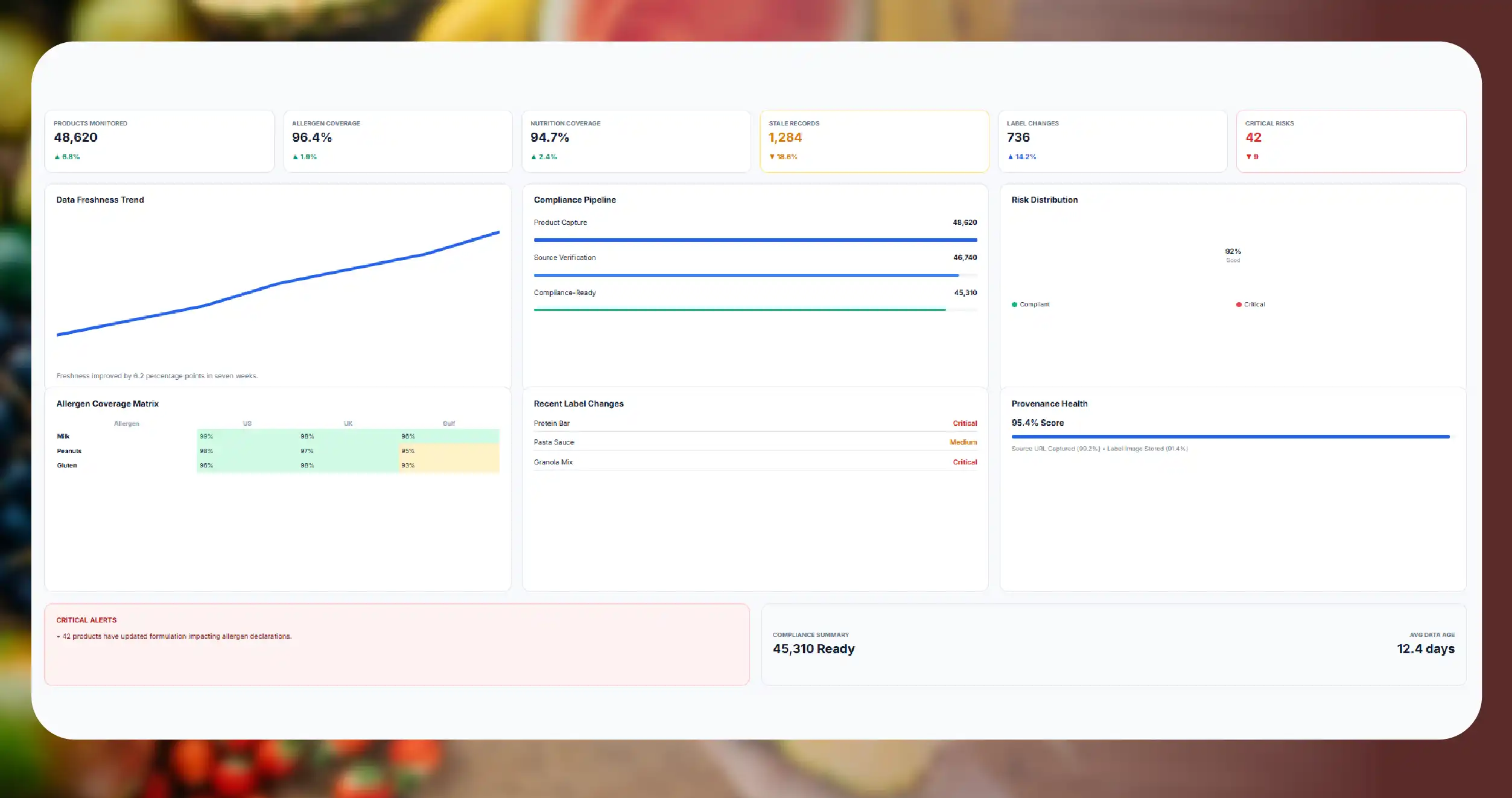
Answer-first: compliance lives or dies on data pipelines. An app can quote the right regulation and still harm a user if its allergen field is three formulations old. The engineering requirements: structured per-product nutrition/allergen fields, provenance (when captured, from what source), and change detection when a label is updated.
Market-by-market orientation (verify each before publish)
United States — FDA nutrition labeling framework; sesame as 9th major allergen via FASTER Act; menu-labeling rules for chains — 2–3 sentences each, cited to FDA.gov.
United Kingdom — FSA 14-allergen framework; Natasha's Law full-ingredient labeling for PPDS foods; HFSS placement/promotion context if relevant — cited to gov.uk/FSA.
Gulf (KSA/UAE/Qatar) — GSO labeling standards; Halal certification data as a de-facto requirement; any national calorie-menu rules — cited to official sources; if primary sources are thin, say less.
Comparison table: allergen count/list · nutrition panel basis. restaurant menu obligations · Halal/diet certification norms — per market, filled only from verified sources.
The data fields your app actually needs
Per product: energy + macros (per 100g/ml AND per serving — markets differ on emphasis), the market's full allergen list as structured booleans plus "may contain" free text, ingredient list, diet certifications (Halal, vegan, organic) with certifier where published, and label_version/collected_at provenance. Freshness rule of thumb: allergen and ingredient fields re-verified on every catalog refresh — never cached longer than pricing.
Sourcing it at scale
Three routes, honestly compared: manufacturer/GS1 feeds (authoritative, patchy long-tail coverage), manual entry (accurate day one, decays immediately), and extraction from retailer/platform listings at scale (broad + refreshable; accuracy tied to the listing itself — which is the same label the consumer sees in-store). Most production apps blend: GS1 where available, extraction for the long tail, change-detection across both.
Unlock AI-powered menu innovation with real-time restaurant data—contact us today to stay ahead of every food trend.
How Food Data Scrape Can Help You
Comprehensive Nutrition & Allergen Data Collection
We collect structured nutrition and allergen data from retailer websites, grocery platforms, and food marketplaces — including energy, macros, allergen flags, ingredient lists, and diet certifications — normalized per market standards.
Market-Specific Regulatory Compliance
Our data extraction solutions support market-specific labeling rules: FDA nutrition panels for the US, FSA 14-allergen framework for the UK, and GSO/Halal requirements for Gulf markets — with provenance tracking for audit readiness.
Change Detection & Freshness Monitoring
We continuously monitor product listings for formulation changes, allergen updates, and ingredient modifications — ensuring your app displays current nutrition data, not stale label information.
Structured Datasets for App Integration
Our clean, normalized datasets include label_version and collected_at provenance fields, making it easy to integrate into your app's data pipeline and maintain audit trails for regulatory compliance.
Scalable Long-Tail Coverage
We augment manufacturer/GS1 feeds with extraction from thousands of retailer listings — ensuring broad product coverage including long-tail items that lack direct manufacturer data feeds.
Questions
Frequently Asked Questions
The UK framework specifies 14 allergens verify + cite FSA; structured boolean fields per allergen plus precautionary "may contain" text is the display-safe data model.
Verify FASTER Act status + cite FDA — answer in 40–60 words with effective date.
Certification norms and consumer expectation make Halal status effectively mandatory data for Gulf-facing apps state regulatory nuance per verified source; carry certifier identity, not just a flag.
Formulations change without announcement; re-verify allergen/ingredient fields on every catalog refresh and surface collected_at — an app displaying stale allergen data carries real user-safety risk.