News
August 2026 Edition
Editor's Note
The retail industry is undergoing a significant transformation as consumers increasingly prioritize value, quality, and affordability. This shift has accelerated the growth of private label products while encouraging national brands to refine their pricing and promotional strategies. In this evolving marketplace, Private Label vs Brand Price Tracking has become a critical capability for retailers, manufacturers, and market intelligence teams seeking to maintain a competitive edge.
Continuous monitoring of pricing dynamics enables businesses to understand how private label products compare with branded alternatives across multiple retailers, regions, and product categories. These insights support informed pricing decisions, maximize profitability, and enhance long-term customer loyalty.
Why Strategic Price Tracking Matters?
Pricing has evolved into one of the most influential factors affecting consumer purchasing behavior. Even minor pricing adjustments can significantly impact market share, sales velocity, and brand perception. Organizations that monitor competitor pricing in real time can respond proactively to changing market conditions instead of reacting after opportunities have been lost.
Comprehensive price tracking helps businesses identify pricing inconsistencies, evaluate promotional effectiveness, maintain competitive positioning, and optimize category performance. More importantly, it enables retailers to strike the right balance between customer value and sustainable profit margins.
Benchmarking Private Labels Against National Brands
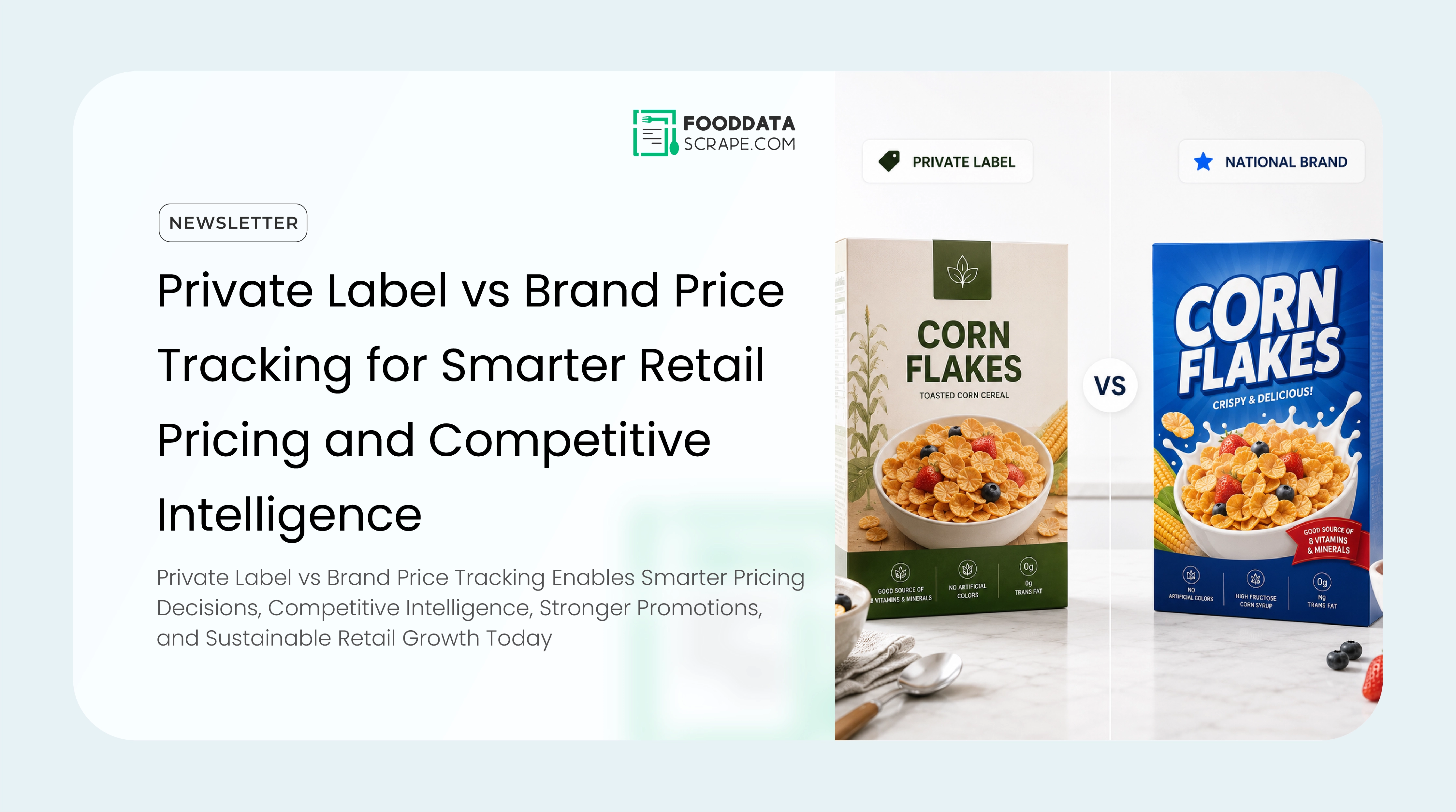
Private label products are no longer viewed solely as low-cost alternatives. Many now compete directly with premium national brands in terms of quality, packaging, and customer satisfaction. As competition intensifies, organizations increasingly rely on brand vs private label price benchmarking to evaluate pricing structures, promotional frequency, assortment depth, and value perception across multiple retail channels.
This benchmarking process enables retailers to establish optimal pricing gaps while helping manufacturers understand how their branded products are positioned against retailer-owned alternatives in an increasingly competitive marketplace.
Essential Pricing Intelligence Metrics
Effective pricing intelligence extends beyond monitoring regular selling prices. Modern retailers analyze multiple data points to build a complete picture of market performance, including:
- Standard and promotional prices
- Discount percentages and promotional frequency
- Price per unit and pack-size normalization
- SKU-level pricing trends
- Regional and store-level price variations
- Category-wise competitive positioning
- Product availability and assortment changes
- Historical pricing movements and seasonal trends
Collectively, these metrics provide actionable intelligence that supports strategic pricing and merchandising decisions.
Business Value of Advanced Price Intelligence
Retailers leverage pricing intelligence to optimize assortment planning, improve promotional strategies, strengthen private label positioning, and increase category profitability. At the same time, consumer brands use these insights to evaluate retailer compliance, measure promotional effectiveness, identify pricing disparities, and protect brand equity.
Comprehensive brand vs private label price comparison also enables organizations to uncover competitive opportunities, refine pricing models, and develop targeted growth strategies based on real-time market conditions rather than assumptions.
Leveraging Automation for Competitive Advantage
The growing complexity of omnichannel retail has made manual price monitoring increasingly inefficient. Thousands of SKUs, frequent promotional updates, regional pricing differences, and rapidly changing online marketplaces require automated data collection and continuous market surveillance.
Automated pricing intelligence platforms provide real-time visibility into competitor pricing, promotional campaigns, assortment changes, and historical pricing trends. This enables decision-makers to respond quickly to market fluctuations, improve forecasting accuracy, and execute pricing strategies with greater confidence.
How Food Data Scrape Powers Smarter Pricing Intelligence?
Food Data Scrape delivers enterprise-grade pricing intelligence solutions that empower retailers, FMCG manufacturers, distributors, and market research organizations with accurate, scalable, and real-time competitive data. Our advanced data collection capabilities capture product prices, promotional offers, SKU attributes, availability, assortment changes, and historical pricing trends across leading grocery retailers, supermarkets, quick commerce platforms, and eCommerce marketplaces.
By transforming large volumes of retail pricing data into actionable business intelligence, Food Data Scrape enables organizations to benchmark private label products against national brands, optimize pricing strategies, monitor promotional performance, identify emerging market trends, and strengthen category management initiatives.
With reliable, continuously updated pricing intelligence, businesses can make faster, data-driven decisions, improve competitive positioning, protect profit margins, and deliver greater value to customers in today's rapidly evolving retail ecosystem.