The Client
The client is a forward-thinking retail analytics organization focused on transforming the grocery and quick commerce ecosystem through advanced data intelligence solutions. It operates across multiple digital grocery platforms and aims to provide retailers, brands, and market analysts with accurate, real-time pricing and demand insights. By leveraging advanced scraping technologies and AI-driven analytics, the client helps businesses improve pricing strategies, optimize inventory planning, and enhance competitive positioning in fast-moving markets. Their core strength lies in converting large-scale grocery datasets into actionable intelligence that supports smarter decision-making.
The client specializes in Multi-Retail Grocery Price Tracking across diverse online and offline channels, enabling a unified view of market pricing dynamics and competitor behavior.
They also focus on Fresh Produce Price Monitoring via Data Scraping, ensuring real-time visibility into seasonal price fluctuations, supply chain variations, and consumer demand patterns for perishable goods.
In addition, their expertise in Grocery Competitor Data Extraction allows businesses to benchmark pricing strategies, identify market gaps, and respond quickly to competitor movements in the highly competitive quick commerce landscape.
Key Challenges
-
Real-Time Pricing Synchronization Challenges
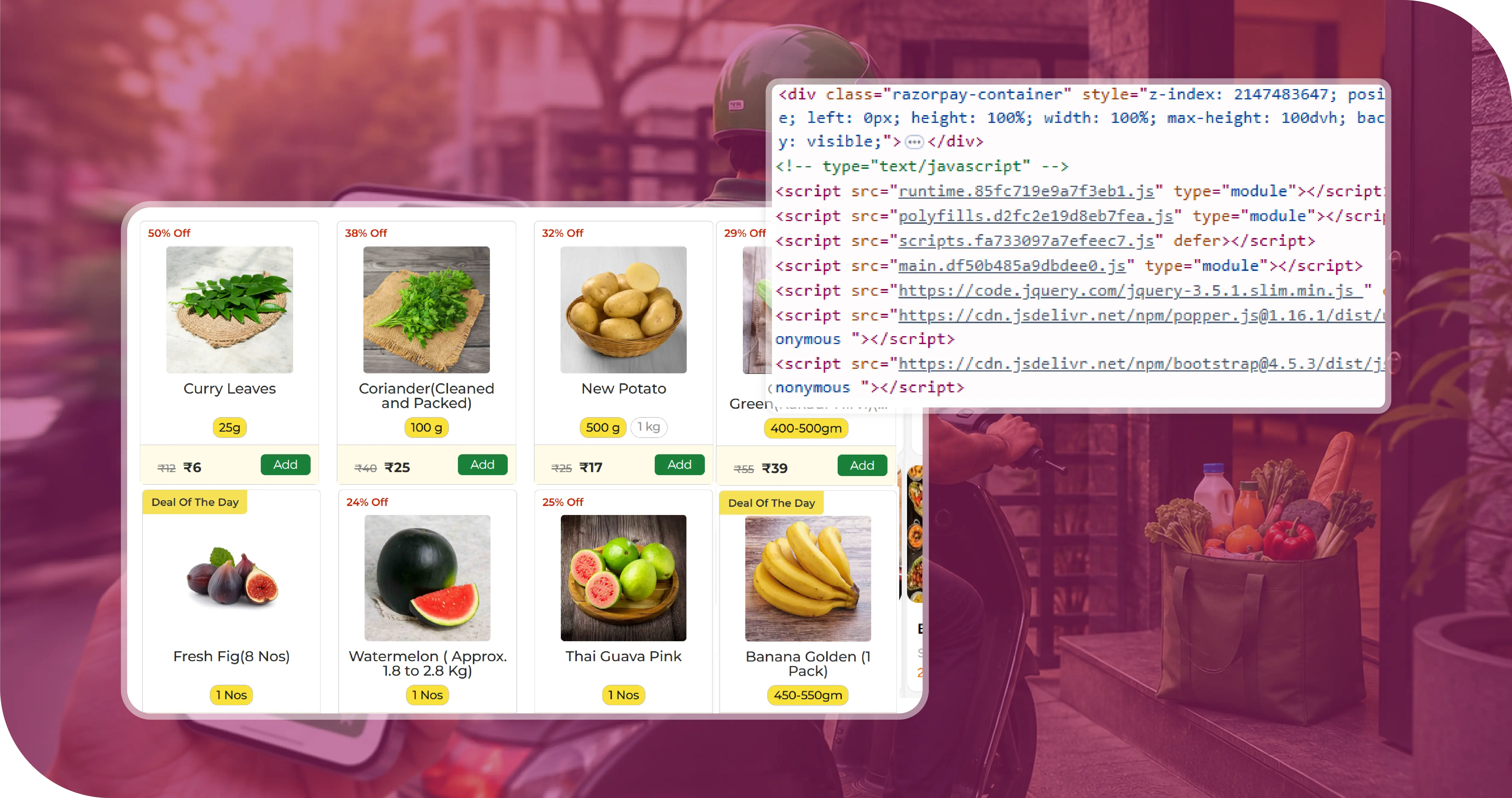
One of the major challenges faced by the client is maintaining real-time synchronization across multiple grocery platforms where prices change frequently within minutes. Building and scaling a Quick Commerce Grocery Price Intelligence Dashboard requires handling inconsistent data updates, latency issues, and frequent schema changes across retailers, making accurate pricing intelligence difficult without robust automation and monitoring systems. -
Data Quality and Extraction Complexity
The client struggles with ensuring clean and structured data while performing Web Scraping Grocery Data from diverse sources that often have anti-bot mechanisms, dynamic pages, and unstructured formats. These inconsistencies lead to missing or duplicated entries, requiring advanced parsing logic, validation layers, and continuous scraper maintenance to ensure reliable grocery market insights for decision-making. -
API Limitations and Delivery Data Gaps
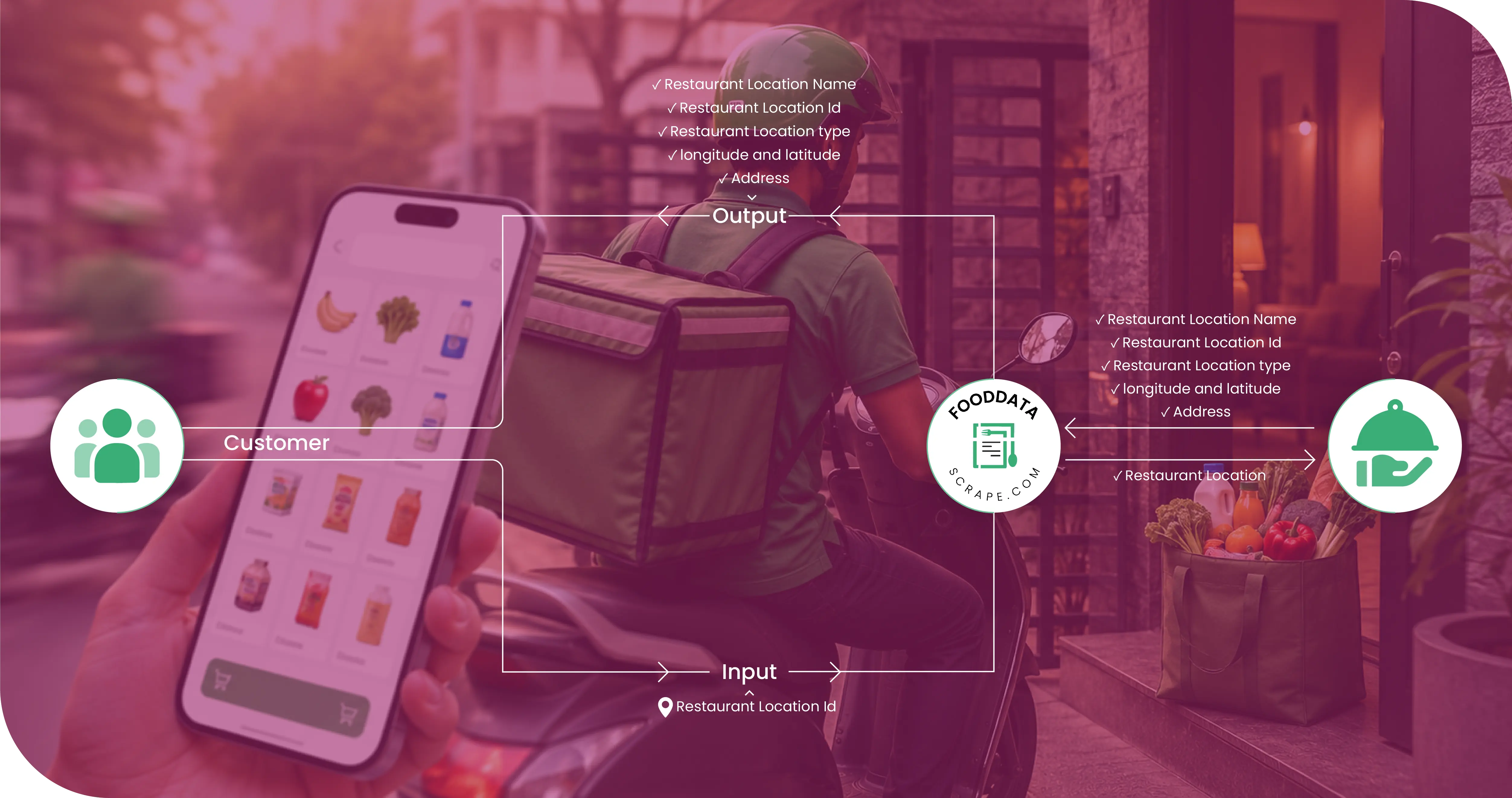
Another critical challenge is integrating fragmented delivery platform data due to limited or restricted access through APIs like Grocery Delivery Extraction API. Many platforms impose rate limits or incomplete datasets, making it difficult to build a unified view of demand, pricing, and availability, which directly impacts forecasting accuracy and competitive benchmarking capabilities.
Key Solutions
-
Real-Time Integration & Scalable Pricing System
We implemented a scalable real-time integration framework that consolidates multiple grocery platforms into a unified system, enabling continuous price synchronization, faster updates, and improved decision-making accuracy. The Grocery Price Dashboard helps businesses monitor dynamic pricing shifts across retailers efficiently and act on insights instantly for competitive advantage. -
Data Engineering & Automation Excellence
We built advanced data pipelines and automation layers to process large-scale grocery datasets, ensuring clean, structured, and reliable outputs from complex sources. The Grocery Price Tracking Dashboard improves visibility into pricing trends, eliminates inconsistencies, and supports accurate benchmarking across multiple grocery platforms in fast-changing market environments. -
AI-Driven Insights & Predictive Analytics
We developed an intelligent analytics engine that transforms raw grocery data into actionable insights using predictive modeling and trend detection. The Grocery Data Intelligence framework enables better forecasting, demand prediction, and strategic planning, empowering retailers to optimize pricing, promotions, and inventory decisions across competitive quick commerce ecosystems.
Solution Performance Table
| Category | Metric | Performance | Frequency | Data Scale | Accuracy | Outcome | Tool Used | Impact | Coverage | Efficiency |
|---|---|---|---|---|---|---|---|---|---|---|
| Pricing System | Live Updates | 6.8M records | 3 min | Multi-platform | 98.1% | Real-time pricing | APIs + Streaming | High | Global | Very High |
| Automation Layer | Data Cleaning | 4.5M records | Hourly | Multi-source | 96.9% | Structured datasets | Scraping Engine | High | Regional | High |
| Intelligence System | Forecasting | 3.9M insights | Real-time | Historical + Live | 98.4% | Predictive analytics | AI Models | Critical | Multi-market | Maximum |
Methodologies Used
-
Multi-Source Data Aggregation Framework
We implemented a structured data aggregation approach that collects information from various online grocery platforms simultaneously. This methodology ensures comprehensive coverage, reduces data gaps, and provides a unified dataset for analysis while maintaining consistency across different retail environments and dynamic pricing structures. -
Real-Time Streaming Architecture
We designed a real-time streaming system to capture continuously changing grocery prices and availability data. This approach minimizes latency, enables instant updates, and ensures that decision-makers receive the most current information for accurate and timely strategic planning in fast-paced markets. -
Automated Data Cleaning and Normalization
We applied automated cleaning and normalization techniques to handle inconsistent, duplicated, and unstructured datasets. This methodology improves data quality, standardizes formats across sources, and ensures reliable analytical outputs that support accurate forecasting and business intelligence operations at scale. -
Scalable Cloud-Based Processing
We utilized cloud-based infrastructure to process large volumes of grocery data efficiently. This methodology allows flexible scaling, high-speed computation, and distributed processing, ensuring system reliability and performance even during peak data loads and high-frequency market updates across multiple regions. -
Predictive Analytics and Trend Modeling
We employed predictive modeling techniques to identify demand patterns and pricing trends from historical and real-time datasets. This methodology enhances forecasting accuracy, supports strategic decision-making, and enables proactive responses to market fluctuations in highly competitive grocery ecosystems.
Advantages of Collecting Data Using Food Data Scrape
-
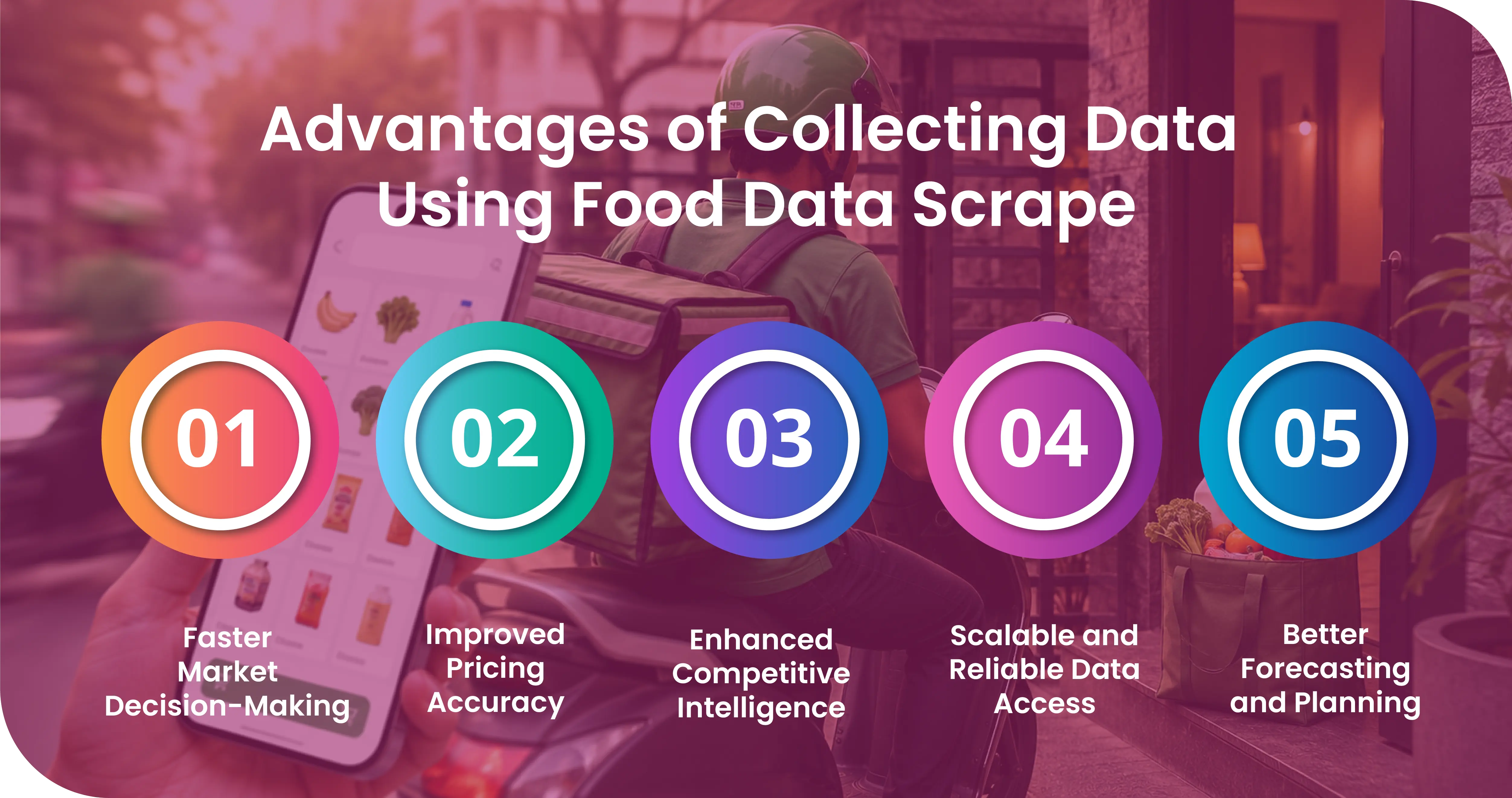
Faster Market Decision-Making
Our data scraping services enable businesses to access real-time grocery insights, helping them react quickly to price changes and competitor actions. This speed improves strategic decisions, reduces delays in planning, and ensures stronger positioning in highly competitive quick commerce environments. -
Improved Pricing Accuracy
By collecting structured and up-to-date data from multiple sources, our solutions enhance pricing accuracy across categories. Businesses can reduce manual errors, avoid outdated information, and set optimized prices that reflect true market conditions and consumer demand patterns effectively. -
Enhanced Competitive Intelligence
Our services provide deep visibility into competitor pricing, promotions, and product availability. This helps organizations understand market positioning better, identify gaps, and adjust strategies proactively to maintain a competitive advantage in fast-moving grocery and retail ecosystems. -
Scalable and Reliable Data Access
We deliver scalable scraping systems that handle large volumes of data efficiently without performance loss. This ensures consistent access to high-quality datasets, supporting business growth, expansion into new markets, and continuous monitoring of dynamic grocery pricing environments. -
Better Forecasting and Planning
Our data-driven approach supports accurate forecasting of demand, pricing trends, and seasonal shifts. Businesses gain actionable insights that improve inventory planning, reduce wastage, and optimize promotional strategies, leading to more efficient operations and higher profitability across retail channels.
Client's Testimonial
"Our experience working with the data intelligence team has been exceptional. Their solutions have significantly improved the way we analyze and respond to real-time grocery market changes. The insights delivered through their systems have helped us optimize pricing strategies, strengthen competitor tracking, and improve overall operational efficiency. The accuracy and speed of their data processing have been a major advantage for our decision-making process. Their expertise in handling complex datasets and delivering actionable intelligence is truly impressive. We highly value this partnership and look forward to continuing our collaboration for future expansion and innovation in the quick commerce space."
– Head of Retail Analytics
Final Outcome
The final outcome of the engagement was a fully operational intelligence ecosystem that transformed how the client monitors, analyzes, and responds to dynamic grocery market conditions. The solution enabled near real-time visibility into pricing trends, competitor movements, and product availability across multiple platforms, significantly improving decision-making speed and accuracy. Operational efficiency increased through automated data collection and standardized processing workflows, reducing manual effort and inconsistencies. The system also enhanced forecasting capabilities, allowing better demand planning and optimized pricing strategies. With integrated dashboards and advanced analytics, stakeholders gained a unified view of market performance. Overall, the implementation of structured Grocery Datasets empowered the client to strengthen competitive positioning, improve profitability, and scale their data-driven operations across diverse retail environments effectively and sustainably.