About The Client
The client was a growing restaurant chain seeking to expand its geographic footprint while minimizing competition and outlet cannibalization risks. Its existing market research relied heavily on manual searches, making it difficult to maintain accurate information about competitors, restaurant locations, cuisines, pricing, ratings, and delivery coverage. To support expansion planning, the client required structured restaurant density and coverage scraping across multiple target markets. The collected data helped identify restaurant clusters, underserved neighborhoods, competitive hotspots, and potential geographic gaps. The company used market entry intelligence for restaurant chains to evaluate prospective territories based on restaurant concentration, cuisine availability, competitor presence, and existing outlet proximity. This enabled decision-makers to prioritize markets with stronger expansion potential. Through competitive restaurant coverage analytics, the client compared its footprint with competing restaurant brands, identified underserved locations, and assessed overlapping service areas. The resulting intelligence improved territory planning, reduced manual research, and created a scalable foundation for future restaurant network expansion.
Key Challenges
-
Fragmented Restaurant Data
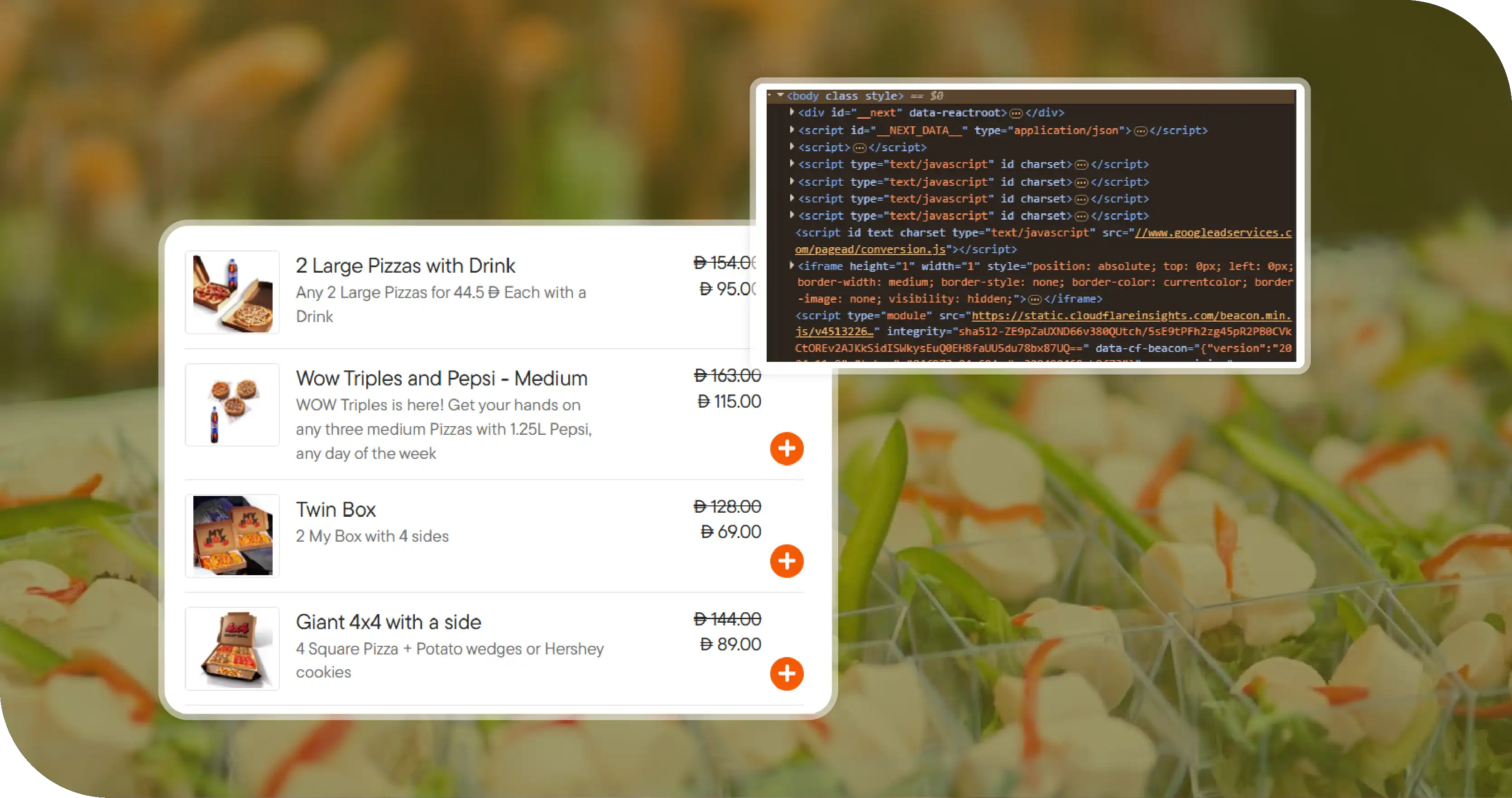
The client struggled to collect consistent restaurant information across multiple platforms and markets. Differences in restaurant names, addresses, cuisines, operating status, and coverage areas made comparisons difficult and reduced the reliability of expansion decisions. Global Restaurant Database requirements intensified this challenge. -
Limited Market Visibility
The client lacked detailed geographic insights into competitor concentrations, underserved neighborhoods, and potential expansion territories. Without Restaurant Location Intelligence for Market Expansion, identifying promising locations and evaluating local demand versus competition required extensive manual research and significant time. -
Complex Competitive Benchmarking
The client found it challenging to compare its restaurant footprint against competitors across different cities and regions. Missing standardized location, cuisine, pricing, and coverage information limited effective Restaurant Intelligence, making it difficult to identify market gaps and prioritize expansion opportunities confidently.
Key Solutions
-
Comprehensive Menu Data Collection
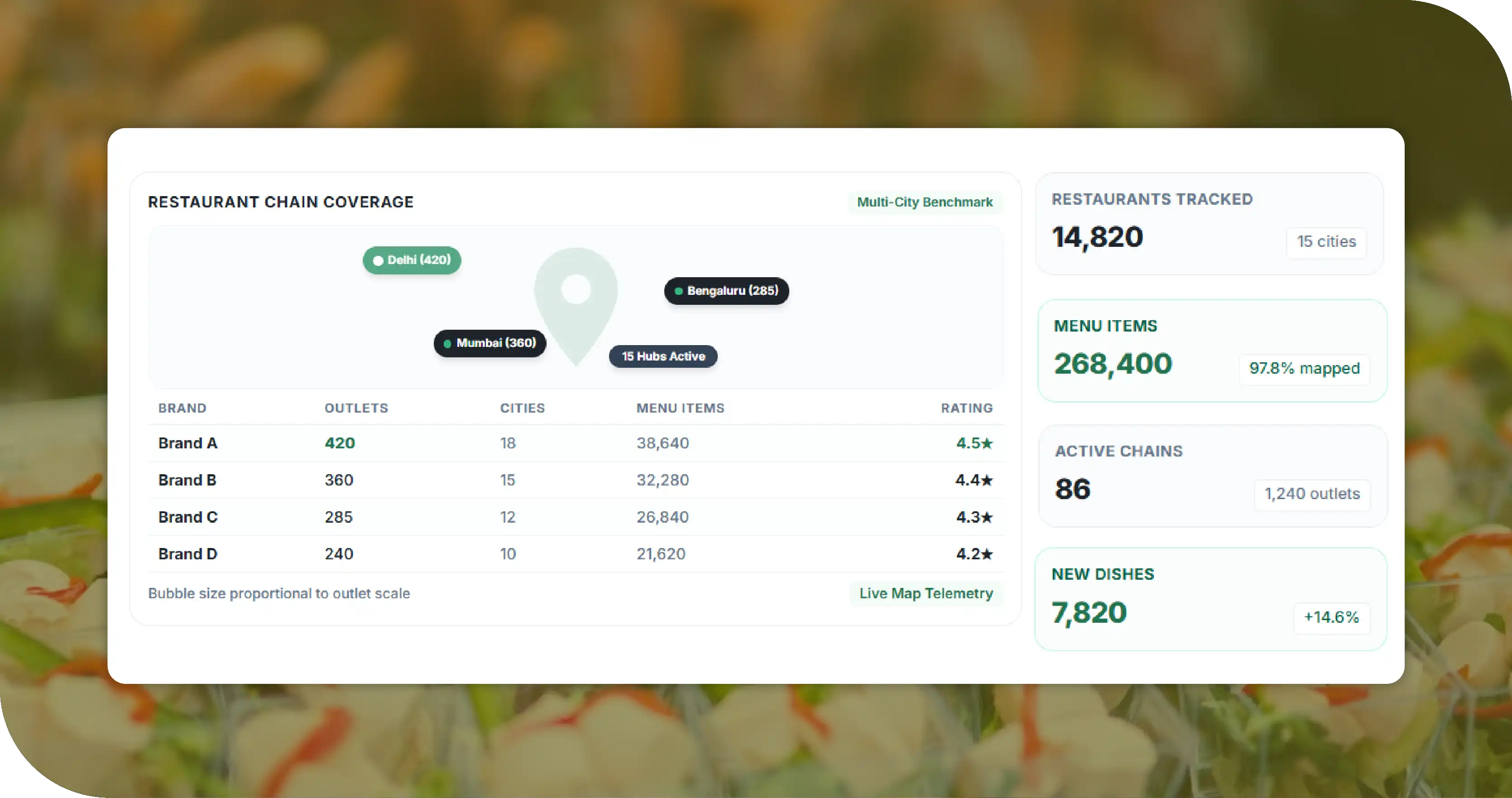
We implemented Scrape Restaurant Menu Data processes to capture restaurant names, menu items, categories, prices, descriptions, availability, ratings, and locations across multiple platforms, creating standardized datasets for reliable competitive and expansion analysis. -
Continuous Data Monitoring
Our Real-Time Restaurant Menu Data Scraping solution continuously monitored menu changes, price fluctuations, newly added dishes, discontinued items, and availability updates, helping the client maintain current market intelligence and respond quickly to competitor pricing and assortment changes. -
Scalable Chain-Level Extraction
Through Food Restaurant Chain Data Scraping, we collected structured information across multiple restaurant brands, cities, and outlets. The solution enabled consistent benchmarking of menus, pricing, product categories, geographic coverage, and competitive positioning across large restaurant networks.
Performance Snapshot
| Metric | Before Solution | After Solution | Improvement | Markets Covered | Restaurants Tracked | Menu Items | Update Frequency |
|---|---|---|---|---|---|---|---|
| Restaurant Records | 12,500 | 48,000 | 284% | 18 | 48,000 | 1,250,000 | Daily |
| Menu Items | 310,000 | 1,250,000 | 303% | 18 | 48,000 | 1,250,000 | Daily |
| Price Records | 420,000 | 1,680,000 | 300% | 18 | 48,000 | 1,250,000 | Daily |
| Competitor Brands | 145 | 520 | 259% | 18 | 48,000 | 1,250,000 | Weekly |
| Coverage Areas | 85 | 240 | 182% | 18 | 48,000 | 1,250,000 | Weekly |
| Data Accuracy | 82% | 97% | 15 pts | 18 | 48,000 | 1,250,000 | Continuous |
| Manual Research Hours | 640 | 120 | 81% Reduced | 18 | 48,000 | 1,250,000 | Monthly |
Methodologies Used
-
Multi-Source Data Collection
We collected restaurant information from multiple digital platforms, restaurant websites, directories, and delivery marketplaces. This approach created broader market coverage while reducing dependency on any single source and improving visibility into restaurant locations, menus, pricing, availability, ratings, and competitive presence. -
Automated Web Scraping
We developed automated scraping workflows to systematically extract restaurant and menu information at scale. Automated processes captured structured fields consistently, minimized repetitive manual research, and supported large-volume collection across multiple cities, restaurant brands, cuisines, and digital platforms. -
Data Cleaning and Standardization
Collected records were cleaned, validated, and standardized before analysis. Duplicate restaurants were identified, inconsistent names were normalized, addresses were structured, cuisine categories were aligned, and incomplete records were flagged to improve dataset consistency and enable accurate comparisons across different sources. -
Geographic Mapping and Analysis
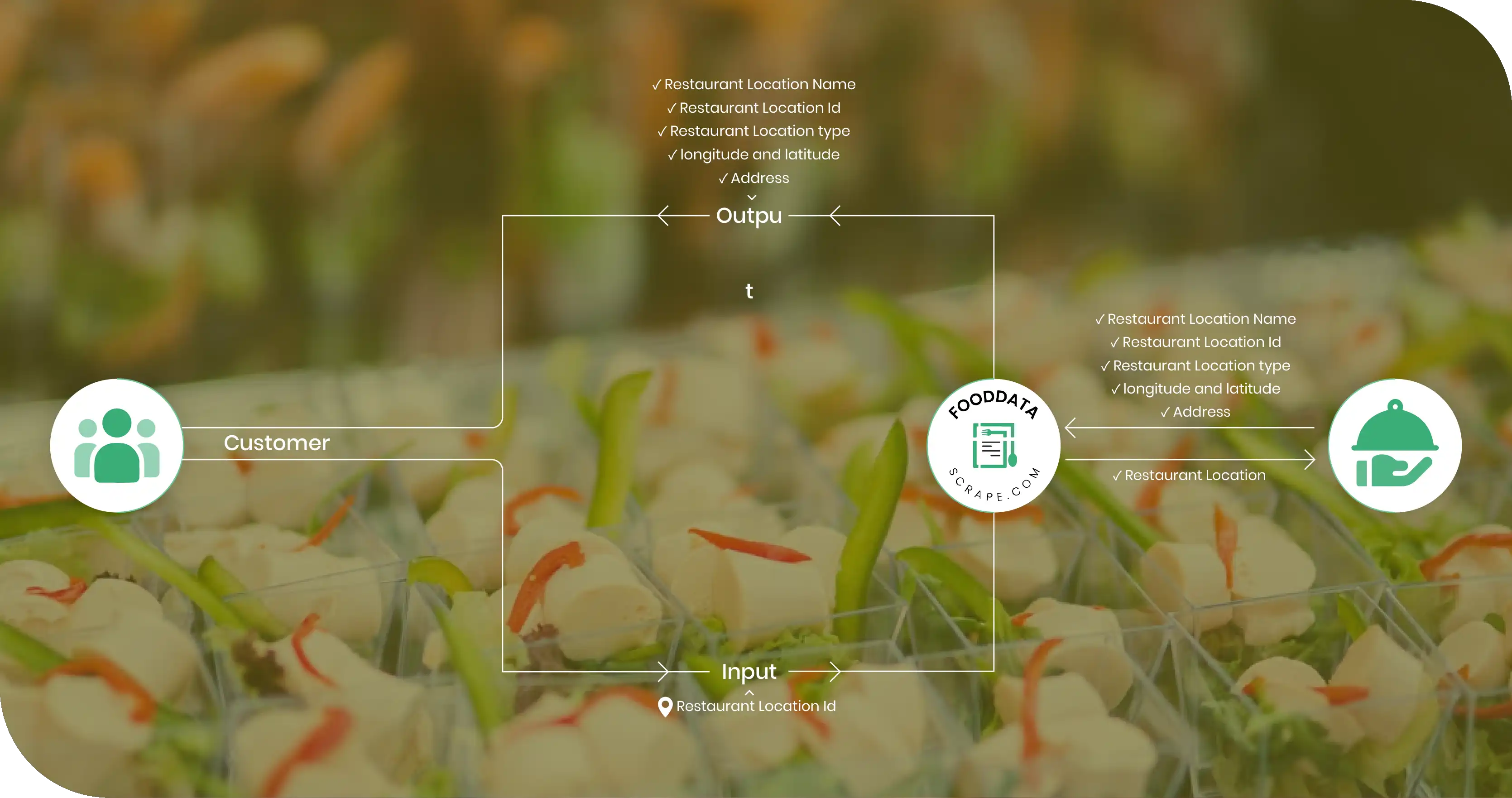
We converted restaurant location information into structured geographic datasets for spatial analysis. Coordinates, neighborhoods, cities, and service areas were evaluated to identify restaurant clusters, underserved locations, competitive concentrations, outlet overlaps, and potential geographic opportunities for future network expansion. -
Continuous Monitoring and Validation
We established recurring collection and validation processes to capture restaurant openings, closures, menu changes, pricing updates, and availability variations. Automated quality checks compared new records with previous datasets, helping maintain reliable information and providing timely insights for ongoing market evaluation.
Advantages of Collecting Data Using Food Data Scrape
-
Faster Market Research
Our automated data collection eliminates extensive manual research across multiple restaurant platforms. Businesses receive structured, regularly updated information faster, allowing teams to evaluate competitors, understand market conditions, identify emerging opportunities, and make expansion decisions without spending excessive time gathering information. -
Broader Market Visibility
We provide extensive restaurant information across cities, regions, brands, cuisines, and platforms. This broader coverage helps businesses understand competitive landscapes, discover underserved areas, compare restaurant footprints, and evaluate market opportunities with greater confidence before investing resources in new locations. -
Improved Competitive Benchmarking
Our structured datasets enable businesses to compare competitors across pricing, menus, ratings, locations, product categories, availability, and service coverage. These comparisons reveal competitive strengths, market gaps, pricing patterns, and assortment differences that can support stronger strategic positioning and planning. -
Better Expansion Decisions
Reliable location and restaurant data helps businesses evaluate prospective territories using measurable evidence rather than assumptions. Teams can identify promising neighborhoods, assess competitor concentration, understand existing outlet coverage, and prioritize expansion opportunities according to market conditions and commercial objectives. -
Scalable and Updated Intelligence
Our solutions can scale from individual restaurants to thousands of outlets across multiple markets. Recurring data collection captures important changes in menus, prices, availability, competitors, and locations, ensuring businesses maintain current intelligence for ongoing monitoring, benchmarking, and strategic decision-making.
Client's Testimonial
"Working with the data scraping team transformed how we evaluate restaurant expansion opportunities. Previously, collecting competitor locations, menus, pricing, and coverage information across multiple markets was time-consuming and difficult to standardize. Their solution delivered structured, accurate, and regularly updated datasets that gave our team much stronger market visibility. We were able to identify underserved territories, benchmark competitors, and prioritize expansion opportunities with greater confidence. The automated collection process also reduced our manual research workload significantly. Their responsiveness, scalability, and attention to data quality made the entire project seamless. We now have reliable intelligence supporting our restaurant network growth strategy."
— Director of Market Expansion
Final Outcome
The project delivered a comprehensive and structured restaurant intelligence solution that significantly improved the client's market expansion planning. By consolidating restaurant locations, menus, pricing, cuisines, ratings, availability, and competitor information, the client gained a clearer view of market conditions across targeted territories. Automated data collection reduced manual research efforts while improving the consistency and timeliness of information. The client could identify underserved neighborhoods, assess competitor concentration, compare outlet coverage, and evaluate potential expansion locations using measurable data. Regular updates also enabled ongoing monitoring of restaurant openings, closures, menu changes, and pricing movements. As a result, the business strengthened its competitive benchmarking capabilities, accelerated market research, reduced expansion uncertainty, and established a scalable data foundation for future restaurant network growth and territory planning.