The Client
A leading retail analytics client in the Middle East focused on strengthening its competitive positioning in Saudi Arabia’s rapidly evolving grocery ecosystem. Operating across multiple retail categories, the client sought advanced data-driven capabilities to improve pricing visibility and product benchmarking across major supermarket chains.
By leveraging Saudi Grocery Product & Pricing Data Extraction, the client was able to consolidate fragmented product catalogs and standardize pricing data across different retailers, enabling faster and more accurate business decisions.
The implementation of Saudi Supermarket Pricing Analytics allowed the organization to track promotional patterns, identify pricing gaps, and optimize shelf-level strategies across key FMCG categories.
With Saudi Grocery Market Intelligence, the client gained a holistic view of market dynamics, including competitor movements, demand fluctuations, and category-level performance trends.
As a result, the client significantly improved pricing efficiency, enhanced margin control, and strengthened its ability to respond quickly to market changes in Saudi Arabia’s highly competitive grocery retail landscape.
Key Challenges
-
Rapid Price Volatility Across Retail Chains
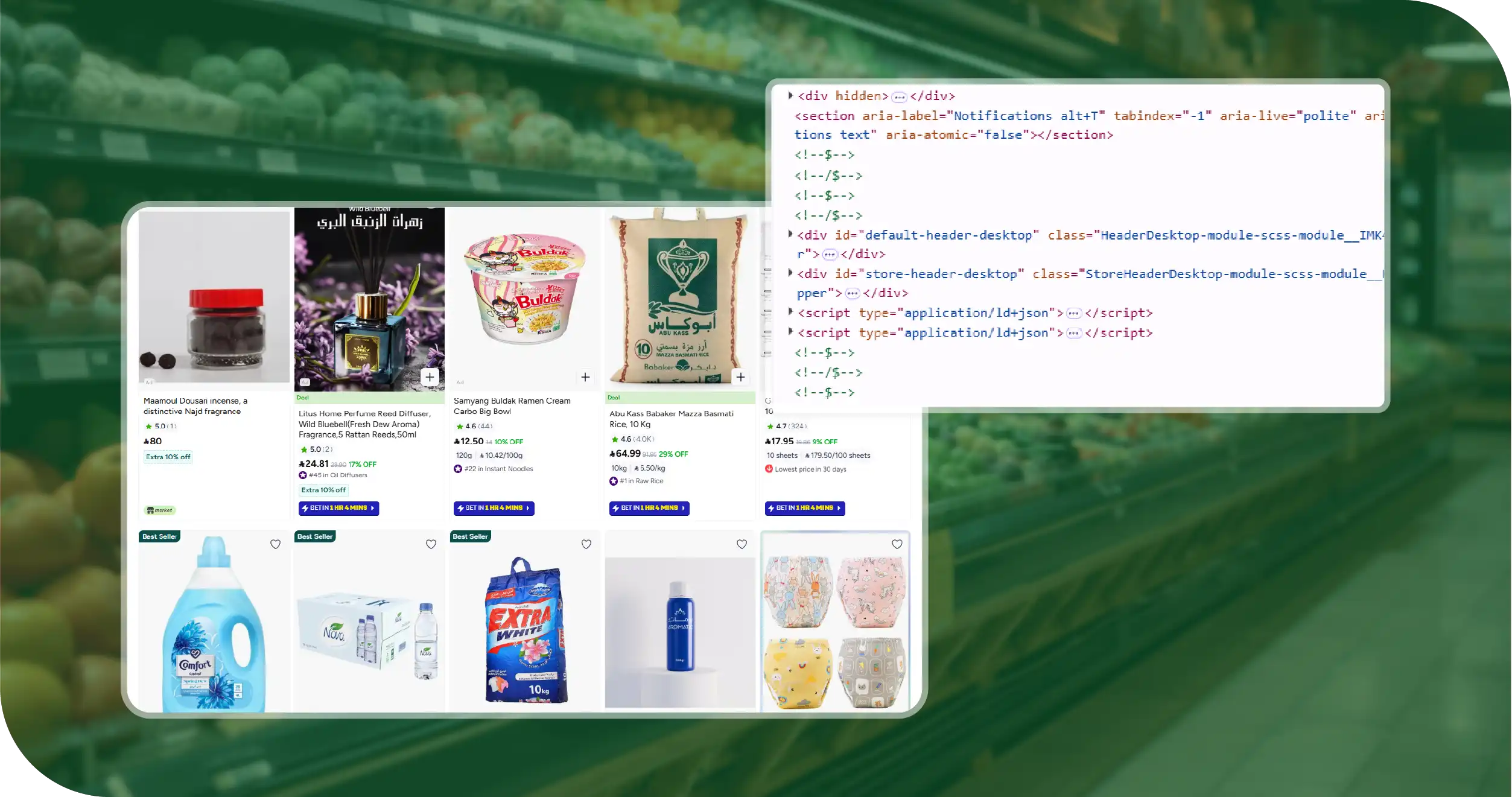
The client struggled to keep up with frequent and unpredictable price changes across Saudi grocery retailers, where promotions and discounts were updated multiple times daily. This made it difficult to maintain accurate benchmarks and competitive positioning in real time. Web Scraping Grocery Data enabled continuous monitoring, but adapting to high-frequency fluctuations remained a key operational challenge. -
Integration Gaps Between Delivery Platforms and Analytics Systems
Another major issue was the inability to seamlessly connect grocery delivery platforms with internal analytics systems, leading to data delays and incomplete visibility across channels. This created inconsistencies in reporting and reduced decision-making speed. The Grocery Delivery Extraction API helped bridge this gap, but integration complexity across multiple vendors remained a persistent challenge. -
Difficulty in Converting Raw Data into Strategic Insights
The client also faced challenges in transforming large volumes of raw pricing and product data into meaningful business insights that could guide procurement and pricing strategies. Teams often struggled with scattered reports and lack of unified KPIs. The Grocery Price Dashboard improved visibility, but ensuring consistent interpretation across departments remained a critical concern.
Key Solutions
-
Centralized Real-Time Pricing Intelligence System
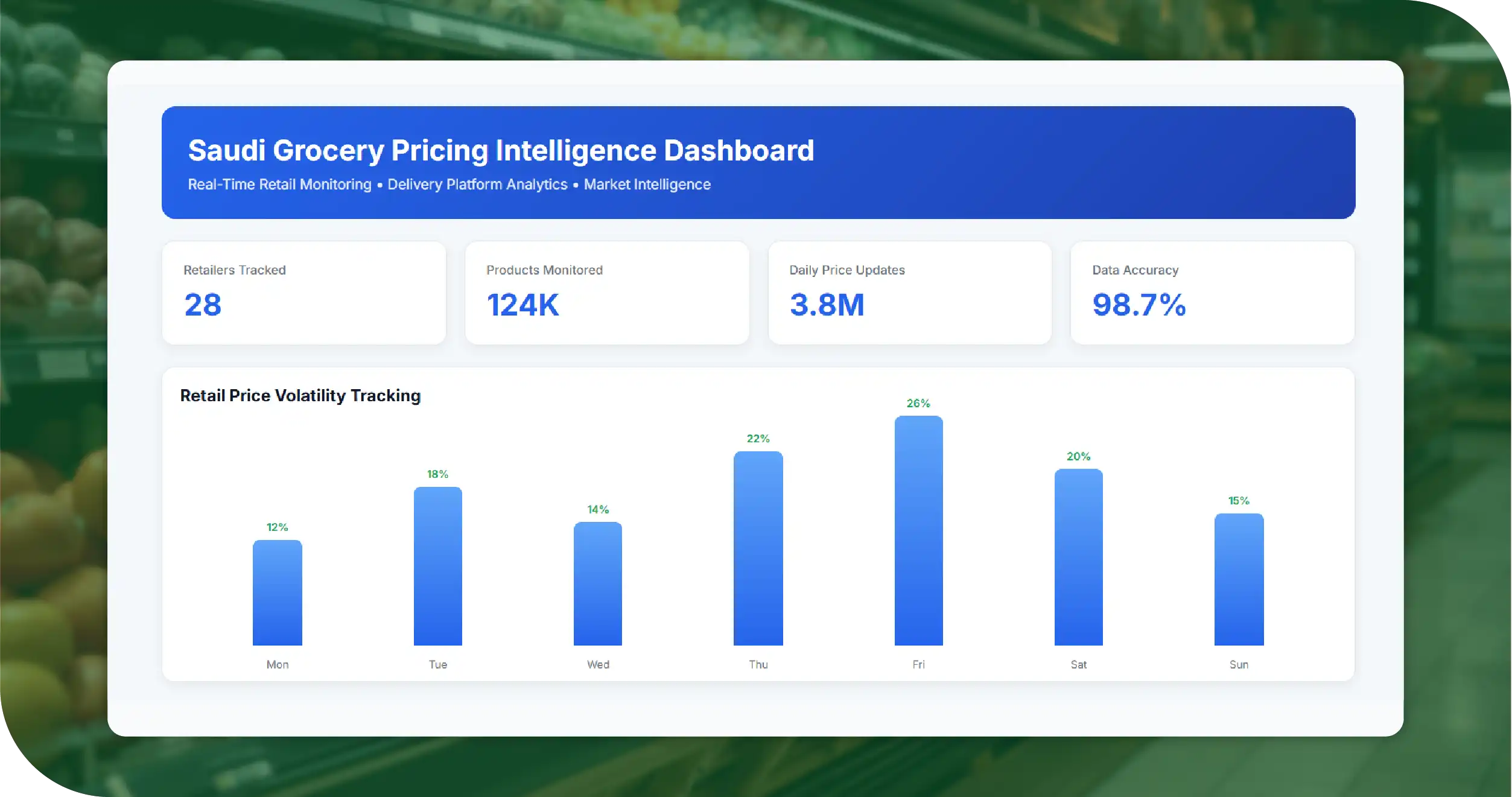
We implemented a unified system that continuously aggregates pricing data from multiple Saudi grocery retailers, ensuring real-time accuracy and consistency. This helped eliminate manual tracking delays and improved decision-making speed. The solution was powered by Grocery Price Tracking Dashboard, enabling teams to monitor price shifts, promotions, and competitor movements in one centralized interface. -
Advanced Data Structuring and Market Normalization
We designed a structured pipeline to clean, normalize, and standardize large-scale grocery datasets collected from diverse sources. This ensured consistency in product mapping, pricing units, and category alignment across retailers. Through Grocery Data Intelligence, the client gained deeper insights into market trends, enabling better forecasting, benchmarking, and strategic pricing decisions across FMCG categories. -
Scalable Dataset Creation for Analytical Use Cases
We built a robust data extraction framework capable of generating high-quality, structured datasets for long-term analytical use. These datasets supported pricing models, competitive analysis, and demand forecasting across Saudi retail chains. The system delivered enriched Grocery Datasets, empowering the client with reliable, scalable data assets for continuous business intelligence and reporting.
Sample Scraped Data Table
| Product ID | Product Name | Category | Retailer | Original Price (SAR) | Discount Price (SAR) | Stock Status | Last Updated |
|---|---|---|---|---|---|---|---|
| 1001 | Milk 1L | Dairy | Carrefour | 7.50 | 6.75 | In Stock | 2026-06-04 10:15 AM |
| 1002 | Basmati Rice 5kg | Staples | Lulu Hypermarket | 32.00 | 29.50 | In Stock | 2026-06-04 10:17 AM |
| 1003 | Cooking Oil 2L | Essentials | Panda Market | 18.00 | 16.80 | Limited | 2026-06-04 10:20 AM |
| 1004 | Sugar 2kg | Staples | Carrefour | 9.00 | 8.40 | In Stock | 2026-06-04 10:22 AM |
| 1005 | Eggs 30 pcs | Protein | Lulu Hypermarket | 22.50 | 21.00 | In Stock | 2026-06-04 10:25 AM |
Methodologies Used
-
Distributed Collection Architecture Across Retail Sources
We implemented a distributed collection approach that gathers data simultaneously from multiple grocery platforms rather than sequential extraction. This reduced latency, improved coverage, and ensured continuous flow of updated information even during peak traffic periods, while maintaining system stability and extraction reliability across sources. -
Intelligent Data Normalization with Context Mapping
An advanced normalization process was built to interpret inconsistent product structures and map them into a unified schema. The system intelligently handled variations in naming, packaging, and categorization, enabling accurate alignment of similar items across different retailers without manual reconciliation or correction efforts required. -
Event-Driven Monitoring for Market Changes
We introduced an event-driven mechanism that triggers updates whenever significant changes occur in pricing or product availability. This reduced dependency on periodic batch processing and ensured near real-time responsiveness, allowing faster identification of market shifts and improving competitive awareness across retail environments effectively. -
Elastic Processing Layer for High Volume Data
A dynamic processing layer was developed to handle fluctuating data volumes efficiently during high-demand periods such as promotions and seasonal sales. The system automatically scaled resources to maintain performance, ensuring uninterrupted processing and consistent output generation even under heavy data ingestion loads. -
Semantic Insight Generation Engine
We built a semantic layer that interprets raw retail signals into meaningful insights by analyzing patterns across price, demand, and category behavior. This enabled deeper understanding of market movements and supported strategic interpretation without relying solely on raw numerical aggregation or static reporting formats.
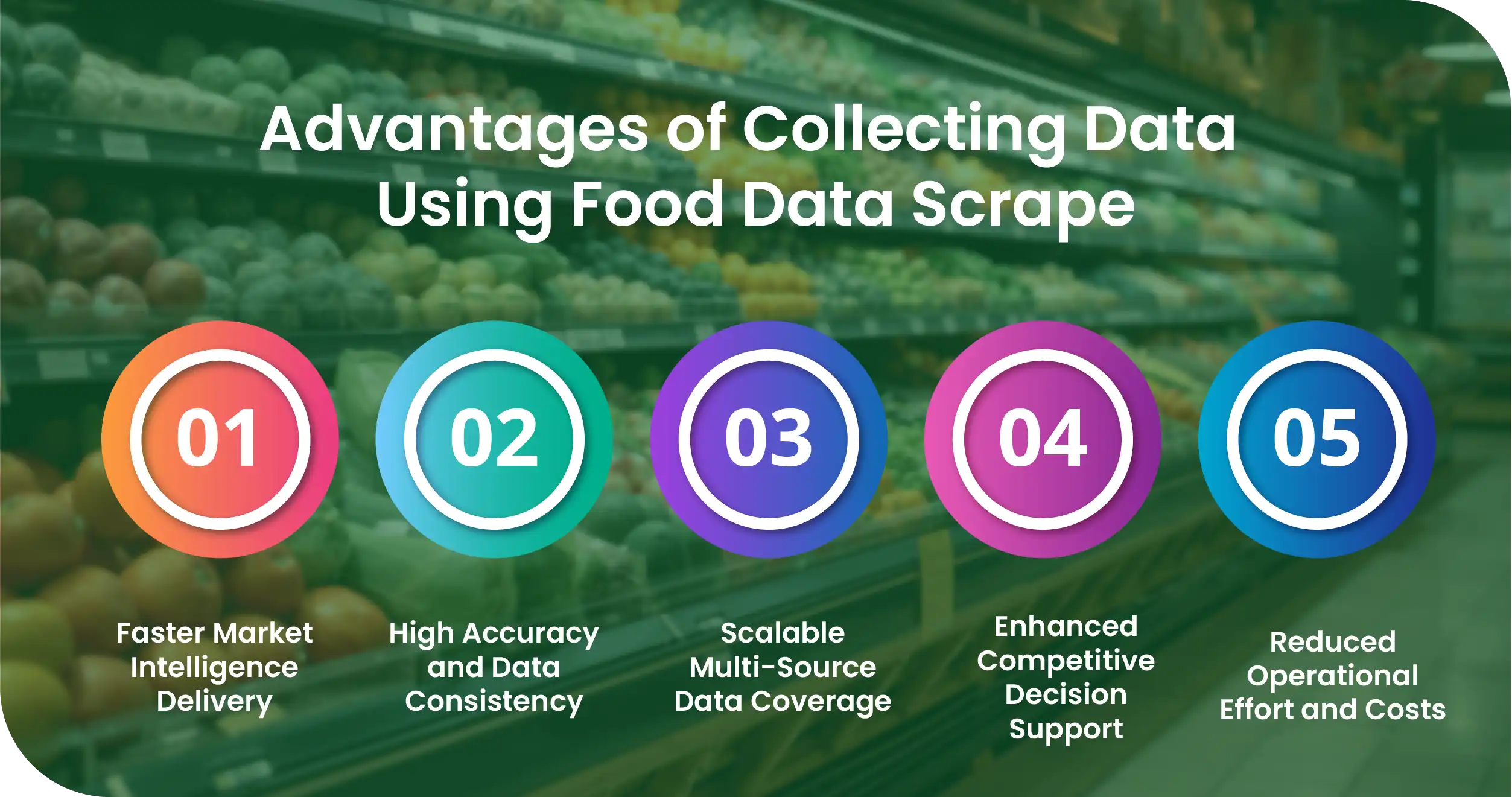
Advantages of Collecting Data Using Food Data Scrape
-
Faster Market Intelligence Delivery
Our data scraping services enable organizations to access updated market information in near real time. This significantly reduces delays in decision-making, allowing teams to react quickly to price shifts, competitor actions, and demand changes across multiple retail channels with improved operational agility. -
High Accuracy and Data Consistency
We ensure extracted data is cleaned, standardized, and validated before delivery. This eliminates inconsistencies across sources and improves trust in analytics outputs. Businesses benefit from reliable datasets that support precise comparisons, forecasting models, and strategic planning without manual correction or data reconciliation efforts. -
Scalable Multi-Source Data Coverage
Our solutions are designed to handle large-scale extraction from diverse platforms simultaneously. This scalability ensures continuous coverage as new sources are added, enabling organizations to expand their monitoring scope effortlessly while maintaining stable performance and consistent data quality across all channels. -
Enhanced Competitive Decision Support
By converting raw market signals into structured datasets, our services empower businesses to identify pricing gaps, promotional trends, and competitor strategies. This enables stronger decision-making capabilities, helping organizations optimize pricing, improve margins, and stay ahead in highly competitive retail environments effectively. -
Reduced Operational Effort and Costs
Our automated scraping solutions eliminate the need for manual data collection and monitoring. This reduces workforce dependency, minimizes operational overhead, and improves efficiency. Teams can focus more on analysis and strategy rather than time-consuming data gathering tasks across multiple retail platforms.
Client’s Testimonial
"Working with this data intelligence team has completely transformed how we understand the Saudi grocery market. Their ability to deliver clean, structured, and highly accurate datasets at scale has significantly improved our pricing and category strategies. We now have faster access to competitive insights and can respond to market changes with confidence. The dashboards and reporting systems they built are intuitive and extremely reliable for daily decision-making. Overall, the collaboration has strengthened our analytics capabilities and improved operational efficiency across teams."
– Head of Retail Analytics
Final Outcome
The final outcome of the project was a fully integrated pricing intelligence ecosystem that transformed how the client monitored and responded to the Saudi grocery market. With automated data collection and structured pipelines in place, the organization achieved real-time visibility into competitor pricing, product availability, and promotional trends across major retailers. Decision-making became significantly faster and more accurate, supported by consistent and reliable datasets. The client also experienced improved margin optimization through better pricing strategies and enhanced forecasting accuracy. Operational efficiency increased as manual tracking processes were eliminated, allowing teams to focus on strategic analysis. Overall, the solution delivered stronger market responsiveness, improved business agility, and a scalable foundation for continuous retail intelligence expansion across multiple grocery categories and channels.