
This report explores the growing importance of retail sales and consumption data in helping businesses understand changing consumer behaviour, optimise pricing strategies, and improve market competitiveness. It examines how automated data collection from online retailers, grocery platforms, marketplaces, and eCommerce websites enables organisations to monitor sales performance, inventory availability, promotional activity, and purchasing trends in near real time. The report also highlights how structured retail datasets support demand forecasting, competitive benchmarking, assortment optimisation, and regional market analysis. Additionally, it discusses the role of artificial intelligence and advanced analytics in transforming raw retail information into actionable business intelligence. By combining large-scale sales, pricing, and consumption insights, companies can make informed decisions that enhance operational efficiency and customer satisfaction. The report demonstrates how continuous retail data monitoring empowers retailers, manufacturers, consultants, and market researchers to respond quickly to evolving market conditions while identifying new growth opportunities across dynamic retail ecosystems.

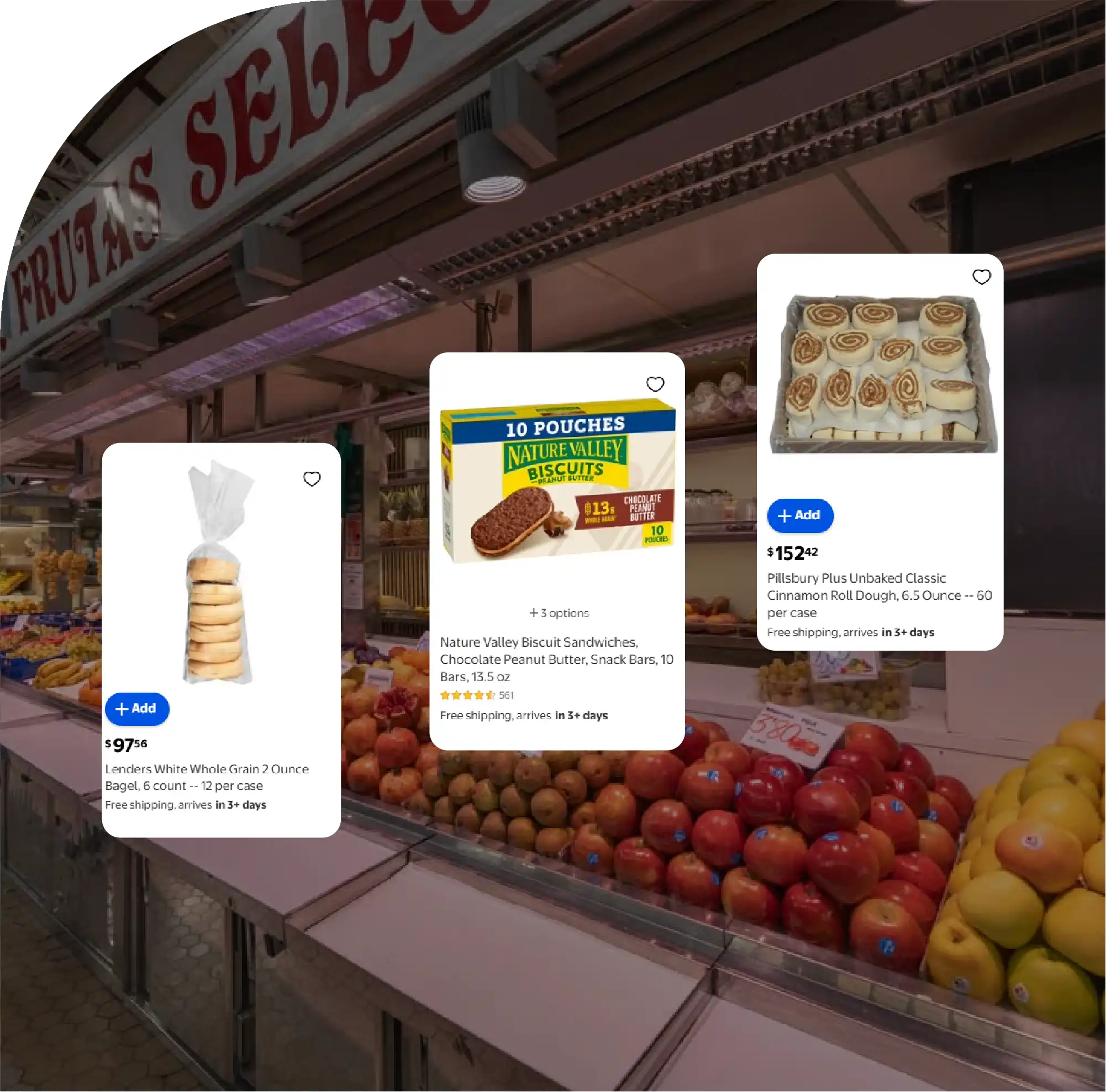
Sales Intelligence
Tracks retail sales patterns, revealing consumer demand changes across multiple markets accurately.
Consumer Insights
Analyses purchasing behaviour, enabling businesses to predict future consumption trends effectively today.
Pricing Analysis
Monitors competitor pricing, promotions, discounts, and category-level pricing fluctuations continuously across retailers.
Demand Forecasting
Supports inventory planning through accurate sales forecasting using historical consumption datasets efficiently.
Market Visibility
Delivers comprehensive retail intelligence for strategic decisions and sustainable business growth globally.

Retail businesses operate in an environment where customer preferences, pricing strategies, promotional campaigns, and product demand change continuously. Understanding these changes requires more than periodic reports or historical sales summaries. Companies increasingly depend on real-time retail intelligence to monitor purchasing behaviour, identify emerging opportunities, and respond quickly to market shifts. This has made retail data collection one of the most valuable assets for manufacturers, retailers, analysts, and investment firms.
Modern organisations use strategy to Scrape Retail Sales & Consumption Data to capture detailed information from online retailers, marketplaces, grocery platforms, and eCommerce websites. These datasets reveal purchasing patterns, inventory movements, pricing behaviour, promotional effectiveness, and regional demand variations. Combined with predictive analytics, they provide a comprehensive view of market performance.
Another growing area is Consumer Consumption Data Scraping, which enables businesses to understand what consumers buy, when they purchase, how frequently they return, and which product categories experience the strongest demand. Instead of relying solely on surveys, organisations obtain large-scale behavioural datasets from multiple retail sources.
Businesses also Extract retail sales trend data to monitor seasonal demand, compare category growth, identify winning brands, and evaluate pricing strategies across different markets. These insights support better forecasting, inventory optimisation, and competitive decision-making while improving overall retail performance.
Retail sales represent much more than completed transactions. Every purchase reflects changing consumer preferences, pricing sensitivity, brand loyalty, promotional success, and economic conditions. When analysed collectively across thousands or millions of products, retail sales data becomes an important indicator of broader market behaviour.
Consumption data extends beyond product purchases by revealing purchasing frequency, basket composition, repeat buying behaviour, regional preferences, and category substitution patterns. These insights help businesses understand demand elasticity and changing customer priorities.
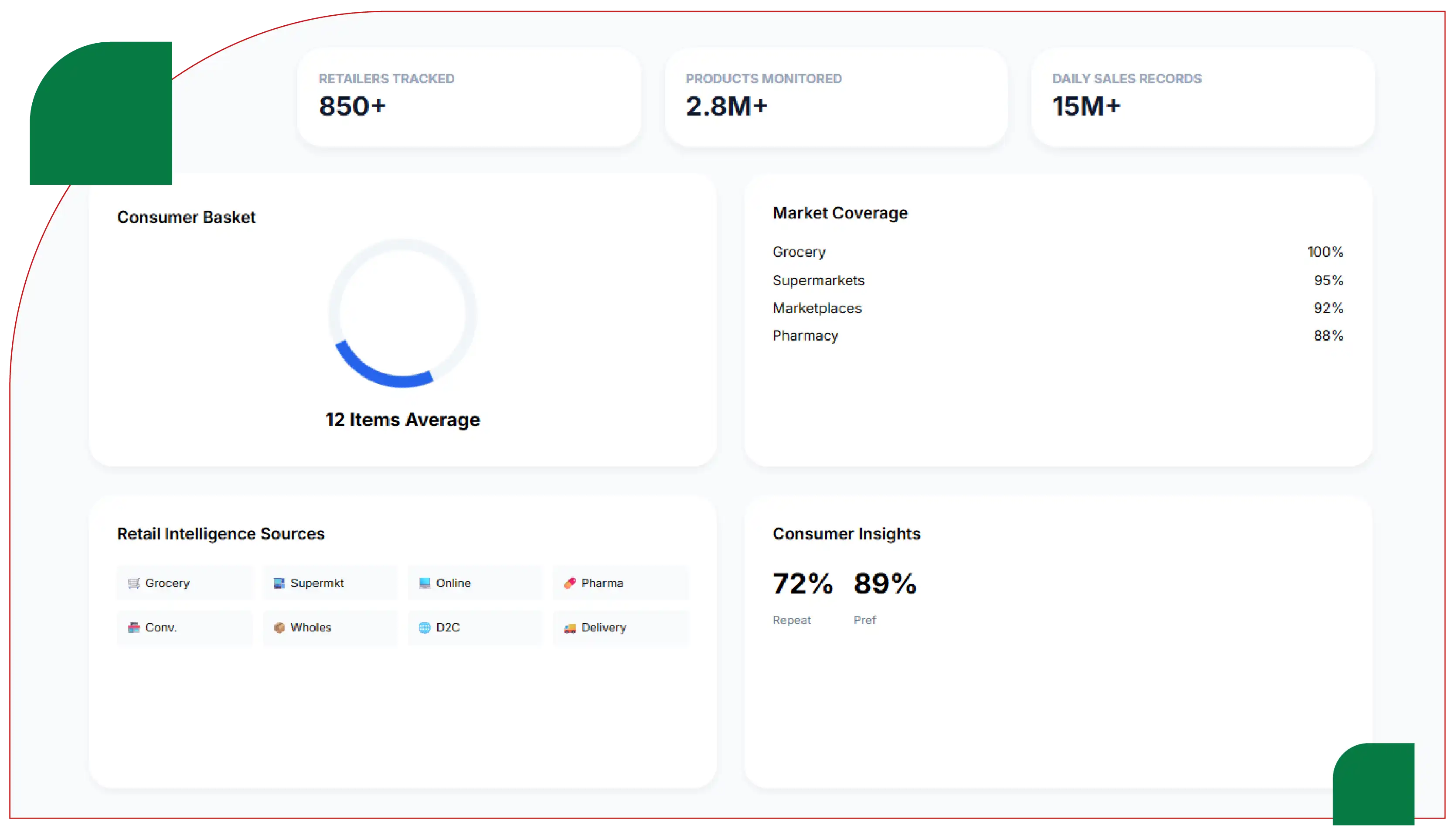
Retail intelligence platforms continuously collect data from:
This continuous data collection provides organisations with near real-time visibility into changing market conditions.
The following table illustrates representative retail metrics collected from large-scale online retail platforms.
| Data Attribute | Monthly Records | Average Daily Updates | Sample Numerical Value |
|---|---|---|---|
| Product Listings | 2,850,000 | 95,000 | 2,850,000 |
| SKU Availability | 1,960,000 | 81,200 | 1,960,000 |
| Price Updates | 4,720,000 | 157,300 | 4,720,000 |
| Promotional Changes | 835,000 | 27,800 | 835,000 |
| Category Rankings | 640,000 | 21,400 | 640,000 |
| Brand Listings | 74,500 | 2,480 | 74,500 |
| Customer Ratings | 5,920,000 | 197,300 | 5,920,000 |
| Review Updates | 1,820,000 | 60,700 | 1,820,000 |
| Inventory Changes | 3,150,000 | 105,000 | 3,150,000 |
| Store Locations | 18,950 | 630 | 18,950 |
| Regional Price Variations | 486,000 | 16,200 | 486,000 |
| Weekly Promotions | 268,500 | 8,950 | 268,500 |
| Basket Price Comparisons | 114,800 | 3,827 | 114,800 |
| New Product Launches | 21,900 | 730 | 21,900 |
| Product Discontinuations | 7,850 | 262 | 7,850 |
The combination of these datasets provides a comprehensive picture of retail activity across multiple channels and geographic markets.
Retail intelligence combines information collected from numerous online and offline channels. Modern scraping systems monitor supermarkets, grocery delivery services, discount retailers, specialty stores, and marketplaces simultaneously.
This unified approach enables businesses to compare pricing, promotional activity, stock availability, assortment changes, and consumer demand across competitors.
Manufacturers use this intelligence to understand retailer execution while retailers benchmark their own performance against competing stores. Investors and consultants rely on similar datasets to evaluate market growth and category expansion.
One of the most valuable applications of retail intelligence is analysing purchasing behaviour. Businesses increasingly Scrape Consumer spending data to understand how economic conditions, inflation, seasonal events, and promotional campaigns influence buying decisions.
Rather than focusing on individual transactions, analysts evaluate millions of purchases to identify larger behavioural trends.
Important consumption indicators include:
These metrics help companies identify both immediate sales opportunities and long-term consumer trends.
Retail markets change rapidly due to new product launches, promotional campaigns, supply chain disruptions, and changing consumer expectations. Continuous Retail market trend data scraping enables organisations to identify these changes before competitors react.
Trend monitoring supports:
Instead of waiting for monthly reports, businesses receive continuously updated market intelligence.
Large-scale retail intelligence platforms process millions of records every day through automated collection pipelines.
The workflow generally includes website monitoring, structured extraction, data validation, duplicate removal, product matching, taxonomy classification, historical comparison, and analytical reporting.
Advanced automation improves both data quality and processing speed while reducing manual effort.
Many enterprises partner with specialised Retail Data Extraction Services capable of collecting structured information across multiple retail ecosystems with high accuracy and scalability.
The table below demonstrates representative retail consumption metrics across major product categories.
| Product Category | Monthly Units Sold | Average Basket Size | Average Selling Price | Monthly Revenue |
|---|---|---|---|---|
| Fresh Produce | 9,850,000 | 7.2 | 2.85 | 28,072,500 |
| Dairy Products | 8,420,000 | 5.6 | 3.10 | 26,102,000 |
| Bakery | 6,940,000 | 4.1 | 2.45 | 17,003,000 |
| Frozen Foods | 5,610,000 | 3.5 | 5.80 | 32,538,000 |
| Snacks | 10,450,000 | 6.8 | 1.95 | 20,377,500 |
| Soft Drinks | 7,820,000 | 5.3 | 2.30 | 17,986,000 |
| Household Supplies | 3,760,000 | 2.4 | 9.60 | 36,096,000 |
| Personal Care | 2,980,000 | 2.2 | 11.40 | 33,972,000 |
| Pet Food | 1,850,000 | 1.7 | 14.90 | 27,565,000 |
| Baby Products | 1,120,000 | 1.5 | 18.75 | 21,000,000 |
| Beverages | 6,380,000 | 4.8 | 3.45 | 22,011,000 |
| Ready Meals | 2,690,000 | 2.1 | 7.90 | 21,251,000 |
| Breakfast Foods | 3,540,000 | 2.8 | 5.10 | 18,054,000 |
| Confectionery | 5,890,000 | 4.6 | 2.20 | 12,958,000 |
| Health Foods | 1,640,000 | 1.9 | 13.60 | 22,304,000 |
Such numerical datasets help analysts identify which categories demonstrate sustained demand growth and stronger consumer engagement.
Retail intelligence benefits a wide range of industries.
Consumer packaged goods companies optimise distribution strategies using retailer-specific sales trends. Grocery chains monitor competitor pricing to improve promotional effectiveness. Manufacturers evaluate product visibility across retailers and identify assortment gaps.
Investment firms use Retail Market Intelligence Data to evaluate category performance before quarterly earnings announcements. Consulting firms build market forecasts using historical retail datasets, while research organisations analyse long-term consumption changes across regions.
Government agencies also examine retail sales trends to evaluate inflation, food security, and economic activity.
Retail forecasting has evolved significantly with the availability of large-scale consumption datasets. Machine learning models analyse historical sales, promotions, pricing, weather conditions, holidays, and regional purchasing behaviour to estimate future demand.
Understanding Sales & Demand Trends enables organisations to reduce stock shortages, minimise excess inventory, improve procurement planning, and increase operational efficiency.
Forecasting models continuously improve as fresh retail data becomes available, making predictions more accurate over time.
Artificial intelligence has transformed retail analytics by automating data interpretation rather than simply collecting information.
Modern AI Grocery Intelligence systems identify unusual pricing activity, forecast inventory shortages, detect promotional effectiveness, recognise emerging consumer preferences, and recommend pricing adjustments automatically.
Natural language processing analyses customer reviews while computer vision validates product images and shelf availability. Machine learning algorithms identify hidden relationships between pricing, promotions, weather, regional events, and purchasing behaviour.
These AI-powered insights allow retailers and manufacturers to respond much faster than traditional reporting systems.
Retail markets continue evolving at an unprecedented pace, making continuous access to structured sales and consumption data increasingly valuable. Organisations that combine automated data collection with advanced analytics gain deeper visibility into consumer behaviour, pricing dynamics, promotional effectiveness, and competitive positioning.
Modern retail intelligence platforms help businesses transform millions of daily transactions into actionable market insights that improve forecasting, inventory planning, pricing strategies, and long-term growth.
As organisations increasingly adopt Web Scraping Grocery Data, they gain scalable access to continuously updated retail information across supermarkets, marketplaces, and grocery platforms. Integrated analytical tools such as the Grocery Price Dashboard convert raw information into meaningful visual insights, while comprehensive Grocery Datasets provide the historical foundation required for predictive modelling, category benchmarking, and strategic decision-making.
Together, these technologies enable retailers, manufacturers, consultants, and investors to make faster, evidence-based decisions in an increasingly competitive retail landscape.
Are you in need of high-class scraping services? Food Data Scrape should be your first point of call. We are undoubtedly the best in Food Data Aggregator and Mobile Grocery App Scraping service and we render impeccable data insights and analytics for strategic decision-making. With a legacy of excellence as our backbone, we help companies become data-driven, fueling their development. Please take advantage of our tailored solutions that will add value to your business. Contact us today to unlock the value of your data.