The Client
The client was a grocery-focused retail intelligence company seeking detailed information about local pricing behavior across stores operating in and around Williamsport. Its existing process relied heavily on fragmented observations, manual research, and periodic competitor checks, making it difficult to maintain consistent historical pricing information.
The company wanted comprehensive Grocery Market Intelligence Data that could reveal differences between individual stores, brands, pack sizes, categories, and promotional offers. Its primary requirement was Williamsport Grocery Pricing Data Scraping, with the flexibility to expand coverage as its analytical requirements grew.
The client also needed reliable Grocery Pricing Analytics Data that could be integrated into internal dashboards and reporting workflows. The ultimate objective was to establish a scalable grocery intelligence pipeline capable of supporting competitive pricing analysis, promotion evaluation, assortment decisions, and localized market strategy.
Key Challenges
-
Store-Level Price Variations
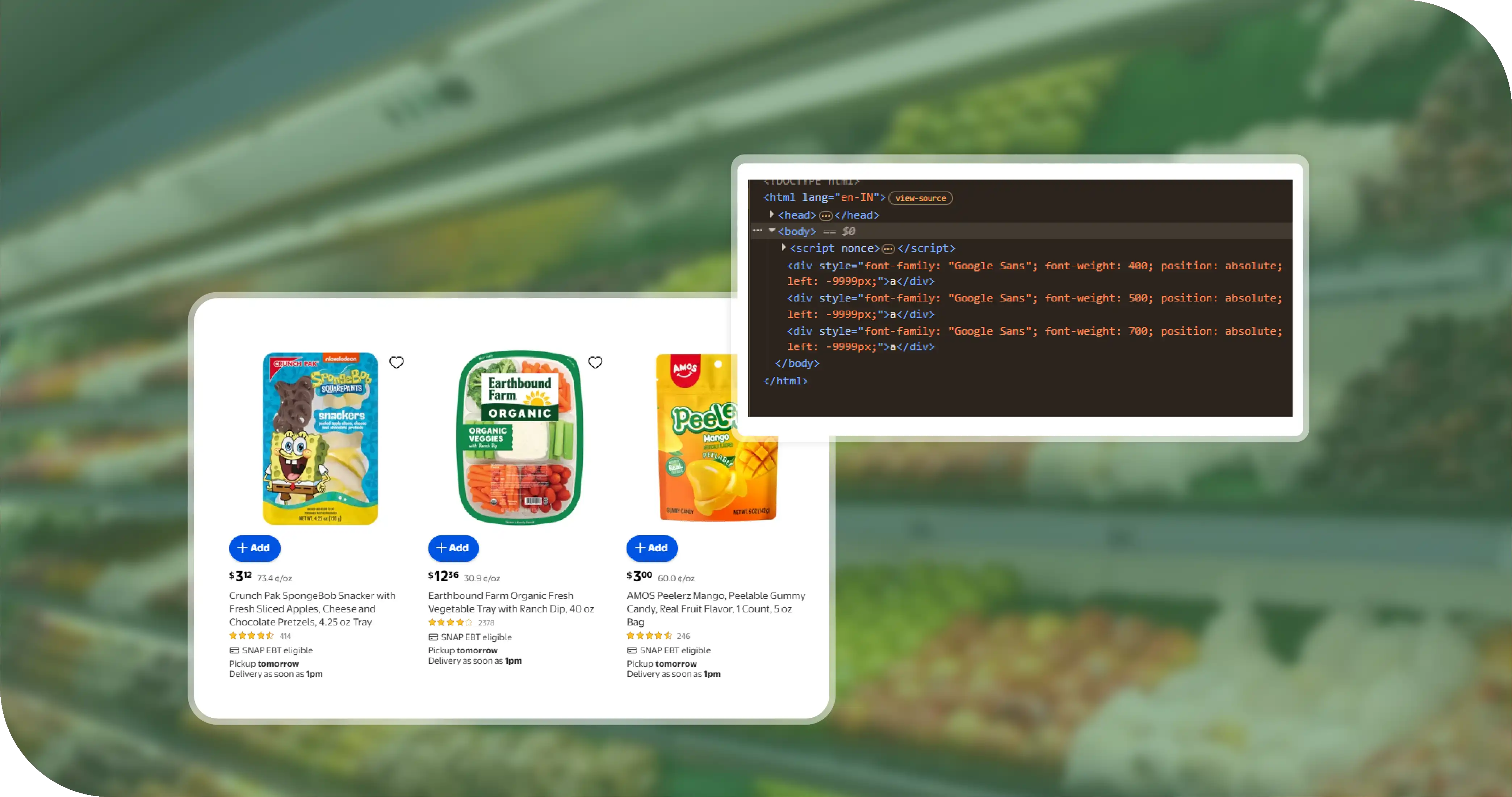
Grocery Store Market Intelligence required identifying price differences for identical products across individual locations. Prices could vary because of promotions, local competition, inventory conditions, and store-specific strategies, making standardized collection and comparison particularly challenging. -
Data Collection Complexity
Traditional research methods created inconsistencies in product names, pack sizes, pricing formats, and promotional information. The client required dependable Grocery Data Scraping Services capable of collecting large volumes of comparable records while minimizing missing, duplicated, or incorrectly mapped products. -
Maintaining Data Consistency
Grocery Store Data Scraping needed to capture changing prices without losing historical records. New products, discontinued SKUs, temporary promotions, and changing availability further complicated the process, requiring consistent product identification and structured historical storage.
Key Solutions
-
Automated Store-Level Collection
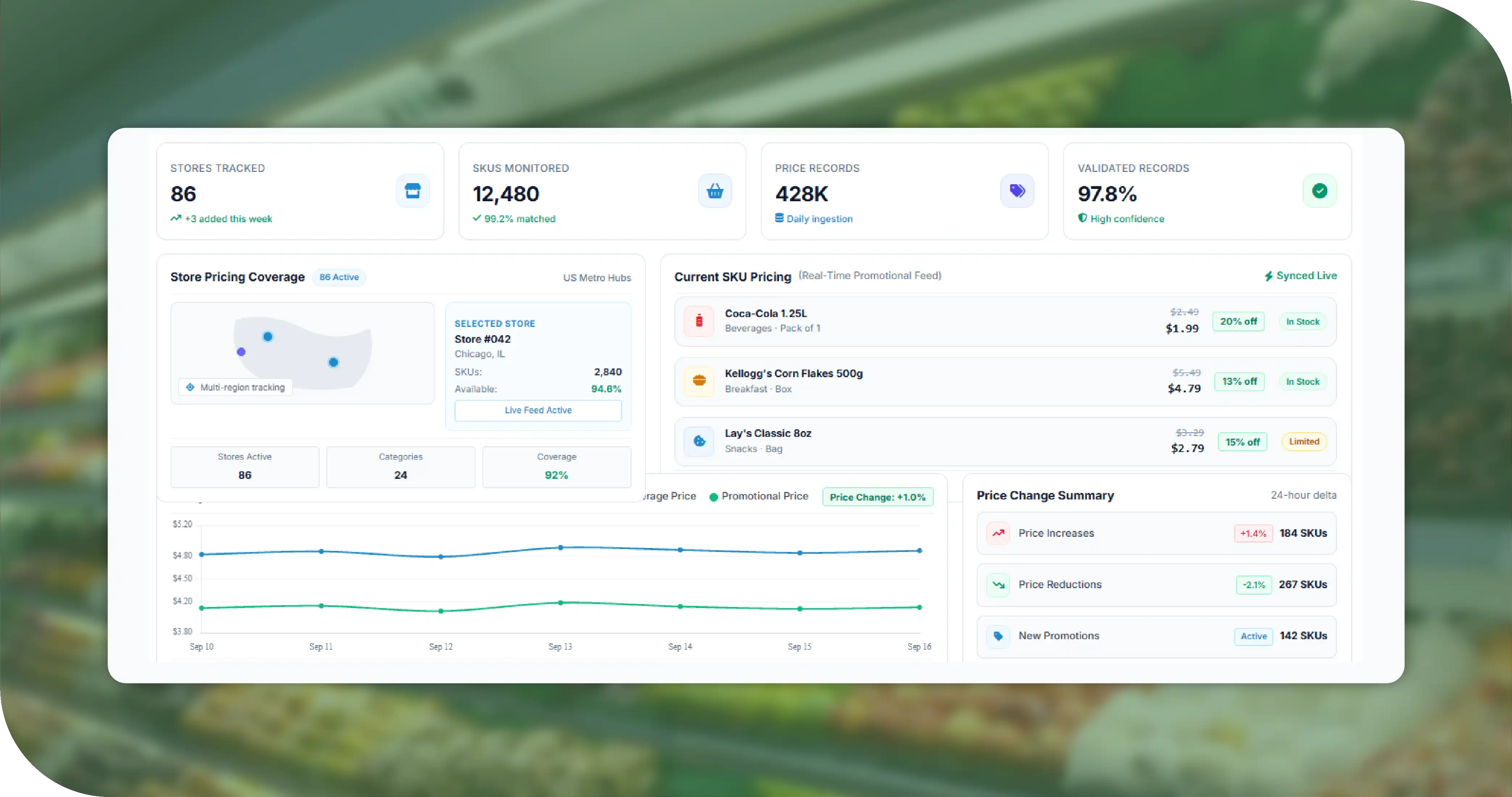
We developed an automated collection workflow designed to capture product-level pricing from targeted grocery locations. Each record was organized according to store, SKU, product name, brand, category, pack size, regular price, promotional price, and availability. -
Data Standardization and Validation
Collected records were normalized to create consistent product identifiers and pricing structures. Duplicate products were removed, pack-size differences were clearly represented, and anomalous values were flagged through validation rules before the dataset reached analytical workflows. -
Historical Price Tracking
The solution maintained recurring pricing snapshots, enabling the client to compare current prices against previous observations. This helped identify price increases, reductions, promotional activity, and store-level pricing gaps across selected grocery categories.
Sample Project Data
| Data Metric | Initial Coverage | After Solution | Improvement |
|---|---|---|---|
| Stores monitored | 12 | 28 | 133.3% |
| Product SKUs tracked | 8,500 | 24,600 | 189.4% |
| Categories covered | 18 | 42 | 133.3% |
| Daily price records | 21,000 | 74,000 | 252.4% |
| Monthly records | 630,000 | 2,220,000 | 252.4% |
| Product-price matches | 91.2% | 98.7% | 7.5 percentage points |
| Duplicate records | 6.8% | 1.4% | 79.4% reduction |
| Missing price fields | 5.9% | 1.1% | 81.4% reduction |
| Promotional SKUs identified | 1,240 | 4,850 | 291.1% |
| Historical snapshots retained | 4 | 26 | 550% |
| Average processing time | 16 hrs | 3.5 hrs | 78.1% reduction |
| Data refresh frequency | Monthly | Daily | 30× |
| Stores with comparable SKU coverage | 8 | 25 | 212.5% |
Note: The figures above are illustrative case-study data created to demonstrate the potential impact of the solution.
Methodologies Used
-
Store Identification
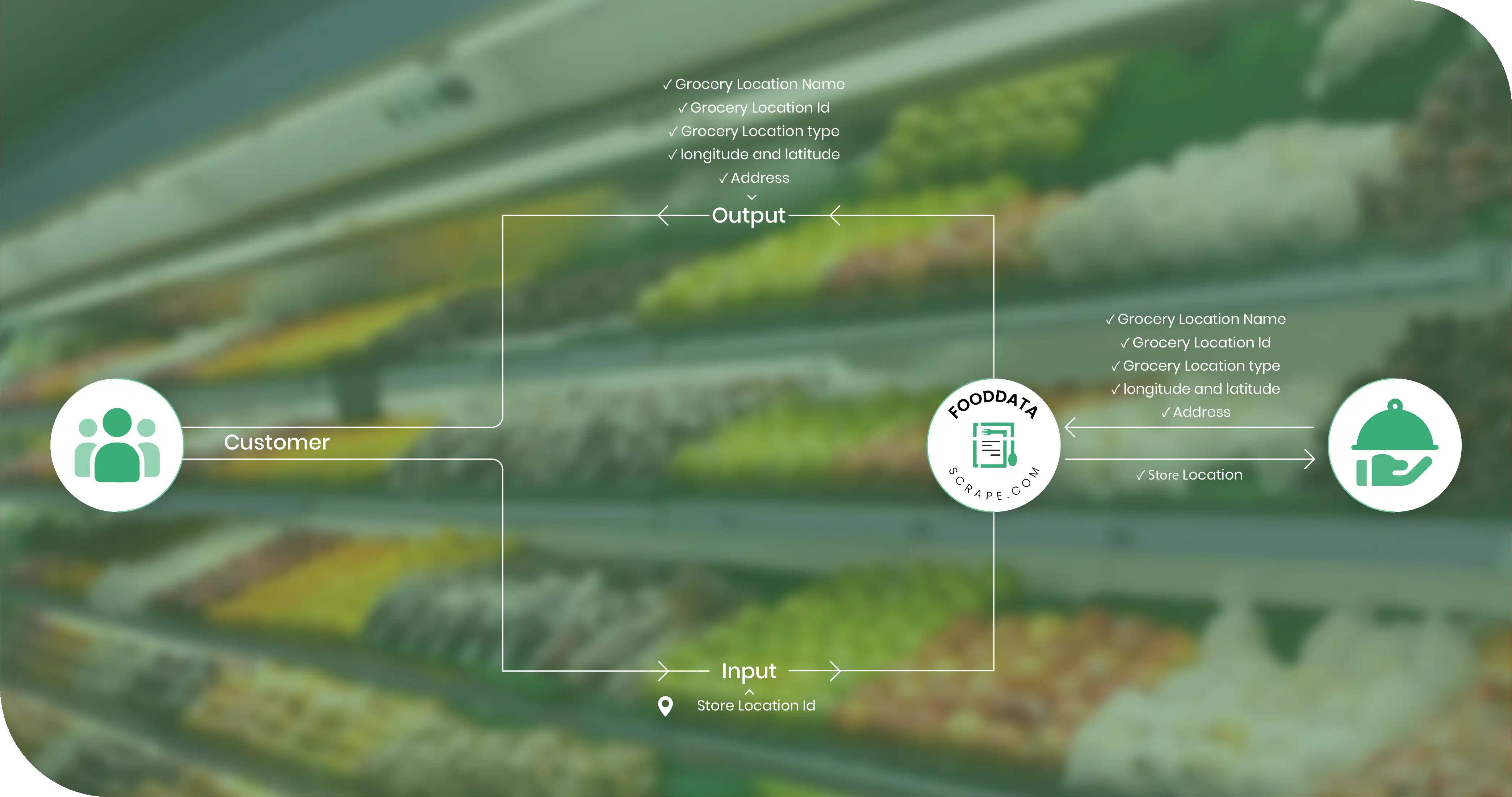
We first established a store-level mapping framework covering locations, product categories, and relevant grocery departments. This created a consistent structure for associating every collected product record with its appropriate store and market. -
SKU-Level Extraction
Product-level information was collected using structured extraction workflows. Product names, brands, categories, pack sizes, prices, promotions, and availability were captured as separate fields to support detailed downstream analysis and comparison. -
Data Normalization
Raw grocery records were standardized using common naming conventions, product identifiers, category classifications, measurement units, and pricing formats. This allowed identical or comparable products to be evaluated consistently across different stores and collection periods. -
Quality Validation
Automated validation checks were applied to identify missing values, duplicates, abnormal pricing, inconsistent units, and unexpected changes. Records failing predefined quality rules were reviewed or excluded before being incorporated into analytical datasets. -
Historical Comparison
Repeated collection cycles created historical pricing snapshots. These snapshots were compared to detect price movements, promotional cycles, product changes, and store-level variations, enabling the client to move beyond static pricing research toward continuous competitive intelligence.
Advantages of Collecting Data Using Food Data Scrape
-
Broader Competitive Visibility
Our data scraping services can provide broader visibility into competitor pricing by combining multiple stores, categories, brands, and SKUs within one structured dataset, helping retailers understand localized competitive behavior more effectively. -
Faster Pricing Intelligence
Automated collection reduces dependence on manual research and enables more frequent updates. Businesses can receive refreshed grocery pricing information faster, allowing analysts to identify meaningful changes before outdated information influences commercial decisions. -
Improved Pricing Decisions
Structured price data enables retailers to compare identical and comparable products across locations. This supports better decisions around price positioning, promotional planning, markdown strategies, category management, and competitive response. -
Historical Market Analysis
Maintaining recurring snapshots creates a valuable historical dataset. Businesses can analyze pricing trends over time, evaluate promotional frequency, identify recurring price movements, and understand how competitors respond to changing market conditions. -
Scalable Intelligence Infrastructure
A structured scraping framework can expand as business requirements grow. New stores, categories, products, and collection frequencies can be incorporated without rebuilding the entire research process, making the approach suitable for long-term retail intelligence programs.
Client's Testimonial
"The store-level pricing dataset transformed how our team approaches grocery competitive analysis. Previously, our analysts spent considerable time gathering scattered pricing information and manually reconciling product differences. The structured dataset gave us a much clearer view of local price variations, promotions, and assortment changes. We particularly valued the consistency of SKU-level information and the ability to compare historical snapshots rather than relying only on current observations. The improved refresh frequency also helped our analysts react faster to competitive movements. Instead of spending most of our time collecting and cleaning information, we could focus on interpreting trends and turning them into commercial recommendations. The solution has become an important component of our broader retail intelligence workflow."
—Director of Retail Analytics, Grocery Intelligence Company
Final Outcome
The project created a scalable foundation for store-level grocery competitive intelligence. The client gained a significantly larger product and store coverage area while improving data consistency and reducing manual processing requirements. Recurring collection also transformed isolated pricing observations into a historical intelligence resource.
With AI Grocery Intelligence, the client could organize large volumes of pricing records into more actionable analytical views, helping teams identify unusual movements, competitive gaps, and emerging pricing patterns. Real-Time Price Monitoring capabilities further supported faster identification of significant changes between collection cycles.
The structured dataset also improved promotional visibility and enabled more detailed comparisons between stores and product categories. Most importantly, the client moved from fragmented manual research toward an automated, repeatable, and scalable data intelligence process capable of supporting ongoing grocery pricing decisions.