About The Client
The client is a retail analytics and market intelligence organization seeking reliable, structured pricing information from Australia's highly competitive grocery sector. Its objective was to strengthen price monitoring, understand competitor movements, and identify actionable patterns across leading supermarket chains. The organization required consistent product-level information covering prices, discounts, categories, pack sizes, promotions, and historical changes to support strategic analysis. Through Woolworths supermarket price analytics, the client aimed to evaluate pricing movements and understand how frequently products changed across categories. It also wanted Aldi supermarket competitive pricing analytics to benchmark discount positioning, private-label competitiveness, and everyday pricing strategies against major retailers. The project supported broader Australian supermarket price intelligence by consolidating fragmented market observations into a structured analytical resource. This enabled the client to compare competitors more efficiently, identify pricing gaps, monitor market movements, and make informed commercial decisions based on timely and standardized supermarket pricing information. The resulting dataset provided a scalable foundation for ongoing competitive monitoring and strategic retail analysis.
Key Challenges
-
Inconsistent Pricing Data
Building a reliable supermarket pricing benchmark was challenging because product prices, discounts, pack sizes, and availability varied across retailers, locations, and collection times, requiring consistent normalization and validation. -
Complex Data Collection
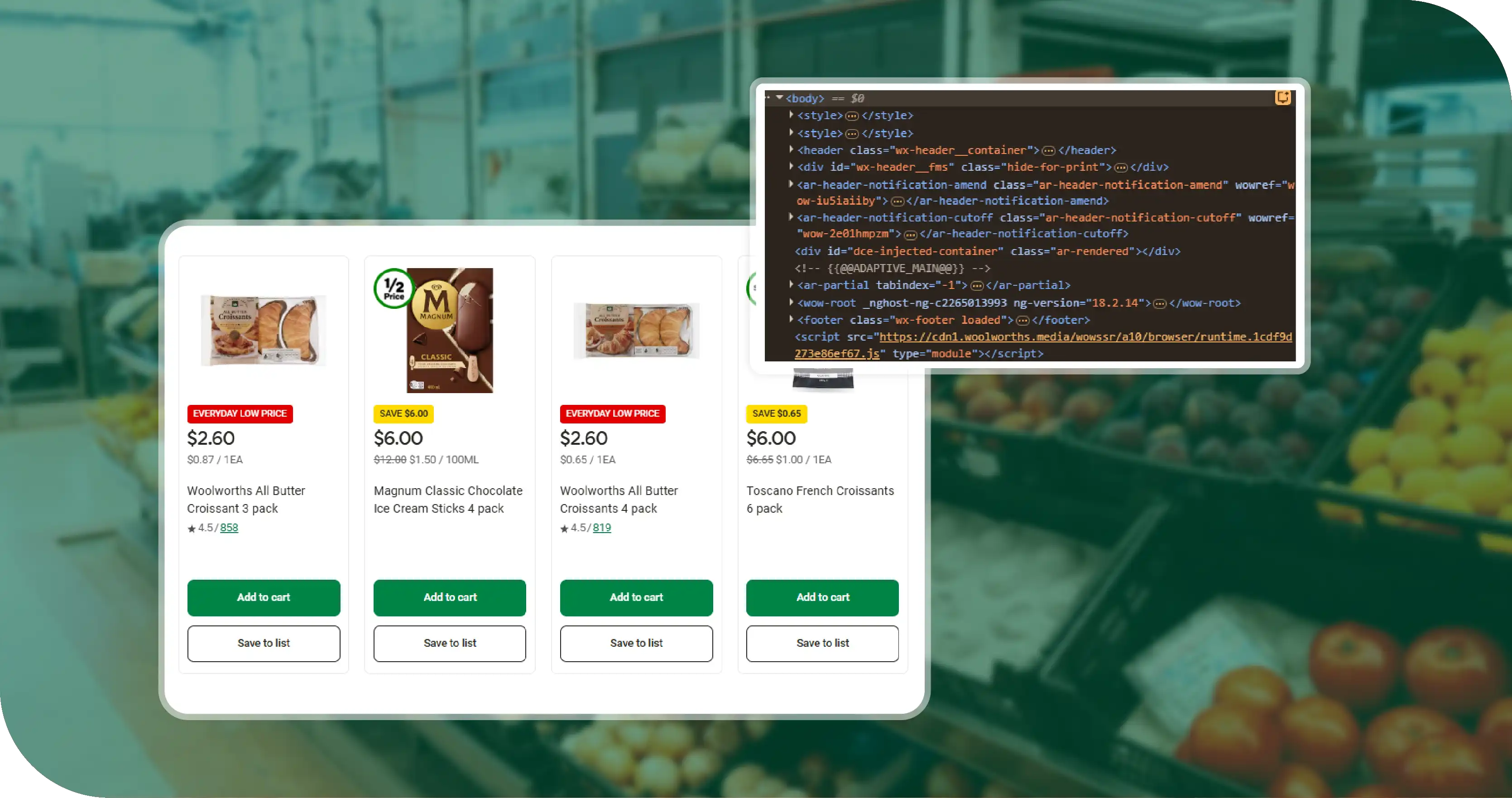
The need to scrape Coles & Woolworths Data across extensive product catalogs created challenges involving dynamic pages, changing layouts, pagination, and large volumes of product information that required systematic extraction. -
Dynamic Website Structures
Web Scraping Coles Supermarket presented technical difficulties because product pages and category listings could change frequently. Maintaining accurate extraction required adaptable workflows, structured field mapping, duplicate handling, and continuous monitoring of source-page changes.
Key Solutions
-
Unified Product Data Framework
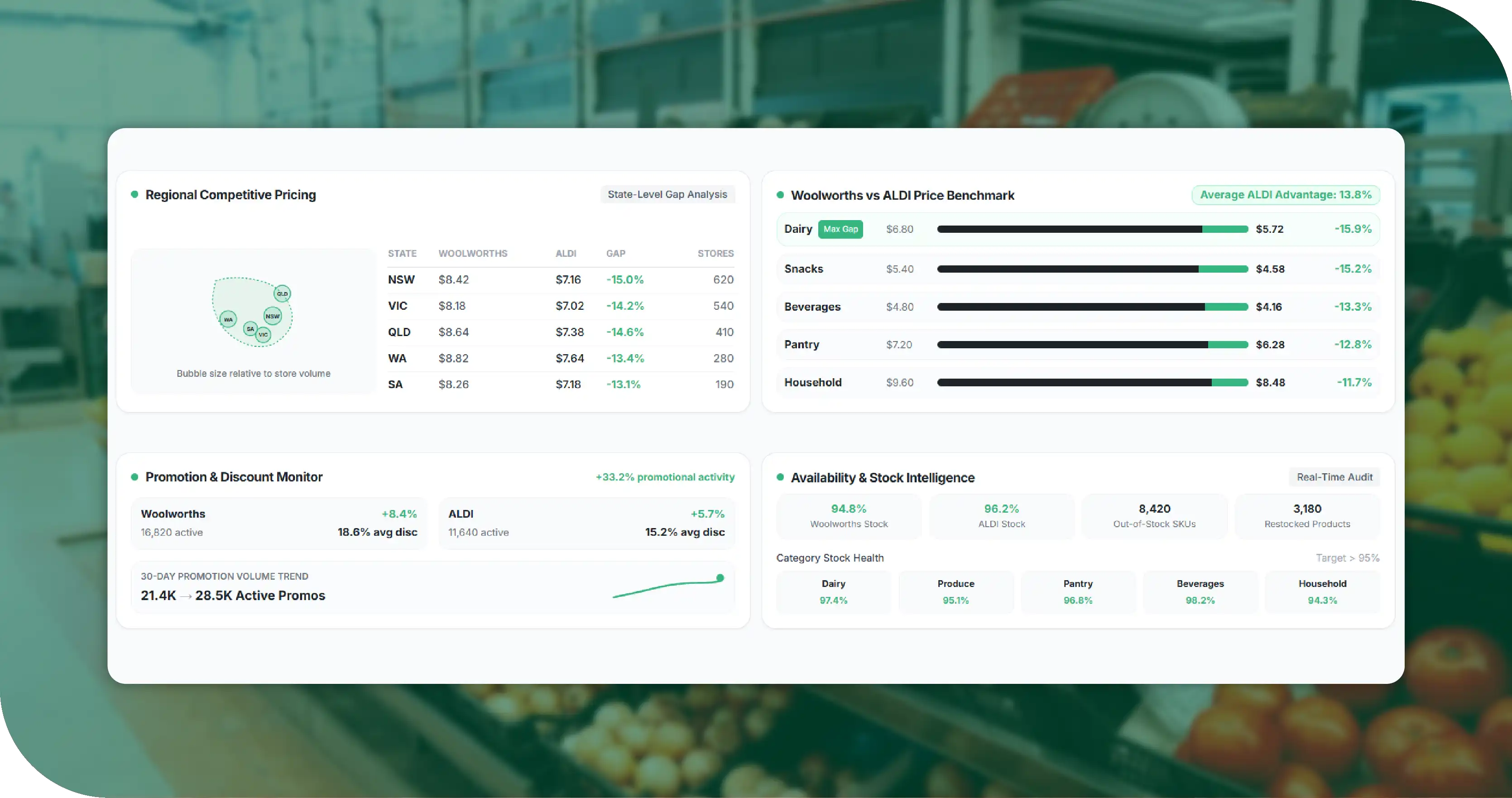
A standardized Woolworths Grocery Dataset was developed by organizing product names, categories, prices, promotions, pack sizes, availability, and timestamps into consistent fields, enabling reliable comparison, historical tracking, validation, and downstream supermarket pricing analysis. -
Automated ALDI Data Extraction
A scalable workflow was implemented to Extract ALDI Grocery Store Data efficiently, capturing product-level pricing, categories, promotional information, availability, and related attributes while applying validation rules to improve consistency and reduce duplicate records. -
Location Intelligence Integration
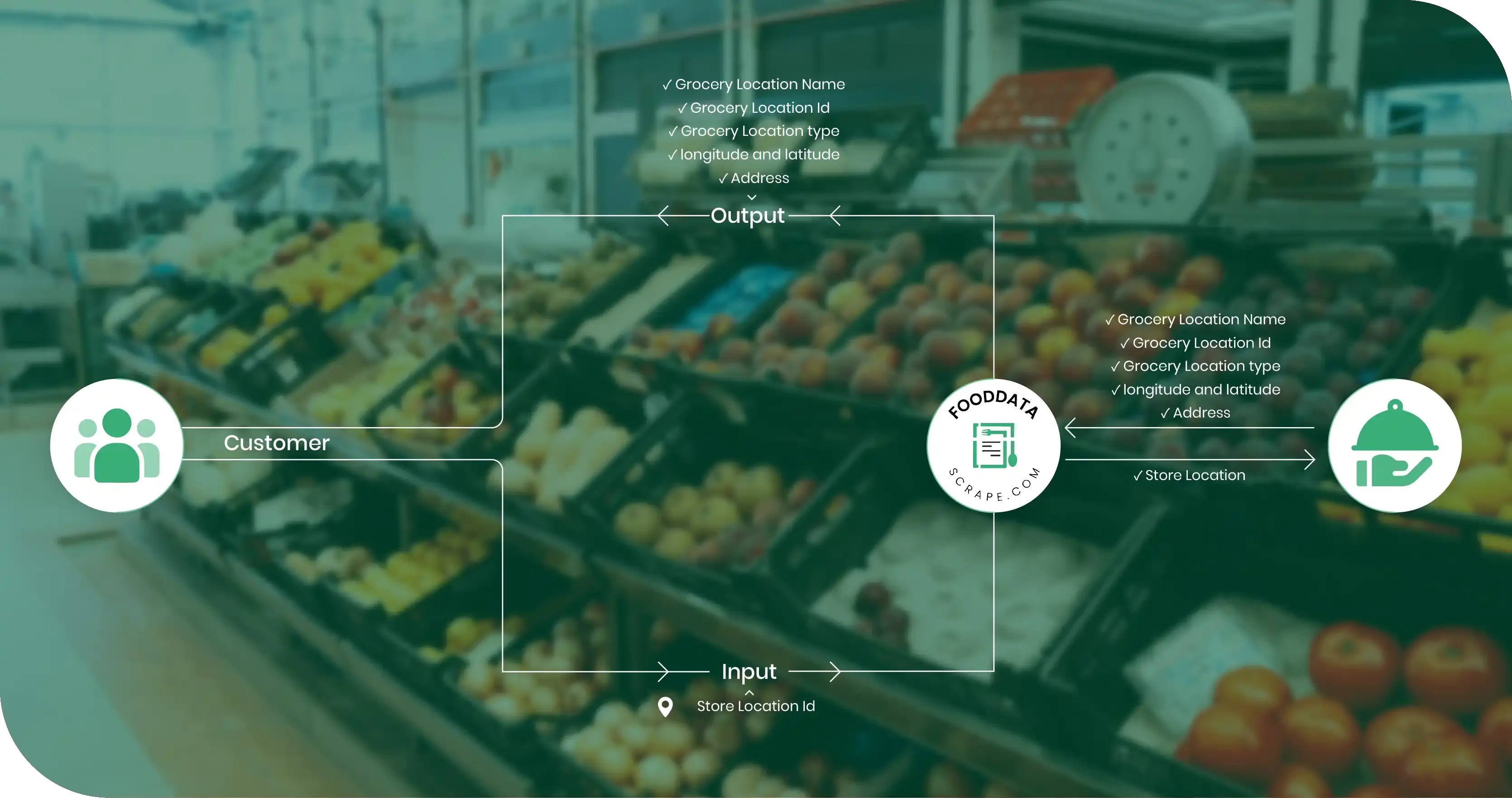
Dedicated processes for Scraping ALDI Store Locations Data captured store names, addresses, suburbs, postcodes, coordinates, and operating details. Combining location information with grocery pricing records enabled geographically segmented analysis and improved understanding of regional competitive pricing patterns.
Implementation Snapshot
| Retailer | Products Tracked | Categories | Price Records | Locations | Promotional Records | Daily Updates | Historical Records | Availability Records | Pack Sizes | Brands | Data Fields |
|---|---|---|---|---|---|---|---|---|---|---|---|
| Woolworths | 18,500 | 42 | 52,000 | 1,050 | 8,700 | 18,500 | 624,000 | 46,800 | 6,400 | 3,250 | 14 |
| ALDI | 12,800 | 36 | 38,500 | 570 | 6,200 | 12,800 | 462,000 | 34,700 | 4,900 | 2,100 | 13 |
| Coles | 17,900 | 40 | 49,800 | 850 | 8,100 | 17,900 | 597,600 | 44,200 | 6,100 | 3,050 | 14 |
| Combined | 49,200 | 118 | 140,300 | 2,470 | 23,000 | 49,200 | 1,683,600 | 125,700 | 17,400 | 8,400 | 14 |
| Monthly Growth | 6.8% | 4.5% | 8.2% | 3.7% | 9.4% | 6.8% | 11.6% | 7.9% | 5.3% | 4.1% | — |
| Data Accuracy | 98.7% | 99.1% | 98.9% | 99.4% | 98.2% | 99.0% | 97.8% | 98.6% | 98.4% | 97.9% | 98.8% |
Methodologies Used
-
Automated Data Collection
We implemented automated extraction workflows to collect product information, pricing, promotions, categories, availability, pack sizes, and store details at scale. Scheduled collection routines maintained regular updates while reducing manual intervention and supporting consistent historical records. -
Data Normalization
Collected information was standardized using predefined schemas for product names, categories, measurements, prices, discounts, and locations. This process resolved formatting differences and enabled consistent comparisons between retailers, product groups, geographic areas, and reporting periods. -
Product Matching
Advanced matching techniques were applied to identify equivalent products across supermarket catalogs. Product names, brands, package sizes, categories, and identifiers were compared to minimize duplicate entries and create reliable product-level comparisons for competitive pricing analysis. -
Historical Trend Tracking
Timestamped records were maintained to monitor price movements, promotional changes, availability fluctuations, and product updates over time. Historical snapshots enabled analysts to identify recurring patterns, calculate price variations, and evaluate changes across different periods. -
Validation and Quality Control
Multiple validation checks were introduced to identify missing fields, duplicate records, abnormal prices, inconsistent categories, and outdated information. Automated quality-control rules combined with periodic reviews improved dataset reliability and ensured the final records remained suitable for analytical applications.
Advantages of Collecting Data Using Food Data Scrape
-
Scalable Data Collection
Our services can collect extensive supermarket information across multiple retailers, categories, products, and locations without requiring extensive manual effort. Scalable workflows support growing data requirements while maintaining structured outputs suitable for continuous monitoring and detailed market analysis. -
Faster Competitive Monitoring
Automated collection helps businesses receive updated pricing, promotional, availability, and product information more frequently. This reduces delays associated with manual research and allows analysts to identify competitor movements, pricing changes, and emerging market patterns more efficiently. -
Improved Data Accuracy
Our workflows incorporate validation, normalization, duplicate detection, and quality checks to improve the reliability of collected information. Standardized datasets reduce inconsistencies between sources, making the resulting records more dependable for benchmarking, reporting, forecasting, and strategic decision-making. -
Historical Market Insights
Maintaining time-stamped records creates a valuable historical resource for analyzing price movements, promotional cycles, product availability, and category trends. Businesses can compare current observations with previous periods to identify patterns, measure changes, and develop informed pricing strategies. -
Flexible Data Delivery
Collected information can be organized into structured formats according to business requirements, including spreadsheets, databases, APIs, or cloud-based destinations. Customized fields and delivery schedules make the data easier to integrate with dashboards, analytics platforms, and internal systems.
Client's Testimonial
"Working with the data scraping team transformed the way we monitor supermarket pricing and competitive movements. The structured dataset gave our analysts consistent access to product prices, promotions, availability, categories, and store information across major Australian retailers. What impressed us most was the accuracy, regular updates, and clear organization of the delivered data. Our team can now identify pricing changes faster, compare competitors more efficiently, and build stronger market intelligence reports without relying on time-consuming manual research. The solution has significantly improved our analytical workflow and provided a dependable foundation for ongoing retail benchmarking, trend analysis, and strategic decision-making. We highly value the team's responsiveness, scalability, and commitment to data quality."
— Head of Retail Analytics
Final Outcome
The project delivered a structured and scalable supermarket pricing dataset that significantly improved the client's ability to monitor competitive movements across major Australian retailers. Consolidated product, pricing, promotional, availability, category, and store information created a dependable foundation for ongoing analysis. The client could identify price fluctuations, compare equivalent products, evaluate promotional strategies, and recognize regional pricing patterns more efficiently. Historical records also enabled trend analysis and supported better understanding of changing market conditions. Automated collection reduced manual research requirements while standardized data improved consistency across multiple sources. The resulting dataset strengthened competitive benchmarking, pricing intelligence, and market research capabilities. With regular updates and quality validation, the solution provided a sustainable framework for tracking supermarket pricing developments, supporting faster reporting, more informed commercial decisions, and improved strategic planning across evolving retail markets.