The Client
The client was a growing restaurant franchise operating multiple outlets across major Indian cities and using Swiggy and Zomato as important food-delivery channels. As the franchise expanded, management found it increasingly difficult to maintain consistent visibility into marketplace performance across individual locations. The client required Restaurant Order Intelligence Data to compare outlet performance, promotional activity, menu positioning, and customer-facing information. We implemented Swiggy Zomato Order Data Extraction to collect structured marketplace information at regular intervals. The resulting dataset also supported Restaurant Order Analytics Data, allowing business teams to evaluate trends rather than depend on isolated screenshots or manually prepared spreadsheets. The broader objective was to establish Restaurant Order Data Intelligence capable of supporting franchise-level decisions. The client wanted reliable information that could help operations, marketing, pricing, and management teams identify underperforming outlets, compare competitors, track changes, and prioritize corrective actions using a centralized analytical workflow.
Key Challenges
-
Fragmented Marketplace Information
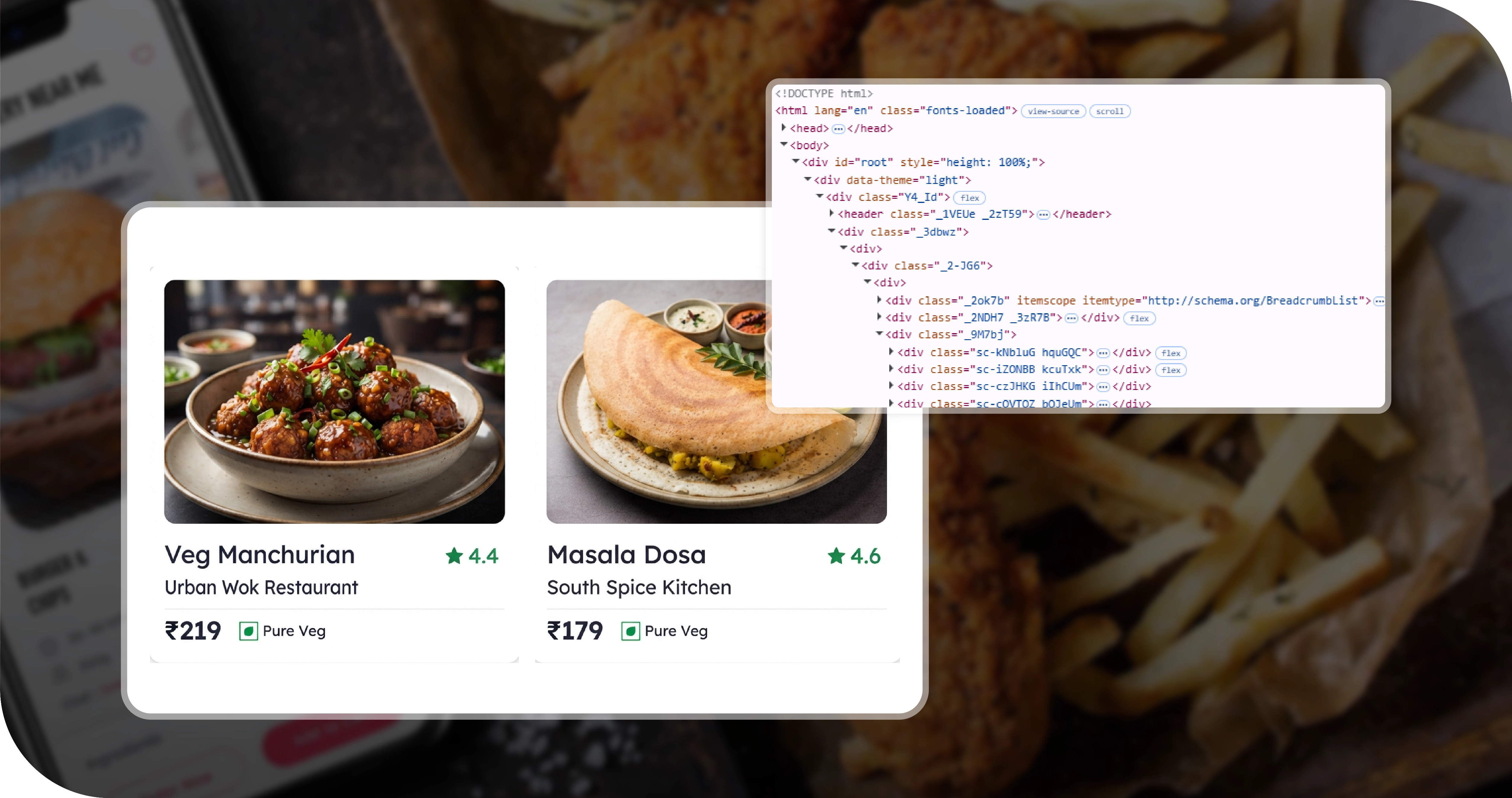
The franchise had information spread across different delivery platforms and outlets. Data structures, menu presentations, promotional offers, delivery fees, ratings, and availability frequently varied, making direct comparisons difficult and creating substantial manual reporting effort for internal teams. -
Limited Cross-Outlet Visibility
Management lacked a standardized method to compare locations and identify meaningful differences in customer-facing performance. Restaurant Order Data Intelligence was required to organize outlet-level information into comparable fields while accounting for differences in menus, locations, pricing, and promotions. -
Large and Continuously Changing Dataset
Food-delivery listings change frequently as prices, offers, availability, ratings, and menu items are updated. The client needed scalable collection capable of maintaining a current Food Delivery Dataset from Zomato alongside a structured Swiggy Dataset for recurring analysis.
Key Solutions
-
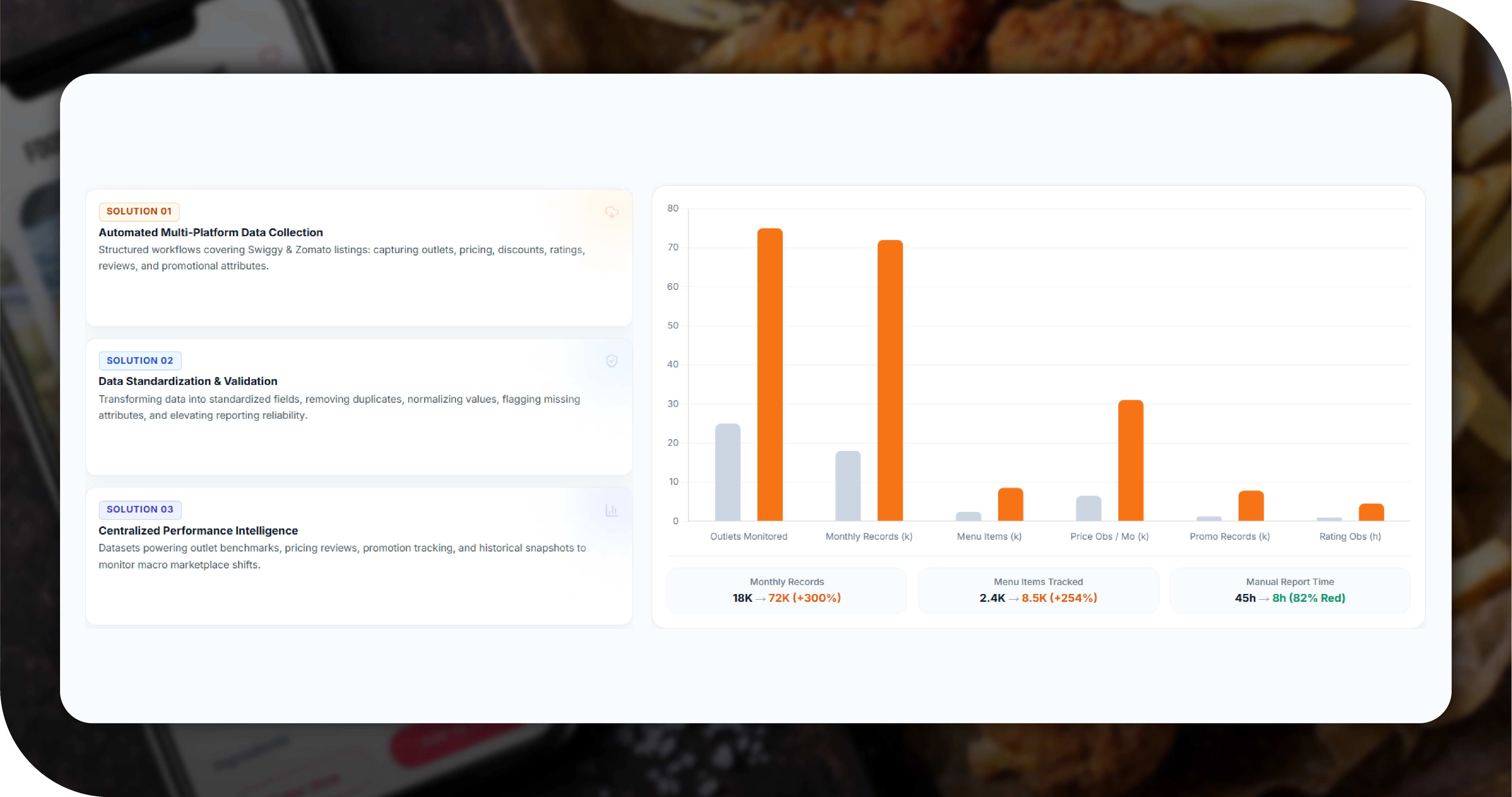
Automated Multi-Platform Data Collection
We developed a structured collection workflow covering relevant Swiggy and Zomato listings. Data fields included restaurant names, outlet locations, menu items, prices, discounts, ratings, review counts, availability, delivery information, and promotional attributes for consistent downstream analysis. -
Data Standardization and Validation
Collected information was transformed into standardized fields so management could compare equivalent products and outlets. Duplicate records were removed, inconsistent values were normalized, missing fields were flagged, and validation checks improved the reliability of recurring reporting. -
Centralized Performance Intelligence
We organized the processed data into analytical datasets that could support outlet comparisons, pricing reviews, promotion monitoring, menu analysis, and management reporting. Historical snapshots also enabled the franchise to identify changes instead of evaluating marketplace information only at one point.
Key Solution Metrics
| Metric | Before Solution | After Solution | Improvement |
|---|---|---|---|
| Outlets Monitored | 25 | 75 | 200% |
| Platforms Covered | 1-2 manually | 2 systematically | Standardized |
| Monthly Records Processed | 18,000 | 72,000 | 300% |
| Menu Items Tracked | 2,400 | 8,500 | 254% |
| Price Observations/Month | 6,500 | 31,000 | 377% |
| Promotional Records/Month | 1,200 | 7,800 | 550% |
| Rating Observations | 900 | 4,500 | 400% |
| Manual Reporting Time | 45 hrs/month | 8 hrs/month | 82% reduction |
| Data Refresh Frequency | Ad hoc | Scheduled | Consistent |
| Outlet Comparison Coverage | 40% | 100% | 60 percentage-point gain |
| Historical Data Availability | Limited | 12 months | Expanded |
| Data Validation Coverage | 65% | 96% | 31 percentage-point gain |
The figures above are illustrative and should be replaced with verified client metrics before publication.
Methodologies Used
-
Requirement Mapping
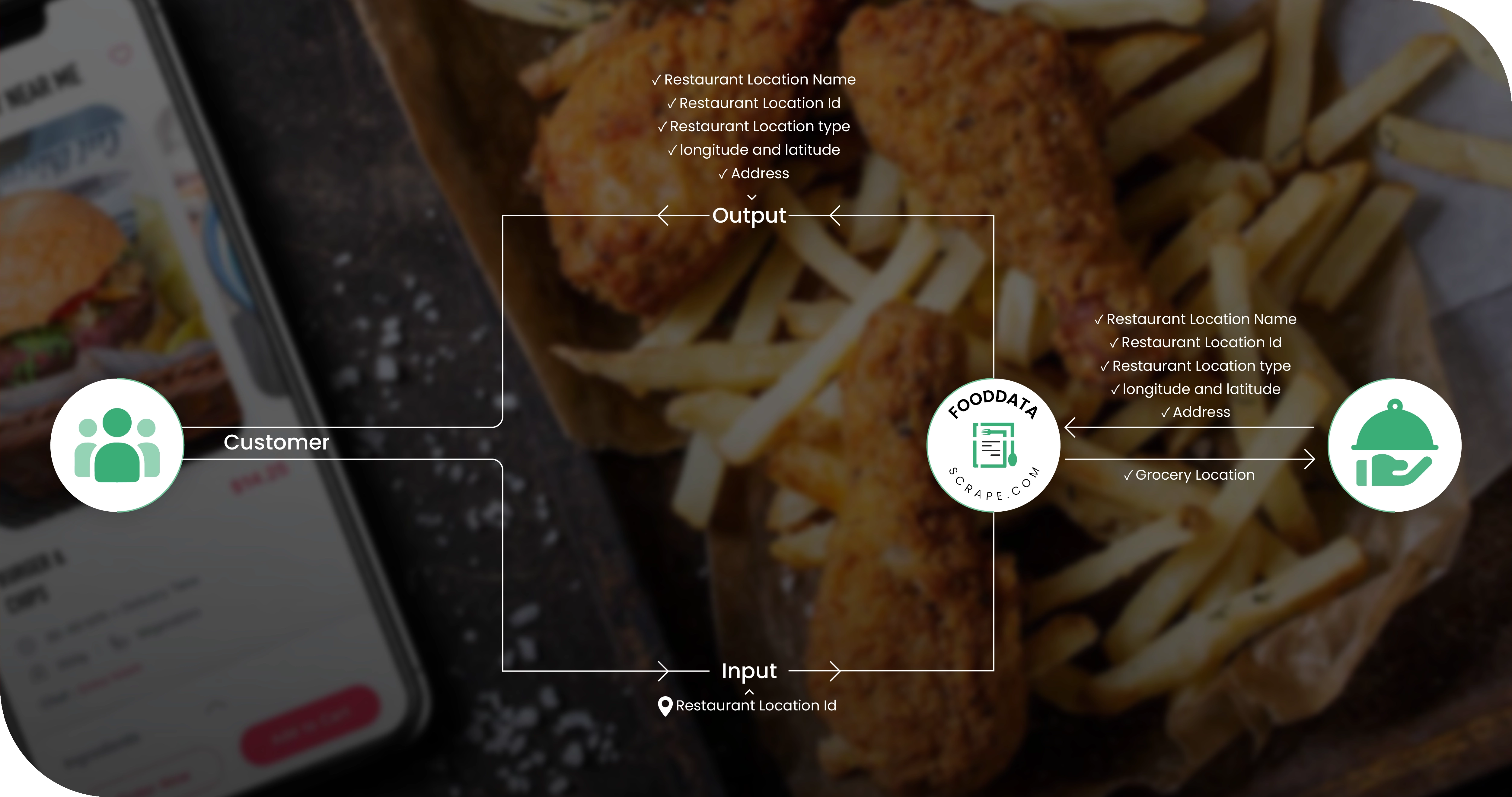
We first mapped the client's business requirements to specific data fields and reporting objectives. This included identifying outlet-level attributes, menu information, prices, promotional details, ratings, availability, and competitive indicators required for operational and strategic analysis. -
Structured Data Extraction
The extraction workflow was designed to capture relevant marketplace information in a consistent structure. Separate data elements were categorized into restaurant, outlet, menu, pricing, promotion, rating, and availability fields to simplify downstream processing and comparison. -
Data Cleaning and Normalization
Raw records were cleaned to eliminate duplication and formatting inconsistencies. Restaurant names, menu categories, product descriptions, prices, discount formats, ratings, and location information were standardized so that records from different outlets and platforms could be analyzed consistently. -
Historical Snapshot Tracking
Periodic snapshots were maintained to create a historical view of marketplace changes. Comparing successive records helped identify price movements, newly introduced products, discontinued items, promotional changes, availability fluctuations, and shifts in customer-facing restaurant information. -
Analytical Dataset Development
The processed information was organized into datasets suitable for business intelligence and reporting. This enabled teams to filter information by outlet, city, platform, category, product, price range, promotion, rating, and other relevant dimensions for deeper performance analysis.
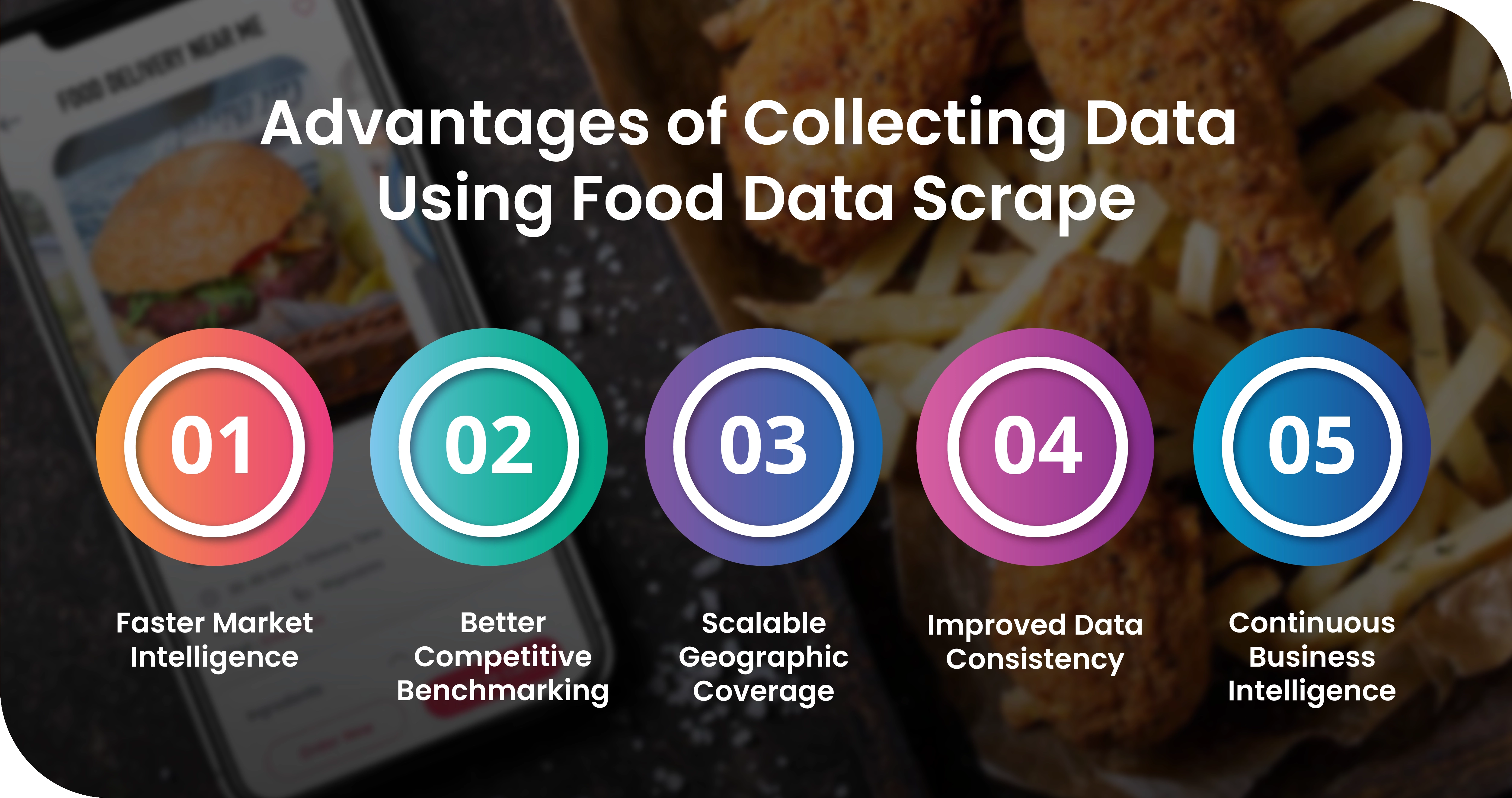
Advantages of Collecting Data Using Food Data Scrape
-
Faster Competitive Monitoring
Our data scraping services reduce dependence on manual marketplace checks. Franchise teams can receive structured information at scheduled intervals, making it easier to identify competitor price movements, promotions, menu changes, and positioning differences across multiple locations. -
Better Pricing Decisions
Consistent marketplace data provides greater visibility into prevailing prices and discounts. Restaurant teams can compare their products against relevant competitors, identify pricing gaps, and evaluate whether promotional strategies are competitive without depending on occasional manual observations. -
Improved Outlet Benchmarking
Standardized data makes it easier to compare outlets operating in different neighborhoods or cities. Management can examine menu depth, pricing, ratings, promotions, and availability to identify stronger-performing locations and understand where operational improvements may be necessary. -
Reduced Reporting Workload
Automated collection significantly reduces repetitive research and spreadsheet preparation. Teams can spend less time gathering marketplace information and more time interpreting trends, developing promotional strategies, reviewing performance, and making operational decisions based on structured datasets. -
Scalable Restaurant Intelligence
A scalable scraping framework can expand as the franchise adds outlets, products, cities, or competitive brands. Instead of redesigning the reporting process each time the business grows, the same structured approach can support increasingly larger datasets and broader intelligence requirements.
Client's Testimonial
"Before this project, our teams spent considerable time checking delivery platforms individually and compiling information into spreadsheets. The biggest improvement has been having a standardized view across outlets and platforms. We can now identify pricing differences, promotional changes, menu availability, and outlet-level gaps much faster. The historical data has also helped us understand how marketplace conditions change over time rather than relying on isolated observations. The reporting process is significantly more efficient, and our operations and marketing teams have a clearer basis for discussing performance. The solution has made marketplace monitoring more structured and useful for decision-making. We particularly value the ability to scale the same approach as we add more locations and products."
—Head of Digital Operations, Multi-Location Restaurant Franchise
Final Outcome
The project transformed fragmented food-delivery marketplace information into a structured intelligence environment for the franchise. Management gained centralized visibility into outlet-level pricing, menus, promotions, ratings, availability, and competitive positioning. The resulting Food Delivery Dashboard provided a practical foundation for recurring performance reviews and helped teams identify marketplace changes faster. With AI Restaurant Intelligence becoming increasingly important for modern restaurant operations, the standardized dataset also created a stronger foundation for automated trend detection, forecasting, anomaly identification, and decision support. Manual reporting requirements were substantially reduced, while historical snapshots made it possible to analyze changes over time. The franchise could scale monitoring across additional locations without proportionally increasing manual research. Ultimately, our Food Data Scraping Services helped establish a repeatable data pipeline that converted marketplace information into actionable business intelligence for pricing, operations, marketing, and franchise management.