
This report examines structured food delivery intelligence derived from the Keeta platform in Abu Dhabi, focusing on restaurant performance, pricing behavior, menu composition, and competitive dynamics. The study explores how digital datasets can be transformed into actionable insights for restaurants, investors, and food-tech stakeholders operating in a highly competitive delivery ecosystem. By analyzing structured restaurant and menu data, the report identifies key market patterns such as pricing consistency, delivery efficiency, promotional impact, and customer preference trends. It also highlights how restaurants adjust strategies based on competition intensity and demand fluctuations. The findings demonstrate that data-driven decision-making significantly improves pricing accuracy, menu optimization, and customer retention. Additionally, the research emphasizes the growing importance of automated data systems for continuous market monitoring and intelligence generation. Overall, the report positions structured delivery data as a core asset for understanding market behavior and improving operational and strategic outcomes in Abu Dhabi’s evolving food delivery landscape.
Price Stability
Consistent pricing improves trust and significantly increases customer satisfaction levels overall.
Speed Advantage
Faster delivery times strongly enhance retention in fast food segments.
Discount Focus
Low-cost restaurants rely heavily on frequent discounts to attract customers.
Premium Value
Seafood and Japanese cuisine succeed through higher pricing and quality perception.
Menu Variety
Diverse menus significantly improve repeat orders and long-term customer loyalty rates.

The rapid digitization of food services in the UAE has made platform-based restaurant data a critical asset for market intelligence and strategic planning. This report examines how structured extraction of restaurant and menu information from Keeta can support pricing analysis, competitor benchmarking, and demand forecasting in Abu Dhabi’s food delivery ecosystem.
Abu Dhabi Food Delivery Data Scraping from Keeta App is increasingly used to convert unstructured restaurant listings, menu catalogs, and promotional data into structured datasets for analytical use in business intelligence systems.
The expansion of digital marketplaces has intensified the need for granular insights, especially in highly competitive urban food delivery environments.
Keeta UAE Pricing & Restaurant Data Scraping enables organizations to monitor dynamic price shifts, promotional strategies, and restaurant performance indicators across multiple cuisine categories in real time.
This capability is particularly valuable in markets like Abu Dhabi, where restaurants continuously adjust pricing and offerings based on demand fluctuations and competitor behavior.
Abu Dhabi Restaurant Competitor Analysis provides a structured framework for comparing restaurant performance metrics such as ratings, delivery times, pricing efficiency, and menu depth.
The objective of this study is to evaluate how Keeta-based restaurant data can be structured and analyzed to generate actionable business intelligence for food delivery stakeholders. The scope includes restaurant metadata, menu pricing, delivery performance, and promotional strategies across Abu Dhabi’s food delivery ecosystem.
The study focuses on identifying patterns in pricing variation, customer preference trends, and restaurant competitiveness. It also examines how digital datasets can support decision-making for restaurants, investors, and food-tech platforms operating in the UAE market.
The research is based on systematic extraction of restaurant and menu-level data from the Keeta platform, followed by normalization into structured datasets. The process involves categorizing restaurants by cuisine, pricing tiers, and delivery performance indicators.
Keeta App Restaurant Data Extraction is used to organize raw listing data into structured fields such as restaurant name, rating, delivery fee, and menu composition. This enables consistent benchmarking across multiple restaurant types.
The dataset is then enriched with pricing, discount, and promotional attributes to allow comparative analysis across competing food categories in Abu Dhabi’s delivery market.
The Abu Dhabi food delivery sector has expanded rapidly due to increased smartphone penetration and consumer reliance on on-demand services. The market is characterized by high competition among restaurants, cloud kitchens, and international food chains.
Digital platforms have become primary discovery channels for customers, making restaurant visibility and pricing strategy critical for success. As competition intensifies, data-driven decision-making is becoming a core requirement for market survival.
Abu Dhabi Food Delivery Data Scraping plays a central role in understanding how restaurants position themselves within this evolving ecosystem by capturing real-time pricing and menu changes.
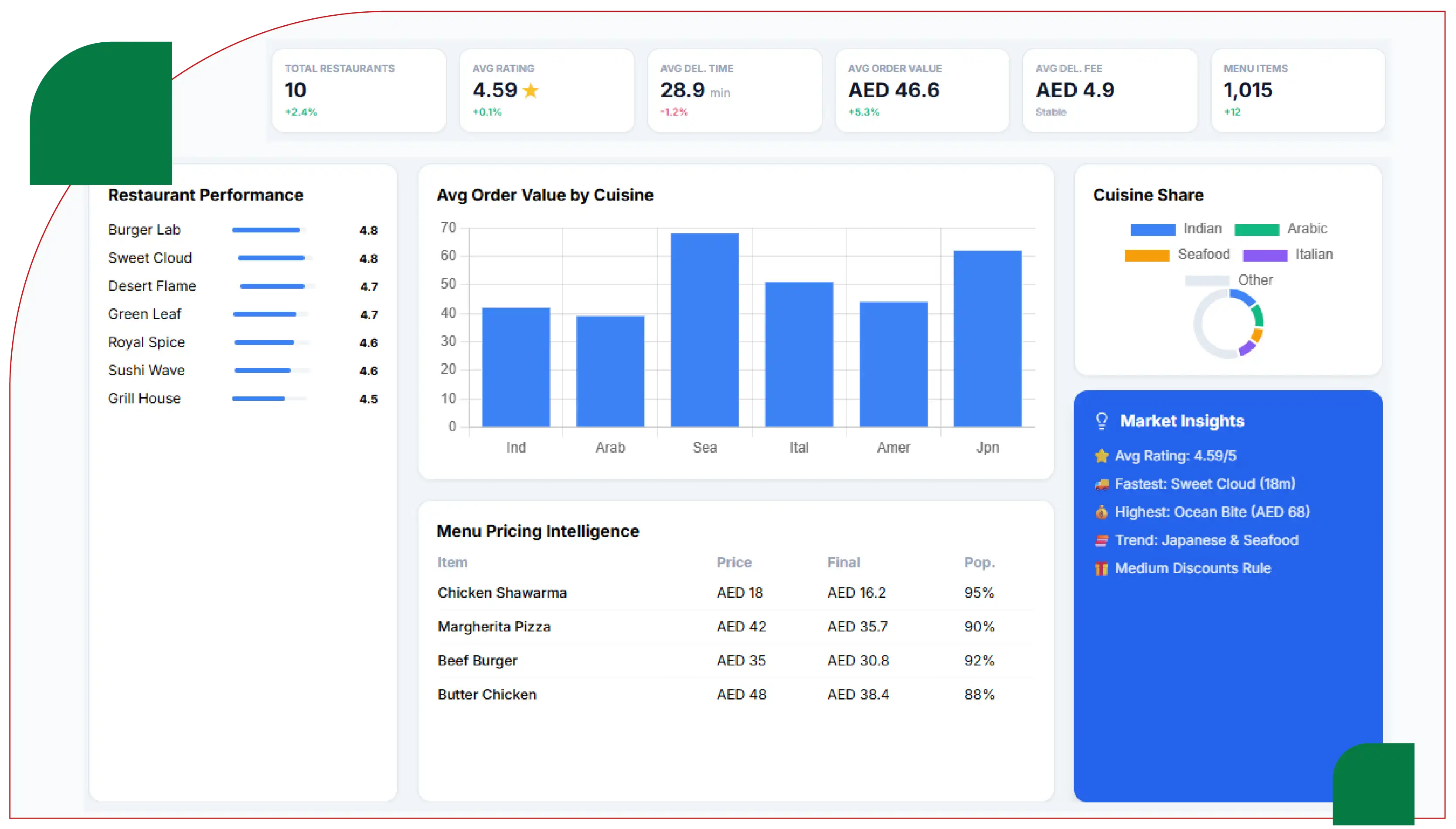
The structured analysis of restaurant datasets reveals significant variation in pricing strategies, delivery efficiency, and customer engagement across Abu Dhabi’s food delivery market.
Restaurants with higher ratings tend to maintain balanced pricing and consistent delivery performance, while budget-focused restaurants rely heavily on discounts and promotional campaigns to attract customers.
Menu diversity also plays a major role in competitiveness, with multi-cuisine restaurants showing stronger customer retention rates due to broader product offerings.
UAE Restaurant Pricing Intelligence Using Keeta Data helps identify how restaurants adjust pricing dynamically in response to demand fluctuations and competitor promotions.
| Restaurant | Cuisine | Avg Rating | Delivery Fee (AED) | Avg Delivery Time | Menu Items | Avg Order Value (AED) | Discount Frequency |
|---|---|---|---|---|---|---|---|
| Royal Spice | Indian | 4.6 | 4 | 29 min | 140 | 42 | High |
| Desert Flame | Arabic | 4.7 | 5 | 27 min | 120 | 39 | Medium |
| Ocean Bite | Seafood | 4.5 | 7 | 40 min | 88 | 68 | Low |
| Pasta Point | Italian | 4.4 | 5 | 31 min | 102 | 51 | Medium |
| Burger Lab | American | 4.8 | 5 | 22 min | 110 | 44 | High |
| Wok Express | Chinese | 4.3 | 4 | 33 min | 115 | 40 | Medium |
| Sushi Wave | Japanese | 4.6 | 6 | 35 min | 90 | 62 | Low |
| Green Leaf | Healthy | 4.7 | 4 | 24 min | 75 | 37 | Medium |
| Sweet Cloud | Desserts | 4.8 | 3 | 18 min | 80 | 28 | High |
| Grill House | BBQ | 4.5 | 6 | 30 min | 95 | 55 | Medium |
Menu data provides deeper insights into customer preferences and pricing elasticity across different food categories. High-demand items often show stable pricing patterns, while niche categories exhibit higher variability due to seasonal and supply factors.
Restaurants with optimized combo meals and bundled offerings tend to achieve higher order frequency and improved customer retention rates.
| Menu Item | Category | Base Price (AED) | Discount % | Final Price (AED) | Popularity Score | Price Volatility |
|---|---|---|---|---|---|---|
| Chicken Shawarma | Wrap | 18 | 10 | 16.2 | 95 | Low |
| Margherita Pizza | Pizza | 42 | 15 | 35.7 | 90 | Medium |
| Beef Burger | Fast Food | 35 | 12 | 30.8 | 92 | Low |
| Butter Chicken | Indian | 48 | 20 | 38.4 | 88 | Medium |
| Sushi Combo | Japanese | 72 | 5 | 68.4 | 80 | High |
| Seafood Platter | Seafood | 95 | 10 | 85.5 | 76 | High |
| Caesar Salad | Healthy | 32 | 5 | 30.4 | 70 | Low |
| Chocolate Cake | Dessert | 24 | 18 | 19.7 | 85 | Medium |
| Pad Thai | Asian | 45 | 10 | 40.5 | 82 | Medium |
| Family Combo | Mixed | 96 | 20 | 76.8 | 89 | High |
Modern food intelligence systems rely on automated pipelines to continuously collect and update restaurant datasets. These pipelines ensure high accuracy and real-time visibility into restaurant performance metrics.
Keeta Food Delivery Scraping API enables automated extraction of restaurant listings, menu structures, pricing changes, and promotional updates at scale, supporting enterprise-level analytics systems.
Food delivery datasets are widely used across multiple industries, including restaurant chains, investment firms, and analytics companies. These datasets support pricing optimization, competitor benchmarking, and demand forecasting.
Web Scraping Food Delivery Data allows organizations to continuously monitor market dynamics without relying on manual data collection processes.
Restaurants use extracted insights to optimize menus, refine pricing strategies, and improve customer targeting based on demand trends and competitor performance.
Pricing consistency is a strong indicator of customer satisfaction in Abu Dhabi’s food delivery ecosystem. Restaurants that maintain stable and predictable pricing across their menus tend to receive higher ratings, as customers perceive them as more transparent and trustworthy. This stability reduces perceived risk during ordering and improves long-term brand loyalty, especially in competitive delivery platforms where price fluctuations are closely monitored.
Delivery speed continues to act as a critical performance differentiator, particularly in fast-food and dessert segments where customer expectations are time-sensitive. Restaurants that consistently optimize preparation and logistics workflows achieve significantly higher repeat order rates, as faster fulfillment directly enhances customer experience and satisfaction.
Discount-driven business models are predominantly observed in lower-priced restaurant segments, where competitive pricing is essential to attract volume-based demand. While these models help drive short-term order spikes, they often require continuous promotional activity to maintain visibility in highly saturated categories.
Premium pricing strategies are most effective in seafood and Japanese cuisine segments, where perceived quality, exclusivity, and ingredient sourcing justify higher price points. These categories show stronger acceptance of elevated pricing when supported by high ratings and consistent service quality.
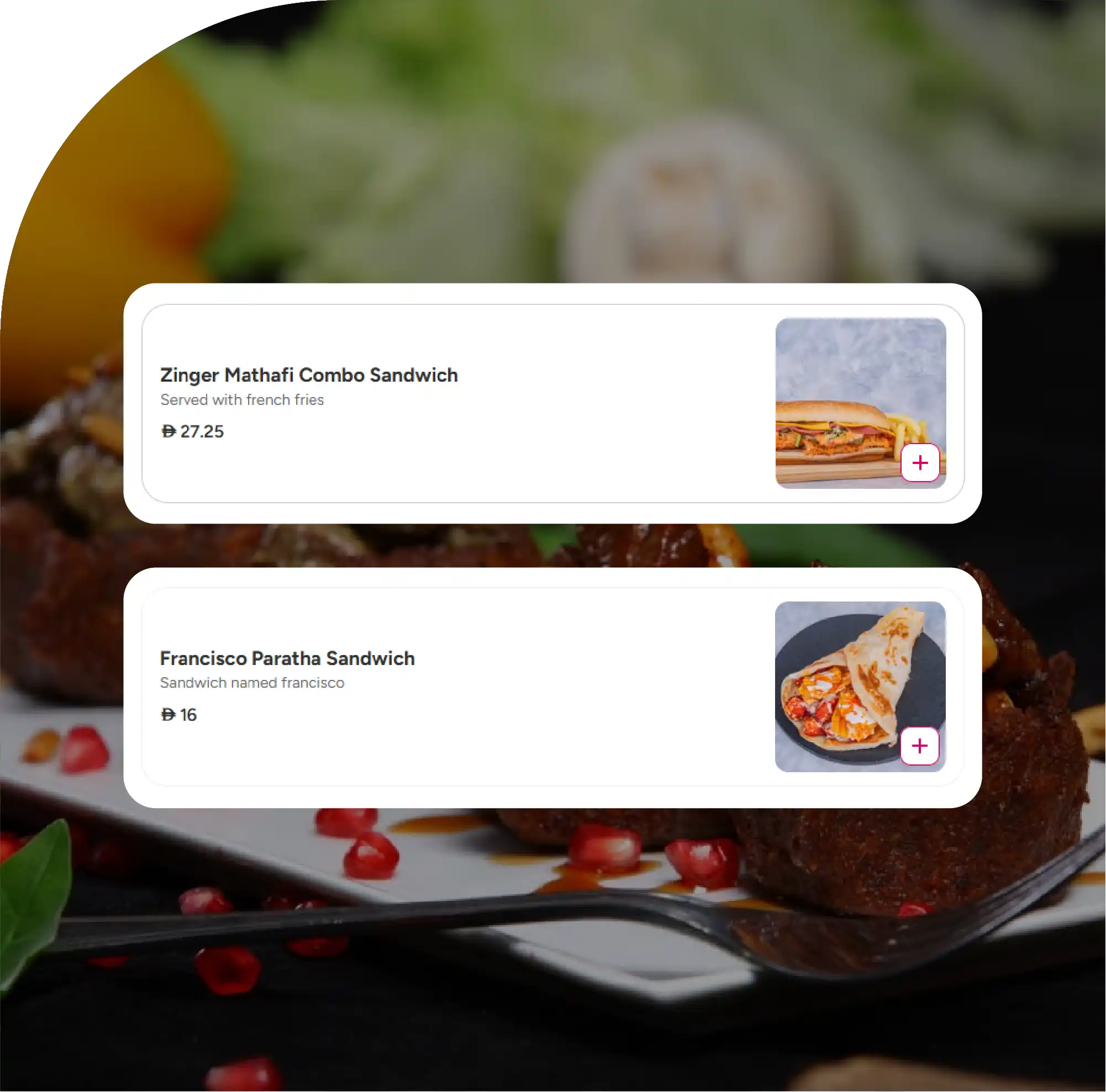
Menu diversity plays a significant role in improving customer retention and encouraging repeat purchases. Restaurants offering broader menu selections across multiple cuisine categories tend to capture a wider customer base, increasing order frequency and long-term engagement. Structured efforts to Extract Restaurant Menu Data enable deeper insights into which menu combinations perform best across different customer segments.
Promotional intensity has a dual impact on restaurant performance. While aggressive discounts and limited-time offers generate immediate order surges, they can also introduce pricing volatility and weaken long-term price stability. Platforms leveraging Food Delivery Scraping API solutions can continuously monitor these fluctuations to balance short-term growth with sustainable pricing strategies.
The analysis demonstrates that structured extraction of Keeta restaurant data provides a powerful foundation for understanding Abu Dhabi’s competitive food delivery ecosystem. The ability to convert platform-level data into structured intelligence enables businesses to track pricing trends, monitor competitors, and optimize menu strategies with high precision.
As the food delivery market continues to evolve, advanced analytics will become essential for maintaining competitiveness and operational efficiency. Organizations that invest in data-driven systems will be better positioned to respond to dynamic market conditions and consumer expectations.
The adoption of Restaurant Data Intelligence solutions ensures continuous visibility into market behavior and strengthens decision-making capabilities across the food-tech ecosystem.
In the future, integrated analytics platforms powered by Food delivery Intelligence will play a central role in shaping restaurant growth strategies. A centralized Food Price Dashboard will further enhance real-time monitoring of competitive pricing patterns. Ultimately, scalable Food Datasets will serve as the backbone for predictive modeling, strategic planning, and long-term growth in the UAE food delivery industry.
If you are seeking for a reliable data scraping services, Food Data Scrape is at your service. We hold prominence in Food Data Aggregator and Mobile Restaurant App Scraping with impeccable data analysis for strategic decision-making.