Introduction
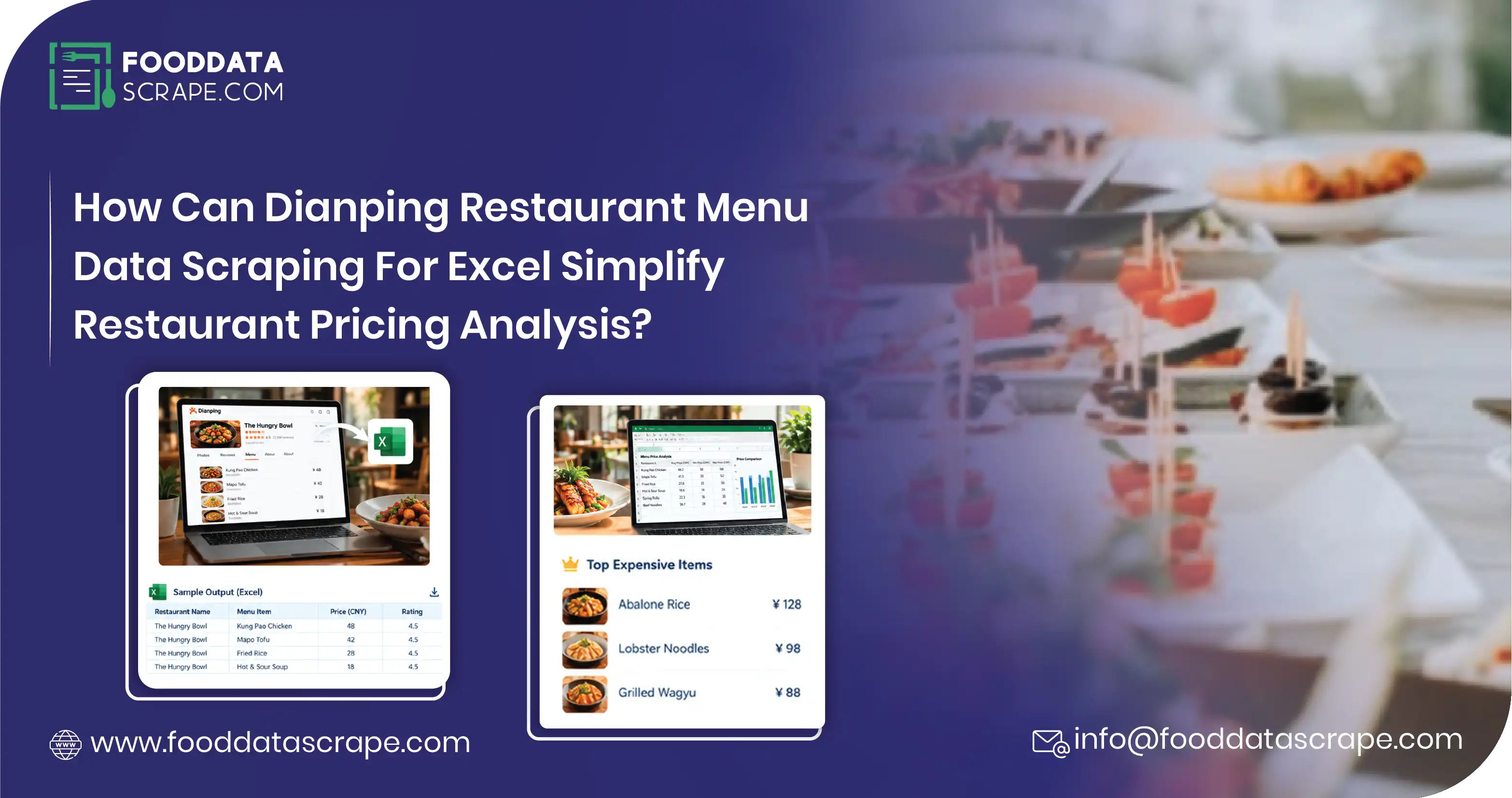
China's restaurant and food-delivery ecosystem generates enormous amounts of information across menus, prices, cuisines, dishes, ratings, promotions, restaurant locations, and availability. For businesses trying to understand this market, structured data can turn scattered online listings into measurable insights. Dianping Restaurant Menu Data Scraping For Excel provides a practical way to organize restaurant information into spreadsheets for analysis, comparison, and reporting.
Businesses can Scrape Dianping Restaurant Menu Data to collect structured information such as restaurant names, cuisine categories, dish names, menu prices, ratings, addresses, operating hours, promotions, and other publicly available attributes. Similarly, companies can Extract Dianping Restaurant Menu Pricing Data to monitor price differences across restaurants, locations, cuisines, and menu categories.
When collected responsibly from publicly accessible sources and handled according to applicable terms and laws, this information can support restaurant benchmarking, market research, competitive intelligence, food-delivery analysis, and pricing studies.
Why Dianping Restaurant Menu Data Matters?
Dianping contains extensive restaurant discovery and consumer-facing information. Menu-level data is particularly valuable because it provides a closer view of what restaurants actually offer rather than relying only on high-level restaurant profiles.
For example, a restaurant dataset can contain:
- Restaurant name and unique identifier
- Cuisine type
- Dish names and descriptions
- Individual dish prices
- Set-meal prices
- Discounted prices
- Restaurant ratings
- Review counts
- Address and geographic information
- Opening hours
- Delivery information
- Promotion details
- Menu categories
- Images or image references
- Restaurant popularity indicators
Once these attributes are transformed into structured records, businesses can compare thousands of restaurants systematically.
This is where Dianping Menu Data Organization In Excel becomes useful. Excel provides a familiar environment for sorting, filtering, grouping, calculating averages, identifying price differences, and creating management reports.
Building a Structured Dianping Menu Dataset
A successful scraping project starts with defining the fields required for analysis. Collecting excessive information without a clear purpose can create unnecessary complexity.
A restaurant menu spreadsheet might include columns such as:
| Restaurant | City | Cuisine | Dish | Category | Original Price | Current Price | Discount | Rating | Reviews |
|---|---|---|---|---|---|---|---|---|---|
| Din Tai Fung | Shanghai | Taiwanese | Beef Noodles | Noodles | ¥42 | ¥36 | 14% | 4.6 | 2,840 |
| Haidilao Hot Pot | Beijing | Hot Pot | Beef Set | Set Meal | ¥168 | ¥148 | 12% | 4.5 | 3,120 |
| Guangzhou Restaurant | Guangzhou | Cantonese | Shrimp Dumplings | Dim Sum | ¥38 | ¥32 | 16% | 4.7 | 1,965 |
| Taier Sauerkraut Fish | Shenzhen | Sichuan | Spicy Chicken | Main Course | ¥58 | ¥52 | 10% | 4.4 | 2,410 |
The values above are illustrative examples showing how a spreadsheet can be structured; they are not claimed Dianping measurements.
The dataset can then be exported into Excel, CSV, JSON, or another format depending on the organization's analytical workflow.
What Restaurant Menu Data Can Reveal?
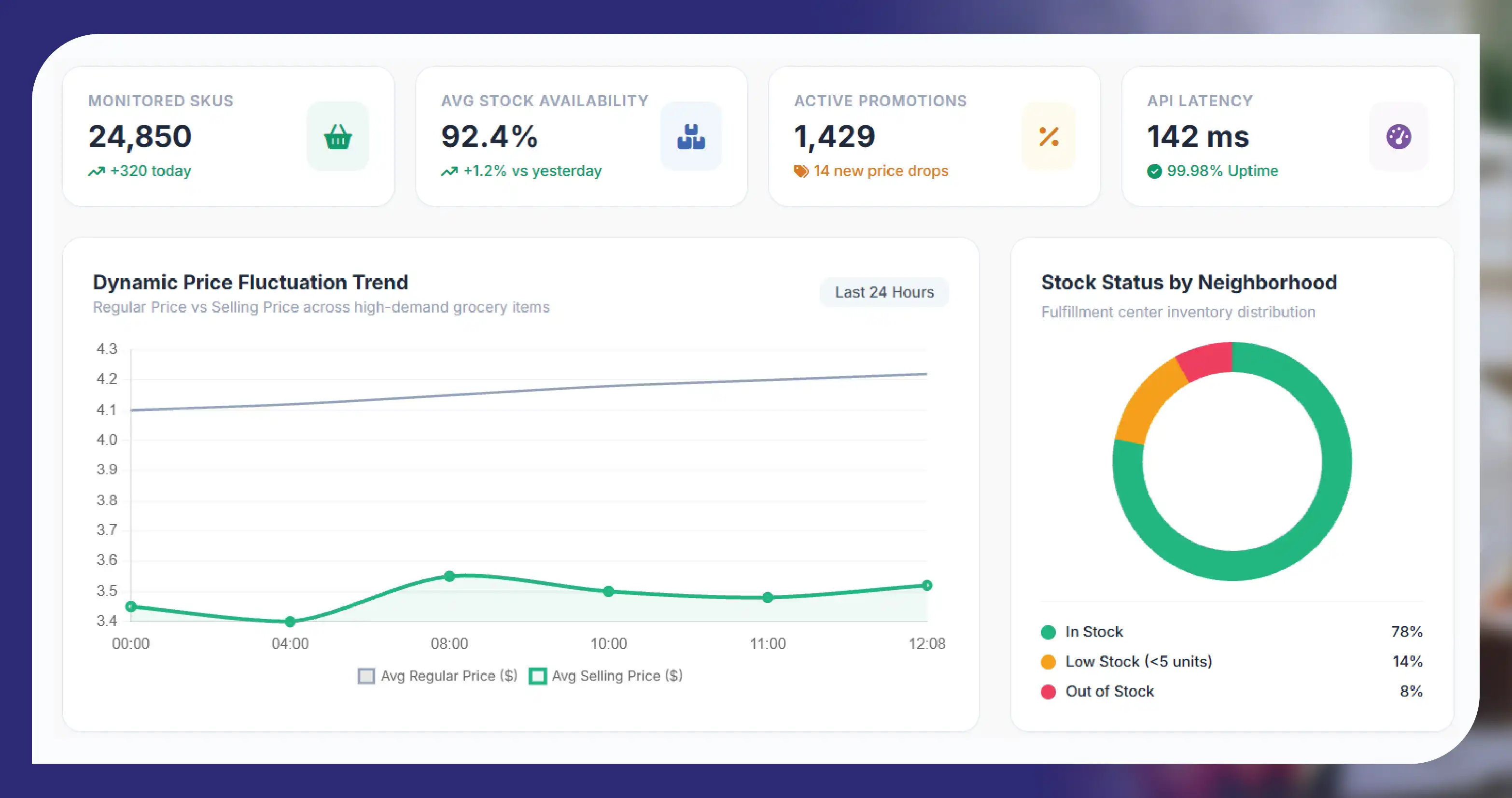
Menu information becomes significantly more valuable when multiple records are combined.
A business can calculate average prices by cuisine, compare dish prices between cities, identify popular categories, and examine how restaurants position themselves within particular segments.
For instance, analysts could investigate whether premium restaurants have substantially different menu pricing from mid-market restaurants. They could also examine whether particular cuisines have higher average entrée prices or whether certain cities demonstrate greater menu-price variation.
This creates opportunities for Restaurant Menu Data Analytics across several dimensions.
Cuisine-Level Analysis
Businesses can group restaurants by cuisine and calculate:
- Average dish price
- Median menu price
- Number of dishes
- Most common menu categories
- Discount frequency
- Average restaurant rating
- Price ranges
Such analysis helps researchers understand how different cuisine segments are positioned.
Geographic Analysis
Location-based analysis can compare restaurant menus across cities, districts, or neighborhoods.
A company operating in multiple markets could examine pricing patterns between Shanghai, Beijing, Shenzhen, Guangzhou, Chengdu, or other markets.
Geographic segmentation can also help identify areas where specific cuisines or price points are concentrated.
Using Excel for Menu Price Benchmarking
Excel is particularly useful for restaurant price benchmarking because the raw dataset can be converted into pivot tables, charts, formulas, and dashboards.
For example, analysts can calculate:
Average Price
Average dish price can be calculated for each cuisine, restaurant, or geographic segment.
Price Difference
A standardized dish or category can be compared across restaurants to identify price gaps.
Discount Rate
Original and promotional prices can be used to calculate discount percentages.
Menu Breadth
The number of dishes associated with each restaurant can provide an indication of menu variety.
Category Share
Analysts can calculate what percentage of a restaurant's menu belongs to beverages, appetizers, desserts, mains, set meals, or other categories.
These calculations can transform a basic spreadsheet into a practical competitive-monitoring tool.
Get accurate Dianping restaurant menu datasets in Excel and turn menu, pricing, and competitive data into actionable restaurant intelligence.
Creating Restaurant Menu Data Intelligence
Large-scale restaurant datasets can support Restaurant Menu Data Intelligence by connecting menu attributes with broader restaurant characteristics.
For example, analysts can examine relationships between:
- Menu price and restaurant rating
- Menu variety and review volume
- Discounting and popularity
- Cuisine and geographic location
- Restaurant positioning and average dish price
- Delivery availability and menu structure
The goal is not simply to collect information but to transform it into a repeatable analytical framework.
A retailer, food manufacturer, restaurant group, investor, or food-tech company could use Food Data Scraping Services to understand market structures and identify changes over time.
Dianping Food Delivery App Datasets for Market Research
Restaurant discovery and food-delivery platforms contain information that can contribute to broader market research. A structured Dianping Food Delivery App Datasets project can combine restaurant profiles with menu and pricing attributes to create a comprehensive dataset.
Potential fields can include restaurant information, cuisine, location, menu categories, dish names, prices, promotional offers, ratings, reviews, and delivery-related attributes where publicly available.
When captured periodically, datasets can also support historical comparisons.
For example:
| Metric | Month 1 | Month 2 | Month 3 | Change |
|---|---|---|---|---|
| Restaurants Tracked | 5,000 | 5,150 | 5,320 | +6.4% |
| Average Dish Price | ¥46 | ¥47 | ¥49 | +6.5% |
| Discounted Listings | 1,420 | 1,510 | 1,630 | +14.8% |
| Cuisine Categories | 35 | 36 | 37 | +5.7% |
| Average Menu Items | 42 | 43 | 45 | +7.1% |
Again, these figures are illustrative rather than actual Dianping market statistics.
Automating Collection Through APIs
For organizations requiring recurring data delivery, an Dianping Food Delivery Scraping API can provide a more automated architecture than manual spreadsheet collection.
An API-oriented workflow can be designed to retrieve structured records and deliver them into downstream systems.
A typical workflow may include:
- Define target restaurants, cities, or categories.
- Collect publicly accessible information.
- Parse menu and restaurant attributes.
- Normalize prices and categories.
- Remove duplicates.
- Validate records.
- Export structured data.
- Deliver the output to Excel, CSV, JSON, or databases.
- Repeat collection according to the required schedule.
Automation can reduce repetitive manual work and make recurring monitoring easier.
Dianping Food Delivery App Data Scraping for Competitive Research
Dianping Food Delivery App Data Scraping can support competitive research when businesses need consistent restaurant-level information.
Restaurant groups can monitor competitor menus and identify changes in pricing, product assortment, promotions, and category expansion.
- Food-tech companies can analyze restaurant supply across different locations.
- Market researchers can create datasets for studying cuisine trends and pricing structures.
- Investors and consulting teams can use structured information as one input into broader market assessments.
The quality of these insights depends heavily on consistent collection, normalization, validation, and historical storage.
Data Cleaning Is Essential
Raw restaurant information can contain inconsistent names, duplicate dishes, missing prices, different category labels, or variations in formatting.
A professional data pipeline should therefore include data cleaning.
For example:
- Standardize restaurant names
- Normalize currency and numerical fields
- Separate original and promotional prices
- Standardize cuisine categories
- Remove duplicate listings
- Validate missing fields
- Normalize location names
- Preserve collection timestamps
Timestamping is particularly important because restaurant menus and prices can change frequently.
A historical dataset allows analysts to distinguish temporary promotions from longer-term pricing changes.
How Food Data Scrape Can Help You?
1. Structured Data Collection
Food Data Scrape can help businesses organize publicly available restaurant information into structured datasets, making large volumes of menu, pricing, and restaurant attributes easier to analyze.
2. Excel-Ready Outputs
Teams can receive cleaned and organized restaurant information in Excel-compatible formats, simplifying filtering, sorting, pivot-table creation, reporting, and internal data analysis workflows.
3. Competitive Monitoring
Recurring restaurant data collection can help businesses monitor menu changes, pricing movements, promotions, cuisine categories, and competitor assortment across selected markets over defined periods.
4. Scalable Data Pipelines
For larger projects, automated collection workflows can support recurring datasets with standardized fields, validation processes, deduplication, timestamps, and delivery into preferred analytical environments.
5. Customized Restaurant Intelligence
Food Data Scrape can tailor restaurant datasets around specific cities, cuisines, menu categories, pricing fields, restaurant attributes, or competitive research requirements for different business objectives.
Conclusion
Restaurant data becomes more useful when it is structured, standardized, and connected to a clear analytical objective. Restaurant Menu Data Scraping can help transform publicly accessible restaurant information into organized datasets suitable for pricing research, menu benchmarking, geographic analysis, and competitive monitoring.
By combining structured restaurant information with AI Restaurant Intelligence, businesses can build more scalable analytical workflows around menu changes, restaurant positioning, pricing patterns, and market trends.
Well-organized Food Delivery Datasets can further support research teams, food-tech companies, restaurant groups, consultants, and analysts that need repeatable restaurant-market intelligence.
For organizations working with large volumes of restaurant information, a carefully designed collection and data-processing workflow can turn menu-level information into a practical foundation for ongoing market research and business analysis.
If you are seeking for a reliable data scraping services, Food Data Scrape is at your service. We hold prominence in Food Data Aggregator and Mobile Restaurant App Scraping with impeccable data analysis for strategic decision-making.
Get a Free Food Data Sample in 48 Hours.
Tell us your platforms, target markets and required fields — we'll map exactly what's possible with food data scraping, recommend the right approach, and send a working sample so you can verify quality before any commitment.