Introduction
Environmental responsibility has evolved from a niche concern into a mainstream purchasing driver. Consumers today expect food brands, restaurants, retailers, and manufacturers to deliver products that minimise environmental impact without compromising affordability, convenience, or quality. This shift is transforming how businesses develop products, source ingredients, design menus, and communicate sustainability.
Extract Eco-Friendly Food Data to gain actionable insights into changing consumer preferences, sustainable ingredient adoption, pricing movements, menu innovations, and packaging trends that influence buying decisions across the food industry.
Rather than relying on assumptions, organisations increasingly use Eco-Friendly Food Data Scraping to monitor restaurants, grocery retailers, food delivery platforms, online marketplaces, review websites, and digital food communities for emerging sustainability signals.
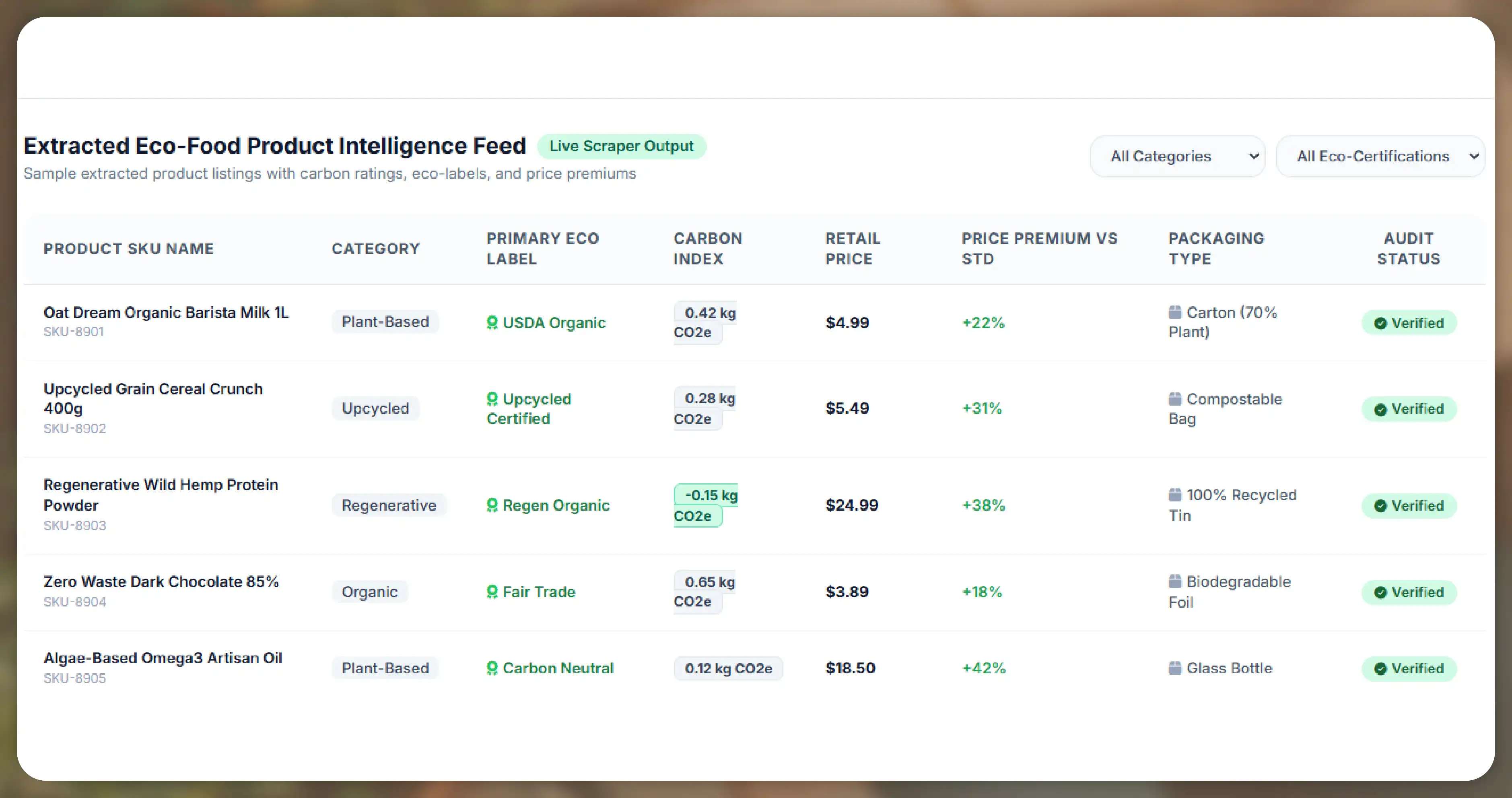
Continuous Eco Food Product Data Extraction enables businesses to convert publicly available food information into valuable market intelligence that supports product innovation, competitive benchmarking, sourcing strategies, and long-term business growth.
As consumers become more selective, broad sustainability claims are losing influence. Instead, shoppers are choosing products with clear environmental benefits, including seasonal ingredients, locally sourced produce, recyclable packaging, waste reduction, and lower-impact food choices. Businesses capable of monitoring these shifts through structured food intelligence gain a significant competitive advantage.
Why Eco-Friendly Food Matters More Than Ever?
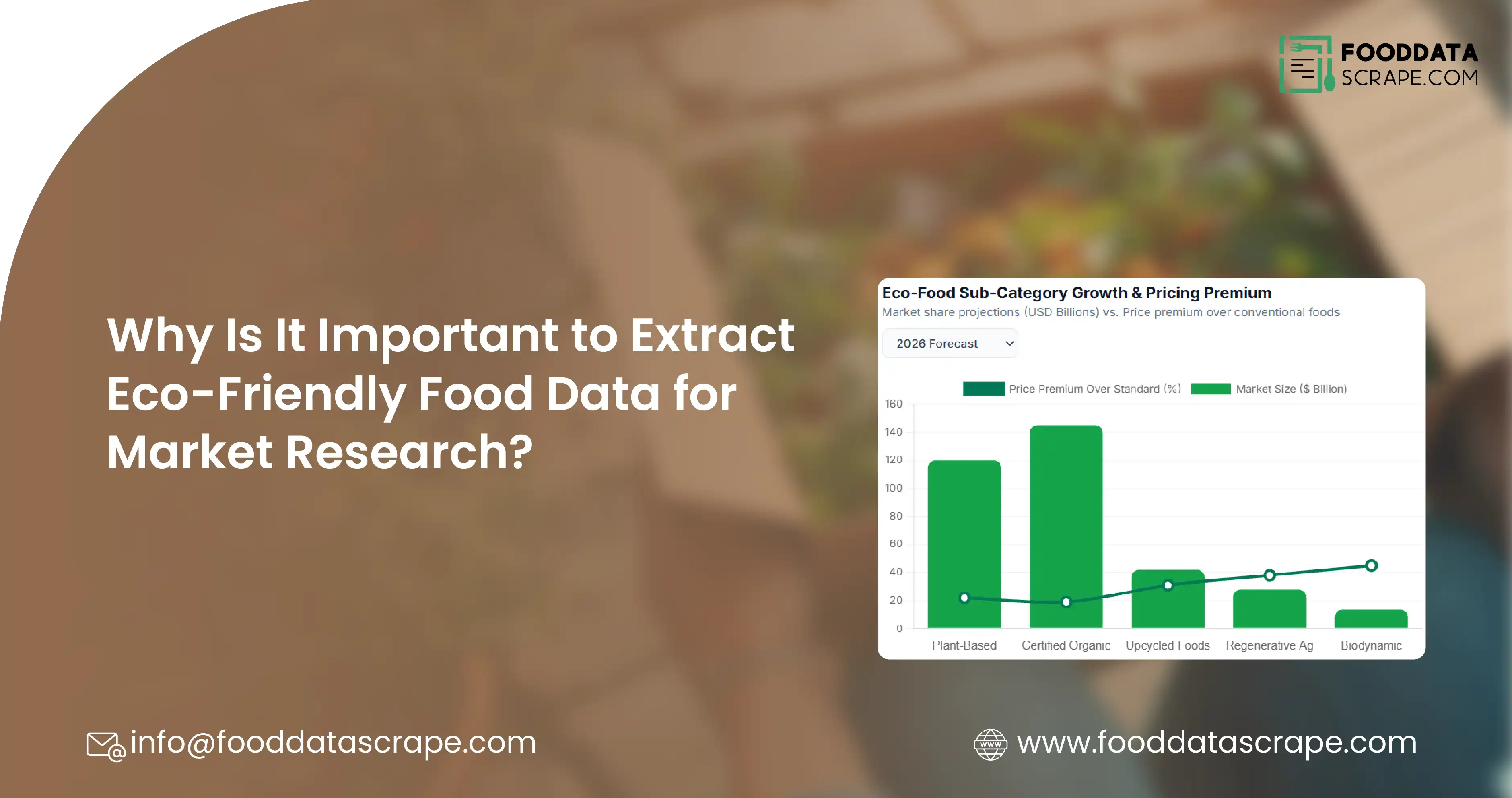
Eco-friendly food refers to products produced, packaged, transported, and consumed with minimal environmental impact throughout their lifecycle. It includes responsible farming practices, sustainable sourcing, biodegradable packaging, reduced food waste, lower-emission ingredients, and efficient supply chains.
Unlike previous years, consumers are no longer attracted by vague environmental messaging alone. Instead, they expect practical solutions that fit naturally into their everyday lifestyles. Affordable products, convenient meal options, seasonal ingredients, and transparent sourcing practices increasingly influence purchasing decisions.
For businesses, understanding these evolving preferences requires continuous monitoring of digital food ecosystems rather than relying solely on historical reports or periodic market surveys.
Understanding the Shift from Sustainability Claims to Consumer Actions
The eco-friendly food movement has matured considerably. Earlier, sustainability marketing focused heavily on broad terms like organic, green, or environmentally friendly. Today, consumers want evidence rather than promises.
They actively seek information about ingredient sourcing, recyclable packaging, seasonal availability, food waste reduction, local production, and practical sustainability improvements.
Businesses that monitor these behavioural shifts gain valuable intelligence for improving products, marketing campaigns, pricing strategies, and customer engagement.
Instead of reacting after competitors introduce successful eco-friendly products, organisations can proactively identify opportunities through continuous food data monitoring.
Why Businesses Need Real-Time Food Intelligence?
The modern food industry evolves rapidly.
- Restaurant menus change weekly.
- Retailers introduce new products regularly.
- Food delivery platforms continuously update offerings.
- Consumer reviews appear every minute.
- Sustainability messaging evolves constantly.
Traditional research methods cannot keep pace with this level of market activity.
Businesses increasingly depend on automated food data collection to monitor product availability, menu changes, ingredient trends, consumer sentiment, promotional campaigns, pricing movements, packaging innovations, and competitor activities.
This continuous intelligence enables faster and more informed business decisions.
Monitoring Emerging Sustainable Ingredient Trends
Ingredient innovation remains one of the strongest indicators of future consumer demand.
Businesses that identify sustainable ingredients early often establish stronger competitive positions before market saturation occurs.
Modern organisations increasingly Scrape eco-friendly food market data to monitor ingredient popularity across grocery retailers, restaurants, food blogs, online recipes, delivery platforms, and marketplace listings.
Low-impact ingredients such as lentils, oats, legumes, seasonal vegetables, seaweed, and upcycled food products continue gaining attention because they combine affordability with environmental responsibility.
Monitoring ingredient adoption across different regions allows manufacturers, retailers, distributors, and foodservice providers to prioritise future product development based on measurable consumer demand rather than assumptions.
Tracking Consumer Demand Across Food Channels
Consumer behaviour now differs across restaurants, grocery stores, online delivery services, and digital marketplaces.
Businesses performing continuous Eco-friendly food demand analysis gain visibility into changing purchasing behaviour across every stage of the customer journey.
These insights reveal which sustainable ingredients are gaining popularity, which packaging formats resonate most strongly, how pricing affects purchasing decisions, and which environmental claims encourage higher customer engagement.
Rather than relying on historical sales alone, organisations can evaluate real-time demand signals from multiple digital channels simultaneously.
Understanding Consumer Preferences Beyond Sales Data
Sales figures explain what consumers purchased.
They rarely explain why they made those choices.
Customer reviews, restaurant ratings, online discussions, recipes, social conversations, and food communities provide much deeper insights into consumer motivations.
Detailed Sustainable food consumer insights enable organisations to understand consumer attitudes towards recyclable packaging, local sourcing, plant-forward meals, ingredient quality, affordability, convenience, and environmentally responsible production.
These behavioural insights help businesses improve product positioning while developing marketing strategies that align with evolving customer expectations.
Building Better Intelligence with Automated Data Collection
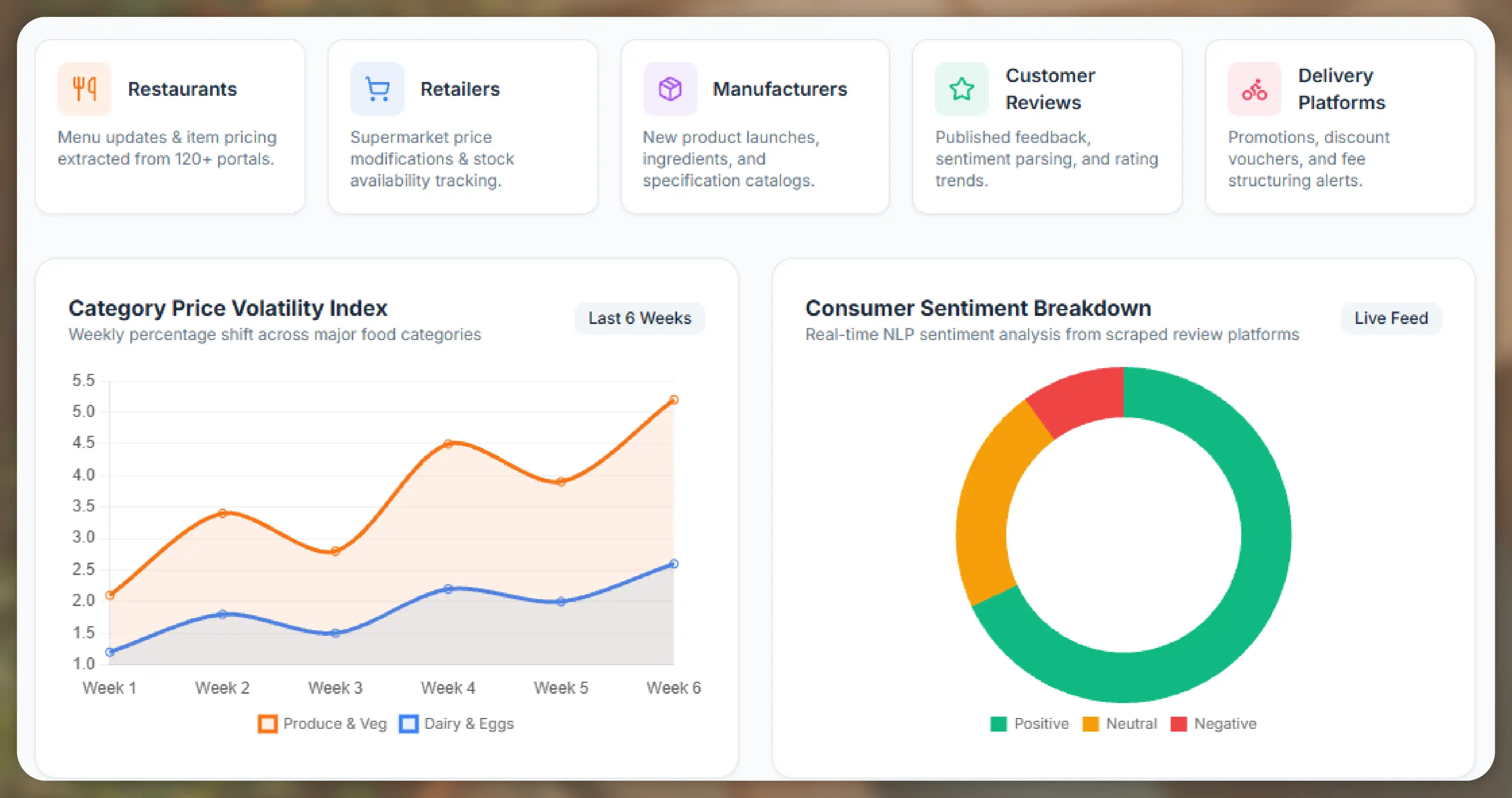
Modern food businesses generate enormous volumes of publicly available information every day.
- Restaurants update menus.
- Retailers modify prices.
- Manufacturers launch products.
- Customers publish reviews.
- Delivery platforms introduce promotions.
Managing this information manually has become impossible.
Automated Food Data Scraping enables businesses to collect structured information from multiple digital sources quickly and consistently while reducing manual effort and improving analytical accuracy.
Structured datasets provide decision-makers with a comprehensive understanding of changing market dynamics across multiple food categories.
Monitoring Restaurant Innovation
Restaurants frequently introduce sustainability initiatives before retailers.
New ingredients often appear on restaurant menus months before reaching supermarket shelves.
Advanced Restaurant Data Intelligence allows organisations to monitor seasonal menu updates, ingredient substitutions, locally sourced products, pricing adjustments, zero-waste cooking initiatives, recyclable packaging, and sustainable dining concepts across thousands of restaurants.
Manufacturers, distributors, suppliers, investors, and restaurant operators can use these insights to identify emerging trends before they become mainstream.
Restaurant intelligence also supports product innovation by highlighting which sustainable ingredients customers actively embrace.
Competitive Intelligence for Eco-Friendly Food Businesses
Every sustainability initiative launched by competitors provides valuable business intelligence.
Continuous monitoring enables organisations to analyse competitor pricing, ingredient choices, promotional campaigns, product descriptions, packaging claims, menu launches, and sustainability messaging across numerous digital platforms.
Businesses can compare market positioning while identifying opportunities to differentiate products through stronger environmental value propositions.
Automated competitive intelligence also improves forecasting by revealing where competitors invest their innovation efforts.
Monitoring Grocery Product Evolution
Online grocery retailers constantly expand their eco-friendly product portfolios.
New sustainable products appear with environmentally responsible packaging, regional sourcing claims, lower-emission ingredients, biodegradable materials, and improved recycling information.
Monitoring grocery listings helps businesses evaluate product assortment growth, category expansion, pricing changes, promotional activity, customer reviews, product availability, and private-label sustainability initiatives.
Retail intelligence enables organisations to benchmark performance while identifying gaps across growing eco-friendly product categories.
Supporting Smarter Product Development
Launching environmentally responsible food products requires far more than good intentions.
Successful innovation depends upon understanding changing consumer behaviour, ingredient demand, pricing acceptance, regional preferences, competitor activity, and sustainability expectations.
Continuous food intelligence enables product development teams to validate concepts before launch, reducing commercial risk while increasing the likelihood of market success.
Rather than relying solely on historical research, organisations gain confidence through continuously updated market data.
Regional Market Intelligence
Consumer priorities differ significantly between countries, cities, demographic groups, and retail channels.
- Some markets strongly prefer seasonal produce.
- Others prioritise affordable plant-forward meals.
- Certain regions value locally sourced ingredients.
- Others focus on recyclable packaging or waste reduction.
Food data extraction enables organisations to compare these regional differences while improving localisation strategies, supplier selection, merchandising decisions, pricing strategies, and inventory planning.
Businesses expanding internationally particularly benefit from regional food intelligence before entering new markets.
Strengthening Sustainability Reporting
Many organisations publish sustainability reports outlining environmental commitments and measurable progress.
Reliable reporting depends upon accurate operational and market intelligence.
Food data extraction supports sustainability reporting by validating packaging improvements, supplier practices, waste-reduction initiatives, product assortment changes, ingredient sourcing, and competitive benchmarking.
This strengthens transparency while improving stakeholder confidence and supporting regulatory compliance.
Enhancing Marketing Strategies
Consumers increasingly distrust generic environmental messaging.
Instead, they respond to specific, evidence-based sustainability claims supported by real product improvements.
Food intelligence enables marketers to identify which environmental messages generate stronger engagement across different customer segments.
Campaigns centred around seasonal ingredients, locally sourced products, reduced packaging, recyclable materials, and food waste reduction consistently outperform broad sustainability messaging when supported by measurable consumer demand.
Real-time market intelligence also helps businesses optimise product descriptions, promotional messaging, digital campaigns, and customer communication.
Turn Eco-Friendly Food Data into Your Competitive Advantage. Discover emerging sustainability trends, monitor consumer demand, and optimise product innovation with our real-time food data scraping solutions. Contact us today to unlock actionable eco-friendly food market intelligence.
The Future of Eco-Friendly Food Intelligence
The digital food ecosystem continues expanding rapidly.
- Restaurants launch new dishes daily.
- Retailers introduce sustainable products regularly.
- Consumer preferences evolve continuously.
- Packaging innovations emerge frequently.
- Ingredient popularity shifts rapidly.
Businesses capable of monitoring these changes through automated food intelligence gain stronger visibility into emerging opportunities while responding more quickly than competitors.
Real-time food data extraction enables organisations to improve forecasting, reduce uncertainty, optimise operations, strengthen innovation pipelines, and remain competitive within increasingly sustainability-focused markets.
How Food Data Scrape Can Help You?
Track Eco-Friendly Food Trends
Our automated scraping solutions collect real-time information from restaurant menus, grocery retailers, marketplaces, delivery platforms, reviews, and food websites, helping businesses identify emerging eco-friendly food trends before competitors recognise changing consumer demand.
Monitor Sustainable Product Performance
We extract structured product, ingredient, packaging, pricing, availability, promotion, and category data from multiple digital channels, enabling organisations to measure sustainable product performance with greater speed, consistency, and confidence.
Analyse Consumer Preferences
Our scraping services gather reviews, ratings, recipes, discussions, and online food conversations to uncover changing customer expectations, allowing businesses to build products and campaigns aligned with evolving sustainability preferences.
Benchmark Competitor Strategies
We continuously monitor competitor menus, pricing, product launches, sustainability claims, packaging innovations, ingredient adoption, and promotional activities, providing actionable intelligence that supports informed strategic planning and market differentiation.
Support Smarter Business Decisions
Our scalable data extraction solutions deliver accurate, structured, and continuously updated market intelligence that strengthens forecasting, product development, sourcing optimisation, retail analytics, pricing strategies, and long-term competitive growth.
Conclusion
Eco-friendly food has become one of the strongest forces shaping modern consumer purchasing behaviour. Businesses that understand evolving ingredient preferences, sustainability expectations, packaging innovations, menu development, pricing trends, and regional demand gain a significant competitive advantage in an increasingly environmentally conscious marketplace.
Health & Specialty Diet Data Scraping further strengthens market intelligence by helping organisations monitor specialised dietary preferences alongside sustainability trends, enabling more comprehensive product development and customer targeting.
Comprehensive Food Datasets provide the structured foundation required for competitive benchmarking, retail analytics, forecasting, product innovation, pricing optimisation, inventory planning, and strategic business decision-making across the global food industry.
Powered by AI Demand Forecasting, continuously updated food intelligence enables businesses to anticipate emerging market opportunities, predict changing consumer preferences, reduce commercial risk, optimise investments, and build future-ready strategies that support sustainable long-term growth.
If you are seeking for a reliable data scraping services, Food Data Scrape is at your service. We hold prominence in Food Data Aggregator and Mobile Restaurant App Scraping with impeccable data analysis for strategic decision-making.