Introduction
The food industry is entering a new era where consumer preferences evolve almost overnight. Social media trends, health-conscious lifestyles, global cuisines, seasonal ingredients, and digital food ordering platforms continuously influence what people eat and how they discover new flavors. For food manufacturers, restaurant chains, retailers, beverage companies, and ingredient suppliers, understanding these rapid changes has become essential for staying competitive. This is where Flavor Trends Data Scraping 2026 is reshaping market intelligence by providing businesses with continuous access to real-time consumer and product information.
Instead of depending solely on surveys or quarterly research reports, organizations now rely on Real-Time Flavor Trends Data Scraping to monitor thousands of online grocery stores, restaurant menus, recipe platforms, food delivery applications, and consumer review websites simultaneously. These continuously updated datasets reveal emerging flavor combinations, ingredient innovations, pricing patterns, customer sentiment, and regional demand before they become mainstream.
Businesses increasingly Scrape Food Flavor Trends Data to identify opportunities for product innovation, optimize inventory planning, improve marketing campaigns, and better understand shifting consumer expectations. By converting massive volumes of online information into actionable intelligence, companies can make faster, data-driven decisions that reduce risk and improve product success.
Why Flavor Trends Are Becoming a Strategic Business Asset?
Flavor is no longer simply about taste. It represents consumer lifestyle choices, cultural influences, wellness preferences, sustainability concerns, and purchasing behavior. Today's consumers actively search for foods that reflect their personal values, whether that means plant-based ingredients, functional nutrition, regional authenticity, clean-label products, or bold international flavors.
Digital platforms have accelerated the speed at which flavor trends emerge. A unique beverage introduced in one country can quickly gain global popularity through food influencers, online recipes, restaurant promotions, and social media discussions. Consequently, businesses can no longer rely on historical sales reports to predict future demand. They require continuous market visibility to understand how preferences evolve across different demographics and geographic markets.
Companies that monitor these changes early are better positioned to introduce innovative products before competitors, optimize promotional strategies, negotiate ingredient sourcing more effectively, and respond quickly to changing consumer expectations.
Understanding Flavor Trends Data Scraping
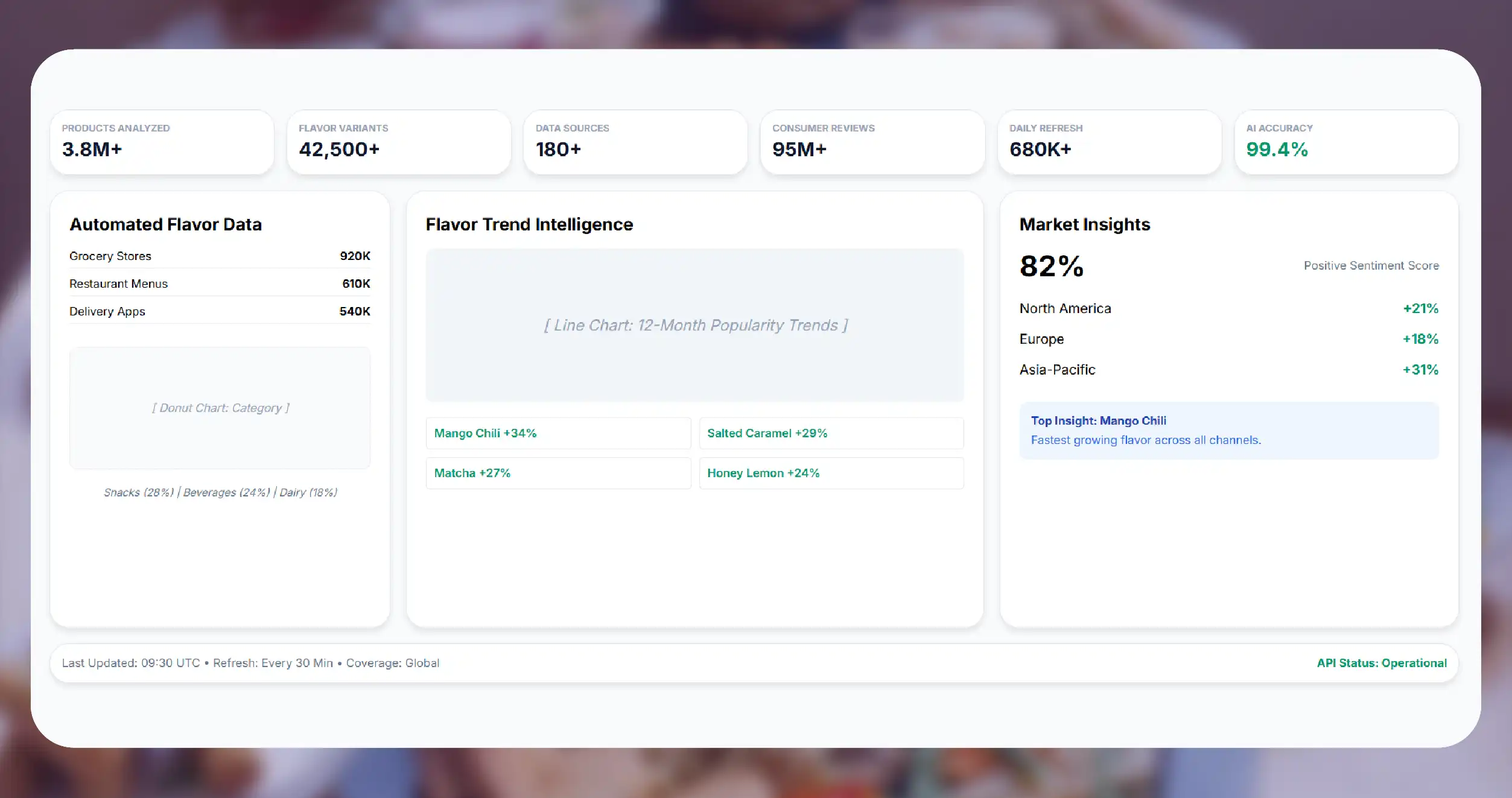
Flavor trends data scraping is the automated process of collecting structured information related to food products, ingredients, recipes, restaurant menus, pricing, customer reviews, and product availability from multiple online sources. Rather than manually tracking thousands of websites, advanced scraping systems continuously gather fresh information and organize it into standardized datasets for analysis.
These datasets often include product names, flavor variants, ingredient compositions, nutritional values, pricing history, promotional offers, customer ratings, review sentiment, menu descriptions, availability status, seasonal launches, and geographic distribution. Once collected, the information is cleaned, categorized, and analyzed using artificial intelligence to uncover meaningful market patterns.
Unlike traditional research methods that often become outdated quickly, automated scraping provides continuously refreshed intelligence, allowing businesses to monitor changing consumer preferences almost in real time.
Multiple Digital Sources Create Richer Market Intelligence
One of the greatest strengths of flavor trend intelligence is the diversity of information sources available across today's digital ecosystem. Grocery retailers publish thousands of new products throughout the year, while restaurants regularly update seasonal menus to attract customers seeking fresh culinary experiences. Recipe websites reveal emerging cooking preferences, and food delivery platforms reflect actual purchasing behavior in different cities and regions.
Consumer reviews contribute another valuable layer of intelligence because they explain why customers enjoy or reject particular flavors. Comments about sweetness, spice levels, texture, aroma, freshness, ingredient quality, and aftertaste provide insights that sales numbers alone cannot reveal.
When businesses combine information from these multiple sources, they develop a far more comprehensive understanding of evolving market demand than any individual dataset could provide independently.
| Data Source | Valuable Insights Collected |
|---|---|
| Grocery Websites | Product launches, flavors, prices, availability |
| Restaurant Menus | Seasonal dishes, regional specialties, ingredient combinations |
| Food Delivery Apps | Popular cuisines, customer ordering patterns |
| Recipe Platforms | Home cooking trends, ingredient popularity |
| Consumer Reviews | Taste preferences, satisfaction, recurring complaints |
| Food Blogs | Emerging culinary innovations and niche flavors |
Artificial Intelligence Makes Flavor Intelligence Smarter
Collecting large amounts of information is only the beginning. The true value comes from transforming raw datasets into meaningful business intelligence. Artificial intelligence enables companies to analyze millions of records efficiently while identifying relationships that would be nearly impossible to discover manually.
Machine learning models classify products according to flavor families, cuisine types, nutritional positioning, ingredient combinations, dietary preferences, pricing categories, and consumer sentiment. Natural language processing examines customer reviews to identify recurring opinions regarding sweetness, spice intensity, freshness, texture, aroma, and overall satisfaction.
These automated systems also recognize emerging flavor combinations before they become widespread. For example, if botanical herbs begin appearing more frequently in beverages across several regions, predictive models can detect the trend months before it becomes mainstream.
Consumer Behavior Is Driving Faster Flavor Innovation
Consumer expectations have changed dramatically over the past decade. Modern buyers are increasingly willing to experiment with unfamiliar cuisines, premium ingredients, and limited-edition products. At the same time, they seek healthier alternatives that align with wellness goals without sacrificing taste.
This shift has encouraged companies to invest heavily in Flavor Consumer Trends Data Extraction, enabling them to understand not only which products are selling well but also why consumers prefer specific ingredients and flavor profiles. Businesses analyze purchasing behavior alongside online discussions, restaurant menus, seasonal promotions, and customer feedback to identify patterns that influence buying decisions.
Instead of launching products based solely on intuition, manufacturers now validate innovation concepts using measurable consumer data. This significantly reduces product development risks while increasing the likelihood of successful market adoption.
Turn emerging flavor trends into profitable business decisions with our advanced Flavor Trends Data Scraping solutions—contact us today to access accurate, real-time market intelligence tailored to your needs.
Regional Preferences Continue to Shape Global Innovation
Although globalization has expanded culinary exploration, regional preferences remain highly influential. Consumers in different markets often interpret the same flavor differently based on local traditions, dietary habits, and cultural expectations.
North American consumers increasingly embrace spicy-sweet combinations, fermented ingredients, and premium snack flavors. European markets continue emphasizing artisanal herbs, gourmet cheeses, and Mediterranean-inspired seasonings. Across Asia-Pacific, consumers frequently adopt bold spices, umami-rich ingredients, citrus infusions, and fusion cuisines. Middle Eastern markets continue favoring aromatic spices, floral ingredients, and traditional dessert flavors, while Latin American consumers show strong interest in tropical fruits, chili-based seasonings, and street-food-inspired innovations.
Understanding these regional differences enables businesses to localize product portfolios while maintaining operational efficiency across multiple markets.
| Region | Emerging Flavor Focus | Business Opportunity |
|---|---|---|
| North America | Hot Honey, Smoky BBQ, Pickle | Premium snacks and sauces |
| Europe | Herbs, Citrus, Truffle | Gourmet packaged foods |
| Asia-Pacific | Matcha, Yuzu, Kimchi | Fusion products and beverages |
| Middle East | Cardamom, Rose, Saffron | Premium desserts and beverages |
| Latin America | Chili Lime, Tamarind, Guava | Functional drinks and snacks |
Turning Market Intelligence into Competitive Advantage
Businesses increasingly depend on Flavor Trend Analytics & Consumer Insights to support strategic decision-making across product development, merchandising, pricing, procurement, and marketing. Continuous market monitoring allows organizations to compare competitor launches, identify ingredient innovations, evaluate pricing strategies, and measure customer sentiment with remarkable precision.
For retailers, these insights improve assortment planning by ensuring shelves reflect evolving consumer demand. Restaurant chains use trend intelligence to optimize seasonal menus and introduce limited-time offerings with greater confidence. Ingredient suppliers forecast procurement requirements more accurately, reducing waste while ensuring supply continuity. Investors and market researchers also benefit from comprehensive visibility into emerging food categories and long-term growth opportunities.
Rather than reacting to market changes after competitors have already moved, businesses equipped with real-time intelligence become proactive innovators.
The Future of Flavor Intelligence in 2026
The future of flavor analytics extends far beyond simply tracking popular ingredients. Predictive artificial intelligence is beginning to forecast which flavor combinations are most likely to succeed based on historical purchasing behavior, consumer demographics, regional preferences, ingredient availability, and digital engagement patterns. Flavor Innovation Data Intelligence empowers businesses to identify emerging opportunities earlier and make faster, evidence-based product development decisions.
As food companies continue embracing automation, predictive analytics, and cloud-based intelligence platforms, Food Trend Data Scraping For Market Intelligence will become an integral part of everyday business operations. Organizations will increasingly combine market intelligence with supply chain analytics, pricing optimization, inventory forecasting, and product lifecycle management to create faster, more responsive innovation pipelines.
This transformation will allow brands to launch products with greater confidence while responding quickly to changing consumer expectations across global markets. Advanced Flavor and ingredient trend analysis will further enable businesses to anticipate shifts in consumer demand, optimize innovation strategies, and maintain a competitive advantage in the rapidly evolving global food industry.
How Food Data Scrape Can Help You?
1. Track Emerging Flavor Trends in Real Time
We continuously collect flavor-related data from grocery websites, restaurant menus, food delivery platforms, and online marketplaces, helping your business identify emerging consumer preferences before competitors and respond with faster product innovation.
2. Monitor Competitor Product Launches
Our scraping solutions monitor competitor products, pricing, ingredient changes, seasonal launches, customer reviews, and promotional campaigns, enabling your team to benchmark performance and make informed strategic business decisions confidently.
3. Analyze Consumer Preferences Across Markets
We gather and structure customer reviews, ratings, menu descriptions, and product information to uncover regional flavor preferences, buying behavior, and ingredient demand, supporting highly targeted product development and marketing strategies.
4. Build Actionable Food Market Intelligence
Our automated data pipelines transform raw food and flavor information into structured datasets, dashboards, and analytics that help improve forecasting, assortment planning, pricing strategies, and overall market intelligence capabilities.
5. Deliver Customized, Scalable Data Solutions
Whether you need daily updates, API integration, historical datasets, or real-time monitoring, our scalable scraping services provide accurate, reliable, and customized flavor intelligence tailored to your unique business objectives..
Conclusion
The growing complexity of today's food ecosystem requires businesses to move beyond traditional research methods and embrace continuous digital intelligence. Comprehensive Flavor and ingredient trend analysis enables organizations to understand changing consumer preferences, identify emerging opportunities, anticipate regional demand, and accelerate innovation through evidence-based decision-making.
As competition intensifies across retail, foodservice, and consumer packaged goods, integrating Food Data Scraping into their business strategy, companies can continuously monitor products, pricing, menus, customer reviews, and market trends from multiple digital sources, ensuring they always have access to current and actionable insights.
Combining these insights with advanced Restaurant Data Intelligence helps businesses understand menu innovations, regional flavor preferences, consumer demand, and competitive positioning across the foodservice industry, supporting smarter product and marketing decisions.
Furthermore, high-quality Food Datasets provide the structured foundation needed for predictive analytics, demand forecasting, inventory optimization, and long-term strategic planning, empowering brands to innovate confidently and achieve sustainable growth in the rapidly evolving global food market.
If you are seeking for a reliable data scraping services, Food Data Scrape is at your service. We hold prominence in Food Data Aggregator and Mobile Restaurant App Scraping with impeccable data analysis for strategic decision-making.