The Client
The client is a regional food and grocery analytics company focused on understanding Southeast Asia’s rapidly growing online delivery ecosystem. The organization wanted to analyze restaurant offerings, grocery catalogs, pricing patterns, and customer-focused trends from leading delivery platforms.
By implementing GrabFood Restaurant Menu Data Extraction, the client collected structured information on restaurant names, cuisines, menu items, prices, ratings, promotions, and availability across different locations. This enabled deeper analysis of food marketplace trends and competitor performance.
Through GrabMart Grocery Data Extraction, the company gathered grocery product details, categories, brands, prices, discounts, and stock visibility to evaluate digital grocery movements. The insights supported better assortment planning and pricing decisions.
The final solution delivered GrabFood & GrabMart Market Intelligence by combining food and grocery datasets into actionable reports. These insights helped the client track market changes, identify growth opportunities, and improve strategic decision-making across Southeast Asian markets.
Key Challenges
-
Difficulty in Collecting Real-Time Marketplace Data
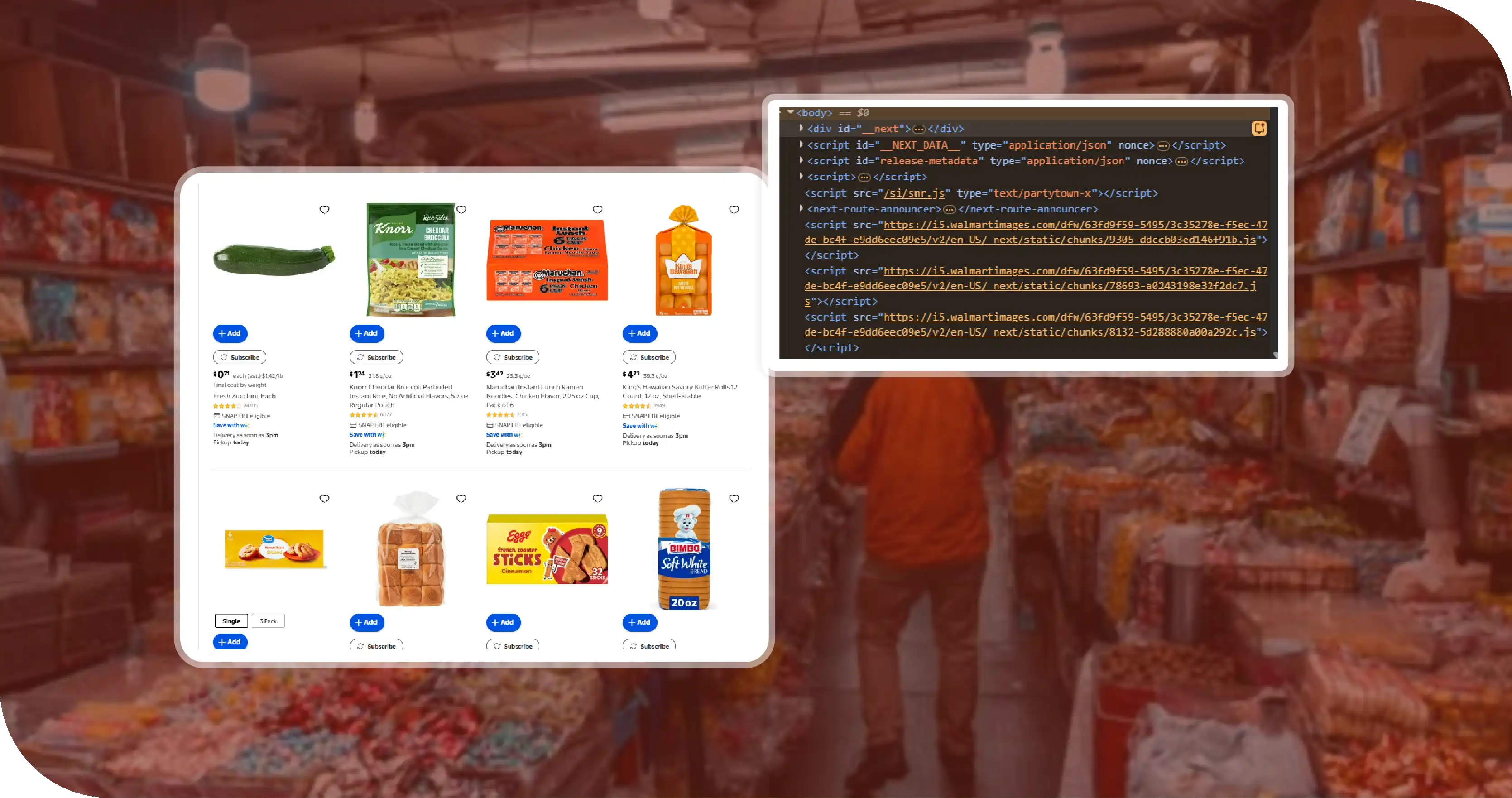
The client faced challenges in gathering accurate and updated food and grocery marketplace information from multiple locations. Manual tracking was inefficient due to frequent changes in prices, menus, promotions, and availability. Implementing Web Scraping Food Delivery Data helped overcome these limitations. -
Managing Large Grocery Product Information
The client needed to capture thousands of grocery items, categories, brands, pricing details, and stock updates from digital platforms. Handling frequent catalog changes required a scalable solution like GrabMart Grocery Delivery Scraping API to maintain reliable and structured datasets. -
Extracting Detailed Restaurant Information
The client struggled to monitor restaurant menus, cuisine options, item variations, discounts, and competitor offerings across regions. Using automated tools to Extract Restaurant Menu Data enabled faster collection, improved analysis accuracy, and better understanding of marketplace trends.
Key Solutions
-
Automated Data Collection Framework
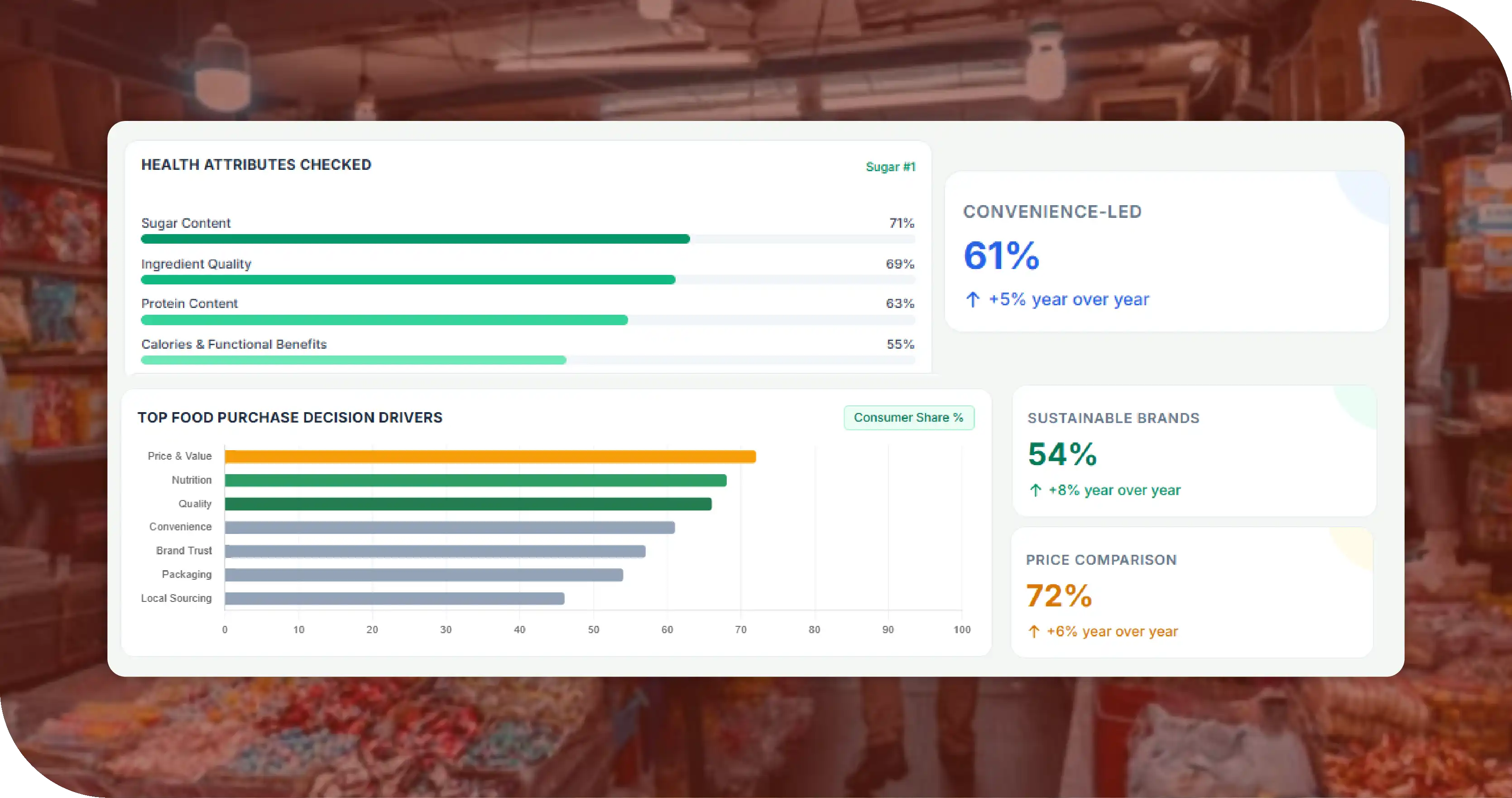
We developed an advanced extraction system to collect real-time restaurant and grocery marketplace information from GrabFood and GrabMart. The solution captured menus, products, pricing, discounts, availability, and location-based insights through a scalable Food Delivery Scraping API for continuous monitoring. -
Restaurant & Grocery Market Analysis
Our solution transformed raw delivery platform information into structured datasets, enabling businesses to compare competitors, identify pricing trends, and analyze customer preferences. The implementation of Restaurant Data Intelligence helped optimize decision-making with accurate marketplace insights. -
Actionable Delivery Platform Insights
We created customized dashboards that processed large-scale food and grocery datasets to reveal demand patterns, promotional activities, and market opportunities. The final Food delivery Intelligence system supported strategic planning, competitive benchmarking, and improved operational performance.
Sample Scraped Data
| Platform | Region | Category | Restaurant/Product | Price | Rating | Discount | Availability |
|---|---|---|---|---|---|---|---|
| GrabFood | Singapore | Fast Food | Big Mac Meal | $8.50 | 4.6 | 10% Off | Available |
| GrabFood | Malaysia | Local Cuisine | Nasi Lemak Set | RM 12.90 | 4.7 | 15% Off | Available |
| GrabFood | Thailand | Beverages | Iced Coffee | ฿75 | 4.5 | 20% Off | Available |
| GrabMart | Indonesia | Grocery | Instant Noodles | Rp 4,000 | — | 5% Off | In Stock |
| GrabMart | Vietnam | Dairy | Fresh Milk 1L | ₫45,000 | — | 10% Off | Available |
| GrabMart | Philippines | Snacks | Potato Chips 100g | ₱85 | — | 15% Off | In Stock |
Methodologies Used
-
Data Collection and Source Identification
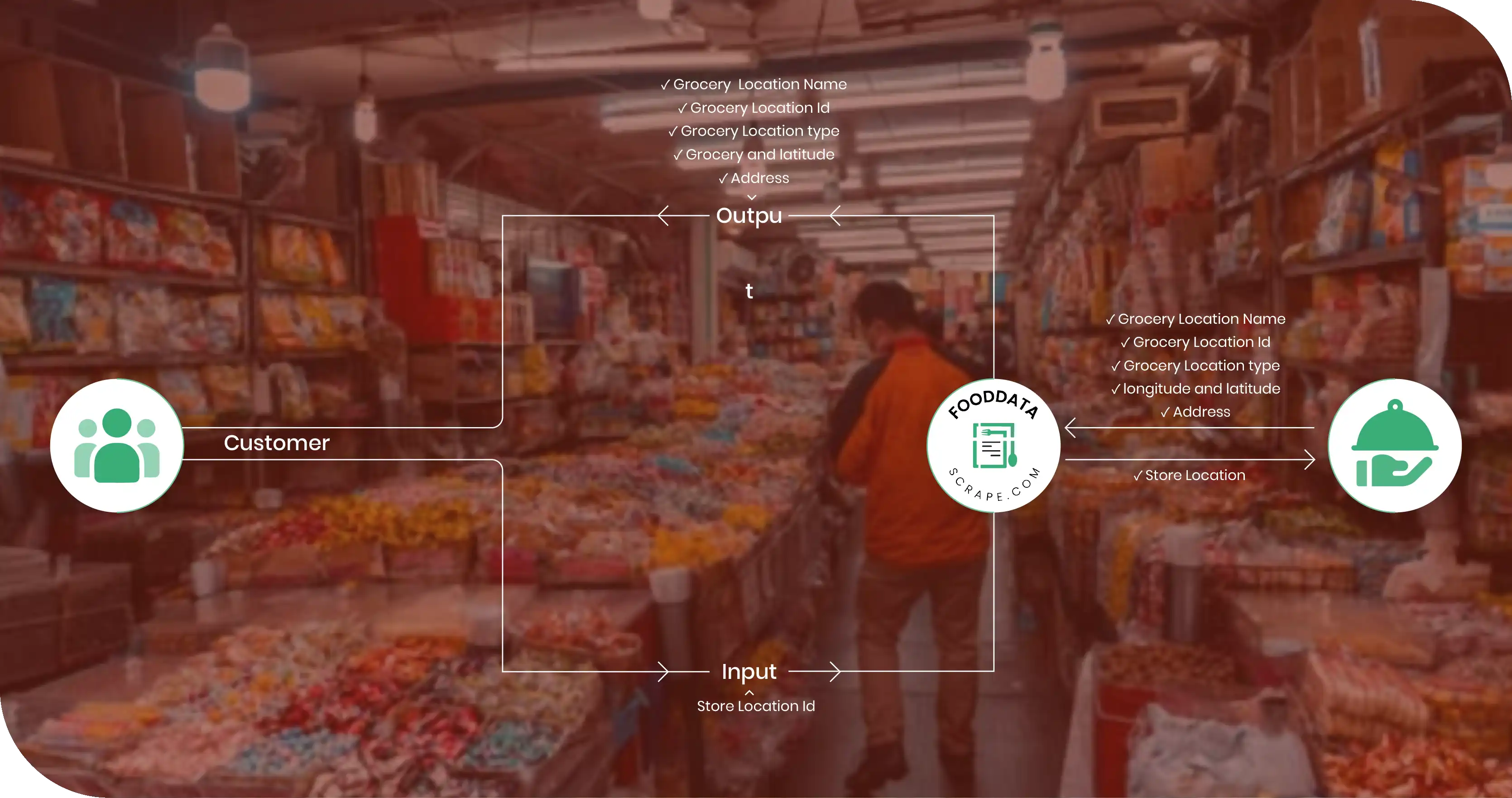
The methodology started by identifying relevant marketplace sources and defining required data fields. The process mapped restaurant menus, grocery listings, prices, locations, and availability details to ensure comprehensive coverage across different regions and platforms. -
Automated Extraction Process
A structured extraction framework was implemented to collect large volumes of marketplace information efficiently. Automated workflows captured updated product details, promotional offers, category information, and seller data while reducing manual effort and improving consistency. -
Data Cleaning and Standardization
Collected information went through validation, cleaning, and formatting procedures to remove duplicates and errors. The datasets were standardized into organized structures, making them easier to analyze, compare, and integrate with business intelligence systems. -
Competitive Trend Evaluation
The extracted datasets were analyzed to identify pricing changes, customer preferences, product movements, and competitor activities. This approach helped businesses understand market dynamics and develop strategies based on accurate and timely marketplace observations. -
Reporting and Insight Generation
The final methodology focused on converting processed datasets into meaningful reports and dashboards. Visual summaries highlighted important trends, performance indicators, and growth opportunities, enabling stakeholders to make informed decisions with reliable market intelligence.
Advantages of Collecting Data Using Food Data Scrape
-
Real-Time Market Visibility
Our data scraping services provide continuous access to updated marketplace information, including pricing, product availability, promotions, and category trends. This helps businesses monitor market movements in real time and respond quickly to changing consumer demands and competitive activities. -
Competitive Benchmarking Support
We collect and organize competitor data across multiple regions and platforms, enabling businesses to compare offerings, identify pricing gaps, evaluate promotional strategies, and understand market positioning. These insights support stronger strategic planning and informed business decisions. -
Product and Menu Intelligence
Our solutions capture detailed product catalogs and menu information, including descriptions, variants, prices, and availability. This allows businesses to optimize assortments, identify high-performing items, monitor category performance, and improve customer-focused offerings through accurate marketplace intelligence. -
Scalable Data Management
We deliver structured, validated, and scalable datasets that integrate seamlessly into analytics platforms and reporting systems. Businesses can efficiently process large volumes of information while maintaining consistency, accuracy, and accessibility across different operational and analytical requirements. -
Actionable Business Insights
Beyond data collection, we transform raw information into meaningful insights through customized reports and dashboards. These analytics reveal trends, opportunities, and performance indicators, helping organizations improve forecasting, optimize operations, and achieve sustainable growth in competitive markets.
Client’s Testimonial
"The data scraping solution delivered exceptional value to our organization. We needed reliable access to restaurant menus, grocery product information, pricing trends, and promotional insights across multiple Southeast Asian markets. The team provided accurate, structured, and regularly updated datasets that significantly improved our market analysis capabilities. Their customized dashboards helped us monitor competitor activities, identify emerging trends, and make faster business decisions. The quality of data, project execution, and ongoing support exceeded our expectations. Thanks to these insights, we enhanced our strategic planning, optimized pricing strategies, and improved our understanding of customer demand across both food delivery and grocery segments."
—Director of Market Intelligence
Final Outcome
The project successfully delivered a comprehensive marketplace intelligence solution for monitoring food delivery and grocery trends across Southeast Asia. The client gained access to accurate, structured, and continuously updated datasets covering restaurant menus, grocery products, pricing changes, discounts, and availability patterns. Through a customized Food Price Dashboard, stakeholders could track competitor pricing strategies, promotional activities, and regional market movements in real time. The solution also generated extensive Food Datasets that enabled deeper analysis of consumer behavior, category performance, and demand fluctuations. As a result, the client improved decision-making, strengthened competitive benchmarking, optimized pricing strategies, and identified new growth opportunities. The automated data collection framework reduced manual effort, increased data accuracy, and provided actionable insights that supported long-term business planning and market expansion initiatives.