Introduction
Australia's restaurant industry is entering a new era where menu success depends on understanding consumer behavior as it happens. Diners are no longer satisfied with familiar offerings alone—they expect bold flavors, authentic global cuisines, premium ingredients, and memorable dining experiences. This rapid evolution is pushing restaurants to rethink how they develop and update their menus.
Businesses using Australia Menu Trends Data Scraping can identify emerging dishes, ingredients, and cuisine preferences before they become mainstream, enabling faster and more informed menu decisions.
Likewise, Australia Restaurant Menu Data Scraping helps operators compare competitor offerings, monitor menu changes across regions, and uncover opportunities to innovate with confidence.
Monitoring Australia Menu Price Data Scraping further allows restaurants, food brands, and market researchers to understand pricing trends, promotional strategies, and customer value expectations in an increasingly competitive foodservice landscape.
Australia's Restaurant Industry Is Moving Faster Than Ever
Consumer tastes in Australia are changing at a remarkable pace. The influence of multicultural communities, social media, food delivery platforms, and international travel has encouraged diners to explore a broader range of cuisines than ever before. As a result, restaurants are refreshing menus more frequently to stay relevant.
Traditional annual planning cycles are no longer enough. Businesses that continuously monitor menu activity can react more quickly to changing preferences, identify high-performing dishes, and introduce new products before competitors gain an advantage. Real-time visibility has become one of the strongest competitive advantages in foodservice.
Comfort Food Is Being Reinvented
Comfort food remains one of the strongest drivers of restaurant visits, but today's consumers want more than familiar flavors. They are looking for premium versions of classic favorites that combine nostalgia with quality ingredients and modern presentation.
From gourmet burgers and slow-cooked meats to elevated pasta dishes and premium steaks, restaurants are transforming traditional comfort foods into premium dining experiences. These offerings create emotional connections while allowing businesses to increase average order values through thoughtful menu innovation.
Smash Burgers Continue to Dominate Modern Menus
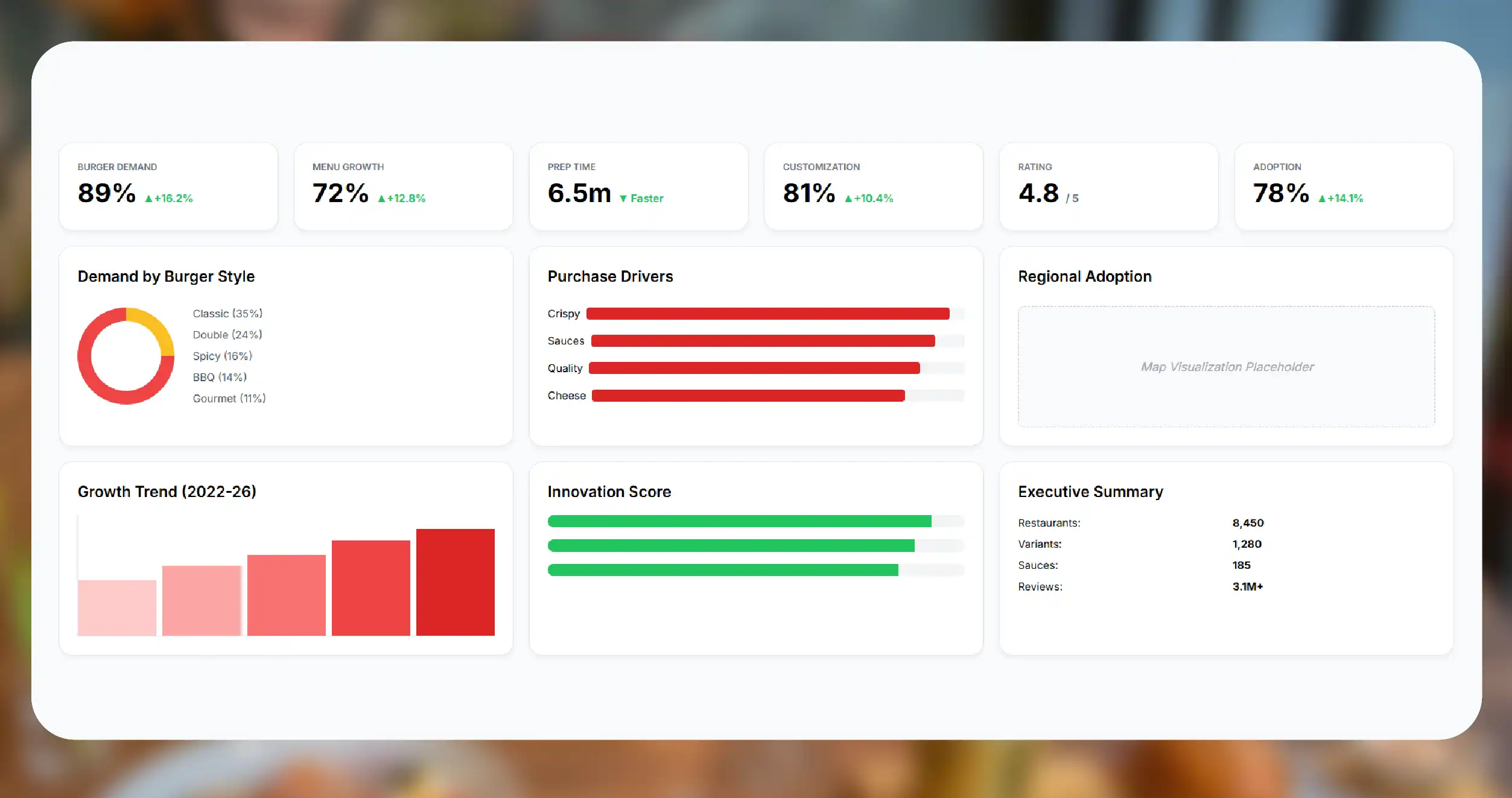
Few menu categories have experienced sustained momentum like smash burgers. Their popularity continues to grow because they offer excellent texture, quick preparation, and strong visual appeal while providing operators with endless opportunities for customization.
Instead of simply adding another burger to the menu, successful restaurants are differentiating their offerings through signature sauces, artisan cheeses, specialty buns, spicy toppings, and globally inspired flavor combinations. The focus has shifted from introducing the format to creating a distinctive customer experience that stands out in a crowded market.
Global Cuisines Have Become Mainstream
Australian diners are embracing authentic international cuisines with growing confidence. Korean, Middle Eastern, Filipino, Japanese, and Southeast Asian dishes are no longer limited to specialty restaurants—they are becoming regular features on mainstream menus across casual dining, cafés, and quick-service restaurants.
This shift reflects changing consumer expectations for authentic flavors and cultural diversity. Rather than borrowing individual ingredients, restaurants are introducing complete dishes that preserve traditional cooking methods while adapting them for local audiences.
Businesses using Australia Food Menu Data Extraction can closely monitor which international cuisines are expanding across different cities and restaurant segments, allowing them to make more informed product development decisions.
Ingredient Innovation Is Shaping New Menus
Ingredients have become powerful drivers of menu innovation. Rather than launching entirely new food categories, restaurants are refreshing existing favorites by incorporating trending flavors that appeal to adventurous consumers.
Hot honey, fermented chili sauces, premium spice blends, artisan cheeses, and Korean-inspired condiments are now appearing across burgers, pizzas, chicken dishes, desserts, and breakfast menus. Their versatility allows restaurants to create unique offerings while maintaining operational efficiency.
Understanding ingredient adoption through Australia menu trend analysis enables businesses to identify which flavors have long-term growth potential instead of following short-lived food trends.
Breakfast and Brunch Continue to Evolve
Morning dining has become an increasingly valuable revenue opportunity for Australian restaurants. Consumers are spending more on premium coffee, matcha beverages, cold brew, gourmet breakfast sandwiches, protein-rich meals, and freshly prepared bakery items.
Rather than relying on traditional breakfast menus, operators are creating elevated morning experiences that encourage longer visits and higher spending. This premium approach is transforming breakfast into one of the most innovative dayparts within Australia's restaurant industry.
Leveraging Australia Food Trend Intelligence helps restaurants understand changing breakfast preferences and identify opportunities for menu expansion throughout the day.
Pricing Has Become a Competitive Strategy
Pricing decisions now involve much more than calculating food costs. Consumers increasingly evaluate menu prices based on ingredient quality, authenticity, portion size, presentation, and overall dining experience.
Restaurants that consistently monitor competitor pricing are better positioned to maintain profitability while remaining attractive to customers. Small pricing adjustments combined with menu optimization can significantly improve both customer satisfaction and business performance over time.
Real-Time Intelligence Is Replacing Traditional Market Research
The foodservice industry is moving away from relying solely on annual reports and delayed sales data. Continuous monitoring of restaurant menus provides a clearer picture of how consumer preferences evolve throughout the year.
Businesses investing in Food Data Scraping gain access to timely insights about new product launches, ingredient trends, cuisine popularity, seasonal changes, and competitive activity. These insights support faster decision-making and reduce the uncertainty associated with menu planning.
Turn Australia's evolving menu trends into your competitive advantage—contact us today for customized restaurant data scraping solutions that power smarter, faster business decisions.
Restaurant Data Is Powering Smarter Business Decisions
Modern restaurant businesses increasingly depend on data to guide expansion, pricing, product development, and marketing strategies. Having access to comprehensive market intelligence allows operators to benchmark their performance while identifying new growth opportunities across different locations.
Using Restaurant Data Intelligence, businesses can compare thousands of restaurant menus, monitor competitor innovations, evaluate regional dining preferences, and respond quickly to changing customer expectations. This data-driven approach helps reduce risk while improving the effectiveness of menu development strategies.
Key Takeaways
- Australian consumers are driving demand for premium comfort food and authentic global cuisines.
- Smash burgers remain one of the strongest-performing menu categories.
- Ingredient-led innovation is creating new opportunities across multiple food categories.
- Breakfast and premium beverages continue to experience strong growth.
- Real-time menu intelligence enables restaurants to respond faster than traditional research methods.
- Continuous market monitoring supports smarter pricing, product development, and competitive positioning.
How Food Data Scrape Can Help You?
1. Real-Time Menu Monitoring
Our data scraping services continuously collect restaurant menu updates, helping you track new dishes, ingredient trends, seasonal launches, and competitor changes to support faster business decisions and product innovation.
2. Competitive Pricing Insights
We gather accurate menu pricing data across restaurants, enabling businesses to compare competitor pricing strategies, identify promotional trends, optimize pricing models, and improve overall market competitiveness.
3. Consumer Trend Discovery
Our solutions capture emerging food trends, popular cuisines, and ingredient adoption patterns, helping restaurants and food brands develop products that align with evolving consumer preferences and market demand.
4. Multi-Location Market Intelligence
We extract menu data from restaurants across multiple cities and regions, providing comprehensive market visibility that supports expansion planning, regional analysis, and localized menu optimization strategies.
5. Customized Data Delivery
Receive structured restaurant datasets in your preferred format through APIs, CSV, JSON, or cloud integration, ensuring seamless access for analytics, reporting, forecasting, and business intelligence workflows.
Conclusion
Australia's restaurant industry is becoming increasingly dynamic, making real-time market intelligence an essential resource for restaurants, food manufacturers, hospitality brands, and market researchers. Consumer expectations continue to evolve, creating new opportunities for businesses that can quickly recognize emerging menu trends.
Organizations that Extract Restaurant Menu Data gain valuable visibility into competitor strategies, ingredient adoption, regional cuisine preferences, and pricing movements that shape future menu decisions.
Comprehensive Food Datasets provide the foundation for predictive analytics, competitive benchmarking, and informed product innovation across Australia's rapidly evolving foodservice market.
By investing in Food Data Scraping in the Australia, businesses can stay ahead of changing consumer preferences, optimize menu strategies, improve pricing decisions, and build sustainable competitive advantages throughout 2026 and beyond.
If you are seeking for a reliable data scraping services, Food Data Scrape is at your service. We hold prominence in Food Data Aggregator and Mobile Restaurant App Scraping with impeccable data analysis for strategic decision-making.