The Client
The client is a data-driven market intelligence firm specializing in the food and hospitality sector, focused on transforming fragmented online restaurant and delivery ecosystem data into structured insights. Their core objective is to help businesses understand pricing behavior, menu evolution, and competitive positioning across multiple food delivery platforms. By leveraging advanced analytics and scalable data pipelines, they support strategic decision-making for restaurants, aggregators, and food-tech startups.
The client heavily relies on Restaurant Menu and Pricing Data Scraping to track real-time changes in menus, discounts, and regional pricing variations across different markets. This allows them to build accurate comparative dashboards and forecasting models for better pricing strategies.
They also focus on Large-Scale Restaurant & Delivery Data Collection to aggregate millions of data points from various food delivery apps, ensuring comprehensive coverage of urban and suburban markets.
Additionally, their operations are strengthened by Food Delivery Market Intelligence, which converts raw scraped data into actionable insights for improving customer targeting, operational efficiency, and revenue optimization in the competitive food-tech industry.
Key Challenges
-
Inconsistent Market Visibility
The client struggled to obtain a unified view of restaurant performance across multiple delivery platforms. Fragmented datasets, varying menu structures, and regional pricing differences limited the effectiveness of Online Food Ordering Data Analytics, making accurate market comparisons and trend identification difficult. -
Frequent Platform and Pricing Changes
Food delivery apps continuously updated menus, promotions, and restaurant listings. Tracking these rapid changes manually was inefficient and error-prone. The client needed reliable Web Scraping Food Delivery Data processes to capture real-time updates and maintain accurate competitive intelligence dashboards. -
Large-Scale Menu Data Management
Managing thousands of restaurant menus across different cities created significant data standardization challenges. Variations in item names, categories, and pricing formats complicated analysis. The client required automated solutions to Extract Restaurant Menu Data consistently while ensuring data quality, completeness, and scalability for research initiatives.
Key Solutions
-
Automated Data Collection Infrastructure
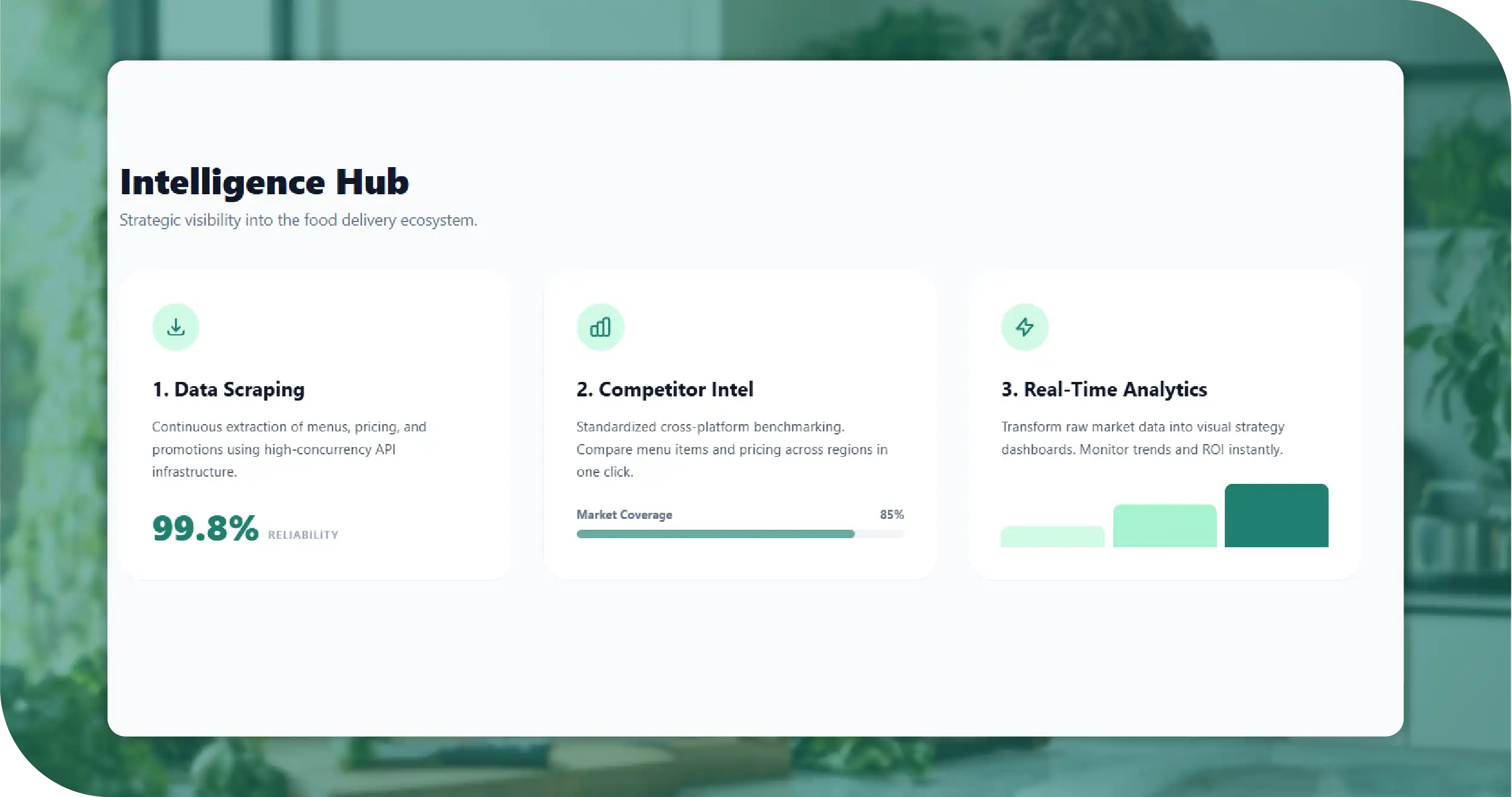
We deployed a scalable Food Delivery Scraping API that continuously captured restaurant menus, pricing updates, promotions, ratings, and delivery information from multiple platforms. This eliminated manual monitoring, improved data freshness, and enabled reliable market tracking across regions. -
Advanced Competitive Intelligence Framework
Our team built a centralized Restaurant Data Intelligence solution that standardized restaurant listings, menu categories, and pricing structures. The framework enabled cross-platform comparisons, trend analysis, and competitor benchmarking while improving the accuracy of strategic business decisions. -
Real-Time Analytics & Monitoring Dashboard
We implemented a comprehensive Food delivery Intelligence dashboard that transformed raw delivery-platform data into actionable insights. Stakeholders could monitor market movements, promotional effectiveness, cuisine trends, and regional demand patterns through automated visual reporting and alerts.
Sample Data Collected and Processed
| City | Restaurant Count | Menu Items Tracked | Average Meal Price ($) | Active Promotions | Delivery Platforms | Daily Records Captured |
|---|---|---|---|---|---|---|
| Dublin | 1,250 | 18,500 | 14.20 | 310 | 4 | 125,000 |
| Cork | 780 | 11,200 | 13.10 | 185 | 3 | 78,500 |
| Galway | 620 | 8,900 | 12.80 | 140 | 3 | 62,300 |
| Limerick | 540 | 7,600 | 13.40 | 122 | 3 | 54,100 |
| Waterford | 410 | 5,700 | 12.50 | 95 | 2 | 39,800 |
| Kilkenny | 320 | 4,500 | 12.90 | 72 | 2 | 28,600 |
| Sligo | 240 | 3,400 | 11.80 | 55 | 2 | 21,400 |
| Dundalk | 285 | 3,950 | 12.30 | 61 | 2 | 24,700 |
| Athlone | 210 | 2,980 | 11.90 | 47 | 2 | 18,900 |
| Wexford | 195 | 2,750 | 12.10 | 42 | 2 | 16,800 |
Methodologies Used
-
Multi-Source Data Acquisition
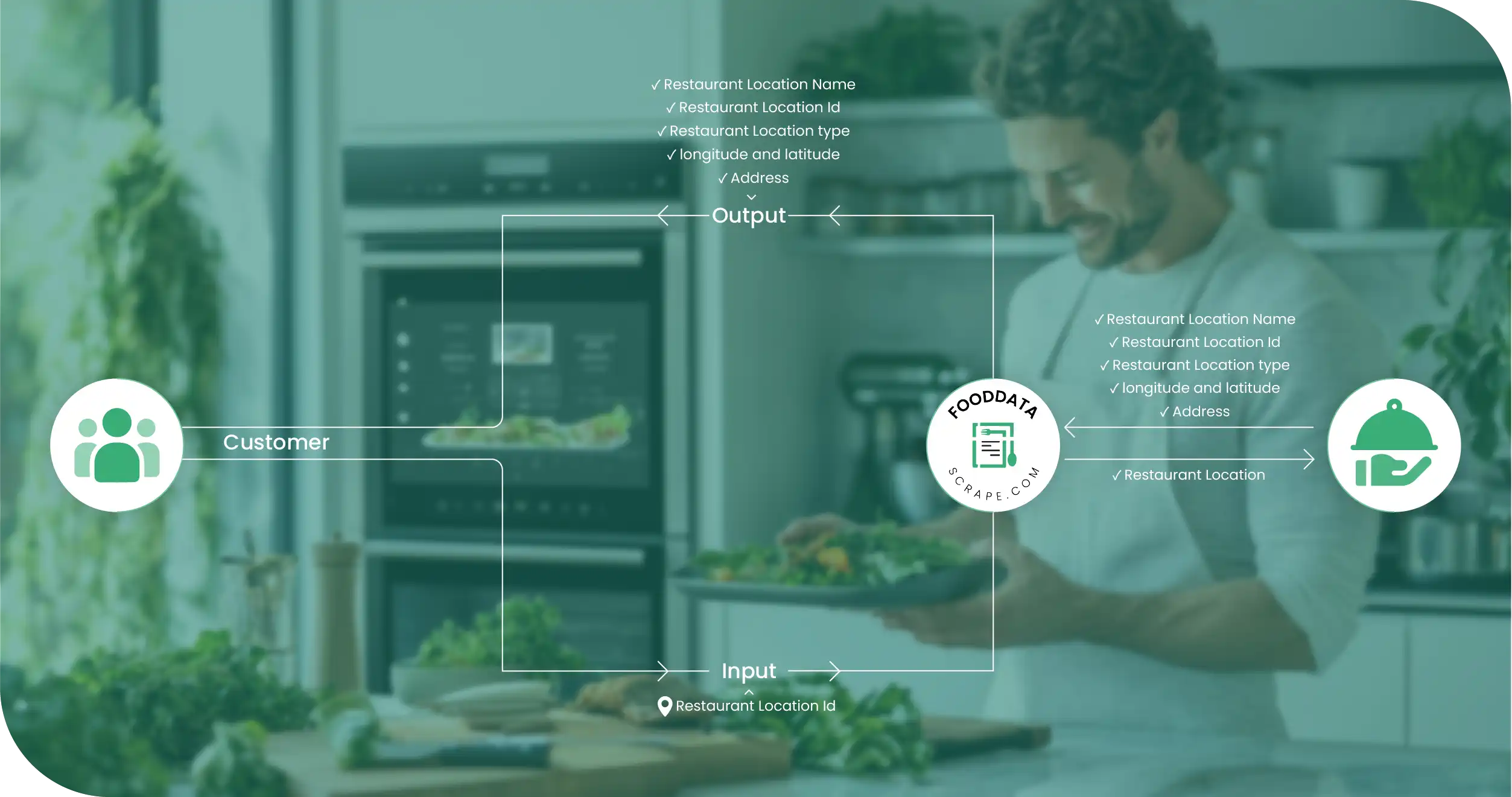
We developed automated collection workflows to gather restaurant listings, menu information, pricing updates, discounts, ratings, and delivery metrics from multiple digital platforms. This approach ensured broad market coverage, reduced data gaps, and enabled continuous monitoring of changing market conditions. -
Data Standardization and Cleansing
Collected information was processed through validation and normalization pipelines to eliminate duplicates, correct inconsistencies, and standardize categories. This methodology improved dataset accuracy, created uniform records across sources, and enabled reliable comparisons between restaurants and regions. -
Real-Time Change Detection
We implemented continuous monitoring systems to identify modifications in menus, prices, promotional offers, and restaurant availability. Automated alerts highlighted significant changes, allowing stakeholders to react quickly to competitor actions and evolving customer demand patterns. -
Market Segmentation Analysis
The dataset was categorized by geography, cuisine type, price range, and customer ratings. This methodology revealed localized trends, uncovered growth opportunities, and provided deeper visibility into consumer preferences and competitive dynamics across different market segments. -
Interactive Reporting and Visualization
We built dynamic dashboards and reporting frameworks that transformed complex datasets into actionable insights. Key performance indicators, trend analyses, and comparative benchmarks were visualized clearly, enabling decision-makers to evaluate performance and support strategic planning initiatives efficiently.
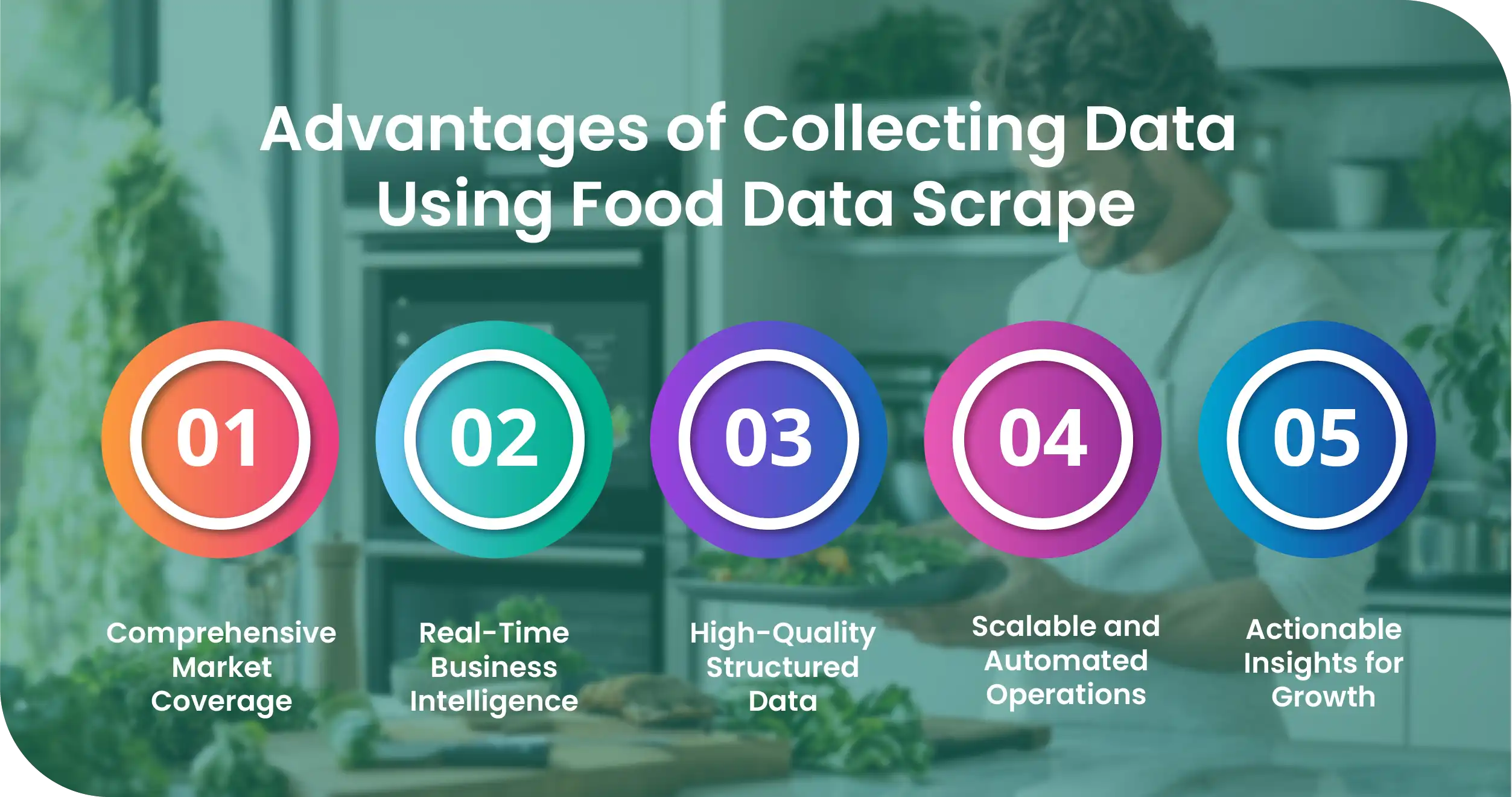
Advantages of Collecting Data Using Food Data Scrape
-
Comprehensive Market Coverage
Our data scraping services collect information from multiple platforms, regions, and categories simultaneously. This broad coverage provides businesses with a complete market view, helping identify competitive opportunities, emerging trends, pricing shifts, and customer preferences that might otherwise remain unnoticed. -
Real-Time Business Intelligence
We deliver continuously updated datasets that reflect the latest market developments. Businesses gain immediate visibility into menu changes, promotions, pricing fluctuations, and operational trends, enabling faster responses to market dynamics and more informed strategic decision-making processes. -
High-Quality Structured Data
Our advanced validation and cleansing processes transform raw information into accurate, standardized datasets. This ensures consistency across sources, reduces analytical errors, improves reporting quality, and provides reliable foundations for forecasting, benchmarking, and performance measurement initiatives. -
Scalable and Automated Operations
Automated collection frameworks eliminate manual research efforts and support large-scale data acquisition. Organizations can efficiently monitor thousands of restaurants, products, and locations while reducing operational costs, improving productivity, and maintaining consistent data availability over time. -
Actionable Insights for Growth
Beyond data collection, we convert information into meaningful intelligence through analytics and visualization. Businesses can uncover demand patterns, evaluate competitor strategies, optimize pricing decisions, identify expansion opportunities, and develop targeted growth plans supported by evidence-based market insights.
Client’s Testimonial
"The data scraping solution delivered exceptional value to our market research initiatives. The team successfully automated large-scale collection of restaurant menus, pricing updates, promotional offers, and delivery metrics across multiple platforms. Their structured datasets significantly improved our competitive analysis capabilities and reduced the time spent on manual research. The real-time insights enabled us to identify emerging market trends, benchmark competitors effectively, and make data-driven strategic decisions with confidence. Their professionalism, technical expertise, and commitment to data accuracy exceeded our expectations. We highly recommend their services to organizations seeking reliable and scalable market intelligence solutions."
— Head of Market Research & Competitive Intelligence
Final Outcome
The project delivered a centralized and scalable market intelligence ecosystem that transformed fragmented restaurant and delivery platform information into actionable business insights. The client gained complete visibility into pricing movements, promotional strategies, menu updates, and regional demand patterns across multiple food delivery platforms. Automated collection and processing significantly reduced manual research efforts while improving data accuracy and reporting speed.
The implementation of a comprehensive Food Price Dashboard enabled stakeholders to monitor market changes in real time, compare competitors, and identify emerging opportunities with greater confidence.
Additionally, structured Food Datasets provided a reliable foundation for advanced analytics, forecasting, and trend analysis. As a result, the client improved strategic planning, enhanced competitive benchmarking, accelerated decision-making processes, and established a sustainable data-driven framework for ongoing market research and business growth.