The Client
The client is a leading food delivery analytics firm specializing in competitive intelligence solutions for the Asian quick-commerce and restaurant delivery ecosystem. With a strong focus on data-driven decision-making, the client works with enterprises, aggregators, and retail analysts to uncover actionable insights from large-scale food delivery platforms.
By leveraging advanced analytics and automated data pipelines, the client continuously monitors pricing fluctuations, promotional strategies, and menu updates across multiple regions. Their objective is to help businesses understand market behavior and optimize pricing strategies for better profitability and customer engagement.
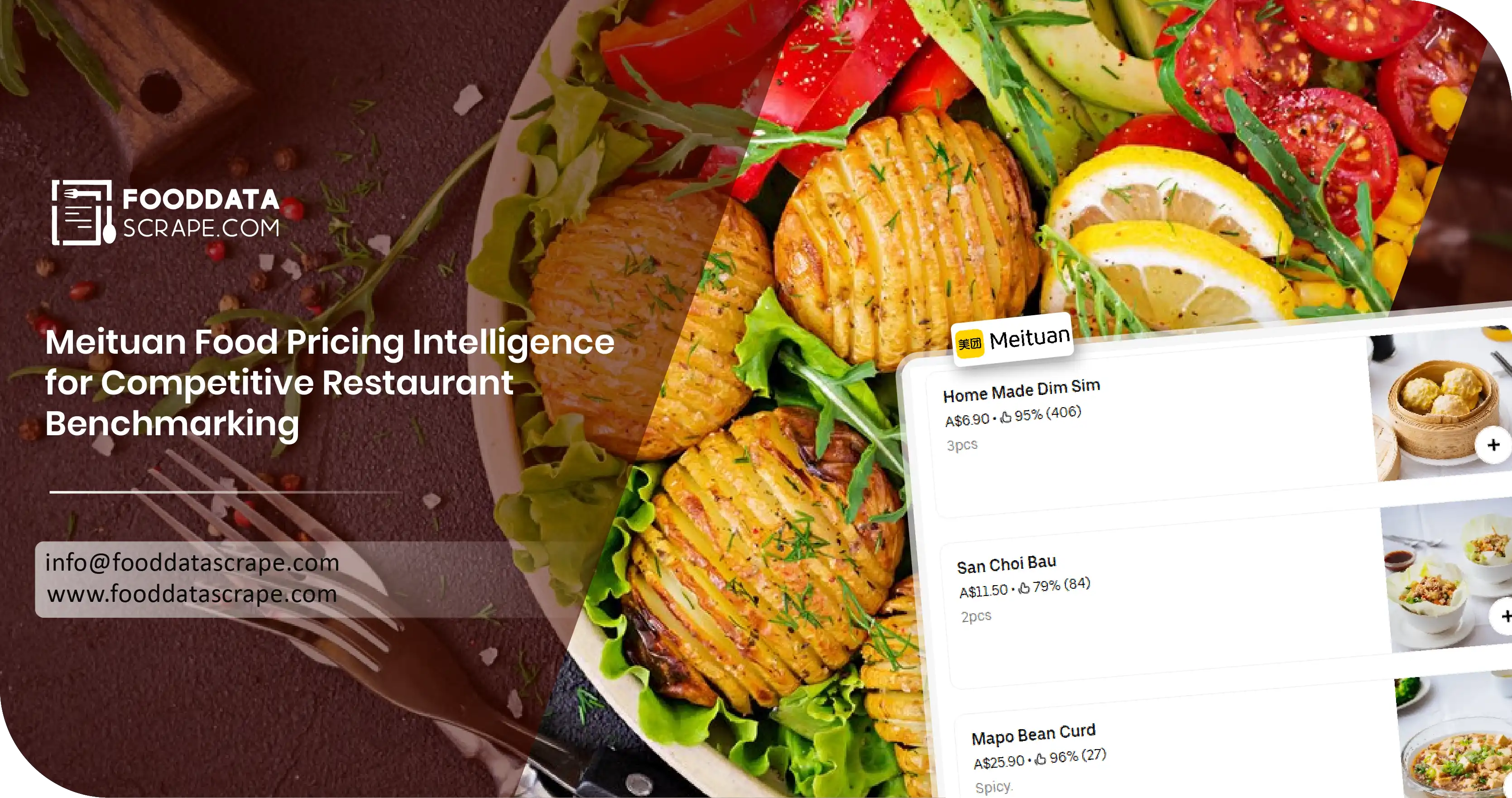
Through Meituan Dynamic Pricing Intelligence, the client gains real-time visibility into restaurant-level pricing shifts and demand-based adjustments across Meituan’s ecosystem.
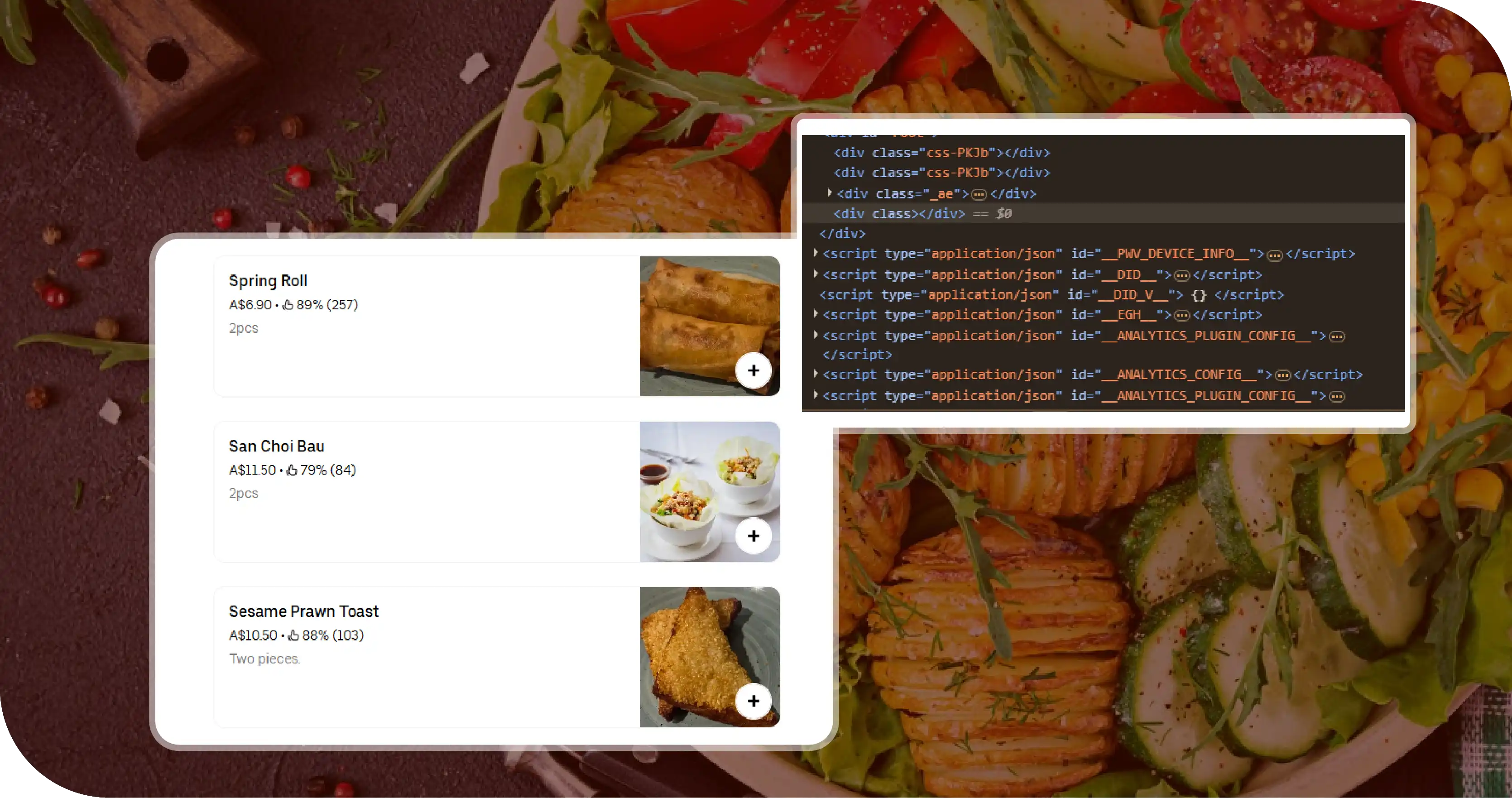
Their core operations also include large-scale Scrape Meituan Restaurant Menu Data processes, enabling structured extraction of menu items, categories, and pricing details for deep comparative analysis.
Additionally, they rely on Scrape Real-Time Meituan Food Prices to track live price changes, enabling faster reactions to competitor movements and market trends.
Key Challenges
-
API Integration Limitations
One of the major challenges faced by the client was the lack of consistent access to structured restaurant data across multiple sources. Integrating Meituan Food Data Scraping API required handling frequent schema changes, rate limits, and anti-bot mechanisms, which often disrupted continuous data flow and delayed analytics processing. -
Data Volume and Real-Time Extraction
Managing large-scale, high-frequency updates from multiple restaurants created significant processing pressure. With Web Scraping Food Delivery Data, the client struggled to maintain real-time accuracy while handling massive data volumes, ensuring freshness of pricing, menu updates, and promotional changes without compromising system performance or speed. -
Unstructured Menu Data Challenges
Restaurant listings often contained inconsistent formats, missing attributes, and dynamic updates. Using Extract Restaurant Menu Data, the client faced difficulties in standardizing menus across cuisines and regions, requiring advanced cleaning, normalization, and validation techniques to ensure reliable and comparable datasets for pricing intelligence and trend analysis.
Key Solutions
-
Scalable Data Ingestion Framework
We built a high-performance ingestion system capable of handling large-scale restaurant and pricing feeds with minimal delay. It ensured continuous data capture, reduced latency issues, and maintained accuracy across dynamic updates, allowing the client to process live market signals efficiently and reliably using Food Delivery Scraping API for uninterrupted data flow. -
Structured Intelligence Transformation Layer
We developed a unified data processing layer that converted raw and unstructured restaurant feeds into clean, structured insights. This enabled consistent comparison of menus, pricing, and promotions across regions, improving analytical depth and decision-making accuracy through advanced Restaurant Data Intelligence capabilities for competitive benchmarking and market evaluation. -
Real-Time Monitoring and Insight Delivery System
We implemented a real-time tracking system that continuously monitored pricing fluctuations, menu updates, and competitor changes. This allowed instant visibility into market dynamics and supported faster strategic responses. The system strengthened overall decision-making efficiency using advanced Food delivery Intelligence for live market optimization and performance tracking.
Sample Scraped Data Table
| Restaurant Name | Item Name | Price (₹) | Discount (%) | Rating | Delivery Time | City | Platform |
|---|---|---|---|---|---|---|---|
| Spice Hub | Chicken Biryani | 220 | 10 | 4.3 | 30 mins | Mumbai | Meituan |
| Urban Tadka | Paneer Wrap | 150 | 15 | 4.1 | 25 mins | Delhi | Meituan |
| Green Bowl | Salad Combo | 180 | 5 | 4.5 | 20 mins | Bangalore | Meituan |
| Food Castle | Veg Burger | 130 | 12 | 4.0 | 28 mins | Pune | Meituan |
| Taste Garden | Noodles Box | 200 | 8 | 4.2 | 35 mins | Kolkata | Meituan |
| Dragon Wok | Fried Rice | 210 | 10 | 4.4 | 32 mins | Chennai | Meituan |
| Curry Point | Butter Chicken | 250 | 18 | 4.6 | 30 mins | Hyderabad | Meituan |
| Snack House | Sandwich Combo | 120 | 5 | 3.9 | 22 mins | Jaipur | Meituan |
Methodologies Used
-
Large-Scale Data Collection Framework
We implemented a distributed data collection system capable of handling high-volume restaurant and pricing information. It ensured continuous extraction from multiple sources while maintaining stability, scalability, and minimal downtime, enabling consistent access to dynamic food delivery ecosystem data. -
Automated Data Extraction Pipelines
We built automated pipelines to streamline repetitive data gathering tasks. These pipelines reduced manual intervention, improved extraction speed, and ensured structured retrieval of restaurant menus, pricing, and promotional updates across different platforms in real time. -
Data Cleaning and Normalization Process
We applied advanced cleaning techniques to remove duplicates, correct inconsistencies, and standardize formats. This ensured uniform datasets across regions, making it easier to compare pricing, menus, and restaurant attributes for deeper analytical insights and reliable reporting. -
Real-Time Processing Architecture
We designed a real-time processing system that continuously ingests and updates incoming data streams. This allowed instant reflection of market changes, ensuring the client always worked with the most current and accurate restaurant and pricing information available. -
Scalable Analytics Infrastructure
We developed a scalable analytics environment that supported large datasets and complex queries. This infrastructure enabled fast computation, efficient storage handling, and seamless performance even during peak data loads, supporting advanced competitive and market analysis tasks.
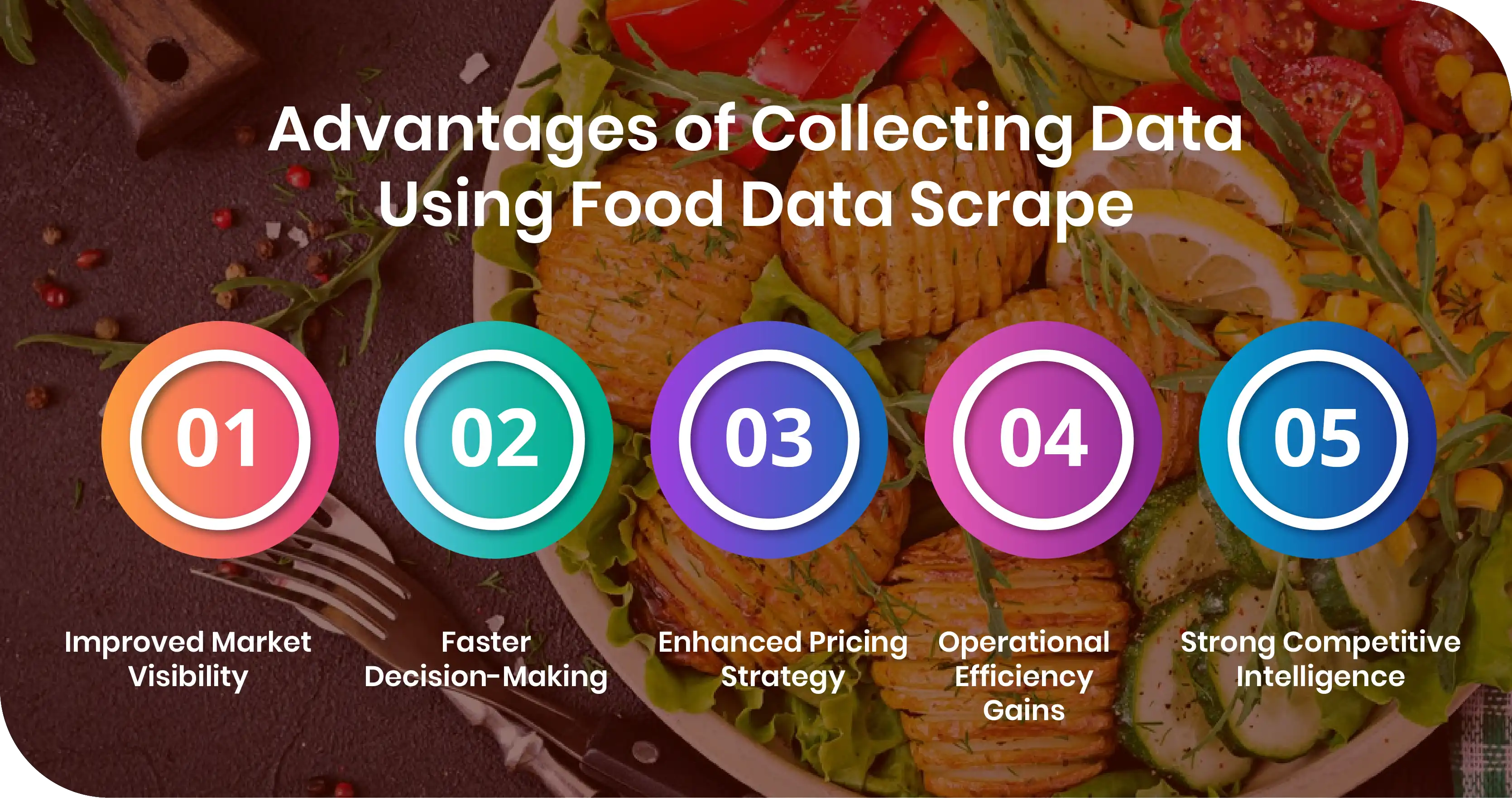
Advantages of Collecting Data Using Food Data Scrape
-
Improved Market Visibility
The solution provided complete visibility into restaurant pricing, menus, and promotional strategies across multiple regions. This enabled faster identification of market trends, helping businesses react quickly to competitor changes and optimize their positioning effectively in a highly dynamic environment. -
Faster Decision-Making
With real-time access to structured insights, decision-makers could quickly evaluate pricing shifts and demand patterns. This reduced dependency on manual research and allowed teams to take timely actions that improved operational efficiency and strengthened competitive strategy execution. -
Enhanced Pricing Strategy
The system enabled detailed comparison of pricing across restaurants and locations. Businesses could identify underpriced or overpriced items, refine their menu strategies, and align pricing with market expectations, improving both profitability and customer engagement. -
Operational Efficiency Gains
Automation reduced manual effort in data collection and processing, allowing teams to focus on analysis rather than extraction. This significantly improved workflow efficiency, reduced errors, and ensured consistent delivery of high-quality structured insights for business use. -
Strong Competitive Intelligence
The solution delivered deep insights into competitor behavior, promotional trends, and menu adjustments. This helped organizations stay ahead in the market by anticipating changes and responding proactively with data-backed strategies that improved overall market performance.
Client’s Testimonial
We partnered with the team to strengthen our food delivery analytics capabilities, and the results have been outstanding. Their data solutions helped us gain real-time visibility into pricing shifts, restaurant menus, and competitive strategies across multiple regions. The accuracy, consistency, and scalability of the insights significantly improved our decision-making process. We were able to optimize pricing strategies and respond faster to market changes than ever before. The implementation was smooth, and the support team was highly responsive throughout. Overall, this collaboration has greatly enhanced our operational efficiency and strengthened our position in a highly competitive food delivery ecosystem.
— Head of Data Analytics
Final Outcome
The final outcome of the project delivered a highly scalable and accurate food delivery analytics system that transformed raw restaurant and pricing information into actionable insights. The client was able to monitor real-time market trends, optimize pricing strategies, and improve competitive positioning across multiple regions. Decision-making became faster and more data-driven, reducing reliance on manual research. The system also enhanced operational efficiency by automating data collection and standardization processes. Overall, the solution significantly improved business intelligence capabilities and enabled sustained growth in a highly dynamic food delivery ecosystem.
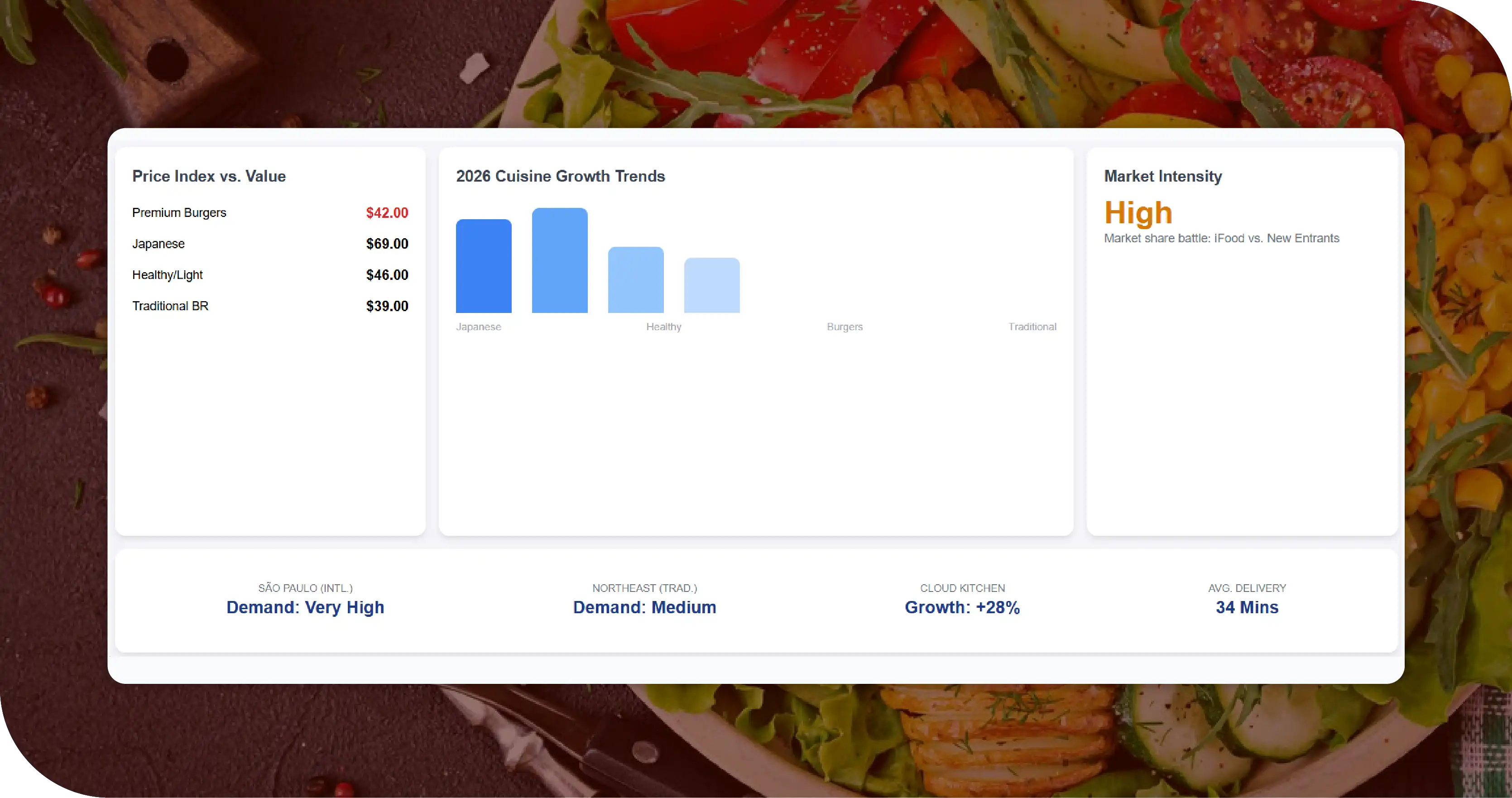
The implementation of Food Price Dashboard provided real-time visibility into pricing fluctuations and market behavior, helping teams respond instantly to competitor changes.
Additionally, high-quality Food Datasets enabled deeper analysis, improved forecasting accuracy, and strengthened long-term strategic planning for better business outcomes.