
The Plant-Based Food Trends Data Scraping report provides detailed insights into the rapidly expanding global plant-based food ecosystem through consumer analytics, pricing intelligence, competitive monitoring, and market trend analysis. As demand for vegan, vegetarian, and sustainable food products continues to grow, businesses require accurate real-time datasets to understand product performance, customer preferences, and market opportunities.
This report highlights how automated data scraping solutions collect valuable information from grocery platforms, online marketplaces, restaurant applications, and food delivery channels. By analyzing pricing changes, product availability, promotions, customer reviews, menu innovations, and regional demand patterns, organizations can make informed decisions regarding product development, retail expansion, and competitive positioning.
AI-powered analytics further enhance forecasting, segmentation, and trend identification. The research demonstrates how plant-based food intelligence supports manufacturers, retailers, restaurants, investors, and researchers in optimizing strategies and achieving sustainable growth in an increasingly data-driven global food market.
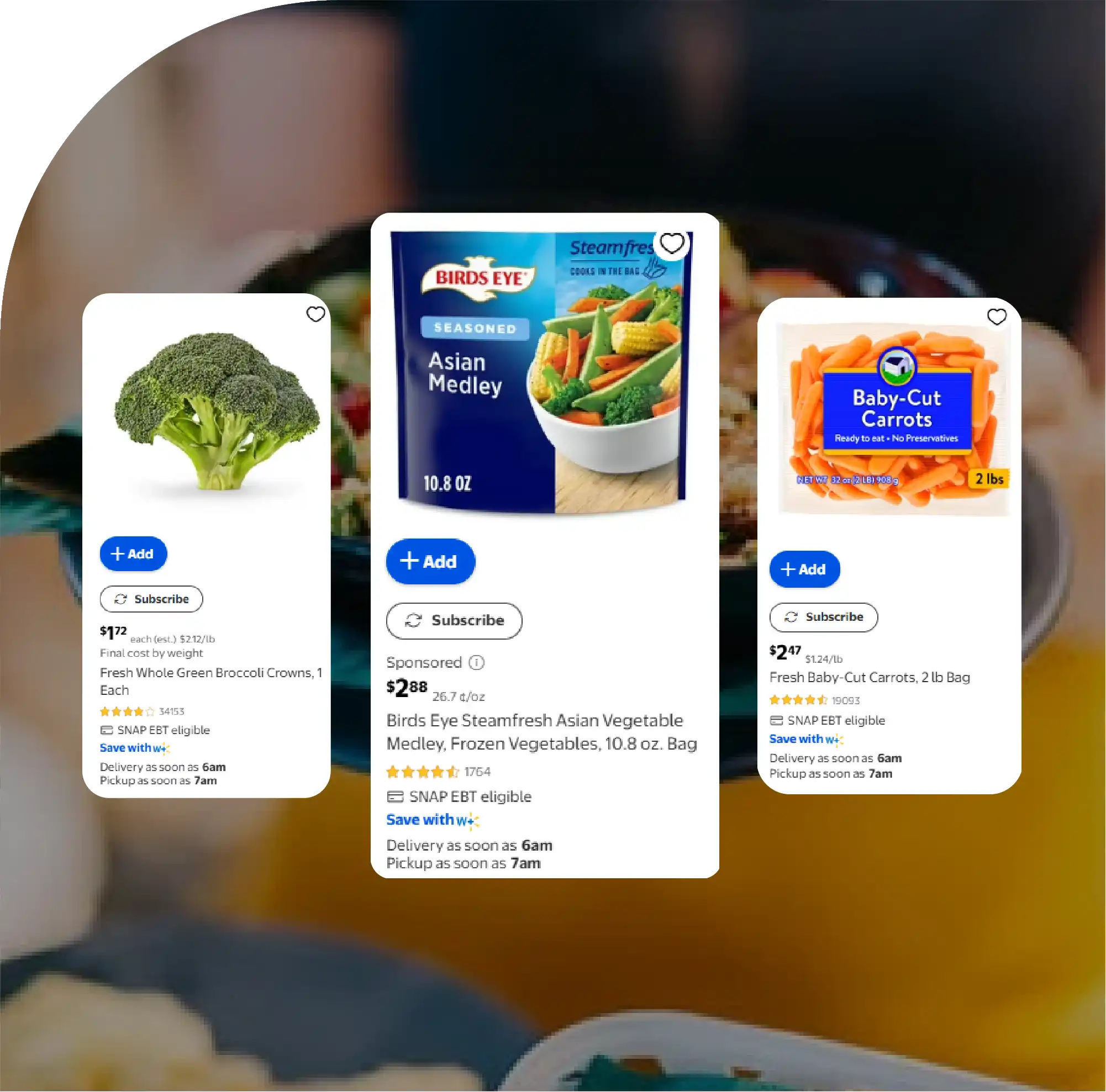
Market Intelligence
Analyzes plant-based trends, competition, and consumer demand worldwide.
Pricing Analytics
Tracks prices, discounts, promotions, and retailer strategies.
Consumer Insights
Evaluates preferences, reviews, ratings, and purchasing behavior.
Category Monitoring
Tracks vegan products, alternatives, and emerging food segments.
Competitive Analysis
Benchmarks brands, menus, availability, and market positioning.

The global plant-based food industry is entering a new era where consumer demand is shaped by health consciousness, sustainability goals, evolving dietary preferences, and rapid innovation across retail and food delivery platforms. Brands, retailers, investors, and food manufacturers increasingly rely on real-time market intelligence to understand changing purchasing behavior, pricing strategies, and competitive positioning. Plant-Based Food Trends Data Scraping has become one of the most effective approaches for collecting large-scale market information from grocery stores, quick commerce apps, online marketplaces, restaurant platforms, and food delivery services.
As businesses prepare for future consumer demand, many organizations now Scrape Plant-Based Food Trends 2026 to identify emerging products, regional preferences, ingredient innovations, promotional campaigns, and pricing fluctuations before competitors react. Continuous data collection enables companies to monitor market evolution rather than depending solely on periodic research reports.
Modern analytics platforms also utilize Plant-Based Food Consumer Trend Analytics to evaluate customer preferences across vegan meat substitutes, dairy alternatives, protein snacks, frozen meals, beverages, desserts, and restaurant menus. These insights support strategic decisions related to product development, assortment planning, retail expansion, pricing optimization, and customer engagement.
The plant-based food sector has evolved beyond niche consumer segments into mainstream grocery retail and food service industries. Supermarkets continue expanding vegan and vegetarian product assortments while restaurants introduce innovative plant-based menu options to satisfy flexitarian consumers.
Key market drivers include:
Instead of relying on quarterly surveys, companies now analyze millions of live product listings, menu updates, promotional campaigns, customer ratings, and inventory changes through automated data collection.
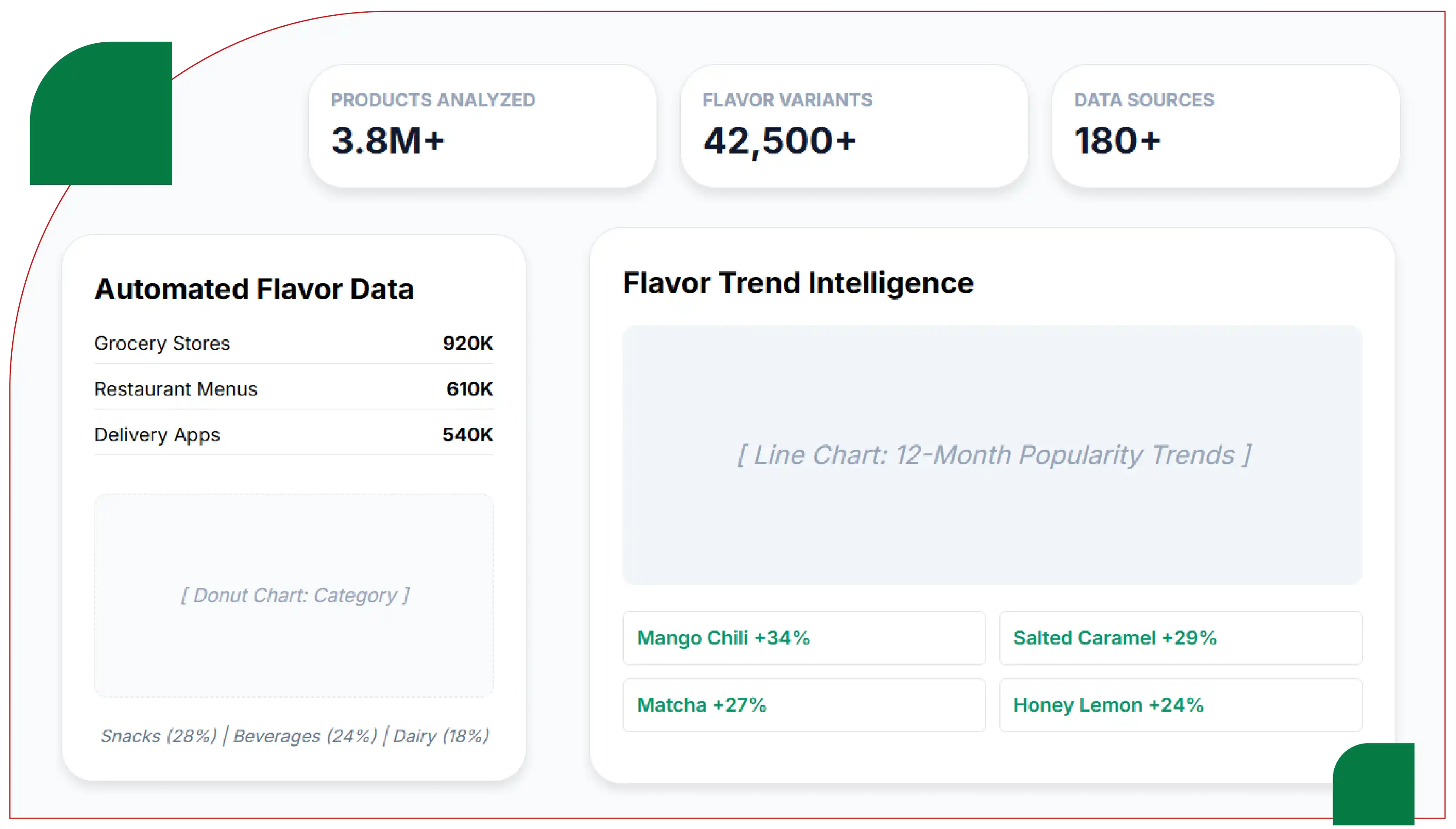
Traditional market research often captures only a small sample of the overall market. Automated data scraping provides continuous visibility into thousands of products across multiple countries simultaneously.
Organizations can monitor:
This real-time intelligence enables faster strategic decisions throughout the supply chain.
Plant-based food intelligence can be collected from numerous digital sources.
Primary data sources include:
Each platform contributes unique insights into pricing, assortment, promotions, and consumer preferences.
Modern scraping systems collect highly structured datasets.
Typical attributes include:
These variables support advanced business analytics.
Companies monitor numerous plant-based categories including:
Tracking these categories reveals growth opportunities and consumer demand shifts.
| Product Category | Products Tracked | Avg Price (USD) | Monthly Price Change | Avg Rating | Retail Availability (%) | Weekly Promotions | Market Share (%) |
|---|---|---|---|---|---|---|---|
| Plant-Based Burgers | 1,420 | 6.89 | +2.8% | 4.6 | 96 | 238 | 18.4 |
| Oat Milk | 1,130 | 4.35 | +1.4% | 4.7 | 98 | 194 | 14.2 |
| Almond Milk | 980 | 3.98 | +0.9% | 4.5 | 99 | 185 | 12.1 |
| Vegan Cheese | 840 | 5.72 | +3.1% | 4.4 | 91 | 152 | 8.9 |
| Plant Yogurt | 760 | 3.64 | +1.8% | 4.5 | 89 | 141 | 7.6 |
| Vegan Ice Cream | 610 | 5.81 | +2.2% | 4.6 | 83 | 122 | 6.4 |
| Plant Protein Powder | 540 | 24.20 | +0.8% | 4.8 | 87 | 71 | 5.7 |
| Vegan Snacks | 1,690 | 3.92 | +2.5% | 4.4 | 95 | 286 | 11.8 |
| Plant Ready Meals | 930 | 7.46 | +3.5% | 4.3 | 86 | 109 | 8.1 |
| Vegan Desserts | 470 | 5.34 | +2.0% | 4.5 | 79 | 82 | 6.8 |
Organizations increasingly Scrape Plant-Based Food Pricing Data to understand competitor pricing strategies, discount frequencies, regional price differences, and promotional effectiveness.
Pricing analytics helps businesses:
Dynamic pricing intelligence provides a significant competitive advantage.
Understanding customer preferences has become equally important as monitoring prices.
Behavior analytics includes:
These insights improve product development strategies.
Artificial intelligence transforms raw datasets into actionable business intelligence.
AI models identify:
Machine learning continuously improves forecasting accuracy as more market data becomes available.
Businesses use Plant-Based Food Market Intelligence to compare their performance against competitors across multiple retail channels.
Competitive monitoring measures:
Benchmarking enables data-driven strategic planning.
Consumers purchase plant-based foods from numerous channels.
These include:
Cross-channel monitoring creates a complete view of the market.
Businesses entering new markets require reliable competitive intelligence.
Using Plant-Based Food Market Data Extraction, organizations evaluate:
These insights reduce expansion risks.
Restaurant menus increasingly feature plant-based alternatives.
Companies utilize Web Scraping Food Delivery Data to monitor:
This information reflects evolving dining preferences.
Restaurant operators frequently update digital menus.
Businesses Extract Restaurant Menu Data to analyze:
Menu intelligence supports both suppliers and restaurant chains.
Modern businesses increasingly integrate Food Delivery Scraping API solutions for automated collection of menu, restaurant, pricing, and delivery information.
API-based automation provides:
Companies leverage Restaurant Data Intelligence to understand restaurant competitiveness across delivery ecosystems.
Key metrics include:
These metrics improve restaurant strategy and supplier engagement.
| Region | Restaurants Offering Plant-Based Menu | Avg Plant-Based Menu Items | Avg Meal Price (USD) | Avg Delivery Time (Min) | Customer Rating | Weekly Promotions | Monthly Orders |
|---|---|---|---|---|---|---|---|
| North America | 5,840 | 18 | 14.60 | 29 | 4.6 | 1,240 | 2,980,000 |
| Europe | 4,930 | 21 | 13.90 | 31 | 4.5 | 1,120 | 2,540,000 |
| United Kingdom | 2,120 | 17 | 13.20 | 28 | 4.6 | 520 | 1,180,000 |
| Germany | 1,870 | 20 | 12.95 | 30 | 4.5 | 438 | 960,000 |
| France | 1,530 | 16 | 14.15 | 33 | 4.4 | 386 | 810,000 |
| Australia | 1,180 | 19 | 15.80 | 27 | 4.7 | 271 | 640,000 |
| Singapore | 890 | 22 | 12.70 | 24 | 4.6 | 238 | 510,000 |
| India | 3,760 | 15 | 8.60 | 26 | 4.5 | 1,040 | 3,420,000 |
| UAE | 1,040 | 18 | 13.85 | 27 | 4.6 | 301 | 560,000 |
| Japan | 960 | 14 | 12.45 | 32 | 4.4 | 209 | 470,000 |
Plant-based food intelligence supports numerous industries.
Major users include:
Each stakeholder benefits from continuous market visibility.
The plant-based food ecosystem will continue expanding through innovation in protein technology, personalized nutrition, sustainable sourcing, and AI-driven retail optimization.
Future market intelligence platforms will increasingly combine pricing, promotions, inventory, restaurant menus, consumer sentiment, nutrition, sustainability metrics, and predictive analytics into unified dashboards. Businesses adopting automated data collection today will be better positioned to anticipate market shifts, optimize product portfolios, and strengthen competitive performance in rapidly evolving food markets.
The plant-based food industry is becoming increasingly data-driven, requiring businesses to move beyond traditional market research toward continuous, real-time intelligence. Automated data scraping empowers organizations to monitor pricing, product availability, restaurant menus, promotions, and evolving consumer preferences across retail and delivery ecosystems.
Integrating Food delivery Intelligence enables businesses to monitor consumer ordering patterns, restaurant performance, and evolving delivery trends with greater accuracy.
An interactive Food Price Dashboard helps organizations visualize pricing fluctuations, promotional activity, and competitive positioning across multiple retailers and regions.
Comprehensive Food Datasets provide the foundation for predictive analytics, demand forecasting, product innovation, and strategic decision-making, helping companies maintain a sustainable competitive advantage in the rapidly growing global plant-based food market.
If you are seeking for a reliable data scraping services, Food Data Scrape is at your service. We hold prominence in Food Data Aggregator and Mobile Restaurant App Scraping with impeccable data analysis for strategic decision-making.