The Client
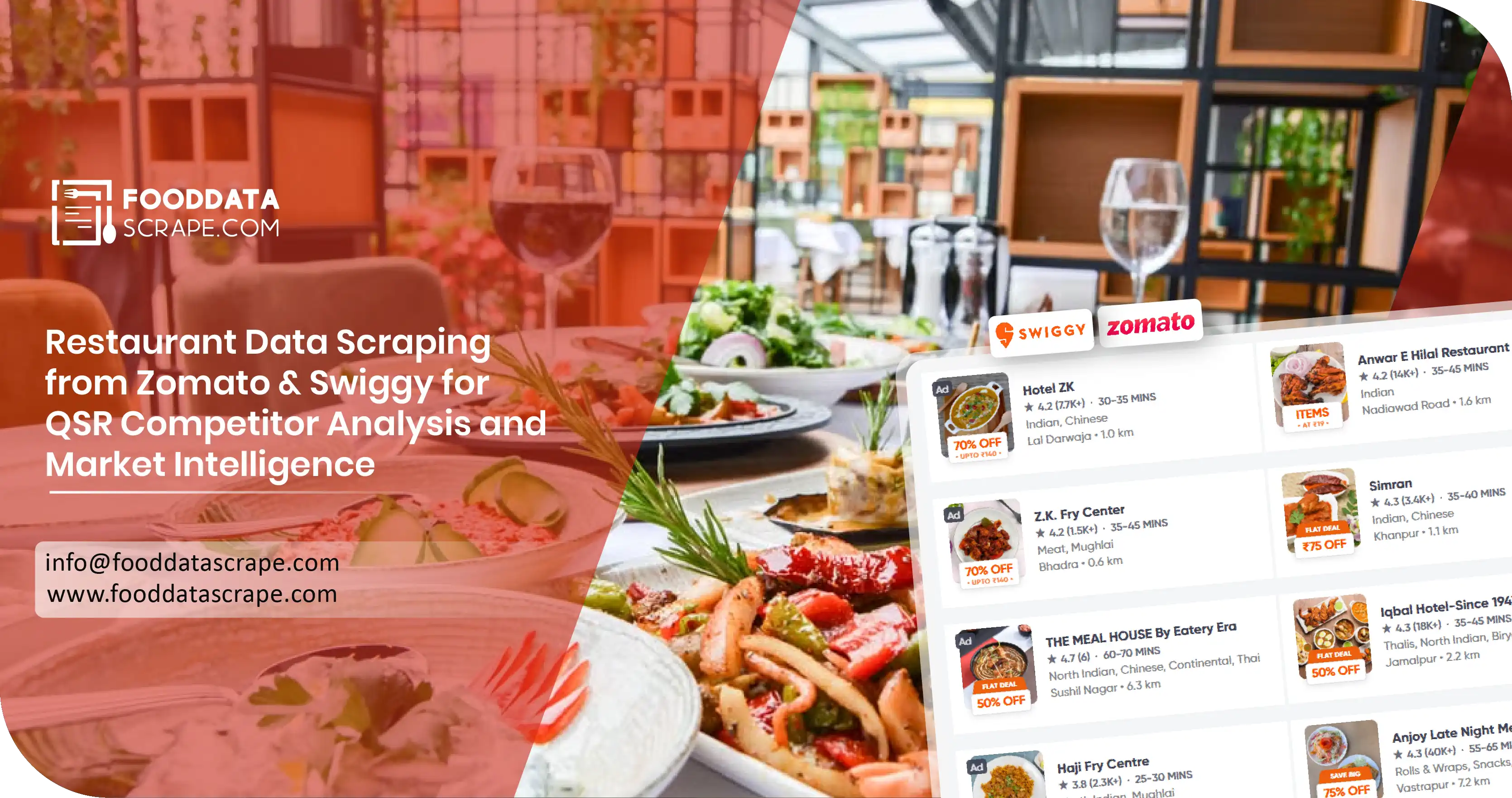
The client is a rapidly growing quick-service restaurant (QSR) brand operating across multiple cities and serving a diverse customer base through online food delivery platforms. As competition intensified, the company sought a reliable way to monitor competitor pricing, menu updates, promotional offers, customer ratings, and delivery performance in real time.
To support strategic decision-making, the client invested in Restaurant Menu & Pricing Data Extraction solutions that provided continuous visibility into market trends and competitor activities. This enabled the brand to benchmark its offerings and identify opportunities for menu optimization.
The organization also leveraged Food Delivery Data Scraping for QSR Market Research to understand changing consumer preferences, regional demand patterns, and emerging food categories across major delivery platforms.
Additionally, Restaurant Menu & Pricing Data Scraping for Competitive Analysis helped the client track pricing strategies, promotional campaigns, and menu innovations adopted by competitors. These insights empowered the business to refine pricing, improve customer engagement, and strengthen its competitive position in the fast-evolving food delivery marketplace.
Key Challenges
-
Limited Visibility into Competitor Pricing
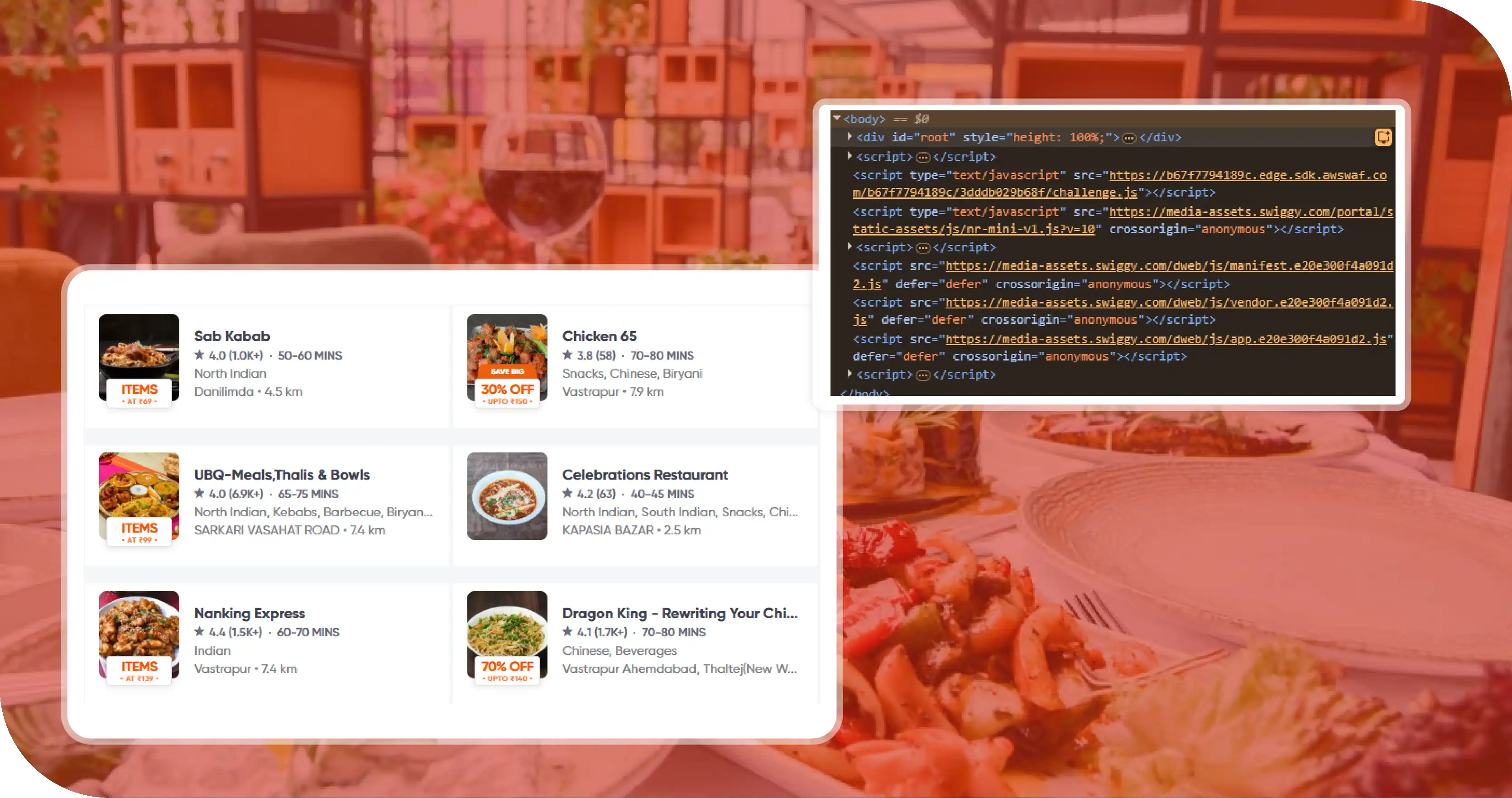
The client struggled to monitor frequent menu price changes, discount campaigns, and promotional offers across multiple competitors. Without a centralized Zomato Food Delivery Dataset, tracking market movements manually was time-consuming, inconsistent, and insufficient for making timely pricing and revenue optimization decisions. -
Difficulty Tracking Menu Performance Across Platforms
Competitors regularly introduced new products, combo meals, and seasonal offerings. The absence of a structured Swiggy Restaurant Dataset made it challenging to compare menu assortments, identify trending food categories, and understand which products were driving customer engagement and higher order volumes. -
Lack of Real-Time Market Intelligence
The client lacked access to accurate and continuously updated competitor information. Without automated Web Scraping Food Delivery Data, it was difficult to monitor customer ratings, reviews, delivery charges, availability patterns, and promotional strategies, limiting their ability to respond quickly to changing market conditions.
Key Solutions
-
Automated Competitor Menu & Pricing Monitoring
We implemented a robust solution to Extract Restaurant Menu Data from leading food delivery platforms. The system continuously tracked menu items, pricing updates, combo offers, delivery fees, and promotional campaigns, providing the client with real-time visibility into competitor strategies and market movements across multiple cities. -
Real-Time Data Collection Infrastructure
Our customized Food Delivery Scraping API enabled automated extraction of restaurant listings, ratings, reviews, delivery timelines, availability status, and discount information. The client received structured datasets through scheduled updates, eliminating manual monitoring and ensuring accurate, scalable, and timely competitive intelligence. -
Advanced Analytics & Market Intelligence Dashboard
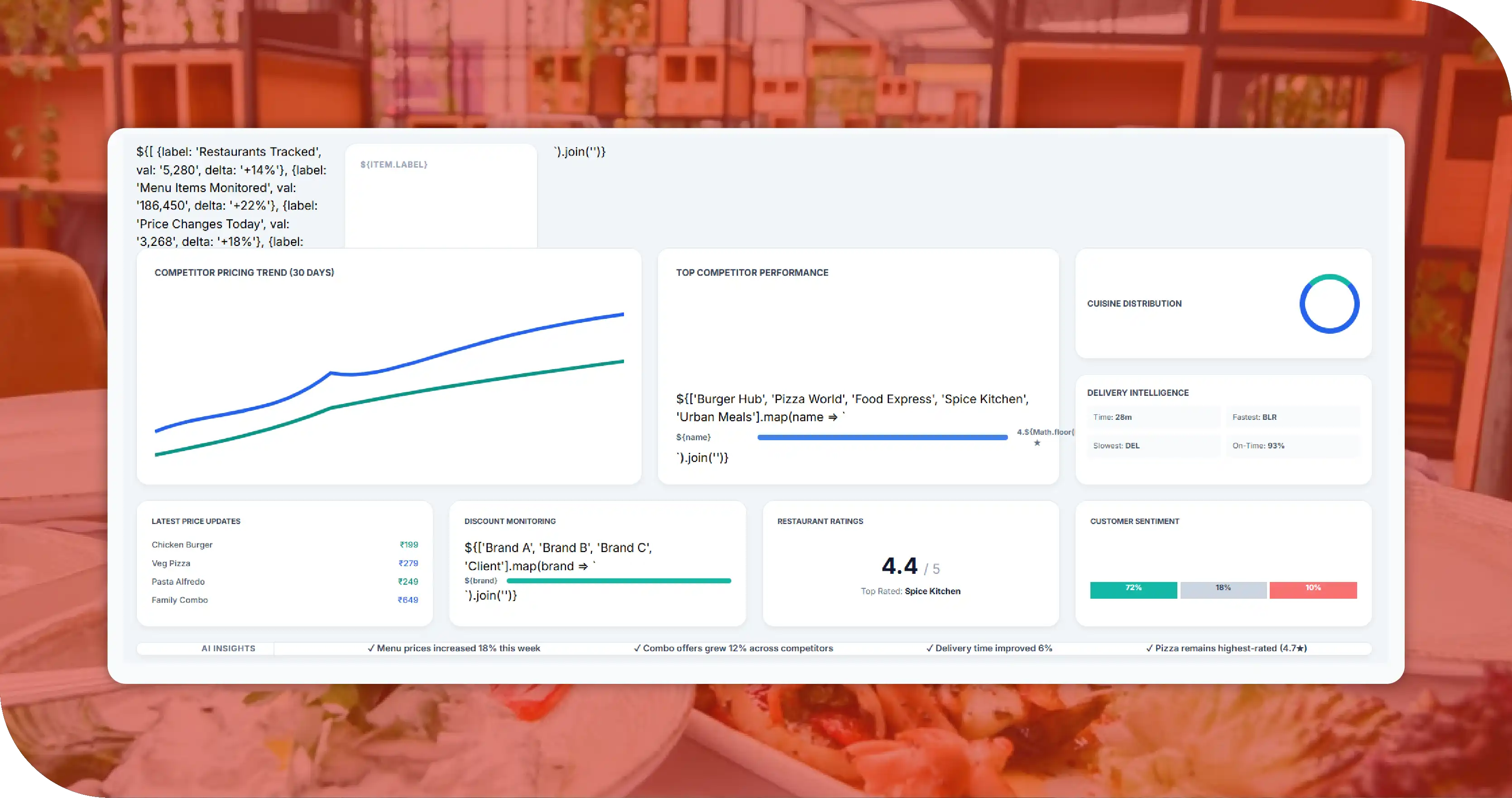
We delivered actionable Restaurant Data Intelligence through interactive dashboards and reporting frameworks. The platform transformed raw food delivery data into meaningful insights, helping the client benchmark competitors, identify pricing opportunities, optimize menu offerings, and make faster strategic decisions based on market trends.
Sample Scraped Dataset Delivered
| Date | Platform | City | Restaurant Name | Category | Menu Item | Listed Price | Discount % | Final Price | Rating | Reviews | Delivery Fee | Delivery Time | Availability | Promotion Type |
|---|---|---|---|---|---|---|---|---|---|---|---|---|---|---|
| 2026-05-01 | Zomato | Mumbai | Burger Hub | Burgers | Classic Burger | ₹199 | 15% | ₹169 | 4.3 | 8,245 | ₹25 | 28 min | Yes | Flat Discount |
| 2026-05-01 | Swiggy | Delhi | Pizza Express | Pizza | Veg Supreme Pizza | ₹349 | 20% | ₹279 | 4.4 | 12,430 | ₹35 | 32 min | Yes | Combo Offer |
| 2026-05-01 | Zomato | Bengaluru | Chicken Point | Fast Food | Chicken Bucket | ₹499 | 10% | ₹449 | 4.2 | 6,120 | ₹29 | 30 min | Yes | Weekend Offer |
| 2026-05-01 | Swiggy | Hyderabad | Wrap Nation | Wraps | Paneer Wrap | ₹189 | 25% | ₹142 | 4.5 | 4,880 | ₹20 | 25 min | Yes | Limited Deal |
| 2026-05-01 | Zomato | Chennai | Biryani House | Biryani | Chicken Biryani | ₹299 | 18% | ₹245 | 4.6 | 15,340 | ₹19 | 27 min | Yes | Festival Offer |
| 2026-05-01 | Swiggy | Pune | Taco Town | Mexican | Veg Taco Meal | ₹259 | 12% | ₹228 | 4.1 | 3,950 | ₹30 | 34 min | Yes | Meal Combo |
| 2026-05-01 | Zomato | Kolkata | Asian Bowl | Asian | Noodles Combo | ₹279 | 22% | ₹218 | 4.4 | 5,720 | ₹22 | 29 min | Yes | Combo Discount |
| 2026-05-01 | Swiggy | Ahmedabad | Grill Factory | BBQ | Chicken Grill | ₹389 | 15% | ₹331 | 4.3 | 7,440 | ₹25 | 31 min | Yes | Limited Offer |
| 2026-05-01 | Zomato | Jaipur | Cafe Delight | Cafe | Cold Coffee | ₹149 | 10% | ₹134 | 4.2 | 2,860 | ₹15 | 22 min | Yes | Beverage Deal |
| 2026-05-01 | Swiggy | Lucknow | Roll Junction | Rolls | Chicken Roll | ₹179 | 20% | ₹143 | 4.5 | 6,930 | ₹18 | 24 min | Yes | Flash Sale |
| 2026-05-01 | Zomato | Surat | Sandwich Corner | Sandwiches | Veg Club Sandwich | ₹169 | 15% | ₹144 | 4.1 | 2,780 | ₹20 | 26 min | Yes | Lunch Offer |
| 2026-05-01 | Swiggy | Indore | Dessert Hub | Desserts | Choco Lava Cake | ₹129 | 25% | ₹97 | 4.6 | 4,540 | ₹12 | 18 min | Yes | Sweet Deal |
Methodologies Used
-
Requirement Mapping & Competitor Identification
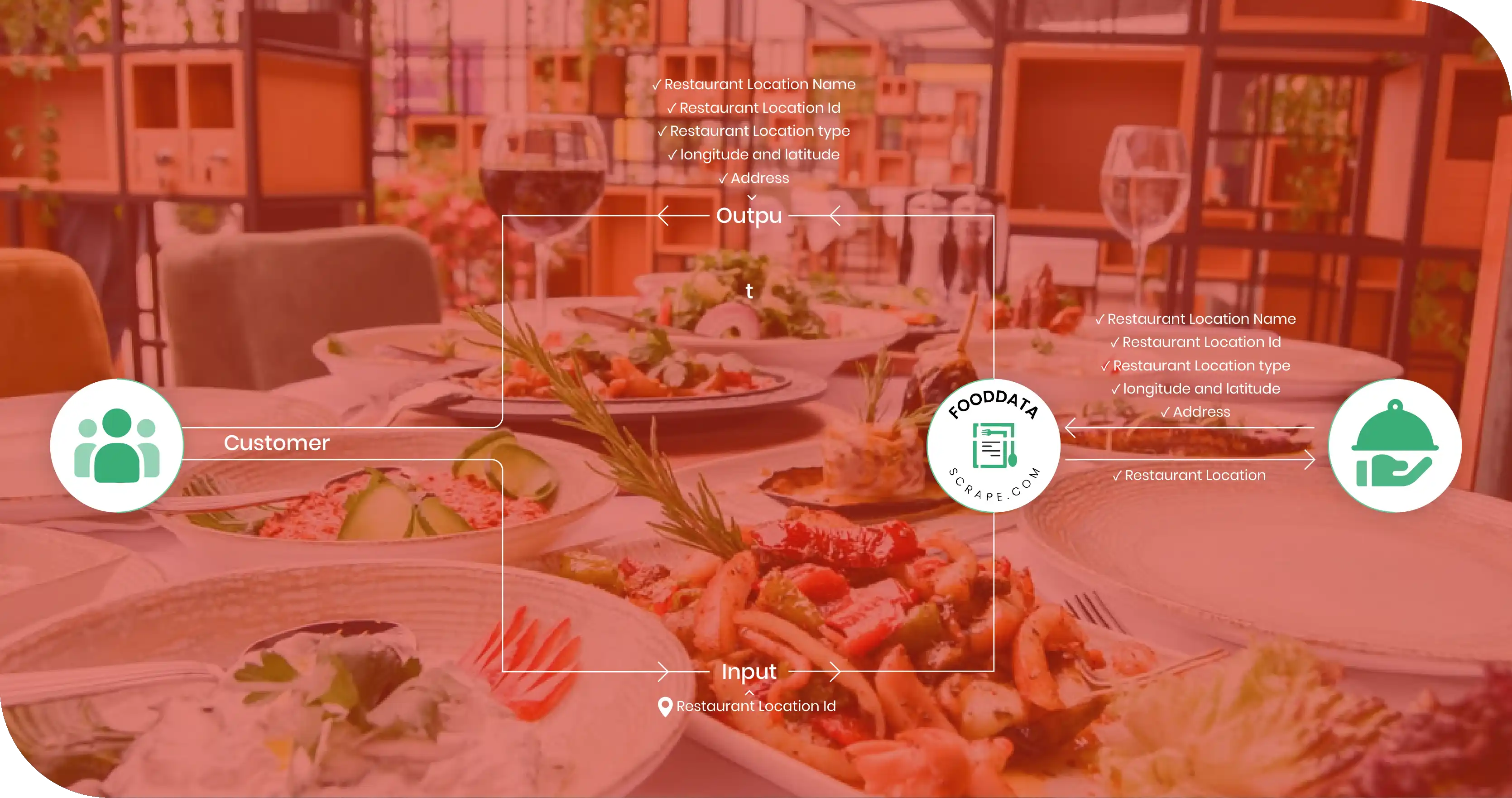
We began by identifying the client's target markets, key competitors, restaurant categories, and business objectives. This planning phase ensured data collection focused on relevant locations, brands, pricing segments, and customer engagement metrics, creating a strong foundation for meaningful analysis. -
Automated Data Collection Framework
A scalable collection framework was configured to gather restaurant information at scheduled intervals. The system captured menu updates, pricing changes, promotional offers, ratings, reviews, and delivery details, ensuring consistent and timely visibility into evolving market conditions and competitor activities. -
Data Validation & Quality Assurance
Collected information underwent multiple validation checks to remove duplicates, standardize formats, and verify accuracy. Quality control procedures ensured reliable datasets, allowing stakeholders to trust insights generated from the information and confidently support strategic decision-making processes. -
Data Structuring & Comparative Analysis
The gathered information was organized into structured datasets and categorized by geography, cuisine, restaurant type, pricing tier, and promotion category. Comparative analysis techniques were then applied to identify pricing trends, menu gaps, emerging opportunities, and competitive strengths. -
Dashboard Development & Insight Delivery
Interactive dashboards and reporting tools were developed to transform raw information into actionable intelligence. Stakeholders gained access to visual performance indicators, trend tracking, competitor benchmarks, and market summaries, enabling faster decisions and continuous monitoring of business performance.
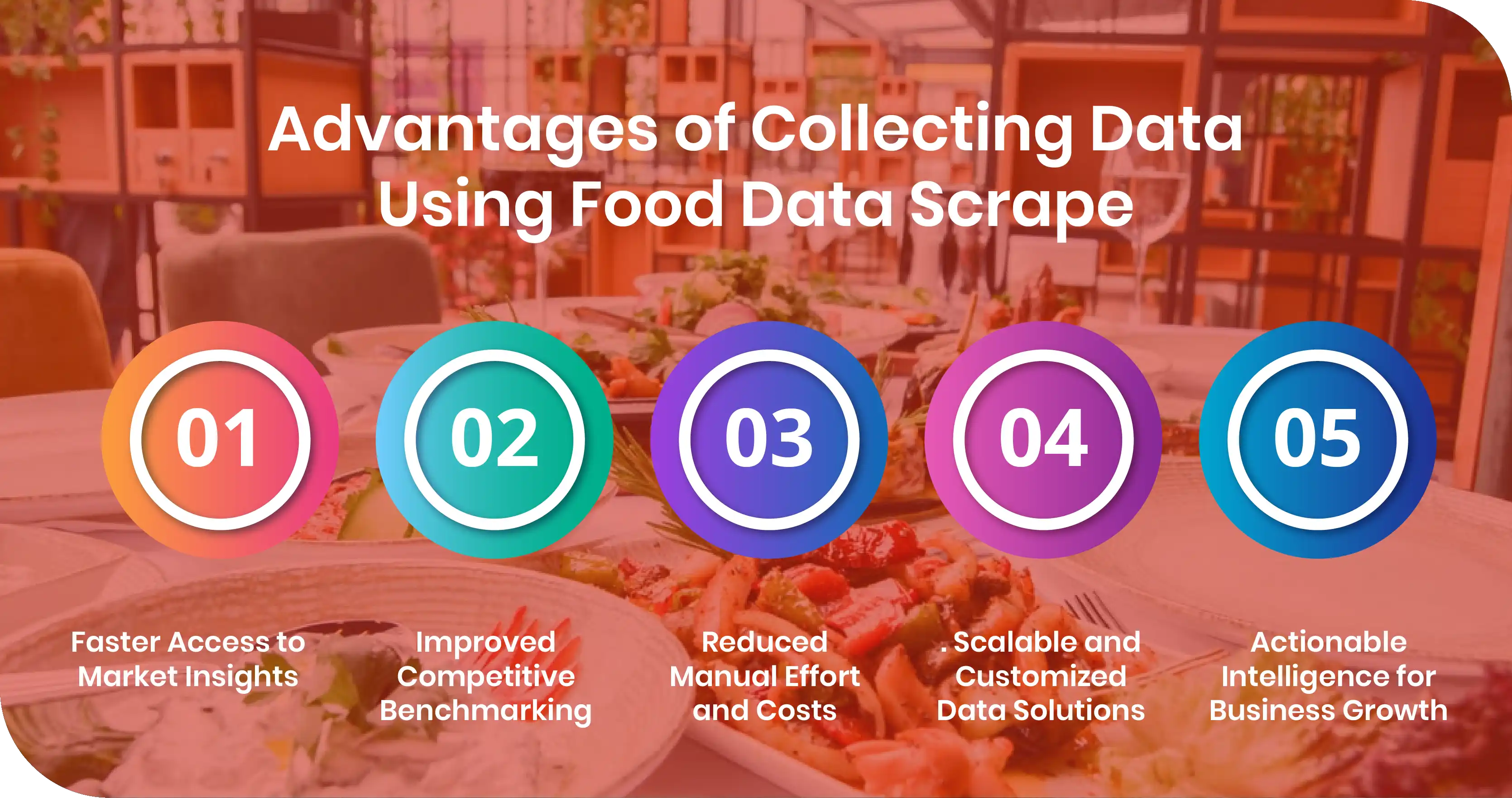
Advantages of Collecting Data Using Food Data Scrape
-
Faster Access to Market Insights
Our services provide continuous access to updated market information, helping businesses quickly identify pricing changes, menu trends, promotional activities, and customer preferences. This enables organizations to react faster to market developments and make informed strategic decisions with confidence. -
Improved Competitive Benchmarking
Businesses gain a clear understanding of how competitors position their products, pricing, and promotions. Detailed comparisons reveal strengths, weaknesses, and emerging opportunities, allowing teams to optimize their offerings, improve market positioning, and enhance overall business performance. -
Reduced Manual Effort and Costs
Automated collection and processing eliminate the need for time-consuming manual research. Teams spend less effort gathering information and more time analyzing insights, reducing operational costs while improving productivity, efficiency, and the speed of business decision-making processes. -
Scalable and Customized Data Solutions
Our solutions are designed to scale with business requirements, whether monitoring a few competitors or thousands of locations. Flexible configurations ensure organizations receive relevant information tailored to specific industries, regions, categories, and strategic objectives. -
Actionable Intelligence for Business Growth
Raw information is transformed into meaningful insights through structured reporting and analytics. Decision-makers can identify growth opportunities, optimize pricing strategies, improve customer engagement, monitor market shifts, and develop data-driven plans that support long-term business success.
Client’s Testimonial
"The insights delivered by the iWeb Data team significantly improved our understanding of the competitive landscape across major food delivery platforms. Their data collection framework provided accurate, timely, and well-structured information that helped us monitor pricing trends, menu changes, customer sentiment, and promotional activities with ease. The dashboards were intuitive, and the quality of data exceeded our expectations. As a result, we optimized our pricing strategy, refined our menu offerings, and improved market responsiveness. Their professionalism, technical expertise, and commitment to delivering actionable intelligence made them a valuable strategic partner for our business growth."
— Director of Strategy & Market Intelligence
Final Outcome
The project delivered a comprehensive competitive intelligence framework that enabled the client to monitor restaurant pricing, menu updates, promotions, ratings, reviews, and delivery performance across major food delivery platforms in real time. Leveraging Food delivery Intelligence, the client gained continuous visibility into competitor activities, allowing teams to identify market opportunities faster, optimize pricing strategies, and refine menu offerings based on evolving consumer preferences.
The automated data pipeline eliminated manual research efforts, improved data accuracy, and powered a centralized Food Price Dashboard that provided timely insights through interactive visualizations and customized reports. Stakeholders could easily track market movements and benchmark performance across regions.
Additionally, structured Food Datasets enabled deeper analysis of customer behavior, promotional effectiveness, and competitor positioning. As a result, decision-makers responded more effectively to market changes, strengthened competitive strategies, improved operational efficiency, and supported long-term, data-driven business growth.