The Client
The client was a food and beverage intelligence company developing advanced consumer insights solutions for brands targeting younger demographics. Its objective was to strengthen its understanding of Gen Z preferences and provide food brands with timely intelligence around products, ingredients, flavors, beverages, and purchasing behavior.
The company was developing an AI food consumer intelligence platform designed to transform large-scale digital consumer signals into structured business insights. It also wanted to strengthen its Gen Z market intelligence platform with richer, frequently refreshed datasets covering food discovery and consumption patterns.
To expand its capabilities, the client required a dependable partner that could scrape AI consumer data platform for food brands and deliver organized, scalable information. The client needed broad data coverage, consistent extraction, standardized fields, duplicate removal, and structured outputs that could seamlessly support dashboards, analytics models, forecasting workflows, and consumer intelligence applications.
Key Challenges
-
Fragmented Consumer Signals
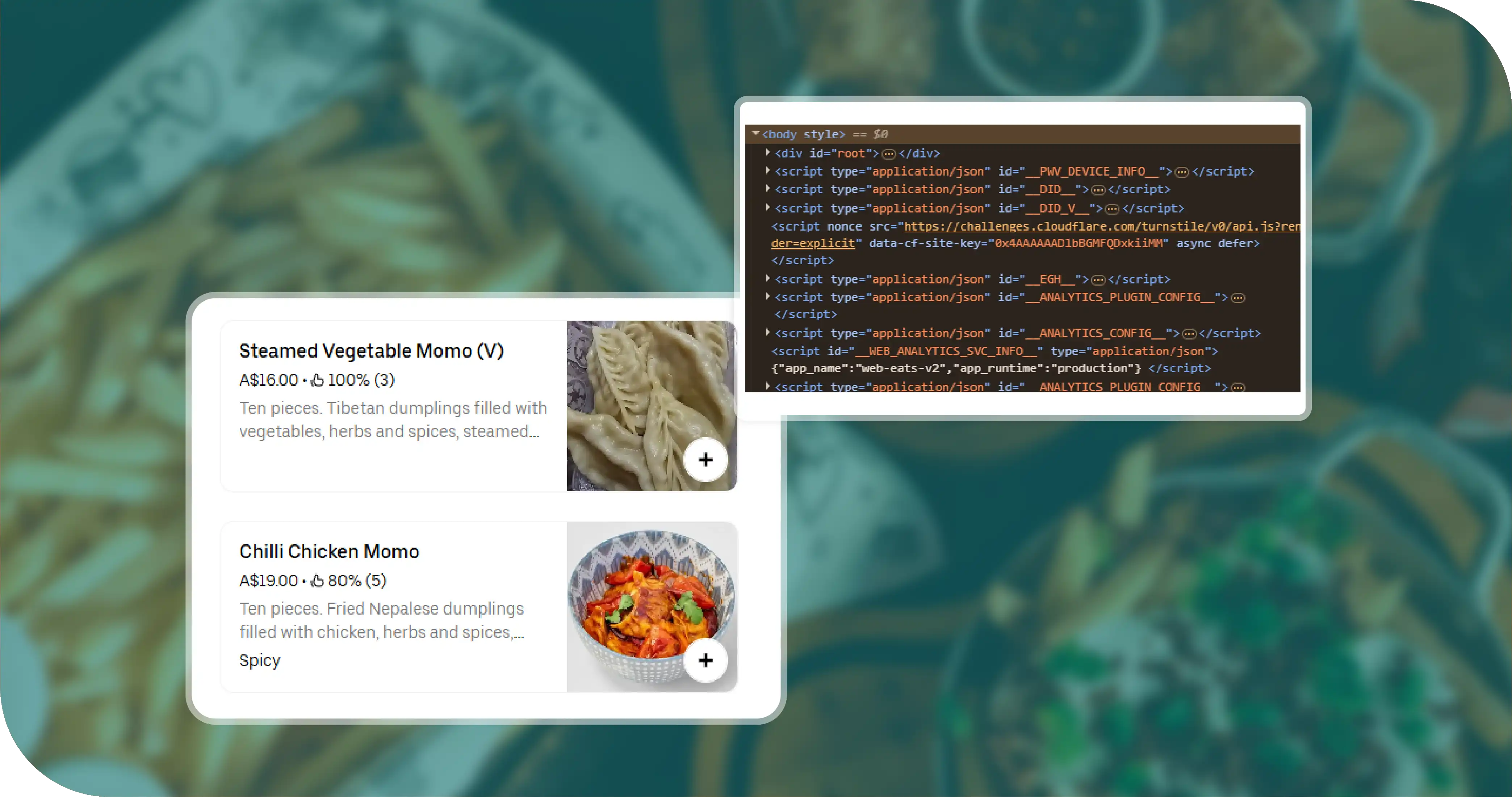
Gen Z conversations and purchasing signals were distributed across numerous digital sources, making consistent collection difficult. The client needed food trend forecasting for brands supported by broader datasets rather than isolated observations. Different layouts, inconsistent terminology, changing product information, and unstructured consumer content complicated automated extraction and normalization. -
Rapidly Changing Preferences
Gen Z food preferences can change quickly as viral products, social conversations, creators, and cultural moments influence discovery. Gen Z Food Trends Data Scraping therefore required frequent collection and refresh cycles. Static datasets could quickly become outdated, limiting the client's ability to recognize emerging flavors, products, beverages, and consumption patterns. -
Complex Data Standardization
Different platforms represented products, categories, ingredients, prices, ratings, and consumer interactions differently. Food Data Scraping for Gen Z needed standardized schemas capable of combining heterogeneous information. Duplicate products, inconsistent naming conventions, missing attributes, and variable formatting also created challenges for downstream analytics and machine-learning applications.
Key Solutions
-
Trend-Oriented Data Extraction
We designed extraction workflows to identify emerging food products, flavors, ingredients, beverages, dietary preferences, and consumer signals. Extract Gen Z Food Trends workflows transformed scattered digital information into structured records, enabling the client to monitor changing preferences and identify recurring patterns across multiple data sources. -
Buying and Drinking Intelligence
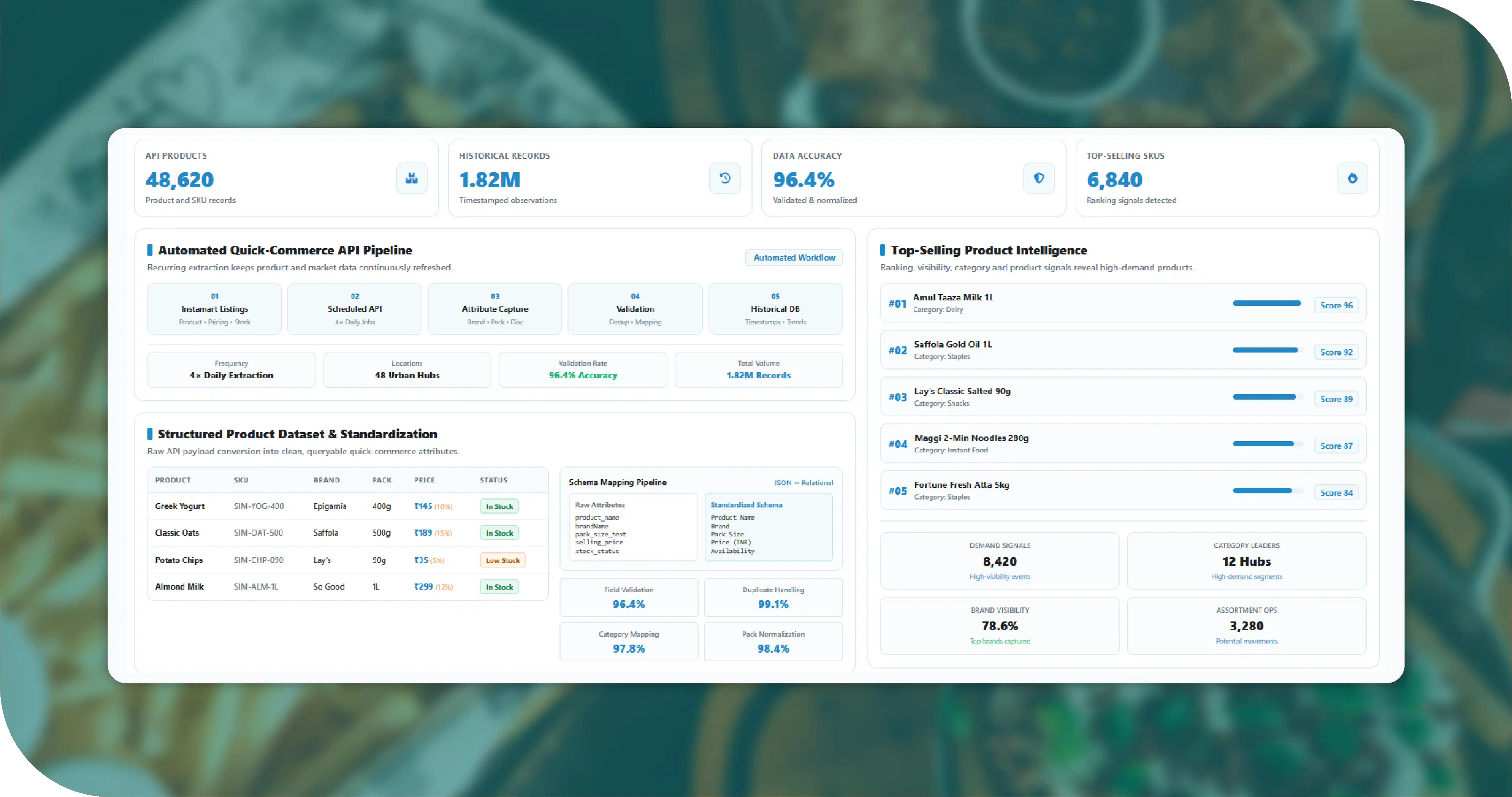
We developed dedicated collection pipelines covering food purchases and beverage preferences. Gen Z - Scrape Buying & Drinking datasets captured product names, categories, prices, brands, formats, ingredients, ratings, availability, and related consumer signals. This allowed the client to compare consumption patterns across food and beverage segments. -
Structured Food Intelligence
Our Food Data Scraping solution combined extraction, cleaning, validation, categorization, deduplication, and standardized formatting. Data was delivered in structured formats suitable for dashboards, databases, analytics systems, and predictive models, allowing the client to integrate refreshed datasets directly into its intelligence infrastructure.
Scraped Data Structure
| Data Category | Records Collected | Sources Tracked | Daily Updates | Avg. Attributes/Record | Data Accuracy |
|---|---|---|---|---|---|
| Food Products | 125,000 | 38 | 18,500 | 14 | 97.8% |
| Beverage Products | 68,500 | 26 | 9,800 | 13 | 98.1% |
| Brands | 8,750 | 38 | 1,240 | 11 | 97.6% |
| Ingredients | 22,400 | 31 | 3,600 | 9 | 96.9% |
| Flavors | 6,850 | 29 | 1,150 | 8 | 97.2% |
| Dietary Attributes | 14,700 | 27 | 2,450 | 10 | 96.8% |
| Product Prices | 156,000 | 34 | 42,000 | 7 | 98.4% |
| Promotions | 31,800 | 30 | 8,700 | 8 | 97.5% |
| Product Ratings | 92,600 | 32 | 16,400 | 6 | 98.2% |
| Consumer Reviews | 285,000 | 25 | 38,500 | 12 | 96.7% |
| Trend Mentions | 410,000 | 42 | 61,000 | 9 | 97.1% |
| Social Engagement Signals | 520,000 | 45 | 74,000 | 11 | 96.5% |
| Product Availability | 178,000 | 35 | 51,500 | 5 | 98.6% |
| Geographic Signals | 47,500 | 24 | 6,800 | 8 | 97.3% |
| Purchase Signals | 135,000 | 28 | 21,600 | 10 | 96.9% |
Methodologies Used
-
Source Discovery
We identified relevant digital sources containing food products, consumer discussions, product listings, beverage information, and trend signals. Source selection prioritized data relevance, consistency, geographic coverage, update frequency, and accessibility to ensure the resulting dataset represented meaningful Gen Z food behavior. -
Automated Extraction
Automated scraping workflows were configured to collect structured and semi-structured information at scale. Extraction rules were customized according to individual page structures, allowing the system to capture product attributes, consumer signals, pricing information, categories, ingredients, ratings, and availability without relying on manual collection. -
Data Cleaning
Raw datasets underwent extensive cleaning to remove duplicate records, incomplete entries, formatting inconsistencies, irrelevant content, and malformed values. Standardized naming conventions were applied across products, brands, categories, ingredients, and flavors, improving consistency and making the information suitable for downstream analytics and reporting. -
Classification and Enrichment
Collected records were classified into meaningful food, beverage, ingredient, dietary, flavor, and consumer-behavior categories. Additional enrichment processes helped identify recurring trends and relationships between products, attributes, consumer signals, and market segments, creating a more useful intelligence layer for strategic decision-making. -
Quality Validation
Automated validation checks were combined with sampling-based quality reviews to identify missing fields, duplicate records, extraction errors, and abnormal values. Monitoring routines helped maintain dataset consistency while scheduled refreshes ensured the client received timely information for trend monitoring, reporting, forecasting, and intelligence applications.
Advantages of Collecting Data Using Food Data Scrape
-
Faster Market Visibility
Our scraping services provide continuously refreshed food intelligence, allowing brands to recognize emerging Gen Z preferences faster than traditional manual research methods. -
Broader Consumer Coverage
Large-scale extraction captures information from multiple digital sources, providing a broader view of food discovery, purchasing, beverage consumption, and evolving consumer interests. -
Better Competitive Intelligence
Structured product, pricing, trend, and consumer information helps brands compare competitors, identify market gaps, benchmark offerings, and understand changing category dynamics. -
Stronger Forecasting Capabilities
Historical and continuously refreshed datasets provide valuable inputs for identifying recurring patterns, emerging trends, seasonal movements, and potential future demand across food and beverage categories. -
Scalable Data Infrastructure
Automated pipelines can expand across markets, categories, sources, and data fields without requiring proportional increases in manual research resources, supporting long-term intelligence initiatives.
Client's Testimonial
"Working with the data scraping team significantly improved our ability to understand Gen Z food behavior. Previously, our researchers depended on fragmented sources and manually collected information, which made trend identification slow and inconsistent. The structured datasets gave us a much clearer view of emerging foods, flavors, beverages, dietary preferences, pricing movements, and consumer signals. The standardized delivery format also integrated smoothly with our intelligence platform and analytics workflows. Most importantly, the refreshed data helped our team identify emerging opportunities earlier and support brand recommendations with stronger evidence. The solution has become an important foundation for our ongoing consumer intelligence and food trend monitoring initiatives."
—Director of Consumer Intelligence, Food & Beverage Technology Company
Final Outcome
The project delivered a scalable Gen Z food intelligence dataset capable of supporting continuous market monitoring, product research, competitive analysis, and trend discovery. By consolidating fragmented food and beverage information into structured records, the client gained a more comprehensive view of evolving consumer preferences.
The solution improved the accessibility of product, pricing, ingredient, flavor, dietary, beverage, availability, rating, and engagement information. Automated collection reduced dependence on manual research while standardized processing improved consistency across datasets. Regular refresh cycles enabled the client to monitor emerging signals rather than relying exclusively on historical research.
The resulting intelligence infrastructure supported faster identification of high-growth food categories, emerging flavors, popular beverage formats, changing dietary preferences, and evolving purchase behaviors. It also created a scalable foundation for dashboards, predictive analytics, consumer segmentation, and future food trend forecasting initiatives.