
Energy Demand: 42.9% of consumers prioritize energy and muscular performance benefits.
Mental Wellness: 39.14% associate healthy foods with improved mental clarity.
Gut Health: 38.37% connect healthy eating with digestive wellness benefits.
Functional Claims: 36.6% favor prebiotic and gut-friendly fiber claims.
Comfort Nutrition: Over 63% associate healthy food with comforting meals.

Healthy eating in 2026 is shifting beyond calorie counting, low-fat labels, and restrictive dieting toward functionality, energy, performance, prevention, and balance. Consumers increasingly want foods that deliver tangible benefits, including sustained energy, muscular performance, mental clarity, digestive wellness, recovery, and emotional wellbeing.
Recent consumer research involving more than 550,000 participants indicates that 42.9% of consumers associate healthy food with boosting energy or muscular performance, making energy the strongest health-related benefit identified. Nearly 39% connect healthy food with mental clarity, while 38.37% associate it with gut and digestive health.
These healthy food trends 2026 demonstrate a fundamental change in consumer expectations. Instead of simply asking whether a food is "healthy," consumers are increasingly asking what that food can do for them.
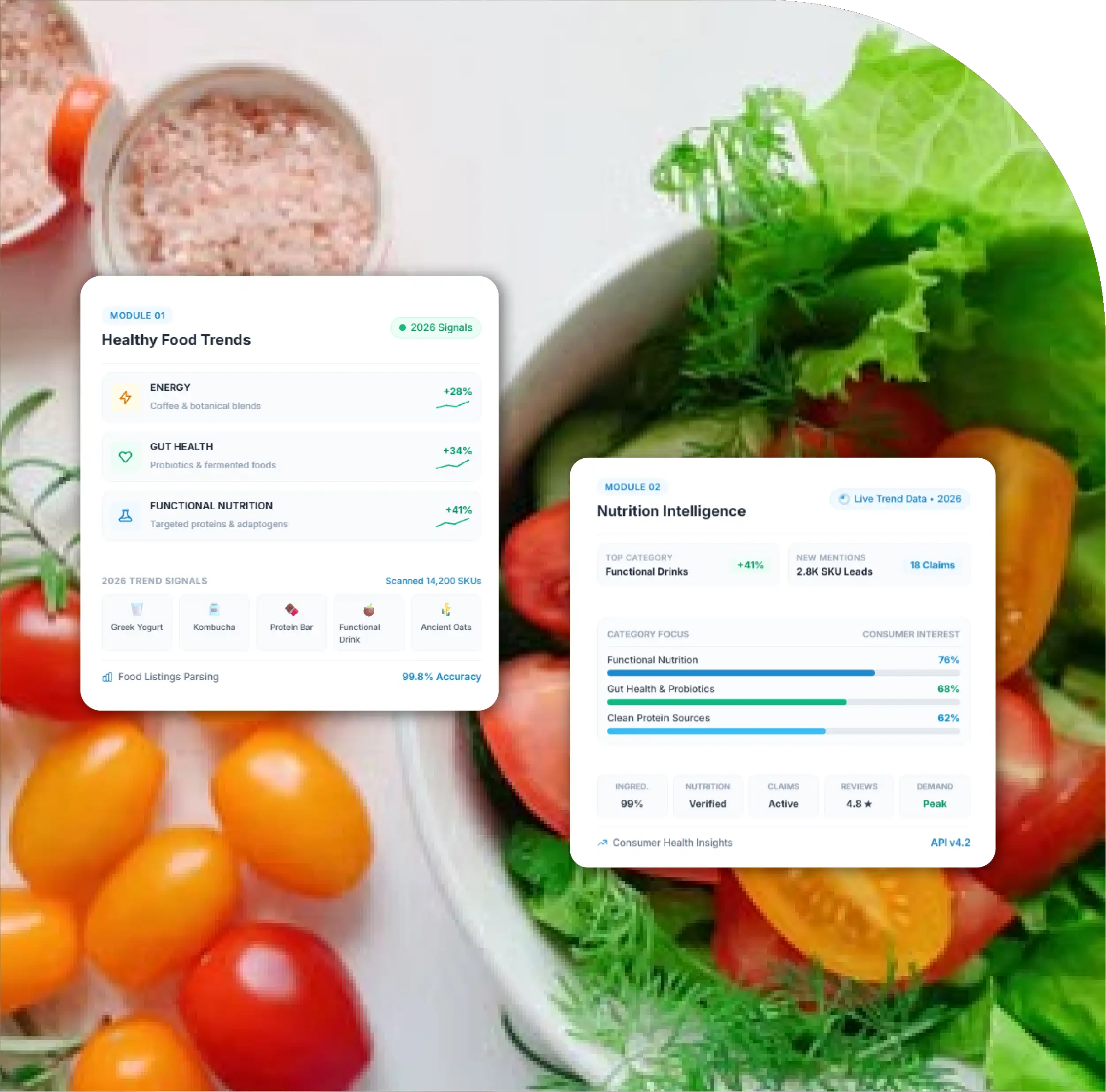
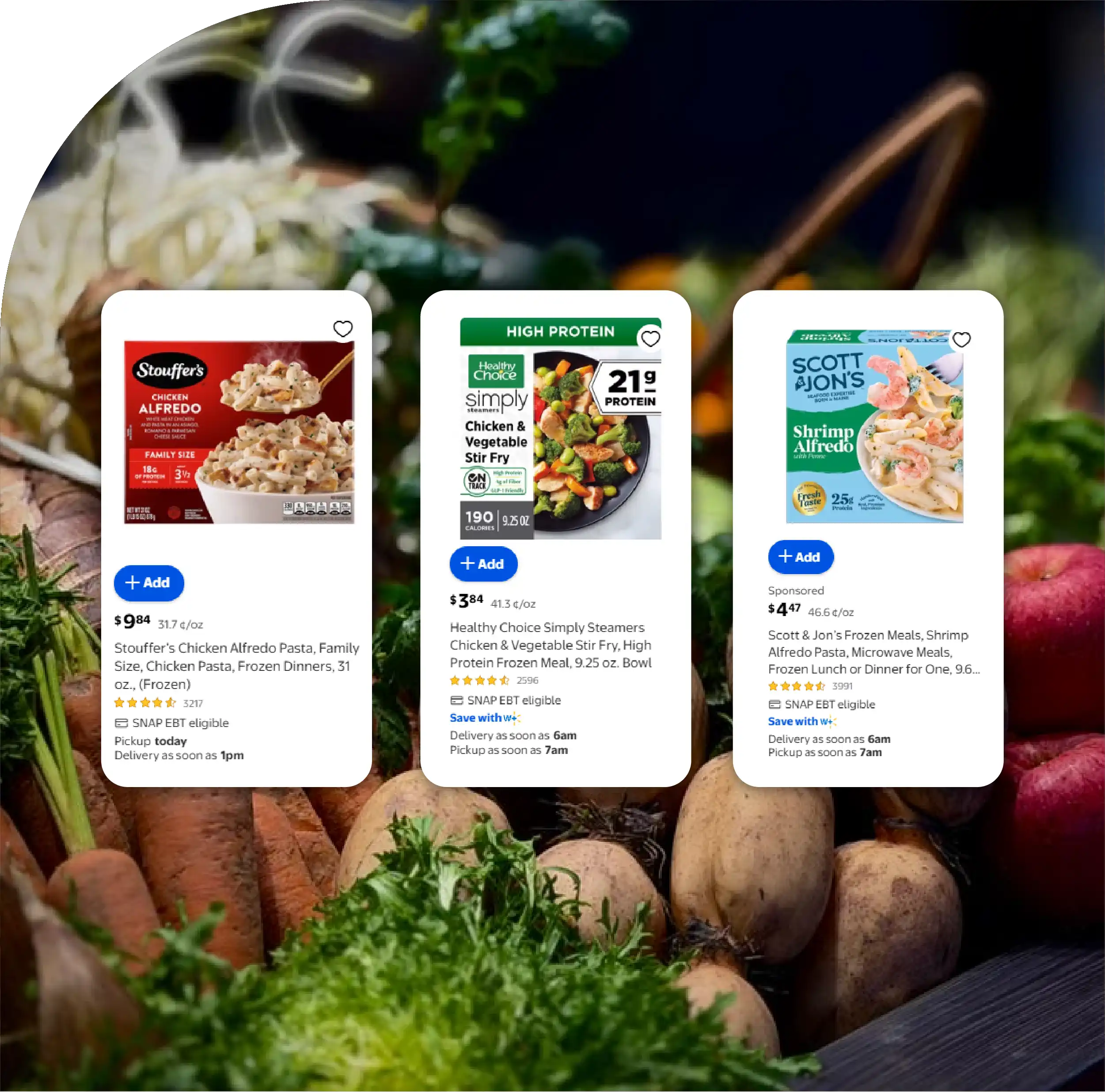
For brands, Scrape Healthy Food Trends Data 2026 to identify emerging ingredients, product categories, claims, consumer preferences, and competitive movements. Consumer Healthy Food Trends Data Scraping can provide additional visibility into changing preferences across retailers, restaurants, marketplaces, and digital channels. Meanwhile, Food Demand Trends Data Scraping can help connect consumer interest with actual products, pricing, availability, reviews, and assortment changes.
This transformation makes Healthy Food Market Intelligence increasingly valuable for CPG companies, retailers, restaurants, foodservice operators, and emerging nutrition brands.
For years, healthy food was largely associated with low calories, low fat, reduced sugar, high protein, or weight management. Those attributes remain relevant, but consumers are now evaluating health through a much broader set of outcomes.
Energy, focus, digestive comfort, immunity, recovery, mood, and convenience are increasingly becoming part of the decision-making process.
| Consumer Health Priority | Consumer Association | Product Opportunities | Key Ingredients | Strategic Implication |
|---|---|---|---|---|
| Energy / muscular performance | 42.90% | Protein snacks, breakfast products, beverages | Protein, B vitamins, iron, magnesium | Position food as functional fuel |
| Mental clarity / focus | 39.14% | Functional drinks, snacks, cereals | Blueberries, green tea, L-theanine | Develop cognitive-wellness products |
| Gut / digestive health | 38.37% | Yogurts, fermented foods, fiber products | Prebiotics, probiotics, inulin | Emphasize digestive functionality |
| Immunity | 13.64% | Fortified beverages, functional foods | Vitamin C, zinc | Use immunity as supporting benefit |
| Prebiotic / gut-friendly fiber | 36.60% | Cereals, bars, beverages | Inulin, chicory root, beta-glucan | Highlight specific functional claims |
| Women's wellness | >33.00% | Fermented foods, yogurt, beverages | Probiotic cultures | Build targeted wellness positioning |
| Brain-health ingredient association | Leading association | Snacks, drinks, breakfast | Blueberries | Create differentiated cognitive stories |
| Healthy comfort food | >63.00% | Vegetable noodles, bowls, meals | Vegetables, pesto, whole foods | Combine indulgence with wellness |
The central insight is clear: consumers increasingly want specific benefits rather than generic "healthy" positioning.
The strongest signal in the data is energy. With 42.9% of consumers associating healthy food with energy or muscular performance, food brands have a significant opportunity to reposition everyday products as functional fuel.
This trend is particularly relevant to breakfast foods, protein snacks, functional beverages, meal replacements, sports nutrition, and convenient on-the-go products.
Instead of relying exclusively on claims such as "low calorie" or "nutritious," brands can develop propositions around sustained energy, physical performance, workout support, and recovery—where those claims can be properly substantiated.
Businesses can Scrape Energy-Boosting Food Consumer Demand Data to monitor products consumers search for, purchase, review, and discuss.
A comprehensive monitoring system could capture:
This converts a broad wellness movement into measurable commercial intelligence.
Mental performance is becoming another important component of healthy-food purchasing.
Approximately 39.14% of consumers associate healthy foods with mental clarity or focus. This creates opportunities for beverages, snack bars, breakfast products, smoothies, cereals, and other convenient formats designed around cognitive wellness.
Blueberries have emerged as a particularly strong ingredient associated with brain health. Other ingredients commonly appearing in cognitive-focused products include green tea, L-theanine, omega-3 fatty acids, and functional mushrooms.
For manufacturers, the opportunity is not simply to place the word "focus" on packaging. Consumers increasingly want understandable ingredient stories and credible reasons to believe a product provides a particular benefit.
Gut health has moved from a specialist wellness niche into mainstream grocery and foodservice.
With 38.37% of consumers connecting healthy eating with digestive health and 36.6% being influenced by "high in prebiotics and gut-friendly fibers" claims, digestive wellness presents a major product-development opportunity.
Prebiotics, probiotics, fermented ingredients, dietary fiber, kefir cultures, chicory root, and inulin are appearing across increasingly diverse food and beverage categories.
The trend is particularly visible in yogurt, fermented beverages, snack bars, cereals, smoothies, functional drinks, and quick-service menu items.
For brands, gut health offers an important advantage because functionality can be incorporated into products consumers already purchase regularly.
Functional nutrition is changing the way companies approach product innovation.
Instead of starting with a traditional category and simply improving its nutritional profile, brands can begin with a consumer need—energy, focus, digestion, recovery, mood, or another wellness objective.
This makes Healthy Food Demand Data Analysis important for identifying gaps between consumer demand and current market supply.
| Functional Segment | Consumer Signal | Example Ingredients | Product Formats | Data Signals to Track | Opportunity Score |
|---|---|---|---|---|---|
| Energy | 42.90% | Protein, B vitamins, iron | Bars, drinks, cereals | Searches, launches, reviews | 9/10 |
| Mental clarity | 39.14% | Blueberries, L-theanine | Drinks, snacks, breakfast | Reviews, searches, ingredients | 9/10 |
| Gut health | 38.37% | Inulin, probiotics | Yogurt, drinks, bars | Claims, launches, assortment | 10/10 |
| Prebiotic fiber | 36.60% | Chicory, beta-glucan | Cereals, beverages, snacks | Claim frequency, product launches | 10/10 |
| Women's wellness | >33.00% | Probiotic cultures | Yogurt, drinks, snacks | Ingredients, category growth | 8/10 |
| Immunity | 13.64% | Vitamin C, zinc | Drinks, fortified foods | Claims, promotions | 6/10 |
| Mood wellness | ~30% menu growth cited | Chamomile, adaptogenic ingredients | Cafés, beverages | Menu appearances, mentions | 8/10 |
| Healthy comfort | >63.00% | Vegetables, whole foods | Bowls, noodles, meals | Reviews, menu trends | 9/10 |
These patterns show why businesses increasingly extract functional food data across multiple channels instead of relying on individual surveys or isolated market reports.
Healthy food trends are also becoming connected to environmental and emotional considerations.
Consumers increasingly evaluate ingredient transparency, sourcing, processing, sustainability, and overall product quality alongside nutritional benefits.
Emotional wellness is another emerging dimension. Mood-supportive ingredients and adaptogenic concepts are increasingly appearing in cafés, beverages, snacks, and wellness-focused menus.
This creates a broader definition of healthy eating: food should support physical wellbeing while fitting conveniently into consumers' lifestyles and increasingly reflecting their personal values.
Consumers do not all define health in the same way.
An athlete may prioritize protein and recovery. A professional may prioritize sustained energy and concentration. Another consumer may focus primarily on digestive health, healthy aging, or reduced sugar.
This creates an opportunity for brands to segment audiences around functional needs rather than demographics alone.
Companies can combine:
Such intelligence allows companies to identify which functional claims and ingredients resonate with specific consumer groups.
The rapid evolution of wellness preferences makes food trend forecasting an important strategic capability.
Not every viral ingredient becomes a sustainable market opportunity. A product may generate significant social attention without developing long-term purchasing behavior.
Effective forecasting therefore requires multiple data signals.
Brands can monitor product launches, retailer listings, restaurant menus, consumer reviews, search behavior, ingredient frequency, pricing, promotions, and geographic expansion.
The objective is to identify not merely what is popular today, but which consumer preferences are likely to influence product development and purchasing behavior over the coming months.
Consumers are also experimenting with specialized dietary approaches, including high-protein, plant-based, gluten-free, low-sugar, keto, anti-inflammatory, and other nutrition-focused lifestyles.
This makes Health & Specialty Diet Data Scraping useful for identifying how specialized dietary requirements influence product assortment and consumer behavior.
Retailers can use these insights to improve category planning. Manufacturers can discover product gaps. Restaurants can identify menu opportunities, while investors can evaluate emerging segments and competitive positioning.
The strongest opportunity lies in translating consumer health priorities into clear, useful, and credible product propositions.
Brands should prioritize functional benefits consumers already understand, communicate ingredients transparently, validate health claims carefully, and monitor competitor innovation continuously.
They should also avoid treating "healthy" as a universal concept. The data demonstrates that consumers associate health with multiple outcomes.
Energy currently leads, but digestive health, mental clarity, comfort, personalization, sustainability, and emotional wellbeing are all shaping the next generation of food innovation.
The healthy-food market in 2026 is becoming increasingly functional, personalized, transparent, and outcome-oriented.
Consumers are moving away from viewing healthy food exclusively through restriction. Instead, they increasingly want products that support how they live, work, exercise, recover, concentrate, and feel.
For CPG companies, retailers, restaurants, and foodservice operators, continuous market monitoring can identify accelerating ingredients, emerging claims, competitive launches, changing prices, and whitespace opportunities.
The competitive advantage will increasingly come from connecting consumer demand with real-world market data.
Healthy Food Data Scraping can help brands continuously monitor products, ingredients, claims, prices, availability, and consumer signals across competitive markets.
Likewise, Healthy Food Demand Trends can reveal where consumer interest is accelerating and which categories deserve additional investment.
Finally, Scrape Functional Food Trends Data to identify emerging ingredients, functional claims, new product launches, and market opportunities before they become fully mainstream.