
The Indian Premier League (IPL) has emerged as a major catalyst for food delivery demand and restaurant revenue growth across India. Historical analysis reveals that IPL matches consistently drive significant increases in online food orders, particularly during evening games, playoffs, and finals. Consumer behavior during IPL is heavily influenced by match excitement, social viewing habits, and team rivalries, resulting in higher order frequencies and larger basket values. Cities such as Mumbai, Delhi, Bengaluru, and Hyderabad experience the strongest demand surges due to their large cricket-viewing audiences. Advanced data scraping, predictive analytics, and real-time intelligence platforms help businesses monitor consumption trends, forecast demand spikes, and optimize operational strategies. Restaurants, cloud kitchens, and food delivery platforms leverage these insights to improve staffing, inventory planning, pricing strategies, and promotional campaigns. By integrating historical datasets with live ordering signals, businesses can maximize revenue opportunities, enhance customer experiences, and maintain operational efficiency throughout the highly competitive IPL season.
Demand Surge
IPL matches trigger significant food ordering spikes across
major cities.
Revenue Growth
Playoffs and finals generate strongest restaurant revenue
uplift percentages.
Consumer Behavior
Group viewing encourages larger baskets and shareable
meal purchases.
Predictive Analytics
Historical datasets improve forecasting accuracy for
delivery demand spikes.
Operational Efficiency
Real-time intelligence optimizes staffing,
inventory, logistics, and profitability.

The Indian Premier League (IPL) has become one of the most powerful demand-shaping events in India’s digital economy, especially for food delivery platforms and restaurant ecosystems. Every season generates large-scale behavioral shifts in consumer ordering patterns, creating a highly predictable yet volatile marketplace influenced by match timing, team rivalry, and audience engagement levels.
The Historical Analysis Scrape IPL Restaurant Revenue & Food Delivery Demand in India reveals that IPL evenings consistently produce sharp spikes in online food ordering activity across metros like Mumbai, Delhi, Bengaluru, and Hyderabad, where group viewing culture is strongest. Restaurants and cloud kitchens see a surge in both order frequency and average basket value during live match hours.
The IPL impact on restaurant revenue in India analytics shows that revenue uplift is not uniform but heavily concentrated during high-stakes matches such as playoffs and finals, where emotional engagement drives impulse ordering behavior. Quick-service restaurants and delivery-first brands benefit the most due to their speed and operational efficiency.
A deep dive into the historical analysis of IPL food delivery demand trends shows that order surges are not random but follow structured cycles aligned with match progression, especially during toss announcements, mid-innings analysis breaks, and final overs where excitement peaks.
Food Data Scrape, a renowned player in data scraping services, plays a key role in aggregating structured IPL-related food consumption datasets that help businesses understand demand behavior at scale.
The IPL season transforms food consumption into an entertainment-linked economy where consumer decisions are heavily influenced by match intensity and social viewing environments. Scraped datasets show that group orders dominate during evening matches, with higher preference for shareable meals and combo deals.
The food delivery demand forecasting during IPL matches demonstrates that predictive models can accurately estimate order spikes by analyzing historical match data, team popularity indexes, and time-slot-based engagement levels. These forecasts help platforms prepare logistics and inventory in advance.
The IPL consumer food ordering behavior analytics further reveals that users tend to increase order value during high-voltage matches, preferring pizzas, biryani, burgers, and beverage bundles that support group consumption patterns.
| IPL Match | City | Match Stage | Pre-Match Orders | Peak Match Orders | Revenue Growth % | Dominant Cuisine | Avg Order Value (₹) |
|---|---|---|---|---|---|---|---|
| MI vs CSK | Mumbai | League | 5,200 | 10,400 | 72% | Biryani & Pizza | 780 |
| RCB vs KKR | Bengaluru | League | 4,800 | 9,600 | 68% | Burgers & Fries | 720 |
| DC vs SRH | Delhi | Playoffs | 6,100 | 12,900 | 81% | Combo Meals | 860 |
| GT vs RR | Ahmedabad | Final | 7,900 | 16,200 | 92% | Desserts & Thali | 980 |
| LSG vs PBKS | Lucknow | League | 3,600 | 7,400 | 65% | Fast Food | 690 |
| CSK vs RCB | Chennai | High-Intensity | 6,800 | 13,500 | 88% | Snacks & Beverages | 910 |
Modern food intelligence platforms rely on structured extraction systems that collect real-time ordering, pricing, and menu data across delivery platforms. These systems enable granular visibility into consumer demand patterns during IPL seasons.
The Web Scraping Food Delivery Data process allows analysts to capture structured insights such as order volume spikes, time-based demand clusters, and regional consumption differences during live matches.
Using method to Extract Restaurant Menu Data, businesses can identify which dishes perform best during IPL nights, enabling dynamic menu optimization and targeted promotional campaigns.
The Food Delivery Scraping API further enhances real-time decision-making by providing continuous access to transactional and behavioral data streams during match hours.
| City | Avg Orders/Match | Surge % | Top Cuisine | Avg Delivery Time | Revenue Index | Peak Ordering Window |
|---|---|---|---|---|---|---|
| Mumbai | 9,200 | 62% | North Indian | 27 mins | Very High | 8 PM – 11 PM |
| Delhi | 8,700 | 65% | Fast Food | 29 mins | Very High | 7 PM – 11 PM |
| Bengaluru | 8,900 | 63% | Pizza & Burgers | 24 mins | Very High | 7:30 PM – 10:30 PM |
| Hyderabad | 7,600 | 57% | Biryani | 31 mins | High | 8 PM – 11:30 PM |
| Kolkata | 6,900 | 52% | Chinese | 30 mins | Medium-High | 7 PM – 10 PM |
| Pune | 6,300 | 49% | Snacks | 28 mins | Medium | 8 PM – 10:30 PM |
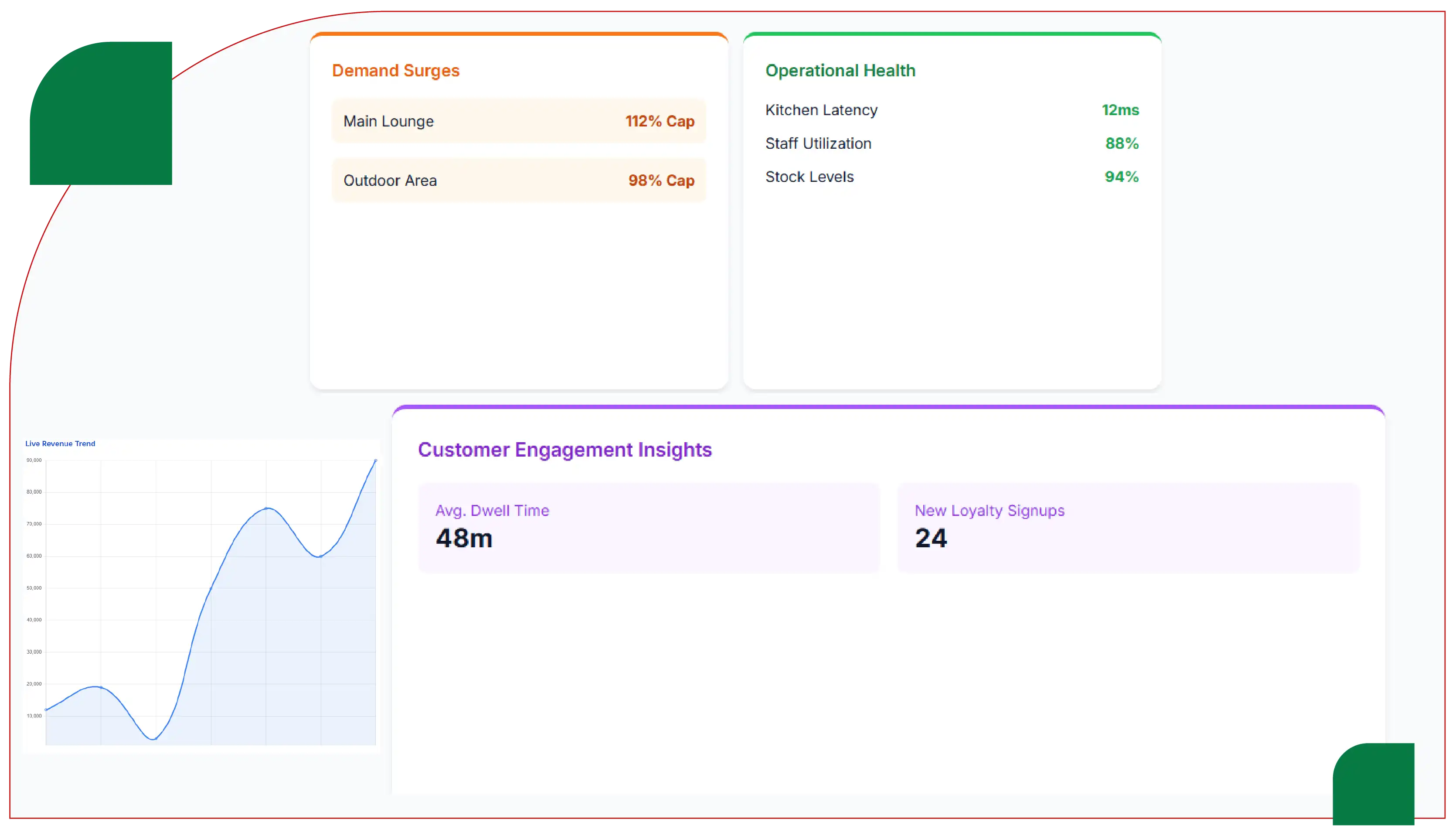
Restaurants increasingly depend on data-driven systems to optimize staffing, inventory, and promotions during IPL seasons. Real-time insights help businesses anticipate demand surges and adjust operations accordingly.
The IPL season restaurant sales intelligence highlights that revenue peaks are most pronounced during final overs when emotional engagement reaches its highest point, leading to impulsive ordering behavior and higher basket sizes.
This intelligence enables cloud kitchens and QSR chains to deploy targeted offers and improve conversion rates during high-demand match periods.
Advanced analytics ecosystems integrate scraping pipelines, predictive models, and real-time dashboards to monitor IPL-driven consumption behavior.
The Restaurant Data Intelligence framework enables businesses to combine historical IPL datasets with live ordering signals, improving demand prediction accuracy and operational efficiency.
These systems also help optimize delivery fleet allocation and reduce delays during peak match traffic, improving customer satisfaction significantly.
The IPL season creates one of the most data-intensive consumption environments in India’s food delivery industry. Businesses that leverage IPL snack and beverage demand intelligence and structured analytics consistently outperform competitors by optimizing pricing, promotions, and logistics in real time.
Dynamic bundling strategies, limited-time offers, and personalized discounts are widely used to capture IPL-driven demand surges and maximize revenue efficiency.
The intersection of sports entertainment and digital food ecosystems continues to evolve, making IPL a critical period for consumer behavior analysis and predictive modeling.
The integration of Food delivery Intelligence systems enables platforms to dynamically respond to demand fluctuations and optimize service efficiency during live matches.
A real-time Food Price Dashboard allows businesses to track pricing fluctuations across regions and adjust strategies for maximum profitability without losing competitiveness.
Additionally, large-scale Food Datasets collected during IPL seasons form the backbone of machine learning models that help predict demand patterns, optimize supply chains, and enhance customer targeting strategies across the food delivery industry.
IPL has transformed into a powerful behavioral engine that reshapes India’s food delivery ecosystem every season. Through structured data extraction, predictive analytics, and real-time intelligence systems, businesses can decode consumption patterns and optimize performance at scale. The integration of scraping technologies, demand forecasting models, and operational dashboards ensures that restaurants and platforms can efficiently capture IPL-driven demand surges while maintaining service quality and profitability in a highly competitive environment.
If you are seeking for a reliable data scraping services, Food Data Scrape is at your service. We hold prominence in Food Data Aggregator and Mobile Restaurant App Scraping with impeccable data analysis for strategic decision-making.