About The Client
The client is a rapidly growing food technology company that provides competitive intelligence solutions for restaurant chains, cloud kitchens, delivery aggregators, and FMCG brands. Their business depends on accurate restaurant pricing, menu availability, promotional offers, delivery coverage, and customer engagement metrics collected from numerous delivery platforms. They wanted a centralized restaurant analytics dashboard for enterprise users where multiple departments could analyze data simultaneously without conflicts. Their objective was to build collaborative food delivery market intelligence capabilities for research teams, category managers, executives, and analysts operating across several countries. To achieve this objective, they partnered with us to Scrape Food Delivery Multi-User Query Platform data and automate large-scale restaurant intelligence collection. Our solution also enabled a secure restaurant intelligence platform with multi-user access, allowing authorized users to generate customized reports, compare competitors, monitor pricing movements, and identify emerging restaurant trends through real-time structured datasets.
Key Challenges
-
Managing Enterprise User Collaboration
The client required a secure restaurant intelligence platform with multi-user access where hundreds of analysts could perform independent searches without affecting system performance, permissions, or shared datasets while maintaining centralized governance and consistent reporting accuracy. -
Scaling Web Scraping Operations
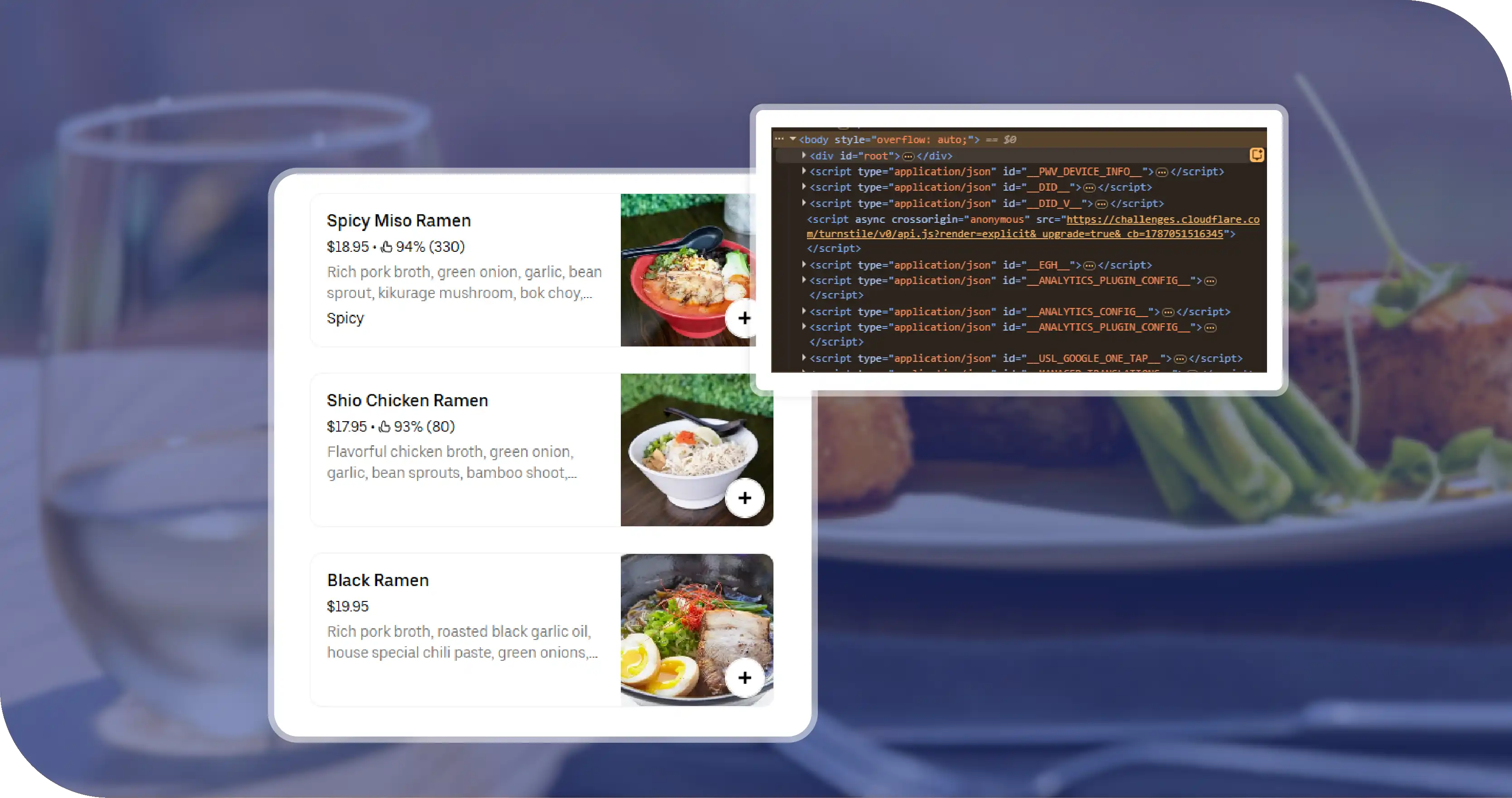
Performing Web Scraping Food Delivery Data across thousands of restaurants, cities, cuisines, and delivery platforms generated massive data volumes that demanded continuous extraction, validation, proxy rotation, and automated quality monitoring without interruptions. -
Converting Data into Intelligence
The client struggled to transform raw restaurant information into meaningful Food delivery Intelligence that could support pricing strategies, menu optimization, competitor benchmarking, promotional monitoring, and executive decision-making across multiple enterprise teams.
Key Solutions
-
Automated Food Delivery Scraping API
We developed a scalable Food Delivery Scraping API that continuously collected restaurant menus, pricing, availability, delivery estimates, promotions, ratings, and operational information while supporting thousands of concurrent enterprise queries with automated updates. -
Enterprise Food Price Dashboard
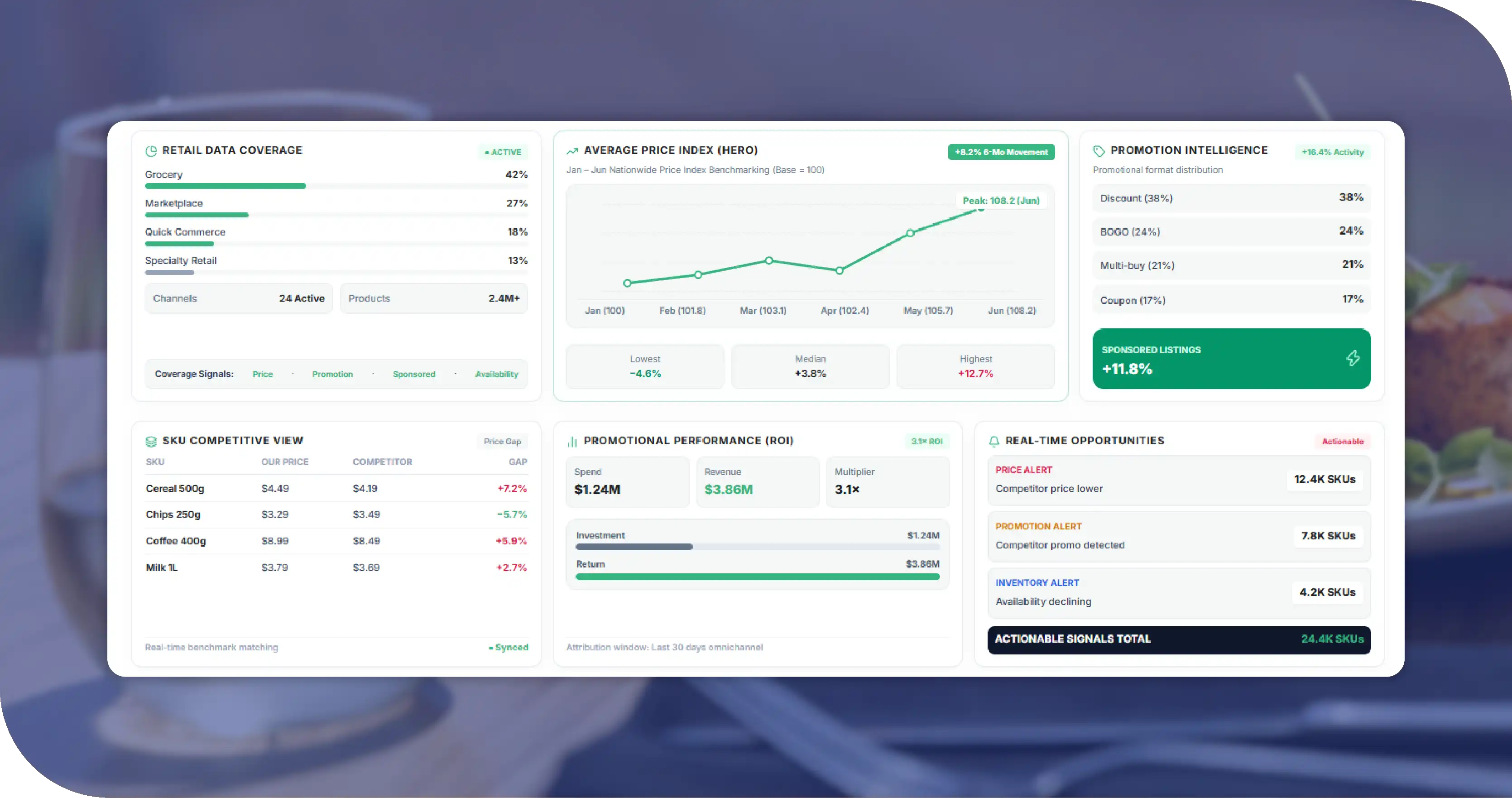
A centralized Food Price Dashboard enabled multiple business users to compare competitor prices, restaurant rankings, delivery fees, promotional campaigns, and historical pricing trends through customizable dashboards and secure role-based access. -
Structured Food Datasets
We generated high-quality Food Datasets containing standardized restaurant information, menu categories, cuisines, delivery zones, pricing history, discounts, ratings, customer reviews, and availability records for advanced business intelligence and predictive analytics.
Sample Data Scraped
| Data Category | Volume Collected | Update Frequency | Business Purpose |
|---|---|---|---|
| Food Delivery Platforms Monitored | 35 | Real-Time | Cross-platform market intelligence |
| Restaurants Scraped | 245,800 | Daily | Restaurant benchmarking |
| Restaurant Chains | 6,420 | Daily | Brand performance tracking |
| Cities Covered | 320 | Daily | Regional market analysis |
| Countries Covered | 24 | Weekly | Global expansion insights |
| Menu Categories | 9,850 | Daily | Category trend analysis |
| Individual Menu Items | 12,750,000 | Real-Time | Menu intelligence |
| Food Prices Captured | 28,900,000 | Hourly | Dynamic price monitoring |
| Historical Price Records | 96,500,000 | Daily | Price trend analysis |
| Promotional Offers | 5,420,000 | Hourly | Campaign monitoring |
| Discount Campaigns | 2,180,000 | Hourly | Promotional analytics |
| Delivery Fees | 8,450,000 | Hourly | Delivery cost comparison |
| Estimated Delivery Times | 10,280,000 | Every 30 Minutes | Delivery performance tracking |
| Restaurant Ratings | 9,780,000 | Daily | Reputation analysis |
| Customer Reviews | 58,600,000 | Daily | Sentiment analysis |
| Cuisine Types | 890 | Weekly | Cuisine popularity analysis |
| Restaurant Images | 15,400,000 | Weekly | Digital catalog management |
| Restaurant Locations | 615,000 | Weekly | Geographic intelligence |
| Operating Hours Records | 4,950,000 | Daily | Availability monitoring |
| Menu Availability Updates | 74,800,000 | Hourly | Stock and menu tracking |
| Featured Listings | 1,460,000 | Hourly | Marketplace visibility analysis |
| Search Ranking Positions | 5,320,000 | Daily | Competitor ranking analysis |
| Delivery Zones Mapped | 295,000 | Weekly | Service coverage analysis |
| User Search Queries Processed | 42,500,000 | Real-Time | Platform usage analytics |
| API Requests Processed | 22,800,000 per day | Real-Time | Enterprise integrations |
| Concurrent Enterprise Users | 850+ | Continuous | Multi-user collaboration |
| Automated Reports Generated | 18,500 | Daily | Executive reporting |
| Data Accuracy Rate | 99.3% | Continuous | Data quality assurance |
| Structured Data Records Delivered | 185,000,000+ | Monthly | Business intelligence & analytics |
Methodologies Used
-
Distributed Web Crawling
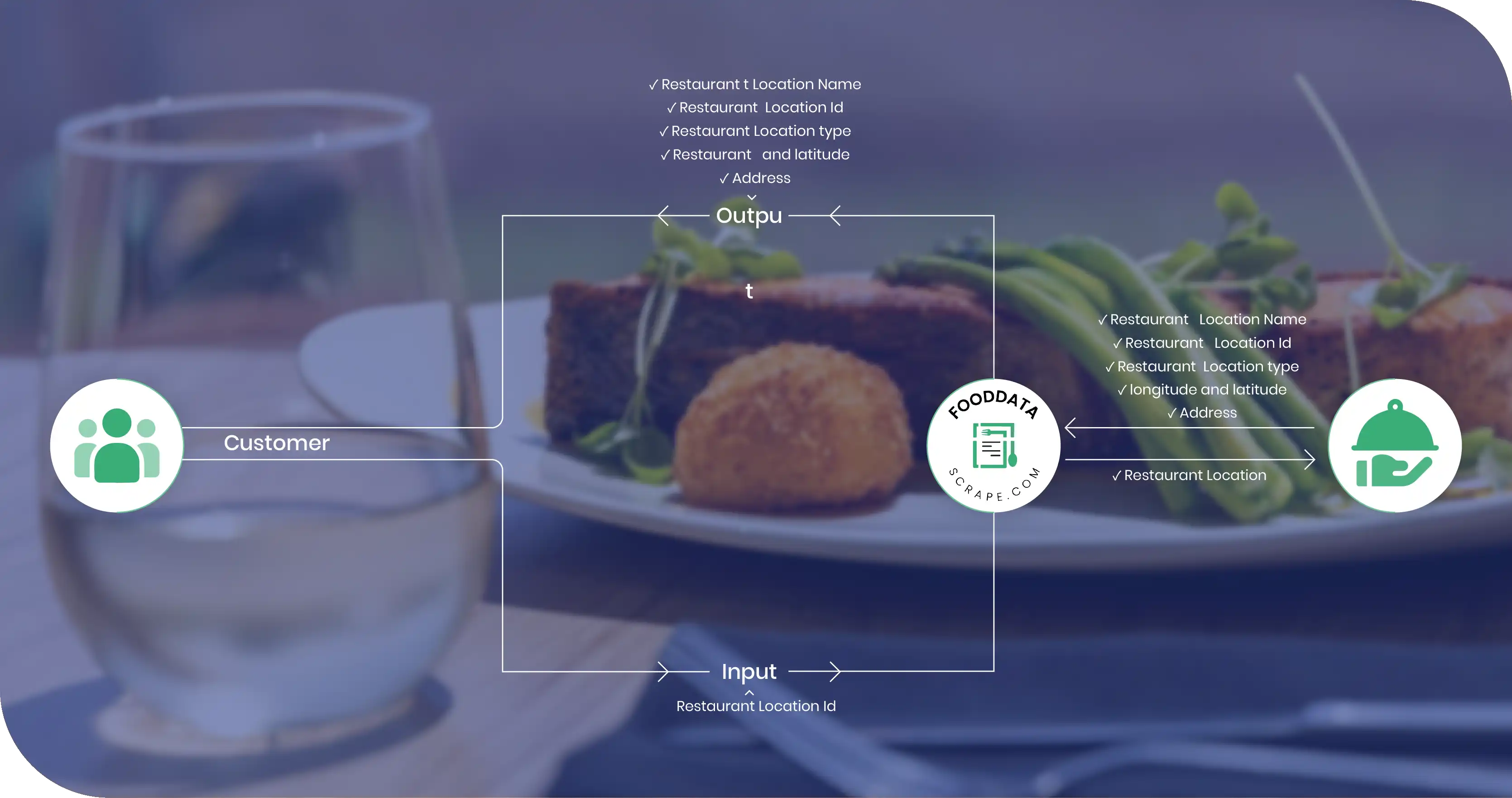
We deployed distributed scraping infrastructure with proxy rotation, intelligent scheduling, and automated retry mechanisms to capture high-volume restaurant information while ensuring reliability, scalability, and uninterrupted data collection across multiple delivery platforms. -
Automated Data Validation
Every dataset passed through automated validation pipelines that removed duplicate entries, standardized restaurant attributes, verified pricing accuracy, and maintained consistent formatting before delivering enterprise-ready structured datasets for analytics. -
Role-Based Data Architecture
We designed secure multi-user architecture with user authentication, permission management, workspace isolation, and collaborative dashboards, enabling different departments to access relevant restaurant intelligence while protecting sensitive enterprise information. -
Continuous Data Synchronization
Incremental crawling, scheduled updates, and change detection algorithms continuously monitored restaurant menus, delivery charges, pricing fluctuations, and promotional campaigns, ensuring dashboards always reflected the latest market conditions. -
Business Intelligence Integration
Collected datasets were integrated into enterprise reporting systems through APIs, automated exports, visualization dashboards, and analytical workflows, allowing stakeholders to perform advanced competitor analysis and strategic decision-making efficiently.
Advantages of Collecting Data Using Food Data Scrape
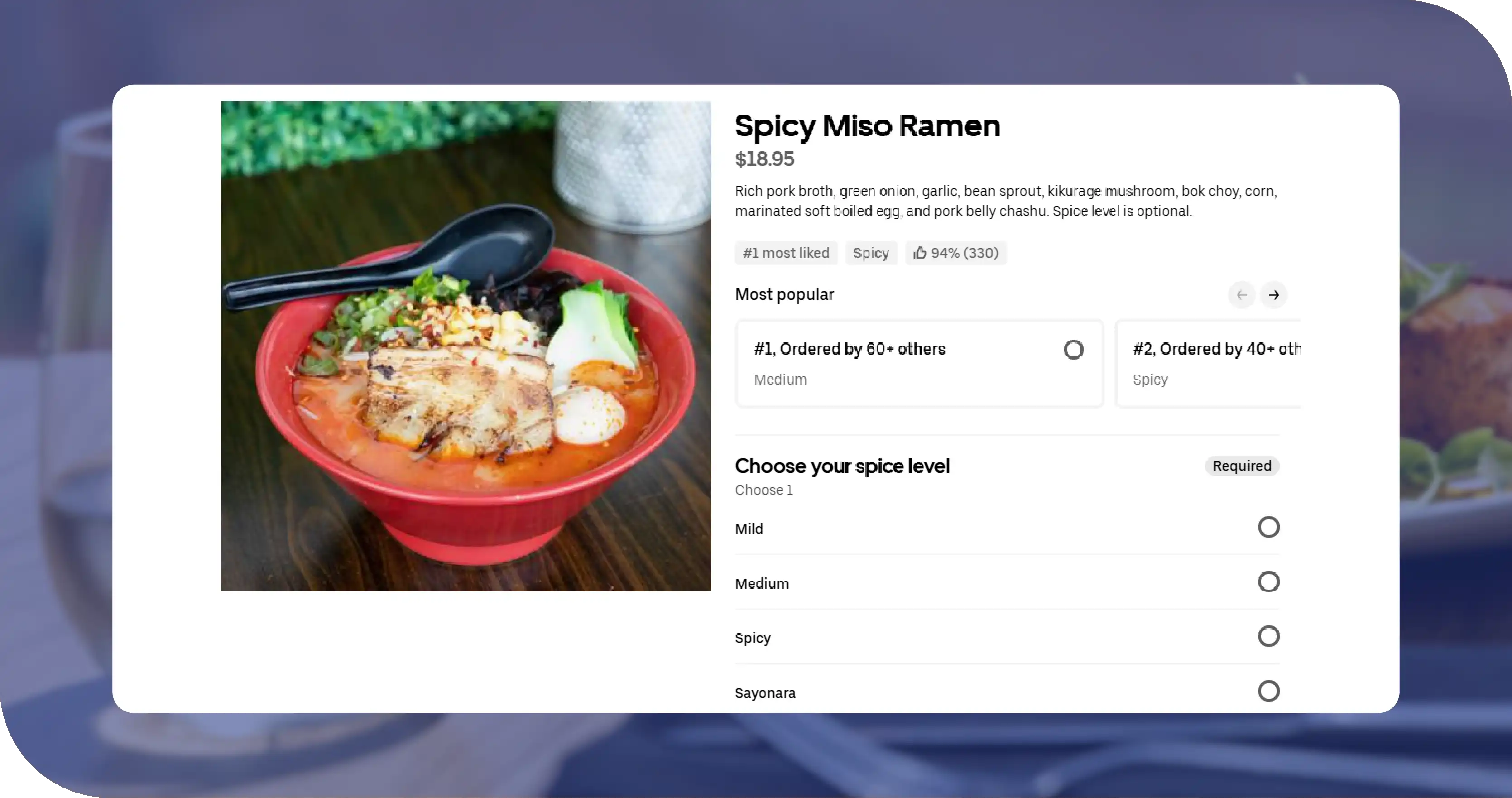
-
Real-Time Market Visibility
Businesses gain continuous access to updated restaurant menus, pricing, promotions, delivery availability, and customer engagement metrics, enabling faster strategic responses to rapidly changing food delivery markets. -
Better Competitive Benchmarking
Organizations can compare restaurant performance, pricing structures, promotional campaigns, customer ratings, and delivery efficiency against competitors to identify opportunities for growth and operational improvement. -
Enterprise Collaboration
Centralized datasets enable analysts, executives, marketing teams, operations managers, and pricing specialists to work simultaneously from one trusted data source without duplication or conflicting reports. -
Improved Pricing Decisions
Historical pricing intelligence helps businesses optimize menu pricing, evaluate competitor discounts, monitor promotional effectiveness, and maximize profitability through evidence-based pricing strategies supported by structured analytics. -
Scalable Data Intelligence
Our automated scraping infrastructure continuously expands data coverage across regions, restaurants, cuisines, and delivery platforms while maintaining high accuracy, consistency, and enterprise-grade performance for long-term growth.
Client's Testimonial
"Working with the Food Data Scrape team completely transformed how our organization collects and analyzes food delivery intelligence. Their multi-user platform provided reliable, accurate, and continuously updated restaurant data that our analysts could access simultaneously without delays. The dashboards simplified competitor tracking, pricing analysis, menu monitoring, and executive reporting across multiple markets. Data quality remained consistently high, while automation significantly reduced manual research efforts. Their technical expertise, responsive support, and scalable infrastructure exceeded our expectations. This solution has become an essential part of our enterprise decision-making process and continues to deliver measurable business value."
— Director of Business Intelligence
Final Outcome
The completed solution provided the client with a highly scalable enterprise platform capable of collecting, processing, and analyzing millions of food delivery records every day. Multiple departments could simultaneously access customized dashboards, generate reports, compare competitors, and monitor pricing changes without affecting platform performance. Automated data collection reduced manual effort, improved reporting accuracy, and accelerated strategic decision-making across regional markets. The centralized architecture enabled secure collaboration between analysts, executives, marketing teams, and operations managers while maintaining consistent data quality. Historical datasets, real-time updates, and enterprise APIs empowered the client to optimize pricing strategies, monitor restaurant performance, evaluate promotional effectiveness, and identify emerging market opportunities. Overall, the platform delivered substantial operational efficiency, competitive intelligence, and long-term business scalability.