Quick Commerce Intelligence Newsletter | Dark Store & Retail Data | September 2026
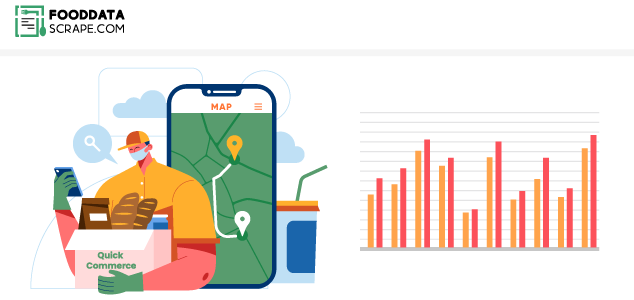
Quick commerce is rapidly changing the way consumers purchase groceries, snacks, beverages, household essentials, and personal-care products. The strategy to Scrape Quick Commerce Dark Store Data is emerging as an important source of intelligence for businesses seeking to understand product availability, pricing, assortment, delivery coverage, and neighborhood-level competition across rapidly expanding fulfillment networks.
The Dark Store Data Opportunity
Unlike traditional retail outlets, dark stores are designed specifically for online order fulfillment. Their locations, inventory mix, serviceable areas, and product availability can provide valuable signals about local demand and competitive activity.
Businesses can monitor product categories, prices, discounts, stock availability, delivery estimates, and geographic coverage to understand how quick-commerce platforms are responding to consumer demand.
Zepto Blinkit Flipkart Minutes Data Scraping enables businesses to examine marketplace information across leading quick-commerce ecosystems and identify differences in pricing, assortment, promotions, and product availability across locations.
Turning Local Data Into Market Intelligence
Quick-commerce competition can vary significantly between neighborhoods. A product may be available in one service area while unavailable in another, while prices and promotional offers may also differ.
Quick Commerce Market Intelligence helps organizations bring these fragmented signals together. Historical datasets can reveal changes in assortment, promotional strategies, pricing movements, and market expansion, giving brands and retailers a clearer picture of competitive developments.
Why Pricing and Availability Matter?
Consumers increasingly expect fast delivery and competitive prices. This creates pressure on platforms and sellers to maintain attractive assortments while responding quickly to changes in demand.
Tracking product prices and stock availability can help businesses identify frequently promoted products, changing price points, unavailable items, and assortment gaps. Such intelligence can support pricing decisions, competitor benchmarking, and category planning.
Making Data More Actionable
Large-scale monitoring becomes more valuable when information can be integrated directly into business intelligence systems.
Quick Commerce Data Scraping API solutions can support the delivery of structured data into dashboards, analytical platforms, and automated workflows. Businesses can use these datasets to monitor products, prices, discounts, categories, availability, and other marketplace signals on a recurring basis.
Mapping the Q-Commerce Ecosystem
Dark stores are also changing the geographic structure of retail. Instead of relying exclusively on large supermarkets or centralized warehouses, quick-commerce companies use networks of smaller fulfillment locations positioned closer to customers.
Scraping Dark Stores for Q-Commerce can help businesses study fulfillment coverage, local assortment differences, product availability, and competitive density. Over time, this information can provide insights into market expansion and changing consumer-access patterns.
From Data Collection to Strategic Decisions
The real value of dark-store data comes from connecting individual observations to larger market trends. A single price change may have limited meaning, but thousands of observations collected over time can reveal pricing strategies, promotional cycles, assortment changes, and geographic expansion.
Brands can use these insights to benchmark competitors, identify underserved categories, evaluate local opportunities, and understand how rapidly consumer-facing retail is evolving.
What Comes Next?
The next phase of quick commerce will increasingly depend on data. As fulfillment networks expand and consumers become more accustomed to instant delivery, businesses will need faster access to reliable market intelligence.
Automated data collection, historical datasets, APIs, and analytics dashboards can help organizations move from reactive monitoring to proactive decision-making. Dark-store intelligence can therefore become an important component of modern retail and grocery strategy.
How Food Data Scrape Is Gaining Prominence
Food Data Scrape is gaining prominence as businesses increasingly look for structured intelligence across food delivery, grocery, and quick-commerce markets. By transforming marketplace information into usable datasets, businesses can strengthen pricing intelligence, competitor monitoring, assortment analysis, and market research.
As quick commerce continues to reshape retail, Scrape Quick Commerce Dark Store Data is becoming a valuable foundation for understanding the products, prices, locations, and competitive dynamics driving this rapidly evolving ecosystem.