The Client
The client was a rapidly growing grocery delivery company operating a network of dark stores across multiple cities. Its business model depended on maintaining high product availability and fulfilling customer orders quickly. However, limited visibility into store-level inventory made it difficult to identify stock-outs, compare availability patterns, and respond to replenishment requirements promptly.
The company wanted a scalable data solution that could provide accurate product availability information across its dark-store network. It needed visibility into product names, SKUs, prices, stock status, categories, store locations, and timestamps to support operational and commercial decisions.
The client partnered with a data scraping team to build grocery dark store inventory intelligence capabilities. The solution included store-level grocery inventory data scrape processes that captured product availability across individual locations. A structured real-time grocery availability API further enabled the client to access refreshed inventory information and identify availability gaps faster.
This improved visibility supported better replenishment planning, inventory optimization, and customer experience management.
Key Challenges
-
Fragmented Inventory Visibility
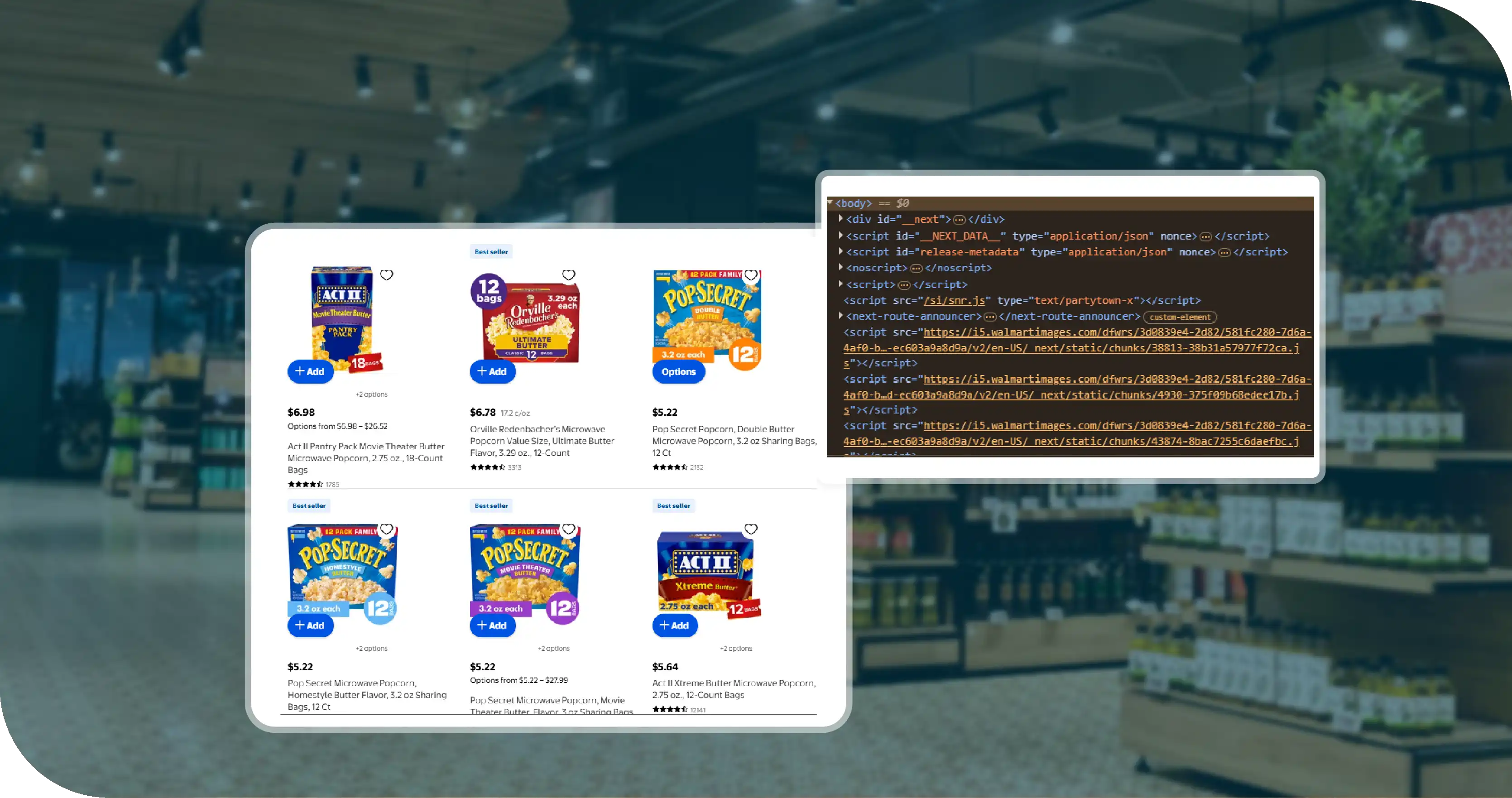
The client struggled to maintain consistent inventory visibility across multiple dark stores because product availability changed frequently. Different locations showed varying stock statuses, making centralized monitoring difficult. Dark Store Data Scraping was required to capture standardized, location-specific inventory information continuously. -
Frequent Stock Status Changes
Rapid inventory movement created challenges in detecting stock-outs quickly. Products could become unavailable shortly after being listed as in-stock, resulting in missed sales opportunities and inaccurate operational decisions. Dark Store Scraping was needed to track these changes at regular intervals. -
Scaling Data Across Locations
Managing large volumes of product and store-level information manually was inefficient and difficult to scale. The client needed structured datasets covering products, SKUs, availability, and locations. A reliable Q-Commerce Dark Store DB was essential for centralized analysis and monitoring.
Key Solutions
-
Automated Dark Store Data Collection
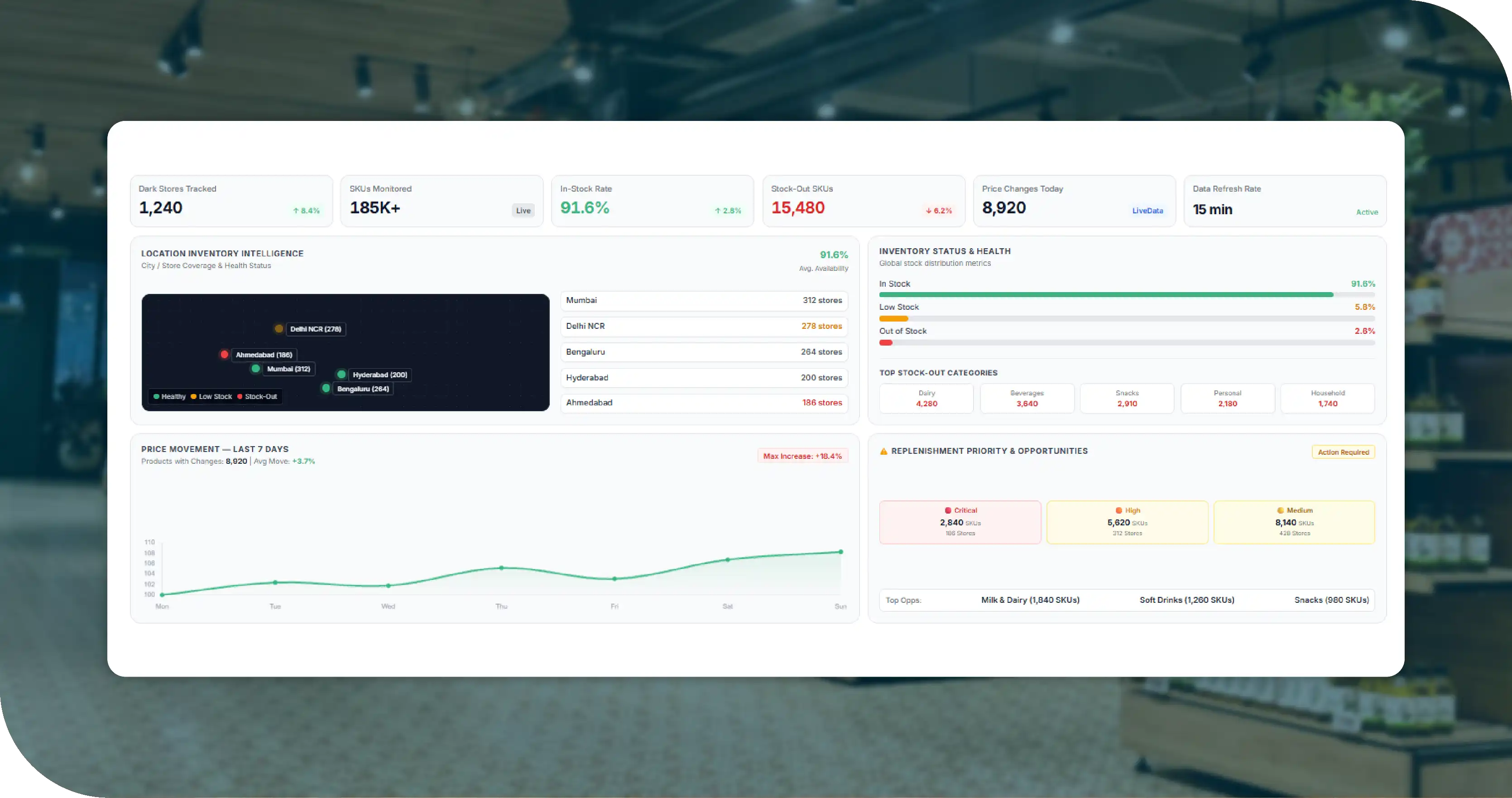
We developed an automated scraping framework to collect product names, SKUs, categories, prices, stock status, and store details across multiple locations. The system captured recurring updates, standardized records, and delivered structured datasets, enabling the client to monitor availability without manual tracking. -
Location-Level Inventory Intelligence
The solution mapped product availability to individual dark stores, allowing teams to compare stock conditions across locations. Q-Commerce Dark Store Location Data Scraping helped identify stores with frequent stock-outs, while historical records supported replenishment planning and operational performance analysis. -
Price and Availability Monitoring
We implemented continuous monitoring of product prices and stock status to identify changes quickly. Dark Store Price & Stock Intelligence enabled the client to detect availability gaps, analyze pricing movements, prioritize replenishment, and improve visibility into rapidly changing quick-commerce inventory conditions.
Data Coverage and Processing Results
| Data Metric | Before Solution | After Solution | Improvement |
|---|---|---|---|
| Dark Stores Monitored | 35 | 180 | 414% |
| Products Tracked | 12,500 | 68,000 | 444% |
| Daily Availability Records | 42,000 | 315,000 | 650% |
| SKU-Level Stock Checks | 18,500 | 142,000 | 668% |
| Product Categories Covered | 28 | 54 | 93% |
| Cities Covered | 4 | 12 | 200% |
| Daily Price Records | 31,000 | 226,000 | 629% |
| Stock-Out Events Detected | 2,100 | 18,700 | 790% |
| Data Processing Accuracy | 91% | 98.7% | 7.7 pp |
| Reporting Frequency | Weekly | Near Real-Time | Faster Monitoring |
| Manual Monitoring Hours/Week | 46 | 8 | 83% Reduction |
| Historical Data Retention | 30 Days | 12 Months | 12× Coverage |
| Average Data Refresh | 24 Hours | 30 Minutes | 96% Faster |
Methodologies Used
-
Automated Data Extraction
We used automated scraping workflows to collect product names, SKUs, categories, prices, availability, and store information from dark-store platforms. Scheduled extraction enabled consistent data collection while reducing manual intervention and maintaining structured records for downstream inventory analysis and stock-out detection. -
Store-Level Data Mapping
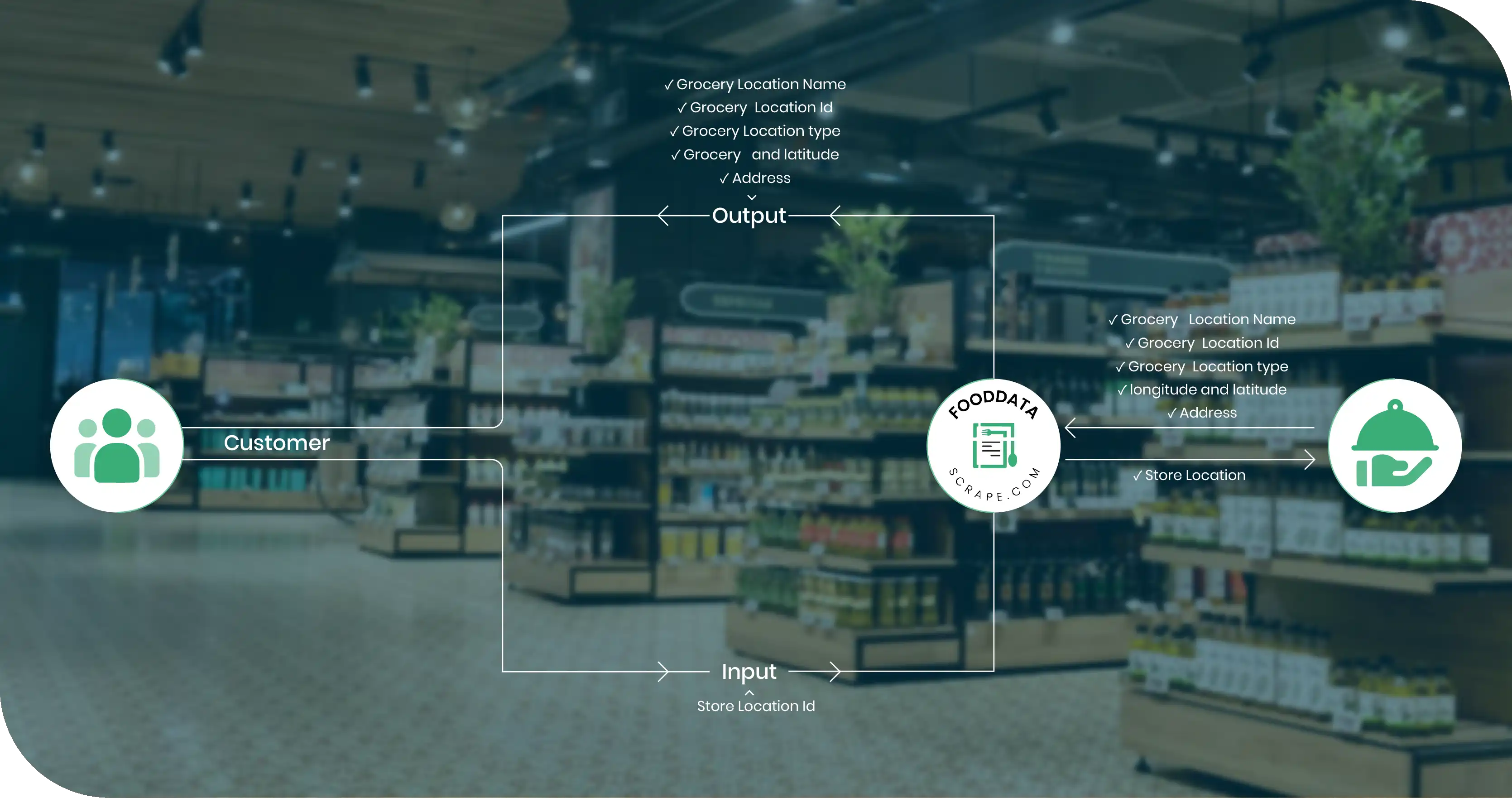
Each product record was mapped to its corresponding dark store using location identifiers, store names, and geographic attributes. This methodology enabled the client to compare inventory conditions across locations, identify regional availability gaps, and understand store-specific stock-out patterns. -
Real-Time Availability Monitoring
Automated monitoring workflows repeatedly checked product availability and detected changes between in-stock and out-of-stock states. Timestamped records created an availability history, helping identify recurring stock-outs, estimate their duration, and provide faster visibility into inventory changes across stores. -
Data Cleaning and Standardization
Raw scraped information was cleaned, normalized, and standardized before analysis. Duplicate products, inconsistent SKU formats, missing values, and variations in product names were resolved. This created reliable datasets suitable for comparing inventory, pricing, availability, and product performance across multiple dark stores. -
Historical Trend Analysis
Historical inventory records were analyzed to identify recurring stock-out patterns, frequently unavailable products, and location-specific availability trends. Time-based comparisons helped the client understand demand-related inventory gaps, improve replenishment planning, and prioritize products requiring closer monitoring across the network.
Advantages of Collecting Data Using Food Data Scrape
-
Wider Inventory Visibility
Our data scraping services provide comprehensive visibility into products, prices, stock status, and store-level availability across multiple dark stores. This enables businesses to monitor inventory conditions consistently, identify availability gaps, and make informed operational decisions using structured, regularly refreshed data. -
Faster Stock-Out Detection
Automated data collection helps identify products that move from available to unavailable without relying on manual checks. Faster detection allows teams to investigate inventory issues, coordinate replenishment activities, reduce potential lost sales, and maintain stronger product availability across locations. -
Scalable Data Collection
Our scraping infrastructure can collect large volumes of product and inventory information across numerous stores and categories. As the client expands geographically, the solution can scale accordingly, supporting broader monitoring requirements without significantly increasing manual data collection efforts. -
Better Inventory Planning
Historical availability data helps businesses understand recurring stock-out patterns, frequently unavailable products, and store-specific inventory gaps. These insights support more effective replenishment planning, demand assessment, assortment decisions, and inventory allocation while helping operational teams focus on high-priority products. -
Reliable Competitive Intelligence
Structured pricing and availability datasets provide a clearer view of changing market conditions. Businesses can compare product availability and pricing across locations, identify operational trends, and strengthen decision-making through consistent data rather than fragmented observations or manually collected information.
Client's Testimonial
"The dark-store inventory scraping solution transformed the way our teams manage product availability. We previously depended on fragmented checks that made it difficult to spot fast-moving stock-outs. The new data pipeline provides consistent store-level information and helps us identify availability gaps, pricing changes, and recurring inventory issues much earlier. Having historical data also allows us to evaluate store performance and improve replenishment decisions with greater confidence. What impressed us most was the scalability of the solution, as we could expand monitoring across additional locations without creating additional manual workloads. The data has become an important resource for our operations, merchandising, and inventory teams."
—Director of Retail Operations
Final Outcome
The project delivered a centralized and scalable inventory intelligence solution for monitoring product availability across the client's dark-store network. Automated data collection provided regular updates on product names, SKUs, prices, stock status, categories, and store locations, replacing fragmented manual monitoring processes. The client gained faster visibility into stock-out events and could identify products and locations experiencing recurring availability issues. Historical datasets also enabled teams to compare inventory patterns, evaluate store-level performance, and improve replenishment planning. Structured data helped operations teams prioritize critical stock gaps while merchandising teams gained better visibility into pricing and assortment conditions. Overall, the solution strengthened inventory transparency, reduced manual effort, supported quicker operational responses, and created a reliable foundation for data-driven decision-making across the client's expanding quick-commerce dark-store ecosystem.