
The report provides a comprehensive analysis of the evolving global sushi market by examining consumer preferences, restaurant menus, grocery retail products, food delivery platforms, recipes, and digital discussions. It explores how changing flavour profiles, premium ingredients, pricing strategies, and meal formats are shaping demand across foodservice and retail channels. The report highlights the growing importance of continuous data collection for identifying emerging trends, monitoring competitor activity, and supporting product innovation. It also examines ingredient adoption, menu expansion, premiumisation, and regional consumption patterns using structured market intelligence. By analysing multiple digital data sources, businesses can gain actionable insights into customer behaviour, optimise pricing strategies, improve menu offerings, and forecast future demand with greater accuracy. The report is designed for restaurant operators, food manufacturers, retailers, distributors, and market researchers seeking reliable intelligence to support strategic planning, accelerate innovation, reduce market risks, and capitalise on new opportunities within the rapidly expanding global sushi industry.
Market Growth
Sushi demand continues expanding through premium products, retail innovation, and digital consumer engagement globally.
Flavour Evolution
Consumers increasingly prefer bold flavours, fermented ingredients, creamy textures, and premium seafood experiences.
Menu Innovation
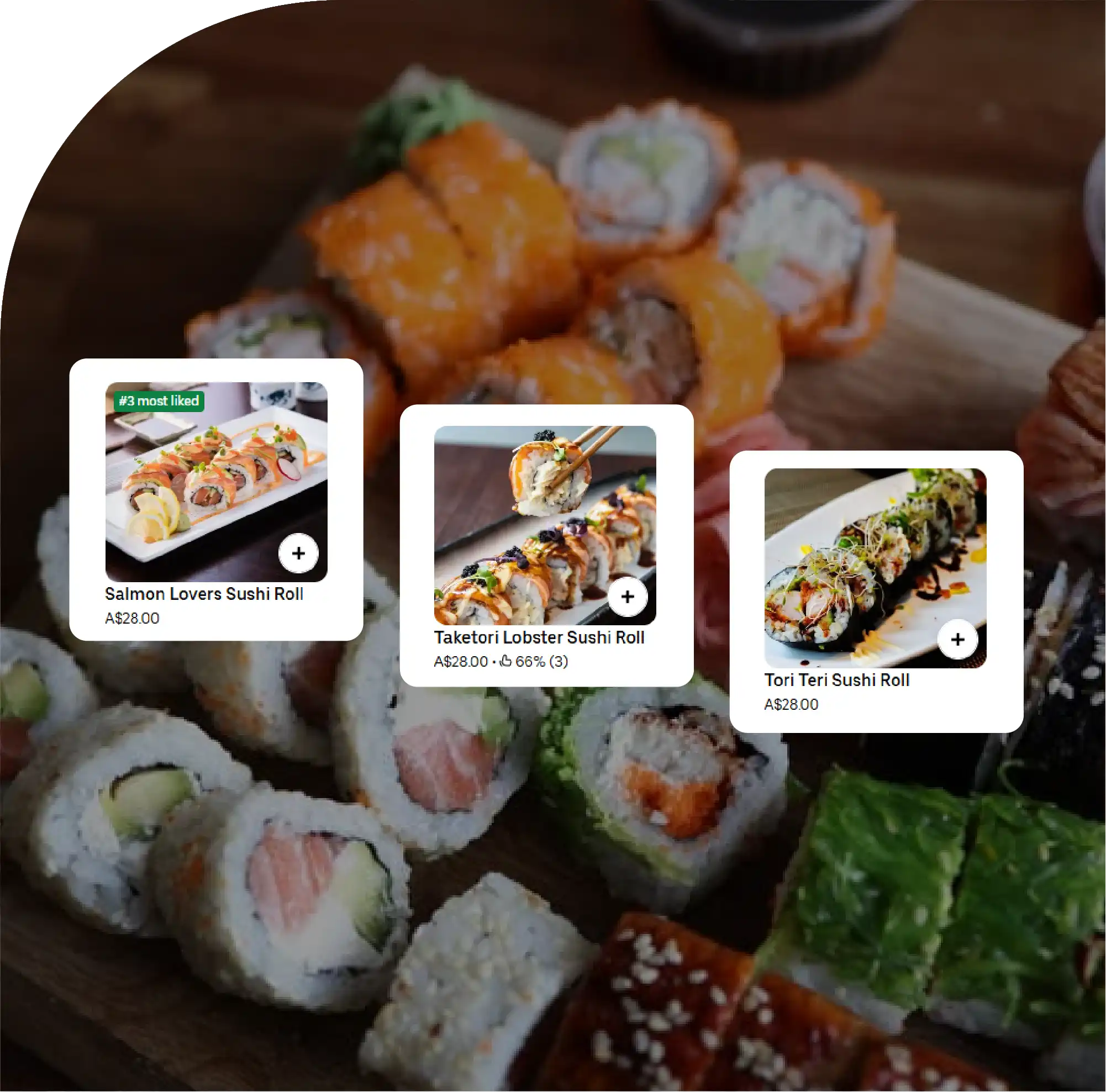
Restaurants expand beyond rolls with bowls, soups, meal bundles, and signature sauces successfully.
Ingredient Trends
Premium seafood, microgreens, koji, and speciality ingredients drive stronger consumer purchasing decisions globally.
Data Intelligence
Continuous market monitoring enables accurate forecasting, competitive benchmarking, and faster product innovation strategies.

Global sushi consumption has expanded far beyond traditional Japanese dining and has become a mainstream food category across restaurants, supermarkets, convenience stores, meal kits, and food delivery platforms. Consumers increasingly expect sushi to combine freshness, premium ingredients, convenience, bold flavours, and visual appeal within a single dining experience. Scrape Sushi Food Trends Data to monitor these changing preferences by collecting large-scale information from restaurant menus, delivery applications, grocery retailers, recipe platforms, and consumer discussions.
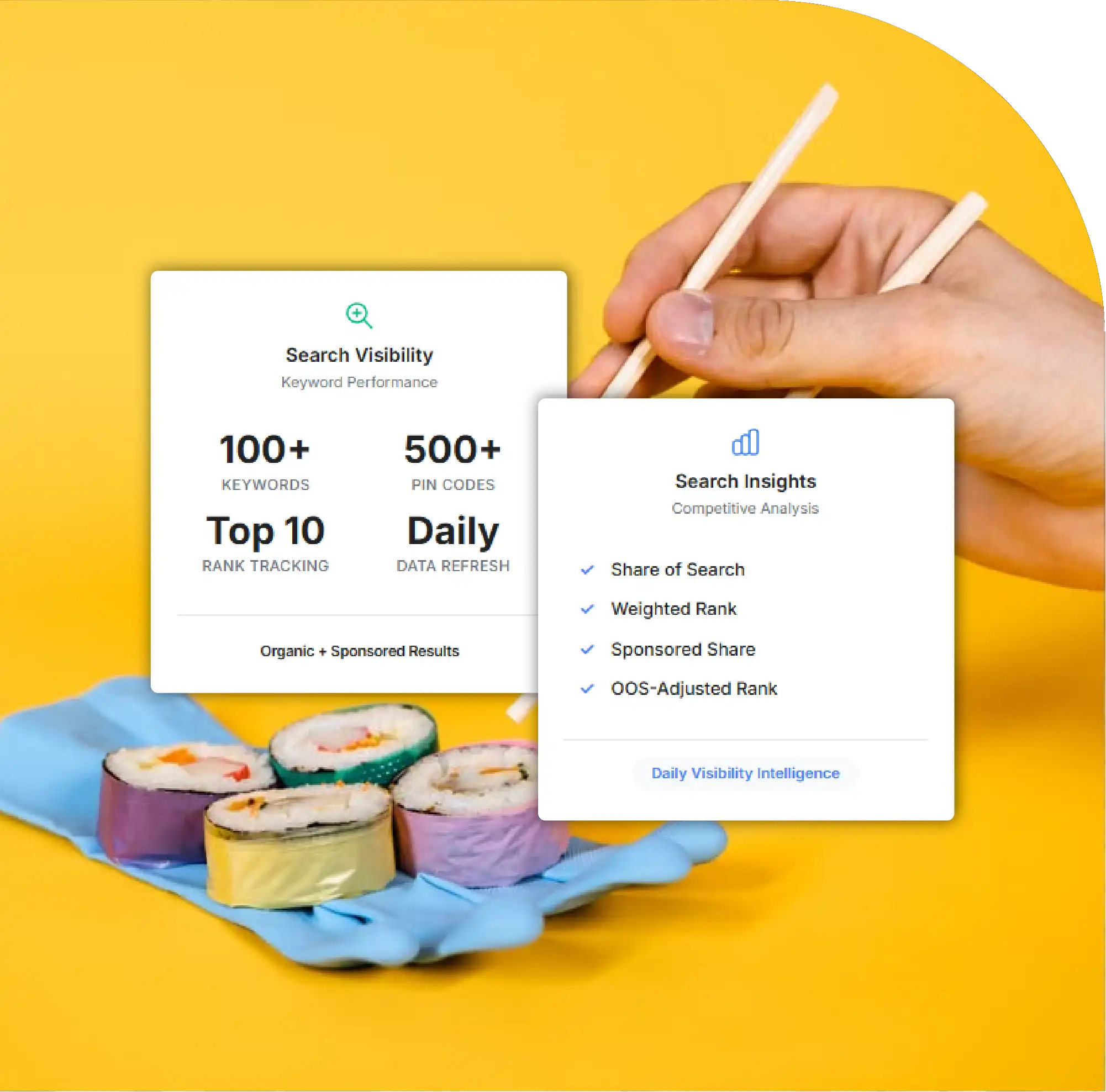
Real-Time Sushi Trend Data Scraping provides continuous visibility into menu launches, pricing updates, seasonal ingredients, consumer engagement, and regional demand shifts. Unlike conventional market research, automated data collection captures changes as they happen, helping businesses respond more quickly to evolving market conditions.
Sushi Consumer Trends Data reveals how flavour preferences, ingredient combinations, premiumisation, meal occasions, and purchasing behaviour continue evolving across global markets. These insights support restaurants, retailers, food manufacturers, distributors, and market researchers in making informed product development and business decisions based on measurable consumer demand rather than assumptions.

Sushi continues to experience healthy long-term growth despite changing consumer behaviour. The category remains one of the strongest performers in premium prepared foods because it satisfies multiple consumer expectations simultaneously, including convenience, freshness, healthier eating, and premium dining experiences.
However, market success increasingly depends on execution rather than novelty. Consumers are no longer impressed simply by introducing another specialty roll. Instead, they seek products offering exceptional flavour, premium ingredients, appealing presentation, and complete meal experiences.
Continuous market intelligence enables businesses to understand which products generate repeat purchases, which ingredients are becoming premium signals, and how consumer expectations differ across regions and retail channels.
The following dataset represents aggregated information collected from restaurant menus, grocery retailers, food delivery platforms, online recipes, product listings, and digital consumer discussions.
| Market Performance Indicator | Measured Value |
|---|---|
| Overall Sushi Social Share | 1.0% |
| Annual Consumer Growth | 19.3% |
| Average Monthly Menu Expansion | 14.8% |
| Restaurant Adoption Growth | 16.1% |
| Retail Product Growth | 13.4% |
| Online Recipe Growth | 22.5% |
| Consumer Review Growth | 18.7% |
| Premium Product Launches | 24.2% |
| Delivery Platform Listing Growth | 21.9% |
| Weekly Consumer Searches | 1,860,000 |
| Restaurant Menu Updates | 11,400 |
| Newly Introduced Sushi Products | 5,820 |
| Countries Analysed | 42 |
| Digital Sources Monitored | 2,700 |
| Restaurant Menus Processed | 310,000 |
| Grocery Product Listings | 870,000 |
| Consumer Reviews Analysed | 6,800,000 |
| Social Discussions Monitored | 9,400,000 |
| Recipe Pages Collected | 590,000 |
| Data Refresh Frequency | Every 24 Hours |
The data demonstrates that sushi demand continues expanding across multiple consumer touchpoints instead of relying on a single sales channel. Growth is now supported by retail, delivery, foodservice, grocery, and digital engagement simultaneously.
Freshness remains the foundation of sushi quality, but purchasing behaviour increasingly favours products delivering stronger flavour experiences. Rich sauces, creamy textures, premium seafood, fermented ingredients, and layered umami flavours are attracting significantly higher engagement than simple traditional combinations.
Sushi Demand Data Scraping enables businesses to monitor these changes directly from thousands of restaurant menus and food delivery platforms. By tracking ingredient updates, seasonal launches, menu descriptions, pricing changes, and customer preferences, organisations gain valuable insight into emerging consumer expectations before trends become mainstream.
Consumers continue appreciating traditional attributes such as freshness and authenticity, yet they increasingly associate premium sushi with buttery textures, spicy sauces, silky finishes, and balanced sweet-and-savoury flavour profiles. This evolution explains why many successful restaurants are enhancing familiar products rather than replacing them with completely new concepts.
Although innovation remains important, classic sushi formats continue forming the foundation of consumer purchasing behaviour. Rice, sashimi, nigiri, maki, and premium seafood consistently appear among the highest-performing menu categories across global markets.
Restaurants have discovered that customers increasingly purchase sushi as part of complete meals rather than individual snack occasions. Soup, rice bowls, grilled accompaniments, and combination platters frequently increase order values while improving customer satisfaction.
Instead of replacing traditional sushi, businesses are adding premium toppings, signature sauces, fermented ingredients, and complementary side dishes that create a richer dining experience while maintaining familiar product formats.
Ingredient-level intelligence provides one of the clearest indicators of future market direction. Premium seafood remains central to consumer purchasing decisions, while fermentation-based ingredients and visually attractive garnishes continue expanding across restaurant menus.
Sushi Market Data Analytics helps businesses identify which ingredients are gaining momentum across multiple markets by continuously monitoring restaurant menus, grocery retailers, recipes, and digital conversations.
Restaurants increasingly experiment with premium shrimp, speciality beef, fermented seasonings, colourful microgreens, premium sauces, citrus glazes, and globally inspired flavour combinations. These ingredients create stronger differentiation while maintaining the authenticity consumers continue expecting from sushi.
| Category | Current Share | YoY Growth | Menu Adoption | Premium Score |
|---|---|---|---|---|
| Fish | 20.0% | 18% | 84% | 95 |
| Rice | 8.8% | 15% | 97% | 82 |
| Salmon | 7.5% | 21% | 79% | 90 |
| Tuna | 7.4% | 17% | 75% | 88 |
| Sashimi | 7.8% | 19% | 61% | 91 |
| Nigiri | 6.2% | 16% | 58% | 89 |
| Maki | 5.3% | 14% | 72% | 80 |
| Shrimp | 4.3% | 29% | 41% | 93 |
| Soup Pairings | 7.3% | 20% | 56% | 71 |
| Japanese BBQ | 3.6% | 47% | 23% | 87 |
| Matcha Products | 2.8% | 50% | 31% | 76 |
| Koji Ingredients | 1.9% | 62% | 18% | 92 |
| Microgreens | 2.4% | 53% | 27% | 86 |
| Shrimp Cocktail | 1.6% | 95% | 14% | 94 |
| Coconut Shrimp | 2.2% | 38% | 19% | 79 |
| Chimichurri | 1.4% | 33% | 12% | 74 |
| Arugula | 1.8% | 34% | 17% | 73 |
| Premium Sauces | 5.7% | 44% | 46% | 90 |
| Spicy Variants | 6.1% | 39% | 63% | 85 |
| Signature Rolls | 8.4% | 26% | 68% | 88 |
The dataset highlights how premium seafood, fermented ingredients, specialty greens, and innovative sauces continue strengthening the overall value proposition of sushi across foodservice and retail environments.
Successful market intelligence programmes combine information from numerous digital sources rather than depending on a single platform.
Restaurant websites reveal menu launches and pricing updates, while food delivery applications expose regional demand and promotional strategies. Grocery retailers provide insights into packaged sushi innovation, and recipe websites reveal ingredient combinations becoming popular among home consumers.
Review platforms help businesses understand customer satisfaction, while social conversations reveal emerging flavour preferences and dining occasions. Integrating these sources creates a comprehensive understanding of changing consumer behaviour across the entire market.
Extract sushi menu and pricing data from thousands of digital sources allows organisations to benchmark competitors, identify pricing opportunities, monitor seasonal launches, and evaluate product positioning with far greater accuracy than traditional market surveys.
Many businesses previously relied on introducing increasingly elaborate sushi rolls to attract customer attention. While these products still generate interest, competition has become significantly more crowded.
Today's innovation focuses on delivering complete dining experiences. Sushi bowls, premium rice meals, Japanese sandwiches, warm side dishes, signature sauces, and meal combinations now provide stronger opportunities for differentiation.
Sauce innovation has become especially influential because it enhances familiar products without requiring completely new preparation methods. Spicy mayonnaise, fermented glazes, sesame dressings, citrus reductions, creamy toppings, and umami-rich seasonings consistently increase consumer engagement while maintaining operational efficiency.
Restaurants combining sushi with soups, grilled proteins, premium beverages, and side dishes also achieve higher transaction values because consumers increasingly purchase complete meal experiences instead of standalone products.
Modern food markets evolve rapidly, making continuous monitoring essential for long-term success.
Sushi Market Data Intelligence enables businesses to evaluate pricing strategies, competitor activity, seasonal ingredient availability, menu expansion, consumer reviews, promotional campaigns, and regional demand patterns simultaneously.
Manufacturers benefit by identifying ingredients suitable for future product development. Restaurant operators can benchmark competitors across multiple cities and pricing segments. Retailers gain clearer visibility into packaged product performance, while distributors improve inventory planning based on measurable consumer demand.
Continuous monitoring also reduces product development risk by validating innovation decisions using real-world market evidence instead of assumptions or limited consumer surveys.
Growing consumer expectations, premium ingredients, and changing dining occasions continue reshaping food Demand Trends across global sushi markets, making continuous digital monitoring increasingly valuable for strategic planning.
Sushi continues evolving from a premium speciality cuisine into a mainstream meal solution across restaurants, grocery retailers, convenience stores, and food delivery platforms. Future success will depend on understanding changing consumer behaviour, ingredient preferences, pricing movements, flavour innovation, and competitive positioning through continuous data collection.
Businesses investing in comprehensive market intelligence can strengthen Demand Forecasting by analysing restaurant menus, grocery listings, delivery platforms, recipes, and consumer discussions together, creating a far more accurate understanding of future demand.
Modern solutions powered by Food Delivery Scraping API technology allow organisations to monitor menu availability, pricing changes, promotions, regional expansion, and product launches in near real time, enabling faster business decisions and stronger competitive positioning.
By combining these insights with structured Food Datasets, restaurants, food manufacturers, retailers, distributors, and market researchers can accelerate innovation, improve pricing strategies, optimise product portfolios, identify emerging consumer preferences, and confidently capture new opportunities within the continuously evolving global sushi market.
If you are seeking for a reliable data scraping services, Food Data Scrape is at your service. We hold prominence in Food Data Aggregator and Mobile Restaurant App Scraping with impeccable data analysis for strategic decision-making.