Introduction
The sweet and salty flavor combination has evolved from a niche snack concept into one of the most influential taste trends shaping the global food industry in 2026. Consumers are actively choosing products that combine contrasting flavors, layered textures, and premium ingredients across retail shelves, restaurant menus, and food delivery platforms. These preferences are influencing product development, pricing strategies, menu engineering, and merchandising decisions.
Businesses that leverage method to Scrape Sweet and Salty Food Trends 2026 gain access to real-time insights into emerging ingredients, consumer preferences, and menu innovations before they become mainstream. Combined with strategy to Scrape Consumer Flavor Preference Data, brands can identify changing consumption behaviors across demographics and regions. Meanwhile, Sweet and Salty Menu Data Scraping enables restaurants, food manufacturers, and retailers to monitor evolving menu offerings, ingredient combinations, pricing, and seasonal launches, allowing them to stay ahead of competitors.
Why Sweet and Salty Foods Are Dominating in 2026?
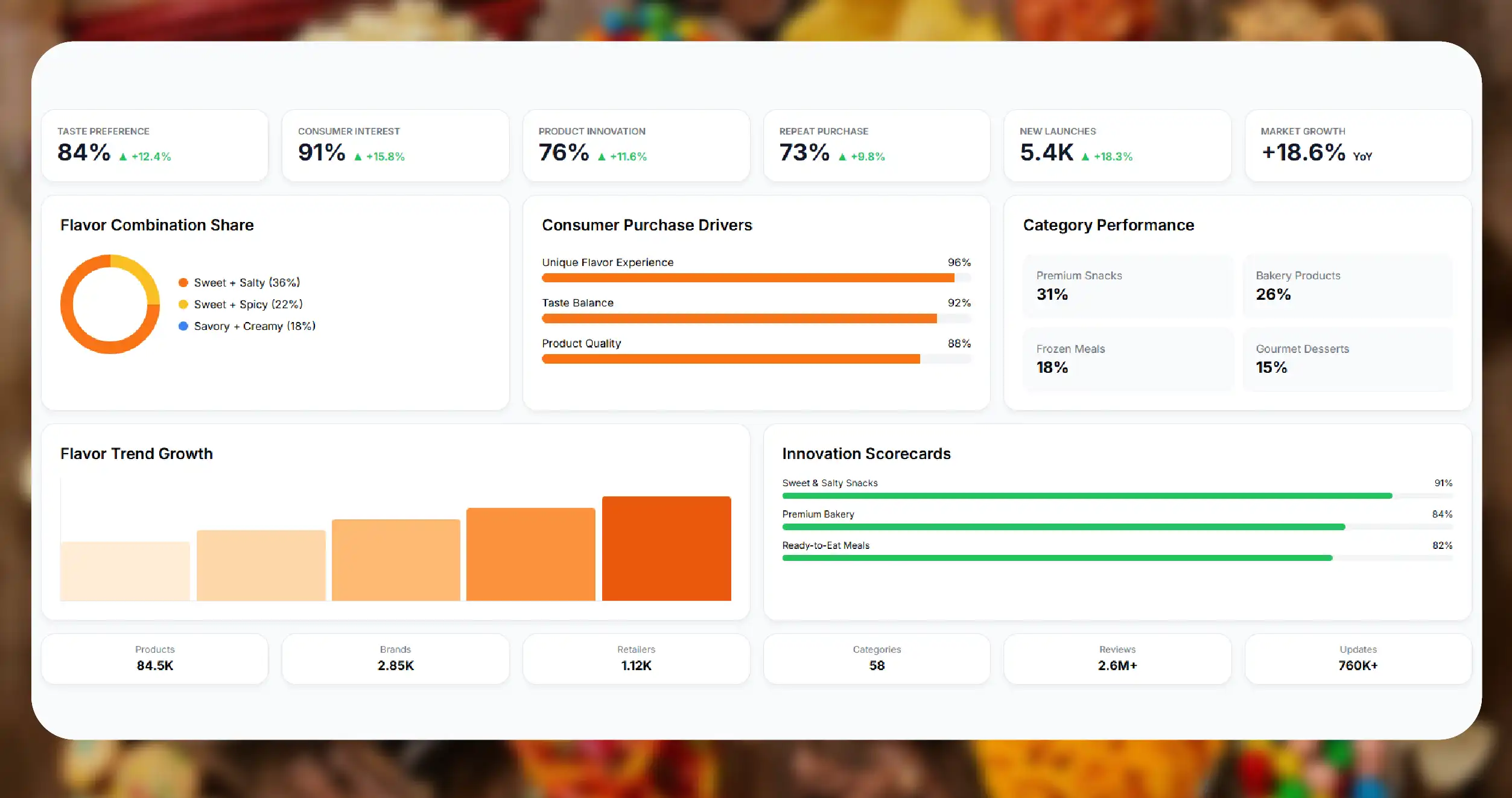
Consumer expectations have changed dramatically over the past few years. Rather than choosing simple sweet or savory products, shoppers increasingly seek foods that combine multiple taste sensations within a single bite.
The growth of sweet and salty products reflects a broader shift toward layered eating experiences. Consumers are attracted to products that deliver crunchy textures with creamy fillings, salty finishes with sweet glazes, and spicy notes balanced by natural sweetness. This complexity creates memorable eating experiences that encourage repeat purchases.
Market data indicates significant growth across snack categories, premium desserts, bakery products, breakfast foods, frozen meals, and restaurant appetizers. Sweet and salty flavors are no longer limited to popcorn or chocolate-covered snacks—they now influence pizzas, burgers, sandwiches, salads, gourmet desserts, protein bars, and ready-to-eat meals.
As competition intensifies, companies require continuous market monitoring to understand which combinations resonate most with consumers.
Consumer Preferences Are Driving Product Innovation
Today's shoppers actively search for products that provide excitement without becoming overwhelmingly sweet. Premium ingredients and authentic flavor combinations have become essential purchasing factors.
Consumers increasingly favor combinations such as:
- Hot honey with fried chicken
- Maple bacon breakfast items
- Sea salt caramel desserts
- Fig with artisan cheeses
- Prosciutto paired with fruit preserves
- Salted chocolate snacks
- Honey-glazed savory meats
- Sweet chili flavored chips
Rather than relying on assumptions, brands now analyze millions of online signals including menus, recipes, grocery listings, reviews, and social discussions to validate demand before launching new products.
This data-first approach significantly reduces product launch risk while increasing market success.
Ingredient Trends Creating New Opportunities
Ingredient-level monitoring has become one of the most valuable applications of Sweet and Salty Product Data Extraction.
Instead of only tracking finished products, businesses monitor how specific ingredients appear together across menus, packaged foods, and recipe platforms.
Several ingredient combinations continue showing exceptional momentum:
Hot honey remains one of the fastest-growing flavor additions across sandwiches, pizza, fried chicken, and gourmet snacks. Its balance of sweetness and heat appeals to younger consumers seeking adventurous flavors.
Bacon continues expanding beyond breakfast into desserts, donuts, candies, burgers, and specialty beverages, creating premium positioning opportunities.
Fig and prosciutto represent growing Mediterranean-inspired combinations appearing on restaurant menus and gourmet retail products. These ingredients signal premium quality while satisfying consumer demand for sophisticated flavor pairings.
Sea salt remains one of the strongest supporting ingredients because it enhances sweetness without overpowering other flavors, making it suitable across multiple food categories.
Continuous ingredient monitoring enables manufacturers to prioritize high-growth combinations before competitors scale production.
Texture Has Become Equally Important
Flavor alone no longer determines consumer satisfaction.
Today's successful food products combine contrasting textures alongside contrasting flavors.
Consumers increasingly prefer products featuring:
- Crunchy coatings
- Gooey centers
- Soft baked textures
- Crispy toppings
- Chewy inclusions
- Layered fillings
Texture innovation creates stronger sensory experiences while increasing perceived product quality.
Packaging and marketing also increasingly emphasize descriptive terms such as "crispy," "loaded," "layered," and "crunchy," reflecting consumer demand for multisensory eating experiences.
Companies that analyze menu descriptions and product listings gain valuable insight into which texture claims generate the highest consumer engagement.
Retailers Need Better Sweet and Salty Retail Analytics
Retail competition has intensified as grocery chains rapidly expand premium snack assortments and private-label innovation.
Using Sweet and Salty Retail Analytics, businesses can continuously monitor:
- Product assortment changes
- New product launches
- Regional availability
- Shelf pricing
- Promotional campaigns
- Product ratings
- Consumer reviews
- Category expansion
Retail intelligence helps manufacturers identify whitespace opportunities where consumer demand exists but product availability remains limited.
It also allows retailers to optimize category planning, improve assortment decisions, and react quickly to emerging trends.
Rather than relying on quarterly reports, retailers now benefit from daily competitive intelligence.
Restaurants Are Expanding Sweet and Salty Menus
Restaurants increasingly use sweet and salty combinations to differentiate their menus.
Quick-service restaurants, casual dining chains, cafes, bakeries, and gourmet establishments all continue experimenting with contrasting flavors across multiple dayparts.
Examples include:
- Honey butter chicken sandwiches
- Salted caramel milkshakes
- Maple glazed burgers
- Sweet chili chicken wraps
- Bacon-infused desserts
- Salted chocolate beverages
- Fruit and cured meat flatbreads
- Gourmet breakfast sandwiches
Tracking menu evolution across thousands of restaurant locations enables operators to identify successful innovations before they become industry standards.
This level of Sweet and Salty Food Market Intelligence allows foodservice businesses to optimize seasonal menus while responding quickly to regional consumer demand.
Data Collection Powers Smarter Decision Making
Modern food businesses increasingly depend on automated Food Data Scraping to monitor rapidly changing markets.
Instead of manually collecting information from hundreds of websites, automated systems gather structured datasets from restaurants, grocery stores, delivery platforms, recipes, review sites, and e-commerce marketplaces.
These datasets typically include:
- Product names
- Ingredient lists
- Flavor descriptions
- Pricing
- Nutritional information
- Availability
- Promotions
- Customer ratings
- Review sentiment
- Category classifications
- Geographic coverage
Continuous monitoring provides organizations with reliable intelligence for product planning, competitive benchmarking, pricing optimization, and trend forecasting.
Restaurant Intelligence Supports Faster Innovation
Restaurants generate enormous amounts of publicly available menu data every day.
Through advanced Restaurant Data Intelligence, businesses can analyze:
- New menu launches
- Limited-time offers
- Seasonal specials
- Ingredient substitutions
- Portion sizes
- Pricing changes
- Regional menu differences
- Consumer ratings
These insights help food manufacturers identify which ingredients gain traction first within restaurants before entering packaged food categories.
Restaurant monitoring also enables suppliers to forecast ingredient demand, helping improve inventory planning and production scheduling.
Turn real-time food trend data into your competitive advantage—contact us today to build a customized sweet and salty food intelligence solution.
Benefits of Automated Food Trend Monitoring
Organizations investing in automated market intelligence gain several competitive advantages.
- They identify emerging ingredients months before widespread adoption.
- They benchmark competitor pricing with greater accuracy.
- They evaluate successful flavor combinations across multiple markets.
- They discover underserved customer segments with growing demand.
- They reduce product development uncertainty through evidence-based decision making.
- They improve category management using continuously updated market data.
Most importantly, automated intelligence enables organizations to react faster than competitors relying on traditional market research.
How Data Scraping Accelerates Product Development
Launching successful food products requires understanding both current demand and future opportunities.
Continuous market monitoring helps innovation teams validate concepts before investing heavily in production.
Instead of depending solely on consumer surveys, organizations analyze millions of real-world data points generated through retail platforms, restaurant menus, online marketplaces, and digital food ecosystems.
These insights support:
- Product innovation
- Competitive benchmarking
- Category expansion
- Ingredient forecasting
- Consumer segmentation
- Regional market analysis
- Seasonal planning
- Pricing optimization
- Promotion effectiveness
- Portfolio management
The result is faster innovation with significantly lower commercial risk.
How Food Data Scrape Can Help You?
1. Real-Time Flavor Trend Monitoring
Our data scraping services continuously monitor food websites, restaurant menus, retail platforms, and marketplaces to identify emerging sweet and salty flavor trends, helping your business stay ahead of changing consumer preferences.
2. Competitive Product Intelligence
Track competitor product launches, ingredient combinations, pricing, promotions, and assortment changes across multiple channels, enabling your team to benchmark performance and develop stronger market strategies.
3. Consumer Preference Analysis
Collect large-scale consumer data from reviews, ratings, recipes, and online platforms to understand evolving flavor preferences, purchasing behavior, and demand patterns for smarter product development.
4. Retail and Restaurant Insights
Monitor grocery retailers, food delivery platforms, and restaurant menus to analyze new offerings, seasonal launches, pricing changes, and regional variations that influence your business decisions.
5. Actionable Market Intelligence
Transform raw food industry data into structured insights that support innovation, pricing optimization, inventory planning, demand forecasting, and faster decision-making across your entire product portfolio.
Conclusion
Sweet and salty flavors represent one of the strongest food innovation opportunities in 2026. Consumers increasingly demand layered flavors, premium ingredients, and exciting textures across snacks, meals, desserts, and beverages. Businesses that continuously monitor these changing preferences gain a significant competitive advantage through faster innovation, smarter pricing, and stronger product positioning.
Leveraging automated market intelligence allows organizations to Extract Restaurant Menu Data alongside retail listings, consumer reviews, ingredient trends, and Food Datasets that reveal evolving purchasing behavior. Combined with continuous monitoring of Sales & Demand Trends, companies can confidently develop products that align with real consumer preferences while responding quickly to market shifts. As sweet and salty combinations continue expanding across every food category, data-driven decision-making will remain essential for long-term growth and innovation.
If you are seeking for a reliable data scraping services, Food Data Scrape is at your service. We hold prominence in Food Data Aggregator and Mobile Restaurant App Scraping with impeccable data analysis for strategic decision-making.