The Client
Our client is a leading global food-tech company dedicated to staying ahead in the dynamic culinary landscape. They focus on delivering innovative dining experiences and rapidly adapting to evolving consumer tastes. By partnering with us, they aimed to strengthen their market leadership through data-driven strategies and real-time trend analysis.
Leveraging Tracking Viral Food Trends 2026, the client monitors social media buzz, restaurant menus, and emerging food platforms to identify viral dishes and flavors. This proactive approach allows them to anticipate consumer demand and adapt their product offerings accordingly.
Through Trending Food Ingredients Data Scraping 2026, they gather granular insights into ingredient popularity, seasonal preferences, and regional flavor variations, enabling smarter product development and targeted marketing campaigns.
With our support in Food Trend Intelligence Solutions 2026, the client has streamlined their innovation pipeline, reducing time-to-market for new recipes while increasing engagement with culinary enthusiasts. Their commitment to data-driven culinary innovation positions them as a trailblazer in the global food industry.
Key Challenges
- Data Fragmentation Across Platforms
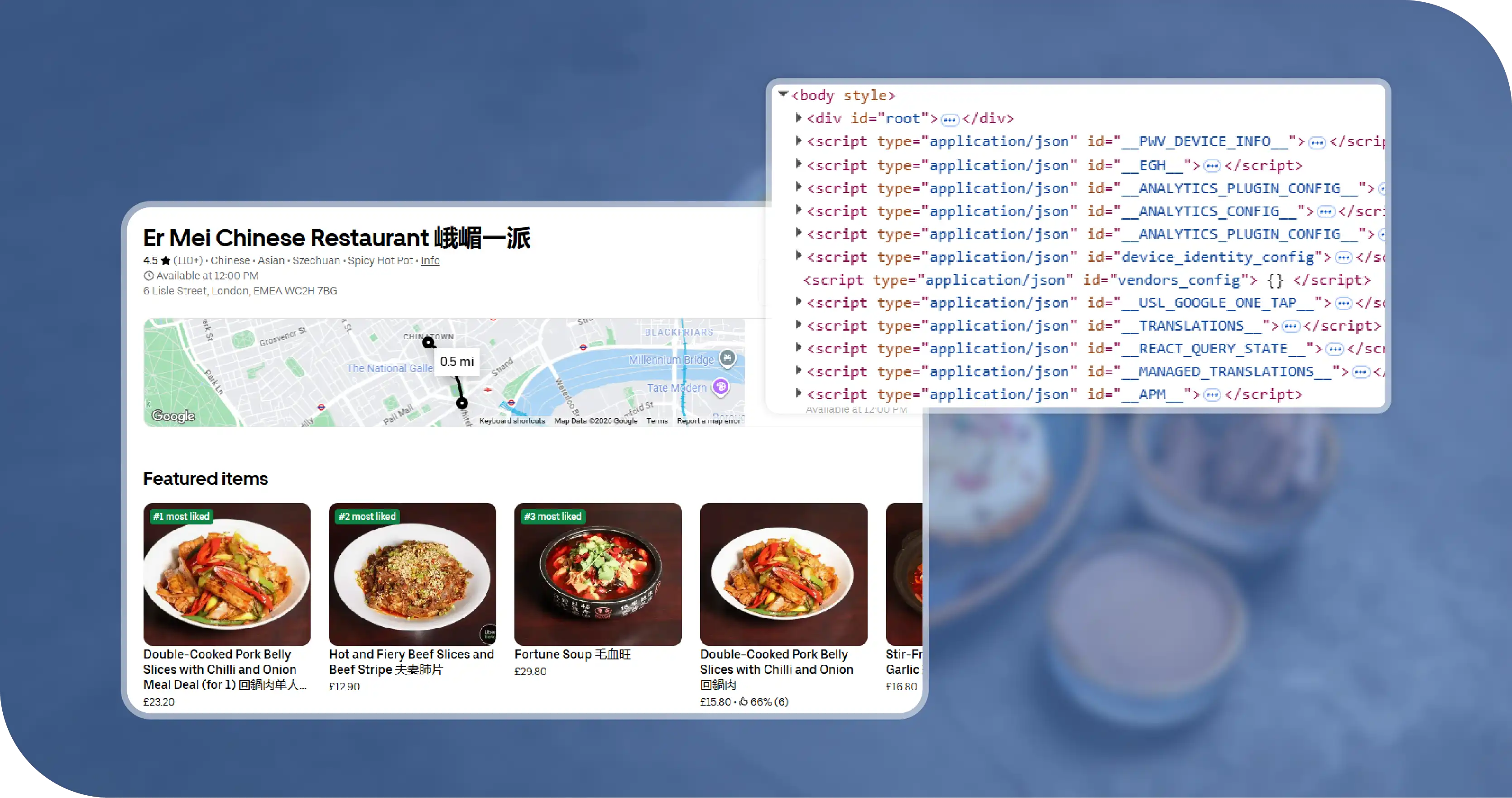
The client struggled with inconsistent and scattered datasets while performing Web Scraping Food Delivery Data, as multiple platforms presented unstructured formats, frequent UI changes, and restricted access. This made it difficult to maintain data accuracy, continuity, and real-time synchronization across sources. - Complexity in Menu Data Extraction
When attempting to Extract Restaurant Menu Data, the client faced challenges with dynamic menus, frequent updates, and region-specific variations. Handling nested modifiers, pricing differences, and unavailable items created inconsistencies, limiting their ability to generate reliable and standardized datasets for analysis. - Integration and Scalability Issues
Using a Food Delivery Scraping API posed integration and scalability concerns due to rate limits, anti-bot mechanisms, and evolving platform policies. The client found it difficult to scale operations efficiently while ensuring compliance, resulting in delays in capturing high-volume, real-time food trend data.
Key Solutions
- Advanced Web Scraping Frameworks
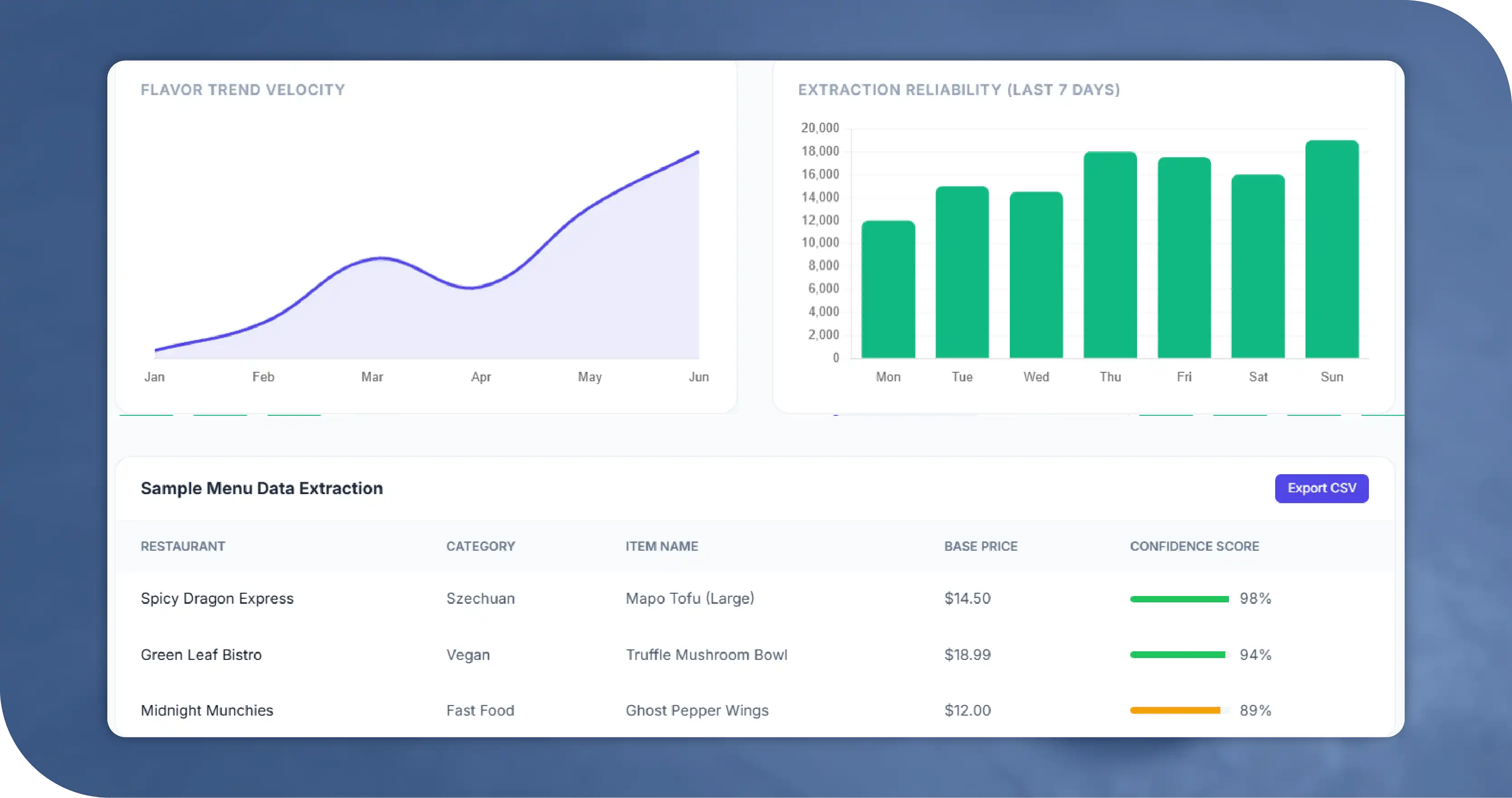
We implemented robust Web Scraping Food Delivery Data solutions using automated scripts and AI-driven crawlers. This ensured consistent extraction across multiple platforms, handling dynamic content, anti-bot measures, and structured output formatting, providing the client with reliable, real-time food trend datasets. - Standardized Menu Data Processing
Through Extract Restaurant Menu Data, we developed a cleaning and normalization pipeline that standardized menu items, modifiers, pricing, and availability. This allowed the client to analyze trends accurately across regions, monitor popular dishes, and make data-driven decisions with confidence. - Scalable API Integration
By deploying a Food Delivery Scraping API, we enabled seamless, scalable data ingestion into the client’s analytics platform. Rate limiting, retries, and dynamic scheduling ensured continuous updates, supporting fast insights and reducing delays in identifying emerging food flavors and trends.
Sample Data
| Restaurant Name | Dish Name | Cuisine Type | Flavor Profile | Price (USD) | Spicy Level | Availability | Trending Score | Review Count | Date Collected |
|---|---|---|---|---|---|---|---|---|---|
| Spice Heaven | Chili Paneer | Indian | Spicy, Tangy | 8.5 | High | Available | 92 | 1200 | 2026-03-15 |
| Taco Fiesta | Mango Habanero | Mexican | Sweet, Hot | 7.0 | Medium | Available | 87 | 980 | 2026-03-16 |
| Sushi World | Wasabi Roll | Japanese | Hot, Umami | 12.0 | High | Limited | 80 | 650 | 2026-03-14 |
| Burger Hub | Jalapeno Crunch | American | Spicy, Savory | 9.0 | Medium | Available | 78 | 540 | 2026-03-16 |
| Fusion Delight | Kimchi Tacos | Fusion | Spicy, Sour | 10.5 | High | Available | 85 | 890 | 2026-03-15 |
Methodologies Used
- Comprehensive Platform Exploration
We systematically explored multiple food-related platforms to capture diverse datasets. By mapping menus, user interactions, and dish variations, we ensured no emerging trend went unnoticed, enabling a holistic view of market preferences across cities, cuisines, and consumer demographics. - Adaptive Extraction Techniques
Our methodology employed adaptive tools that could handle changing web structures. By dynamically adjusting to interface updates, pop-ups, and interactive content, we maintained uninterrupted data collection while preserving accuracy and avoiding data gaps from frequently updated websites. - Structured Data Transformation
Collected data underwent a rigorous transformation process, converting unstructured information into standardized formats. This included categorizing dishes, normalizing ingredient names, and aligning prices, ensuring the client received clean, ready-to-analyze datasets suitable for trend prediction and strategic planning. - Insightful Analytics and Visualization
We applied analytical models to detect emerging flavor trends, regional preferences, and popular dish combinations. Visual dashboards and interactive charts provided clear, actionable insights, enabling the client to quickly understand market dynamics and make informed culinary innovation decisions. - Automated Workflow Deployment
A fully automated workflow was implemented to manage extraction, processing, and reporting. This ensured continuous updates, reduced manual effort, and allowed for scalable operations, enabling the client to respond in real-time to shifts in consumer tastes and emerging food trends.
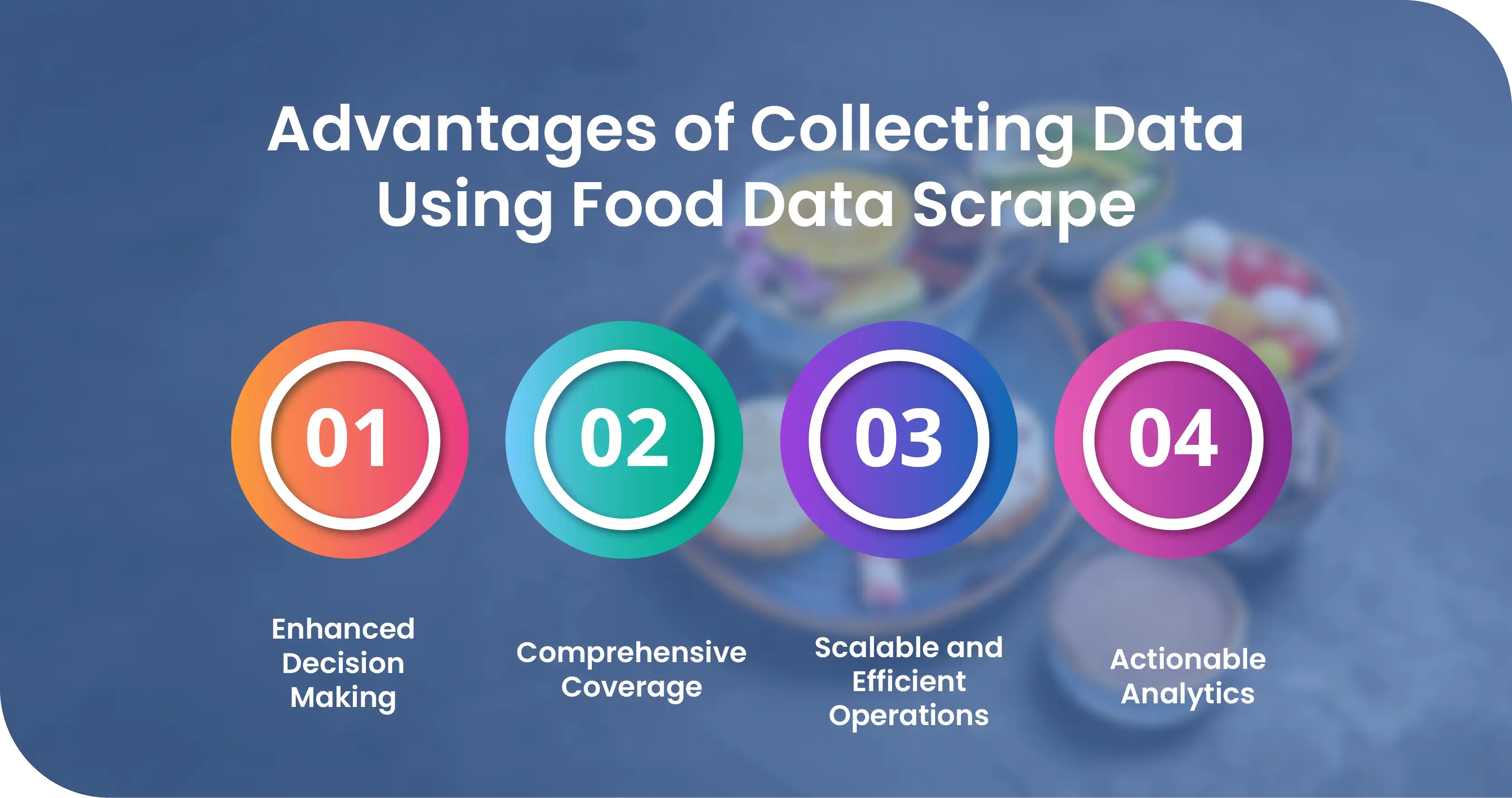
Advantages of Collecting Data Using Food Data Scrape
- Our services
provide timely access to up-to-date food trends, ingredient popularity, and menu innovations. Clients can quickly respond to changing consumer preferences, launch new products strategically, and maintain a competitive edge in a rapidly evolving culinary market. - Enhanced Decision-Making
By delivering structured and clean datasets, we empower clients to make informed decisions about product development, pricing strategies, and menu design. Reliable insights reduce guesswork, improve forecasting accuracy, and enhance operational efficiency across multiple locations or regions. - Comprehensive Coverage
We collect data across multiple platforms, including restaurants, delivery apps, and social channels. This holistic approach ensures no emerging trend or popular flavor is missed, allowing clients to understand regional, seasonal, and demographic variations for better market targeting. - Scalable and Efficient Operations
Our automated workflows handle large volumes of data without manual intervention. Clients benefit from consistent updates, minimized errors, and scalable solutions capable of supporting growth while keeping extraction and processing costs low. - Actionable Analytics
The processed data is delivered in an easily interpretable format, ready for analysis. Clients can quickly visualize trends, track performance metrics, and identify opportunities for innovation, leading to improved customer engagement and accelerated product development cycles.
Client’s Testimonial
"Partnering with this team has been a game-changer for our culinary innovation strategy. Their data scraping services provided us with accurate, real-time insights into emerging food trends, enabling us to launch new dishes with confidence and precision. The structured datasets and actionable analytics saved our team countless hours of manual research and allowed us to understand regional preferences in detail. Their professionalism, technical expertise, and responsive support made the entire process seamless. We have seen a measurable increase in customer engagement and faster time-to-market for new offerings, thanks to their solutions."
—Head of Product Innovation
Final Outcome
The final outcome of our collaboration demonstrated the power of data-driven decision-making for the client. With our Restaurant Data Intelligence, they gained a comprehensive understanding of emerging flavors, regional preferences, and trending menu items across multiple platforms.
Leveraging Food delivery Intelligence, the client was able to monitor customer behavior, optimize menu offerings, and respond swiftly to evolving market demands, ensuring a competitive edge.
Our solutions also integrated a Food Price Dashboard, enabling real-time tracking of pricing trends, promotions, and competitor strategies, which improved revenue management and pricing accuracy.
By providing structured and clean Food Datasets, we empowered the client to perform advanced analytics, forecast trends, and make strategic product innovation decisions. This resulted in increased customer engagement, faster product launches, and a stronger presence in the culinary market.