Introduction
South Korean cuisine has become one of the biggest influences on global menu innovation. What was once considered a niche cuisine has evolved into a mainstream culinary movement, inspiring restaurants, food manufacturers, cloud kitchens, and retailers worldwide. From crispy Korean fried chicken and gochujang-based sauces to premium barbecue dishes and creative fusion meals, Korean flavours now appear on menus across every major food market.
Businesses that want to stay ahead of consumer demand need more than annual reports and occasional market surveys. They need continuous access to changing restaurant menus, pricing updates, ingredient innovations, and seasonal launches. South Korea Menu Data Scraping 2026 allows organisations to monitor these developments in real time, transforming restaurant information into valuable business intelligence.
By using method to Scrape South Korea restaurant menu data, businesses gain visibility into thousands of restaurant menus across different cities, cuisine categories, and dining formats. Combined with South Korea Food Market Intelligence, this data helps companies recognise emerging food trends, benchmark competitors, optimise pricing strategies, and launch products that align with changing consumer preferences.
Why South Korea Is Driving Global Food Innovation?
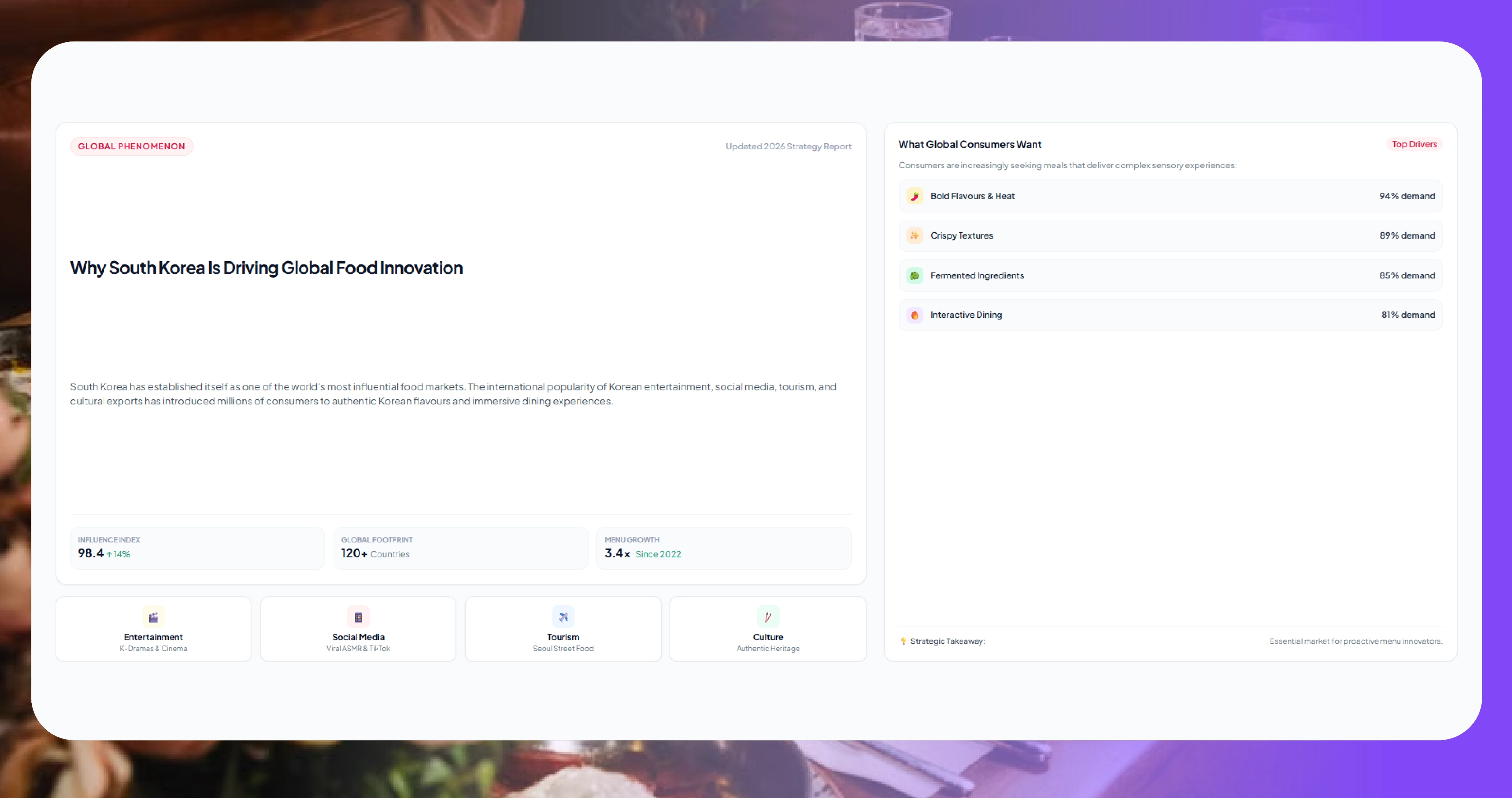
South Korea has become one of the world's most influential food markets. The international popularity of Korean entertainment, social media, tourism, and cultural exports has introduced millions of consumers to authentic Korean flavours and dining experiences. As a result, restaurants around the world are rapidly incorporating Korean-inspired dishes into their menus.
Consumers are increasingly seeking meals that deliver bold flavours, crispy textures, fermented ingredients, and interactive dining experiences. Traditional dishes such as bulgogi, bibimbap, kimchi, galbi, tteokbokki, and Korean fried chicken continue expanding into international foodservice markets, while fusion concepts are creating entirely new menu categories.
This growing demand has made South Korea an essential market for businesses looking to anticipate future menu trends rather than simply reacting to them.
Why Restaurant Menu Data Matters in 2026?
Restaurant menus evolve much faster than traditional market research can capture. New dishes appear every season, promotional items change weekly, prices fluctuate with ingredient costs, and delivery-exclusive products frequently enter the market without much public attention.
Businesses that Extract South Korea foodservice data gain access to continuously updated restaurant information, enabling faster decision-making across product development, pricing strategy, menu engineering, and competitive analysis.
Instead of relying on outdated reports, companies can monitor real-time menu changes and identify emerging opportunities before they become industry standards. This proactive approach significantly reduces business risk while improving forecasting accuracy.
Korean Flavours Continue Dominating Restaurant Menus
One of the strongest signals emerging from South Korean restaurants is consumers' growing preference for balanced heat rather than extreme spice. Gochujang has become a signature ingredient because it delivers sweetness, fermented depth, and moderate heat that appeals to a broad customer base. Restaurants increasingly use it across burgers, fried chicken, pizzas, noodles, rice bowls, sandwiches, and even pasta.
Crispy textures remain equally important. Double-fried cooking techniques continue attracting consumers seeking crunchy, flavourful meals that maintain their quality during delivery. Soy garlic, honey butter, spicy chilli, sesame, and cheese-flavoured coatings are also becoming increasingly common across quick-service and casual dining menus.
Rather than launching completely unfamiliar products, many operators successfully introduce Korean flavours through familiar menu formats, making adoption easier for customers while reducing operational complexity.
Fusion Menus Continue Expanding
Fusion cuisine has evolved beyond experimentation into a major growth category. Consumers increasingly enjoy familiar comfort foods enhanced with Korean flavours, creating exciting menu options without requiring entirely new dining experiences.
Restaurants are successfully introducing bulgogi burgers, kimchi fries, Korean-inspired tacos, gochujang pizzas, Korean sandwiches, and spicy rice bowls that combine traditional Korean ingredients with globally recognised formats.
Through continuous South Korea Restaurant Analytics, businesses can identify which fusion combinations are gaining traction across different cities, restaurant formats, and customer demographics, allowing them to introduce successful products with greater confidence.
Comfort Food Meets Premium Dining
Another defining characteristic of South Korea's restaurant industry is the balance between comfort food and premium dining experiences. Traditional dishes continue evolving through the use of premium meats, artisanal ingredients, specialty sauces, handcrafted noodles, seasonal vegetables, and elevated presentation.
Consumers increasingly expect affordable meals that also deliver restaurant-quality flavours and memorable dining experiences. This trend encourages restaurants to innovate without abandoning familiar favourites, creating menus that appeal to both everyday diners and premium customers.
Real-Time Monitoring Improves Strategic Decisions
Restaurants constantly introduce seasonal specials, limited-time offers, delivery-exclusive meals, promotional bundles, and chef collaborations. Without continuous monitoring, businesses risk missing valuable market signals that influence future consumer demand.
Modern Korean Cuisine Data Scraping enables organisations to automatically monitor thousands of restaurant menus, capturing updates as they occur rather than relying on manual research. This provides decision-makers with accurate, timely information that supports faster innovation and better competitive positioning.
Continuous monitoring also helps businesses understand how restaurants respond to ingredient shortages, changing customer preferences, and seasonal purchasing behaviour throughout the year.
Pricing Intelligence Supports Better Planning
Food inflation continues influencing restaurant pricing worldwide, making price monitoring more valuable than ever. Restaurants regularly adjust prices, introduce value meals, redesign combo offers, and modify portion sizes to maintain profitability while remaining competitive.
Using continuous Restaurant menu Data monitoring, businesses gain visibility into pricing movements across different restaurant categories, regions, and cuisine types. This information supports competitive benchmarking, promotional planning, revenue forecasting, and menu engineering while helping businesses maintain pricing strategies that reflect changing market conditions.
Regional Differences Create Valuable Insights
Consumer preferences vary considerably across South Korea. Metropolitan areas often introduce innovative menu concepts much earlier than smaller cities, while regional tastes influence ingredient selection, cooking styles, and promotional campaigns.
Continuous South Korea Foodservice Data Extraction enables organisations to compare menu trends across multiple geographic regions, identifying local preferences that may later expand into national or international markets. These regional insights help businesses tailor product launches, marketing campaigns, and expansion strategies more effectively.
Artificial Intelligence Is Transforming Restaurant Intelligence
Artificial intelligence has significantly improved the way businesses analyse restaurant markets. Instead of manually reviewing thousands of menus, automated systems identify ingredient trends, pricing movements, seasonal launches, flavour combinations, and menu evolution in real time.
Modern Food Data Scraping solutions convert large volumes of unstructured restaurant information into organised datasets that support forecasting, consumer behaviour analysis, product innovation, and strategic planning. This allows businesses to react quickly to emerging opportunities while reducing manual research costs.
Discover What's Next on South Korea's Menus Unlock real-time restaurant menu data, pricing insights, and emerging food trends across South Korea. Get in touch today to power smarter product innovation, competitive analysis, and faster market decisions.
Restaurant Intelligence Supports Multiple Industries
Restaurant menu intelligence is no longer valuable only for restaurant operators. Food manufacturers use menu data to identify future product opportunities, grocery retailers analyse flavour trends before introducing private-label products, investment firms monitor restaurant expansion, and hospitality consultants evaluate competitive positioning across different markets.
Similarly, distributors and consumer packaged goods companies increasingly rely on Restaurant Data Intelligence to understand changing demand patterns, improve inventory planning, and strengthen relationships with restaurant partners through better market insights.
Key Data Points Captured Through Menu Scraping
Restaurant menu scraping provides structured datasets containing valuable business information, including:
- Restaurant names and locations
- Cuisine categories
- Complete menu listings
- Product descriptions
- Ingredient information
- Menu prices
- Promotional offers
- Combo meals
- Seasonal products
- Beverage selections
- Dessert categories
- Delivery availability
- Restaurant ratings and reviews
- Product images
- Menu availability status
How Food Data Scrape Can Help You?
Real-Time Menu Monitoring
Our automated solutions continuously monitor restaurant menus across South Korea, capturing pricing updates, ingredient changes, seasonal launches, limited-time offers, and newly introduced dishes to help businesses respond quickly to changing consumer demand.
Competitive Market Intelligence
We collect structured restaurant data that enables businesses to compare competitor menus, monitor promotional activities, benchmark pricing strategies, identify product gaps, and strengthen long-term menu planning using accurate market intelligence.
Trend Discovery
Our advanced analytics identify emerging flavours, popular ingredients, cooking techniques, regional preferences, and innovative menu formats before they become mainstream, enabling businesses to launch successful products supported by reliable market evidence.
Custom Data Delivery
We provide structured restaurant datasets in multiple formats compatible with analytics platforms, dashboards, business intelligence systems, and forecasting tools, allowing organisations to integrate restaurant insights into existing workflows efficiently.
Enterprise-Scale Data Collection
Our scalable infrastructure monitors thousands of restaurants with automated updates, ensuring businesses receive reliable, high-quality restaurant intelligence that supports strategic decision-making across South Korea's rapidly evolving foodservice industry.
Conclusion
South Korea continues setting the pace for global food innovation, making restaurant intelligence more valuable than ever before. Businesses that monitor evolving menus, pricing strategies, flavour innovations, and regional preferences gain a significant competitive advantage in an increasingly fast-moving food industry.
Our advanced solutions help businesses Extract Restaurant Menu Data from thousands of restaurants while delivering structured Food Datasets that power market research, pricing intelligence, and product innovation. Combined with Web Scraping Latest Viral Food Trends, our services enable organisations to identify emerging opportunities early, make data-driven decisions with confidence, and stay ahead of changing consumer preferences throughout 2026 and beyond.
If you are seeking for a reliable data scraping services, Food Data Scrape is at your service. We hold prominence in Food Data Aggregator and Mobile Restaurant App Scraping with impeccable data analysis for strategic decision-making.