The Client
The client was a growing food-tech and market research company seeking reliable data to understand India's rapidly evolving online food delivery landscape. Its objective was to monitor restaurant offerings, menu changes, pricing patterns, promotions, ratings, and availability across different locations. To support its research and analytics initiatives, the client required a scalable solution capable of collecting large volumes of structured restaurant information from Swiggy.
Through Swiggy product data Scraping, the client aimed to build a comprehensive database covering restaurant and menu-level information for competitive analysis and business intelligence.
The collected information strengthened its Swiggy food delivery marketplace intelligence, helping the company identify market trends, compare restaurant offerings, evaluate customer-facing deals, and understand competitive positioning.
The client also wanted deeper Swiggy restaurant pricing intelligence to monitor price variations, discounts, menu changes, and location-based pricing. The resulting structured data provided a dependable foundation for market research, competitor benchmarking, pricing analysis, and informed strategic decision-making.
Key Challenges
-
Inconsistent Pricing Information
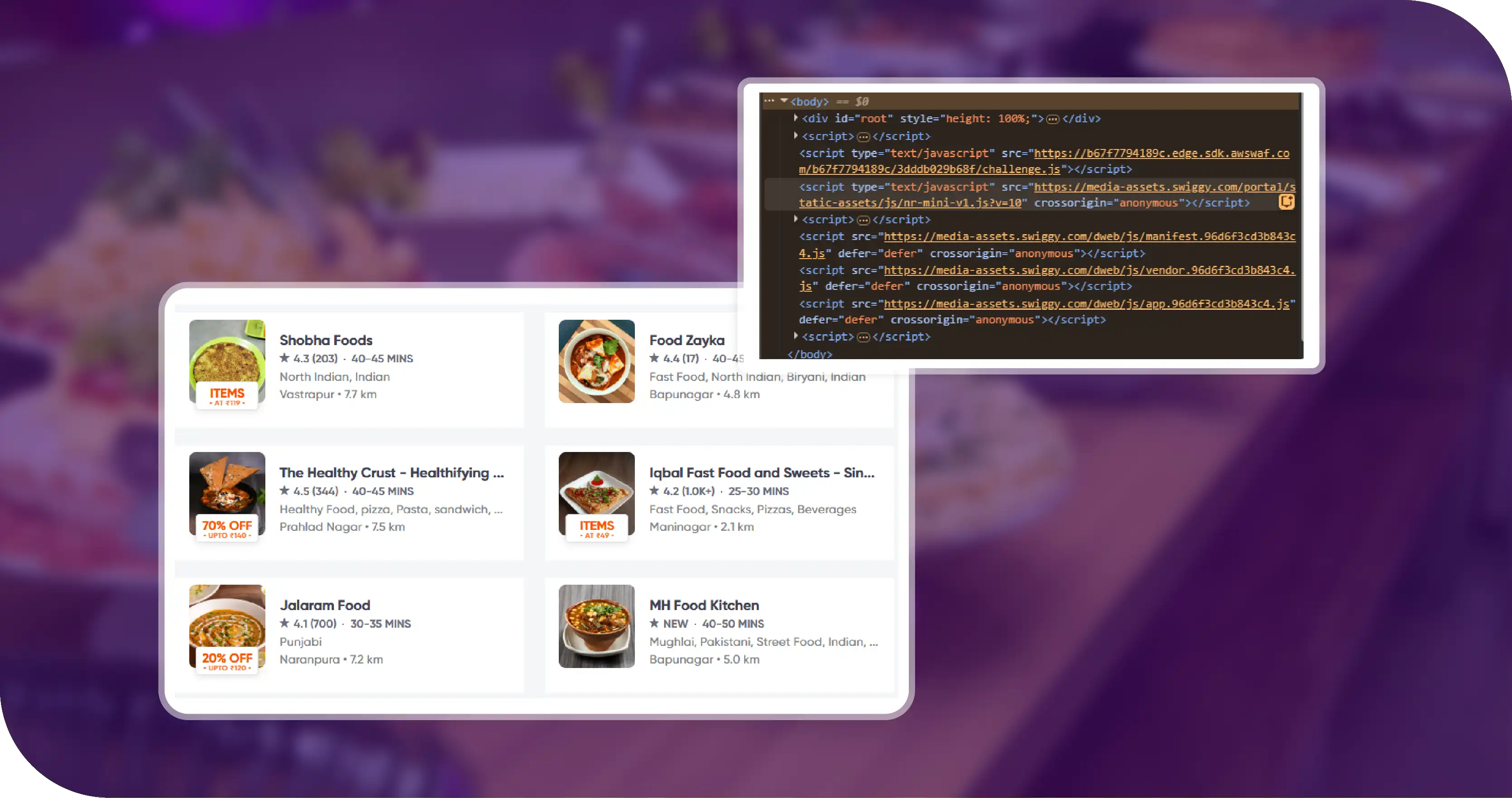
The client struggled to monitor frequent menu price changes, discounts, and promotional offers across restaurants and locations. Manual tracking was time-consuming and often produced outdated records, making reliable Swiggy pricing data Scraping essential for competitive analysis, benchmarking, and informed pricing decisions. -
Large-Scale Data Collection
Collecting restaurant and menu information across multiple locations required substantial time and resources. The client needed a scalable Swiggy Food Delivery Scraping API to gather restaurant details, menus, prices, availability, and promotional information consistently while managing frequently changing marketplace content. -
Dynamic App Data
The client faced difficulties accessing and organizing continuously changing restaurant information from the food delivery platform. Implementing Swiggy Food Delivery App Data Scraping was necessary to automate data collection, maintain structured records, support regular updates, and improve the efficiency of marketplace research.
Key Solutions
-
Comprehensive Restaurant and Menu Data Extraction
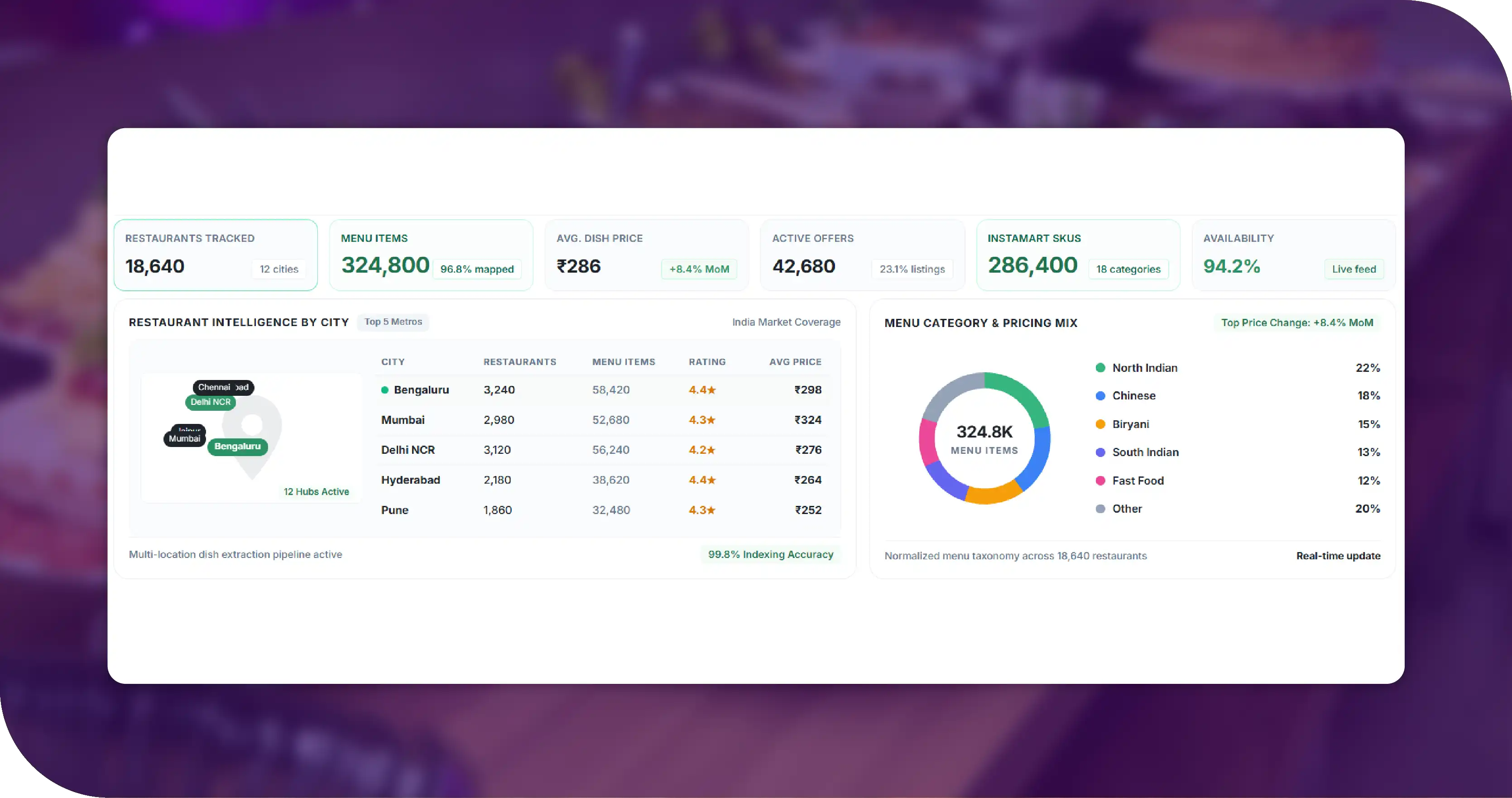
We developed an automated solution to collect restaurant names, locations, cuisines, ratings, menus, prices, discounts, availability, and delivery information. The structured Swiggy Dataset enabled the client to perform competitive benchmarking, market research, pricing analysis, and restaurant-level performance assessment efficiently. -
Detailed Menu and Pricing Intelligence
Our solution enabled Scraping Restaurant Menu Data from Swiggy, capturing dish names, categories, descriptions, prices, offers, ratings, and availability. Automated extraction helped the client monitor menu changes, compare restaurant offerings, identify pricing trends, and track promotional strategies across multiple locations. -
Quick-Commerce Data Collection
We also supported Swiggy Instamart Quick Commerce Data Scraping API requirements by collecting product names, brands, categories, pack sizes, prices, discounts, and availability. This expanded the client's data coverage beyond restaurants and supported comprehensive food delivery and quick-commerce intelligence.
Scraped Data Summary
| Data Category | Records Scraped | Restaurants | Menu Items | Locations | Categories | Price Records | Discount Records | Rating Records | Availability Records | Update Frequency | Output Format |
|---|---|---|---|---|---|---|---|---|---|---|---|
| Restaurant Details | 125,000 | 125,000 | --- | 75 | 35 | --- | --- | 125,000 | 125,000 | Daily | CSV/JSON |
| Menu Items | 2,850,000 | 125,000 | 2,850,000 | 75 | 480 | 2,850,000 | 620,000 | 1,900,000 | 2,850,000 | Daily | CSV/JSON |
| Pricing Data | 3,100,000 | 125,000 | 2,700,000 | 75 | 480 | 3,100,000 | 1,050,000 | --- | 2,900,000 | Daily | CSV/Excel |
| Offers & Discounts | 850,000 | 98,000 | 1,150,000 | 72 | 410 | 850,000 | 850,000 | --- | 760,000 | Daily | CSV/JSON |
| Ratings & Reviews | 1,750,000 | 110,000 | --- | 70 | 390 | --- | --- | 1,750,000 | --- | Weekly | CSV/JSON |
| Restaurant Locations | 125,000 | 125,000 | --- | 75 | 35 | --- | --- | --- | 125,000 | Weekly | CSV |
| Product Availability | 2,450,000 | 115,000 | 2,600,000 | 75 | 520 | 2,100,000 | 580,000 | --- | 2,450,000 | Daily | JSON |
| Quick-Commerce Products | 1,900,000 | --- | 1,900,000 | 65 | 750 | 1,900,000 | 490,000 | --- | 1,850,000 | Daily | CSV/JSON |
Methodologies Used
-
Source Mapping and Field Identification
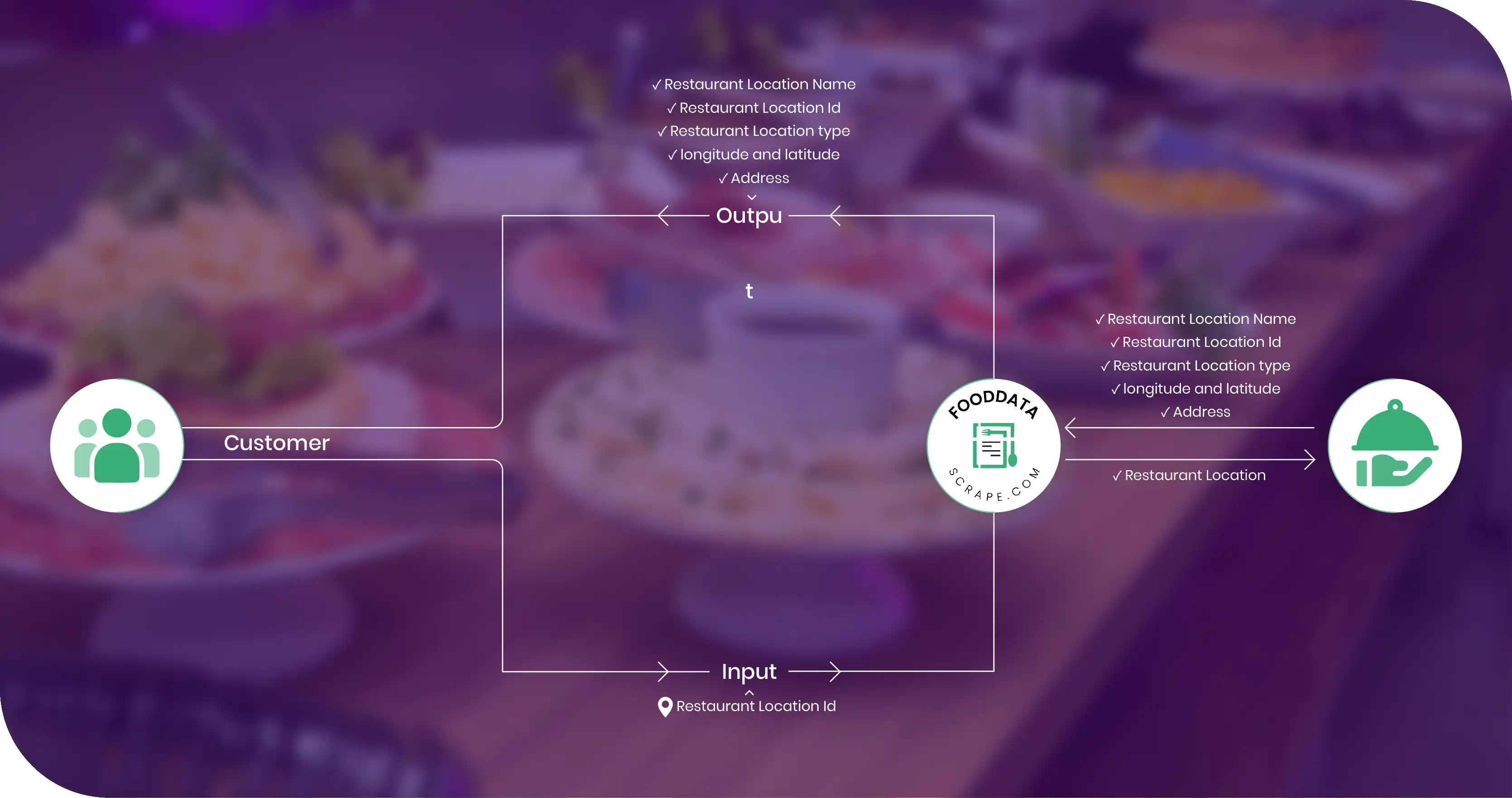
We first mapped relevant restaurant, menu, pricing, location, rating, promotion, and availability fields required for the project. This ensured the extraction workflow focused on business-critical attributes and produced datasets aligned with the client's competitive intelligence and analytical requirements. -
Multi-Parameter Extraction
We designed extraction workflows capable of collecting information using multiple parameters, including restaurant, cuisine, location, category, product, and price. This methodology enabled broader coverage while allowing the client to segment collected information according to different market research requirements. -
Data Validation and Quality Checks
Collected records underwent validation checks to identify missing values, duplicate entries, inconsistent pricing, incomplete menus, and inaccurate classifications. Automated quality-control processes improved dataset reliability and ensured that the final information was suitable for downstream analysis and reporting. -
Historical Data Tracking
We maintained structured records of extracted information to enable historical comparison of restaurant menus, prices, offers, ratings, and availability. This methodology allowed the client to identify pricing movements, promotional changes, menu modifications, and evolving competitive patterns over time. -
Scalable Data Processing
We implemented scalable processing workflows capable of handling large volumes of restaurant and product information efficiently. The methodology supported structured data transformation, batch processing, standardized outputs, and recurring collection, allowing the solution to accommodate growing data requirements without major workflow changes.
Advantages of Collecting Data Using Food Data Scrape
-
Comprehensive Market Visibility
Collecting restaurant and food delivery data through Food Data Scrape provides businesses with comprehensive visibility into menus, prices, ratings, offers, cuisines, locations, and availability. This information helps organizations understand market movements, compare competitors, identify opportunities, and make informed strategic decisions. -
Improved Competitive Benchmarking
Structured food marketplace data enables businesses to benchmark restaurant pricing, menu variety, promotions, ratings, and availability against competitors. Regularly collected datasets make it easier to identify competitive gaps, evaluate positioning, monitor market changes, and develop stronger pricing and promotional strategies. -
Faster Data-Driven Decisions
Automated food data collection eliminates lengthy manual research and provides organized information for analysis. Businesses can quickly evaluate pricing trends, popular cuisines, restaurant performance, product availability, and promotional activities, enabling faster decisions based on current and consistently structured market information. -
Scalable Data Collection
Food Data Scrape enables businesses to collect large volumes of restaurant and product information across multiple cities, categories, and platforms. Scalable extraction workflows support growing data requirements while maintaining standardized formats, reducing operational workload, and improving the efficiency of large-scale market intelligence. -
Enhanced Business Intelligence
Collected food marketplace data can support dashboards, forecasting, pricing intelligence, competitor monitoring, and market research initiatives. By transforming scattered information into structured datasets, Food Data Scrape helps businesses uncover actionable patterns, evaluate opportunities, optimize strategies, and strengthen overall business intelligence capabilities.
Client's Testimonial
"Working with the data scraping team transformed the way we analyze the food delivery market. Their solution delivered accurate, structured, and regularly updated restaurant, menu, pricing, and availability data at scale. The collected information significantly reduced our manual research efforts and helped us benchmark competitors, identify pricing trends, and understand market opportunities more efficiently. We particularly appreciated the consistent data quality, flexible extraction methodology, and organized delivery format. The team understood our requirements quickly and provided a scalable solution that supported our growing analytical needs. Their professionalism, responsiveness, and technical expertise made the entire project seamless. We are highly satisfied with the results and would confidently recommend their services to businesses requiring reliable food marketplace intelligence."
—Food & Market Intelligence Company
Final Outcome
The project delivered a scalable and structured food marketplace data solution that significantly improved the client's ability to monitor restaurants, menus, pricing, promotions, ratings, and product availability. Automated extraction reduced dependency on manual research while providing consistent and regularly refreshed information for analysis.
The client received clean, organized datasets that could be integrated into internal analytics, dashboards, competitive benchmarking systems, and market research workflows. Detailed pricing and menu information helped identify competitive pricing patterns, promotional changes, and evolving consumer offerings across locations.
The solution also improved data accessibility, enabling faster decision-making and more efficient market monitoring. By establishing a reliable data collection and processing workflow, the client gained a stronger foundation for food delivery intelligence, competitor analysis, pricing strategy, and future expansion into quick-commerce data analytics.