The Client
The client was a restaurant intelligence and competitive analytics company serving food businesses, restaurant chains, aggregators, and market research teams. Its primary objective was to build a reliable database capable of tracking menu changes, pricing movements, promotional campaigns, and restaurant-level marketplace activity across multiple cities. The company wanted actionable insights from Restaurant Menu Price Monitoring Data to compare pricing strategies, identify frequently discounted products, and understand market-level variations. It also required Restaurant Menu & Promotion Intelligence to evaluate competitor positioning and promotional effectiveness. To strengthen its research capabilities, the client needed a scalable solution to Extract Restaurant Promotion Data from major food delivery platforms at regular intervals. Manual collection was proving inefficient because menus, prices, discounts, availability, and offers changed frequently. The client therefore approached Food Data Scrape for a structured, automated data collection solution capable of producing consistent datasets for downstream analytics, reporting, benchmarking, and restaurant intelligence applications.
Key Challenges
-
Dynamic Restaurant Information
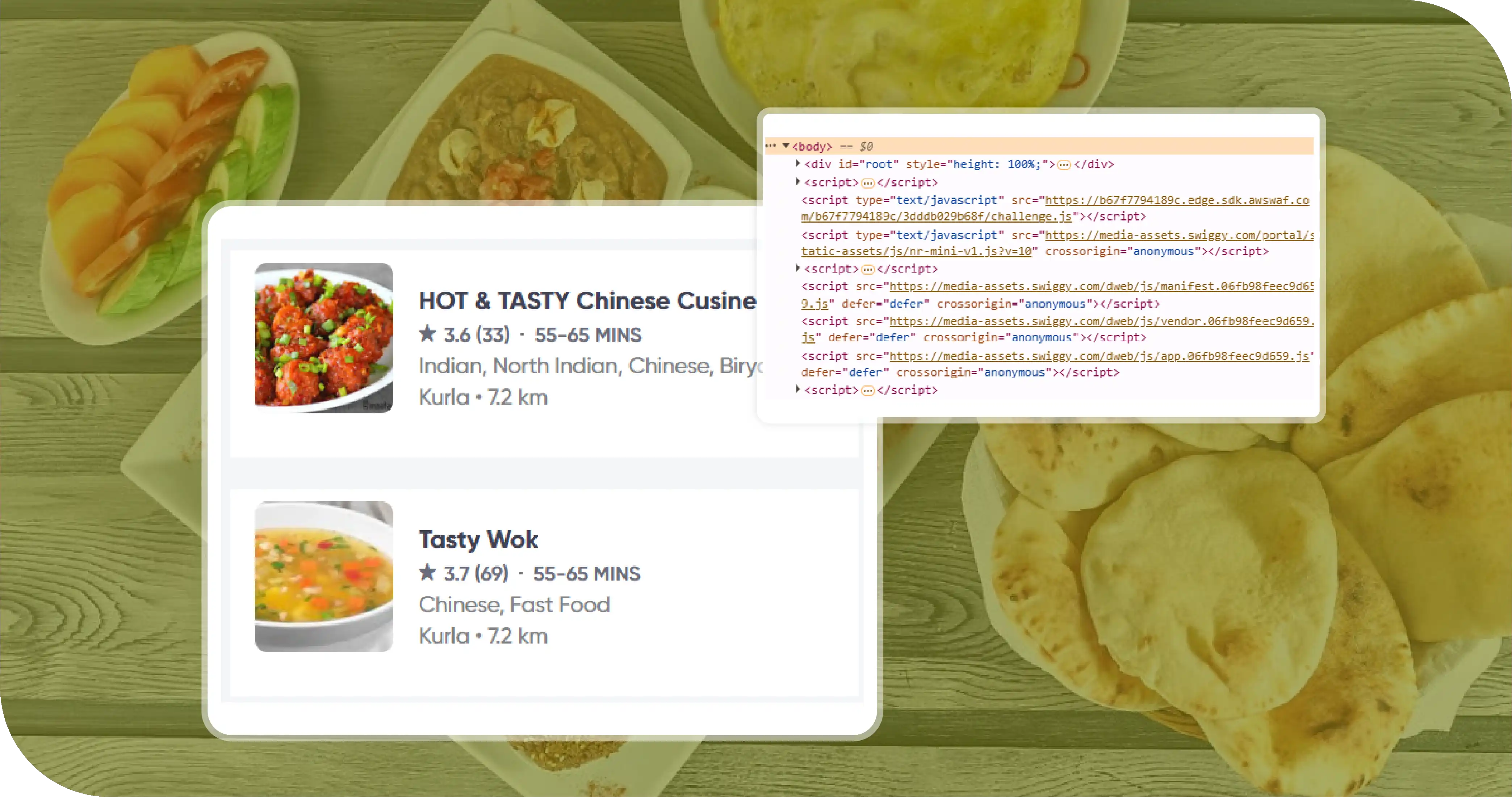
The client needed large-scale Restaurant Menu Data Scraping because restaurant listings, dishes, prices, descriptions, discounts, and availability changed frequently. Capturing these variations consistently across multiple cities required automated collection, scheduled refreshes, validation, and standardized fields. -
Complex Data Collection Requirements
The client required reliable Food Data Scraping Services to collect information from multiple restaurant listings while maintaining consistent structures. Different restaurants presented menus, promotional messages, pricing formats, and availability information differently, creating significant challenges for normalization. -
Competitive Intelligence Gaps
Building actionable Restaurant Intelligence required combining menu information, pricing, ratings, discounts, offers, cuisines, locations, and promotional patterns. The client lacked a unified dataset that could connect these variables and support meaningful competitor benchmarking across restaurant categories and markets.
Key Solutions
-
API-Based Swiggy Data Collection
The project incorporated a Zomato Food Delivery Scraping API approach to collect restaurant profiles, menu items, prices, ratings, discounts, availability, and promotional information in structured formats. The solution supported scalable extraction and recurring data refreshes for analytics. -
Automated Swiggy Marketplace Extraction
A Swiggy Food Delivery Scraping API solution enabled systematic collection of restaurant and menu information. Data fields included restaurant names, cuisines, dishes, prices, offers, ratings, delivery details, and promotional information, creating a consistent foundation for competitive analysis. -
Structured Dataset Development
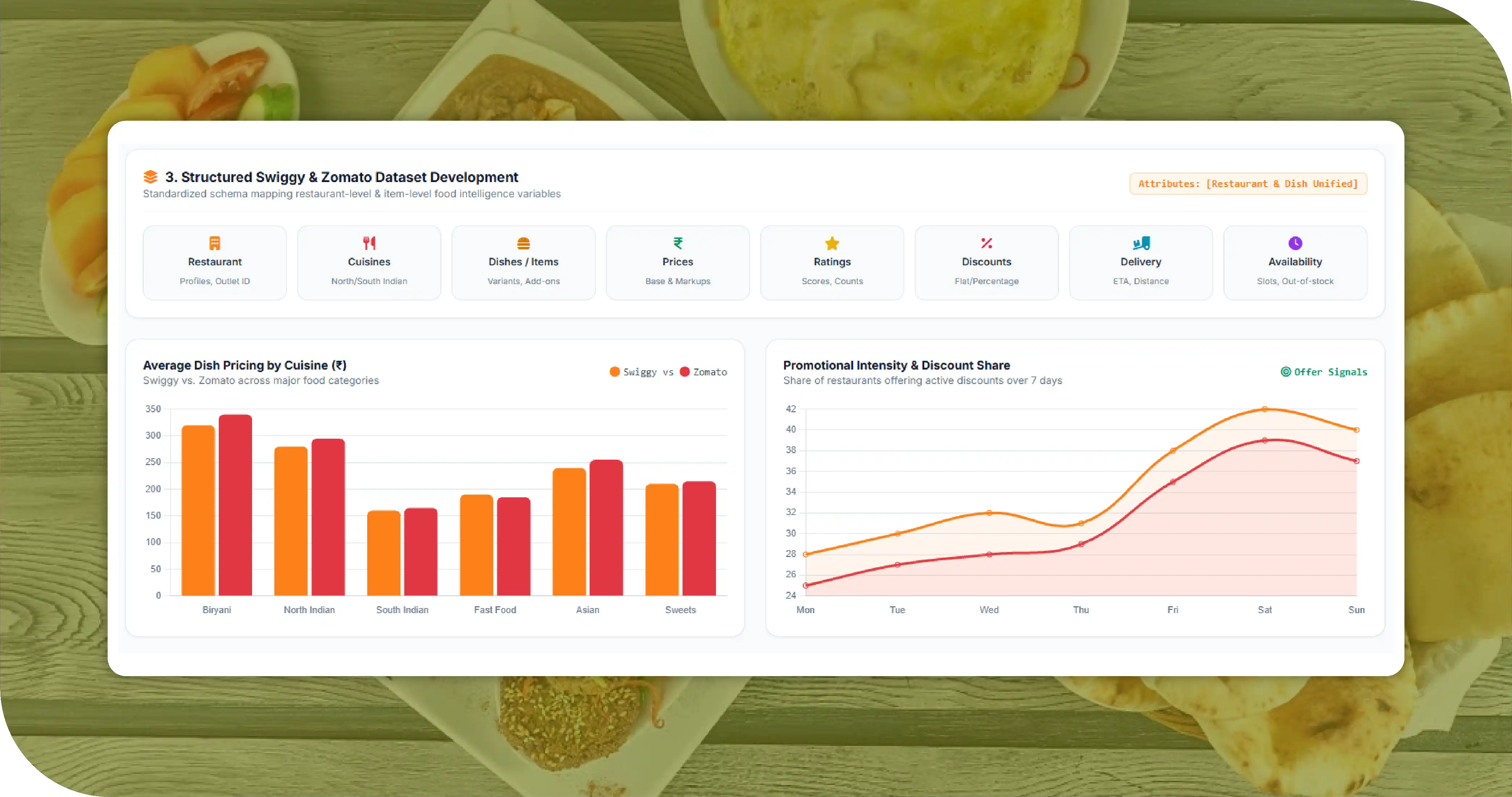
The collected information was organized into a comprehensive Swiggy Dataset containing restaurant-level and item-level attributes. Duplicate records were removed, fields standardized, and relevant promotional variables structured for dashboards, market research, pricing comparisons, and restaurant performance analysis.
Long Data Collection and Intelligence Table
| Data Category | Data Field | Records Collected | Restaurants Covered | Cities | Refresh Frequency | Accuracy Target | Data Format | Key Use |
|---|---|---|---|---|---|---|---|---|
| Restaurant | Restaurant Name | 48,650 | 12,480 | 42 | Daily | 97.4% | JSON/CSV | Competitor Tracking |
| Restaurant | Cuisine Type | 48,650 | 12,480 | 42 | Daily | 97.2% | JSON/CSV | Market Segmentation |
| Menu | Menu Items | 286,400 | 12,480 | 42 | Daily | 97.6% | JSON/CSV | Menu Benchmarking |
| Menu | Item Prices | 286,400 | 12,480 | 42 | Daily | 97.5% | JSON/CSV | Price Monitoring |
| Promotion | Discount Offers | 96,820 | 11,760 | 42 | Daily | 96.9% | JSON/CSV | Promotion Analysis |
| Promotion | Coupon Details | 62,450 | 10,940 | 39 | Daily | 96.8% | JSON/CSV | Offer Comparison |
| Availability | Item Availability | 286,400 | 12,480 | 42 | Daily | 97.1% | JSON/CSV | Inventory Insights |
| Ratings | Restaurant Ratings | 48,650 | 12,480 | 42 | Daily | 97.3% | JSON/CSV | Reputation Analysis |
| Reviews | Review Counts | 48,650 | 12,480 | 42 | Weekly | 96.7% | JSON/CSV | Demand Analysis |
| Location | Restaurant Coordinates | 12,480 | 12,480 | 42 | Weekly | 98.1% | JSON/CSV | Geographic Mapping |
| Delivery | Delivery Information | 48,650 | 12,480 | 42 | Daily | 96.9% | JSON/CSV | Service Comparison |
| Promotion | Promotional Labels | 84,300 | 11,980 | 42 | Daily | 97.0% | JSON/CSV | Campaign Tracking |
| Pricing | Original vs Offer Price | 96,820 | 11,760 | 42 | Daily | 97.4% | JSON/CSV | Discount Measurement |
| Category | Food Category | 286,400 | 12,480 | 42 | Daily | 97.5% | JSON/CSV | Category Analytics |
| Marketplace | Platform Identifier | 335,050 | 12,480 | 42 | Daily | 98.0% | JSON/CSV | Cross-Platform Analysis |
Methodologies Used
-
Automated Data Extraction
Automated extraction workflows were configured to collect restaurant, menu, pricing, promotional, rating, and availability information at scale. Scheduled processes reduced dependency on manual collection while enabling recurring updates whenever marketplace information changed. -
Data Normalization
Raw information was transformed into standardized fields covering restaurant names, menu categories, item names, prices, discounts, ratings, locations, and promotional attributes. Normalization made datasets easier to compare across restaurants, cities, categories, and platforms. -
Data Validation
Validation procedures were applied to identify duplicate records, missing values, inconsistent pricing fields, malformed entries, and unusual data variations. Automated checks helped maintain dataset consistency and supported reliable downstream analytics and reporting. -
Historical Data Tracking
Historical snapshots were maintained to help the client compare menu and promotional changes over time. Previous prices, discounts, offers, and availability records supported trend analysis, promotional monitoring, and identification of recurring competitive strategies. -
Structured Data Delivery
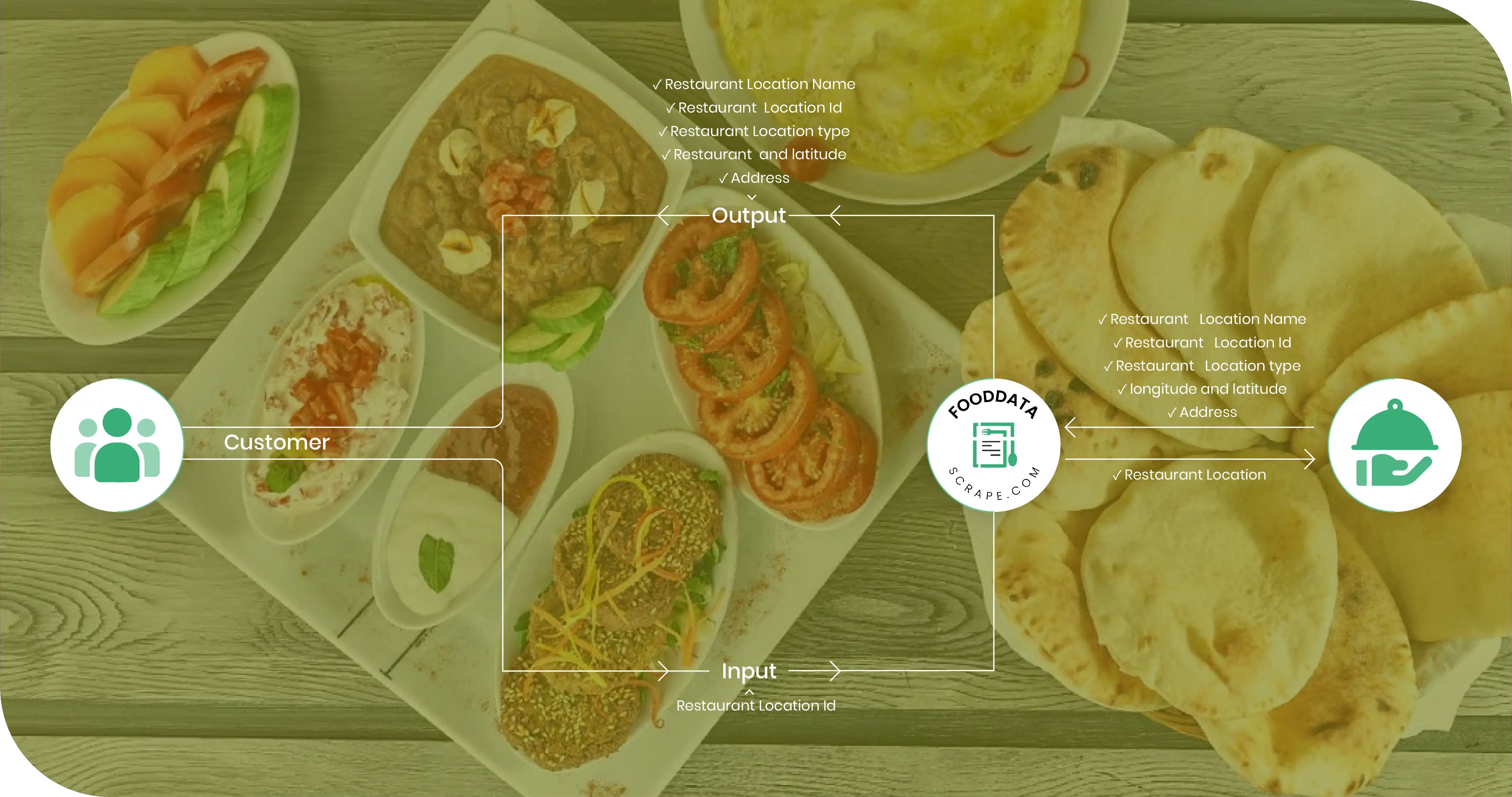
Processed datasets were delivered in structured formats suitable for databases, dashboards, analytical tools, and business intelligence systems. Consistent schemas allowed the client to integrate restaurant information directly into existing research and reporting workflows.
Advantages of Collecting Data Using Food Data Scrape
-
Scalable Restaurant Intelligence
Food Data Scrape enabled the client to process large volumes of restaurant information across multiple locations without depending on manual research. Scalable extraction supported broader market coverage and recurring competitive monitoring requirements. -
Faster Competitive Analysis
Structured menu, pricing, and promotional datasets reduced the time required to identify competitor changes. Analysts could compare restaurants, dishes, discounts, and offers more efficiently while using standardized information for regular market assessments. -
Better Price Visibility
Regular data collection provided greater visibility into restaurant menu prices and promotional pricing changes. Historical records allowed analysts to identify price movements, discount frequencies, product-level variations, and market-specific pricing patterns. -
Improved Promotion Monitoring
Automated collection made it easier to monitor promotional campaigns, coupons, discounts, and offer structures. Businesses could identify changing promotional patterns and incorporate these insights into competitor research, campaign analysis, and strategic planning. -
Flexible Business Intelligence
Structured datasets could be integrated with dashboards, databases, analytical platforms, and reporting systems. This flexibility allowed the client to transform continuously collected marketplace information into customized intelligence workflows for different business requirements.
Client's Testimonial
"Food Data Scrape provided a structured solution that significantly improved how we collect and analyze restaurant marketplace information. Previously, our analysts spent considerable time gathering menu prices, promotional offers, and restaurant details manually. The automated data pipeline gave our team consistent datasets that could be refreshed regularly and integrated into our analytics workflows. We particularly valued the standardized structure because it simplified comparisons across restaurants, cities, menu categories, and promotional campaigns. The solution also helped us maintain historical records for competitive research. The overall implementation was organized, scalable, and aligned with our data requirements, giving our analysts a stronger foundation for restaurant intelligence and marketplace monitoring."
—Head of Data Analytics, Restaurant Intelligence Company
Final Outcome
The project delivered a structured restaurant marketplace intelligence system capable of supporting continuous analysis across menus, prices, promotions, ratings, availability, and locations. The client gained access to standardized datasets that reduced manual research requirements and improved the consistency of competitive analysis. Historical snapshots made it possible to track pricing movements and promotional changes over time, while structured restaurant records supported geographic and category-level comparisons. The solution also strengthened the client's ability to connect menu information with promotional activity and customer-facing marketplace attributes. As part of the broader dataset, Restaurant Chain Location Data provided an additional layer for mapping restaurant presence across cities and identifying geographic expansion patterns. The resulting data infrastructure could support dashboards, market research, competitor benchmarking, pricing intelligence, and promotional analysis. Regular refreshes also ensured that the client could continue monitoring dynamic restaurant marketplace information as menus, prices, offers, and availability evolved.