About the Client
The client is a market intelligence and food analytics company serving restaurant groups, investment firms, FMCG brands, and hospitality consultants. Their objective is to monitor changing menu prices across thousands of restaurants while identifying inflation patterns, regional pricing differences, and promotional strategies. They required a scalable solution capable of collecting structured restaurant information from multiple food delivery platforms and restaurant websites. The organization relied heavily on restaurant pricing trends and inflation tracking to provide accurate reports for clients seeking competitive intelligence. They also needed reliable restaurant menu benchmarking and inflation tracking to compare brands across cities, cuisines, and delivery platforms. Additionally, the company wanted a centralized restaurant chains menu pricing trends dashboard that displayed historical and real-time pricing metrics, allowing analysts to identify emerging trends quickly and deliver valuable recommendations backed by continuously updated restaurant data.
Key Challenges
-
AI-Powered Pricing Analysis
The client struggled to implement AI-powered menu pricing intelligence because restaurant prices changed frequently across platforms. Manual monitoring produced inconsistent datasets, making inflation analysis difficult while reducing confidence in forecasting pricing behavior and competitive market positioning. -
Real-Time Price Monitoring
Maintaining Real-Time Price Monitoring across thousands of restaurants was challenging due to continuous menu updates, promotional discounts, regional price variations, and limited automation, causing delays in identifying significant pricing changes and inflation trends. -
Large-Scale Food Data Collection
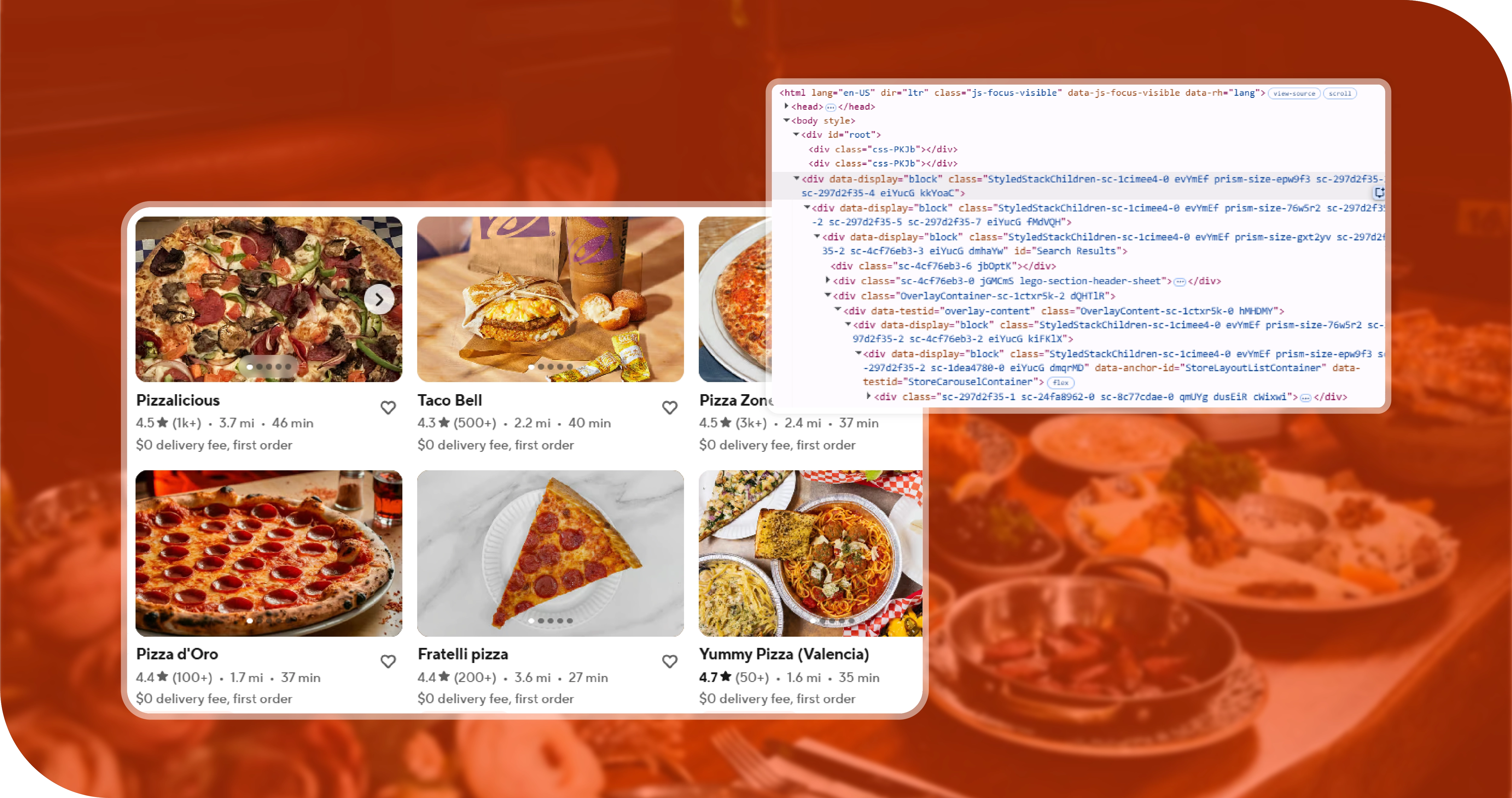
Collecting consistent Food Data Scraping outputs from multiple restaurant websites and food delivery platforms proved difficult because of dynamic page structures, anti-bot protections, missing menu attributes, and inconsistent product categorization across sources.
Key Solutions
-
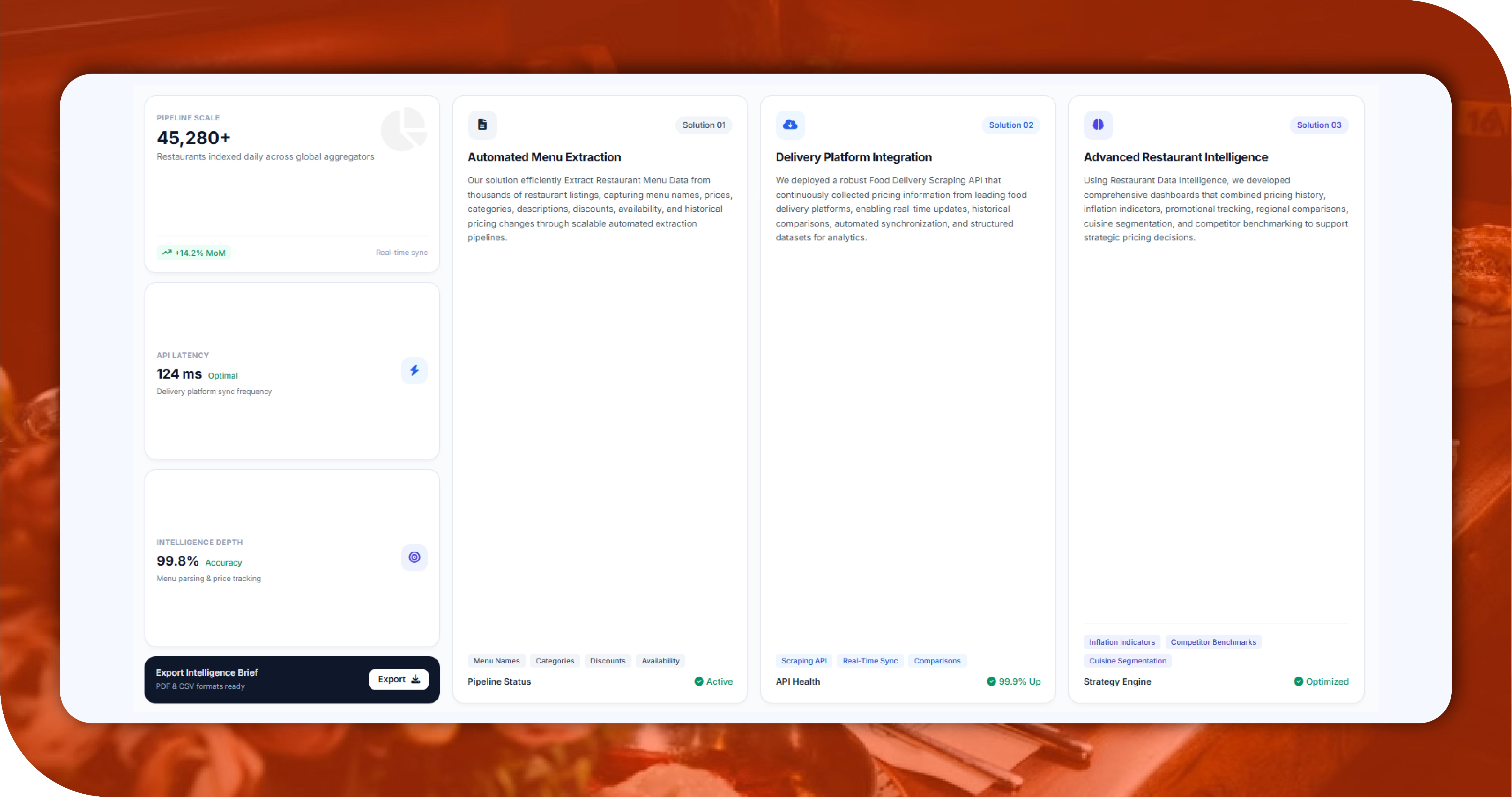
Automated Menu Extraction
Our solution efficiently Extract Restaurant Menu Data from thousands of restaurant listings, capturing menu names, prices, categories, descriptions, discounts, availability, and historical pricing changes through scalable automated extraction pipelines. -
Delivery Platform Integration
We deployed a robust Food Delivery Scraping API that continuously collected pricing information from leading food delivery platforms, enabling real-time updates, historical comparisons, automated synchronization, and structured datasets for analytics. -
Advanced Restaurant Intelligence
Using Restaurant Data Intelligence, we developed comprehensive dashboards that combined pricing history, inflation indicators, promotional tracking, regional comparisons, cuisine segmentation, and competitor benchmarking to support strategic pricing decisions.
Scraped Dataset Overview
| Data Category | Records Collected |
|---|---|
| Restaurant Chains | 8,750 |
| Individual Restaurant Locations | 62,400 |
| Menu Categories | 185,000 |
| Menu Items | 4,250,000 |
| Historical Price Records | 31,800,000 |
| Daily Price Updates | 920,000 |
| Discount Records | 1,450,000 |
| Combo Meal Listings | 385,000 |
| Beverage Listings | 510,000 |
| Delivery Fees | 240,000 |
| Service Charges | 195,000 |
| Cuisine Categories | 420 |
| City Coverage | 185 |
| Country Coverage | 24 |
| Restaurant Ratings | 2,850,000 |
| Customer Reviews Indexed | 18,600,000 |
| Promotional Campaigns | 760,000 |
| Availability Status Records | 14,200,000 |
| Timestamped Snapshots | 36,400,000 |
| Images Indexed | 5,900,000 |
Methodologies Used
-
Automated Web Scraping
We implemented scalable crawlers capable of extracting structured restaurant menu information continuously while adapting to dynamic web pages, pagination, JavaScript-rendered content, and frequent website updates without compromising data quality. -
Data Normalization
Collected restaurant information was standardized by cleaning inconsistent naming conventions, categories, currencies, pricing formats, and duplicate records, ensuring accurate comparisons across multiple restaurant brands and delivery platforms. -
Historical Data Archiving
Every pricing update was archived with timestamps, allowing analysts to measure inflation trends, monitor historical pricing behavior, evaluate seasonal variations, and compare restaurant pricing over extended time periods. -
Quality Validation
Automated validation processes verified pricing accuracy, removed anomalies, detected duplicate entries, and ensured consistency across millions of records before integrating datasets into analytical dashboards and reporting systems. -
Analytics Dashboard Integration
Structured datasets were integrated into interactive dashboards featuring trend visualization, competitor benchmarking, inflation tracking, historical comparisons, and customizable reporting for restaurant pricing analysis.
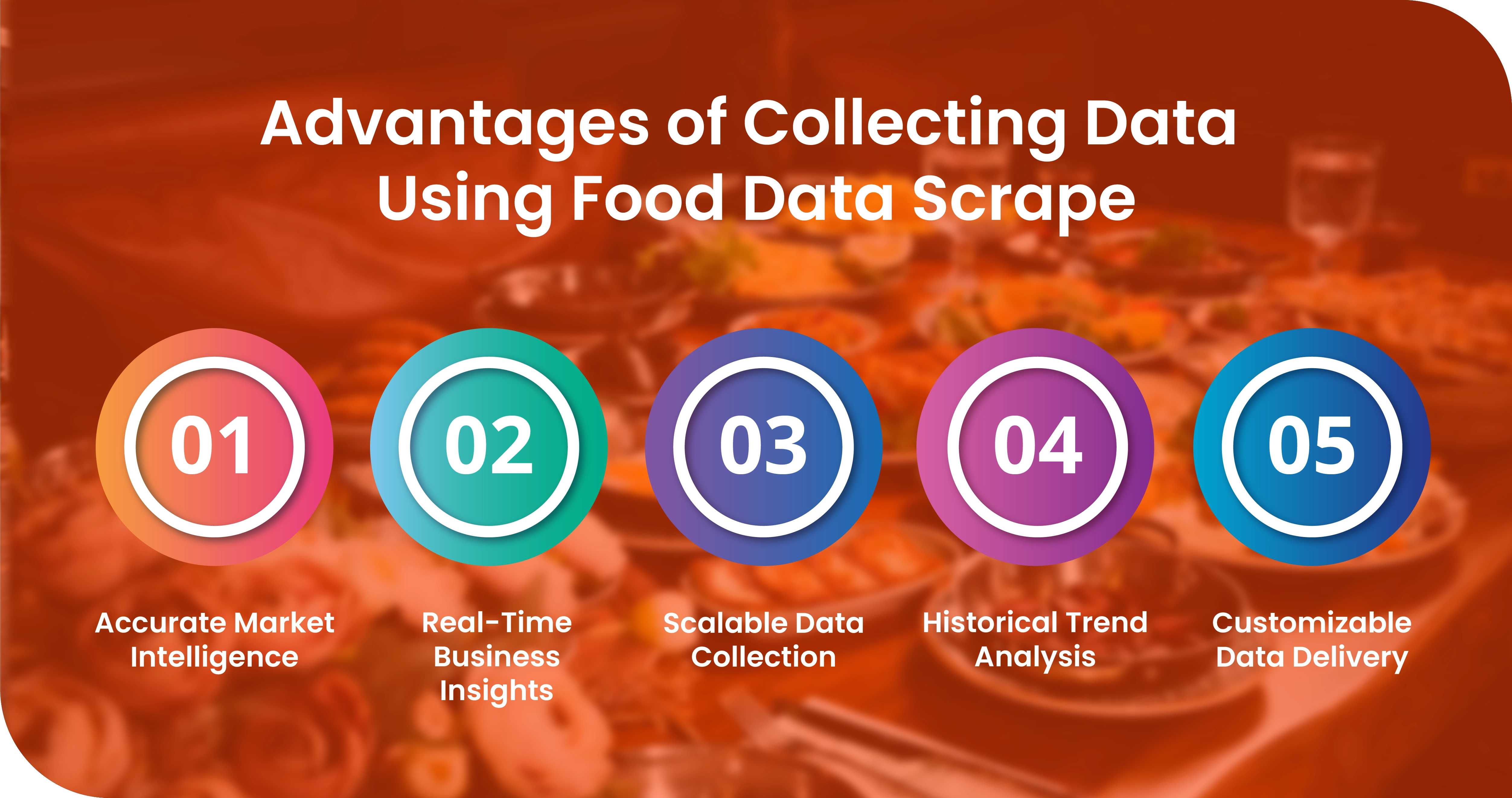
Advantages of Collecting Data Using Food Data Scrape
-
Accurate Market Intelligence
Our automated data collection provides accurate restaurant pricing information that supports competitive benchmarking, inflation analysis, strategic planning, and market research with consistently updated datasets. -
Real-Time Business Insights
Businesses receive continuously updated restaurant menu information, enabling faster responses to pricing changes, promotions, competitor movements, and emerging market opportunities. -
Scalable Data Collection
Our infrastructure efficiently captures millions of restaurant records across multiple countries, supporting enterprise-scale analytics without manual intervention or operational bottlenecks. -
Historical Trend Analysis
Historical pricing archives allow organizations to evaluate inflation, monitor long-term pricing behavior, identify seasonal changes, and improve forecasting accuracy through comprehensive analytical models. -
Customizable Data Delivery
Clients receive structured datasets in multiple formats, APIs, dashboards, and automated reports tailored to their analytical requirements, business workflows, and integration environments.
Client's Testimonial
"Working with Food Data Scrape completely transformed our pricing intelligence capabilities. Their automated restaurant data collection platform delivered highly accurate menu prices, historical records, and competitor insights with exceptional consistency. We now monitor inflation trends across thousands of restaurants in real time while reducing manual effort significantly. Their responsive technical team customized dashboards and reporting according to our business requirements, helping us generate valuable insights for clients faster than ever before. We highly recommend Food Data Scrape to organizations seeking reliable restaurant pricing intelligence and scalable food market analytics solutions."
— Director of Market Intelligence
Final Outcome
The project successfully delivered a scalable restaurant pricing intelligence platform capable of monitoring millions of menu records across multiple restaurant chains and delivery platforms. Using automated extraction, historical archiving, and advanced analytics, the client achieved faster inflation analysis, improved competitor benchmarking, and enhanced reporting accuracy. The integrated Food Price Dashboard provided real-time visibility into menu price changes, promotional activity, regional pricing differences, and historical inflation trends through interactive visualizations. Comprehensive Food Datasets enabled analysts to perform predictive pricing analysis, identify market opportunities, and support data-driven strategic planning. As a result, the client reduced manual research efforts, improved operational efficiency, accelerated reporting cycles, and gained a reliable foundation for long-term restaurant pricing intelligence and market monitoring.