The Client
The client was a growing food-tech and restaurant analytics company seeking reliable market intelligence to understand the rapidly changing online food-delivery landscape. With restaurants continuously updating menus, prices, offers, availability, and delivery information, the client needed a scalable approach to track competitors and identify market opportunities.
The primary requirement was to develop comprehensive Uber Eats restaurant intelligence that could provide structured insights into restaurant listings, cuisines, ratings, locations, menu categories, and pricing across selected markets. The client also wanted continuous Uber Eats menu monitoring to identify changes in menu items, prices, discounts, availability, and restaurant offerings. These insights would help the team maintain current market datasets and recognize emerging trends.
Another key objective was Uber Eats competitor price monitoring, allowing the client to compare similar dishes and restaurant pricing, identify pricing gaps, evaluate promotional strategies, and support competitive decision-making. The resulting intelligence framework helped transform large volumes of restaurant data into actionable business insights.
Key Challenges
-
Inconsistent Delivery Information
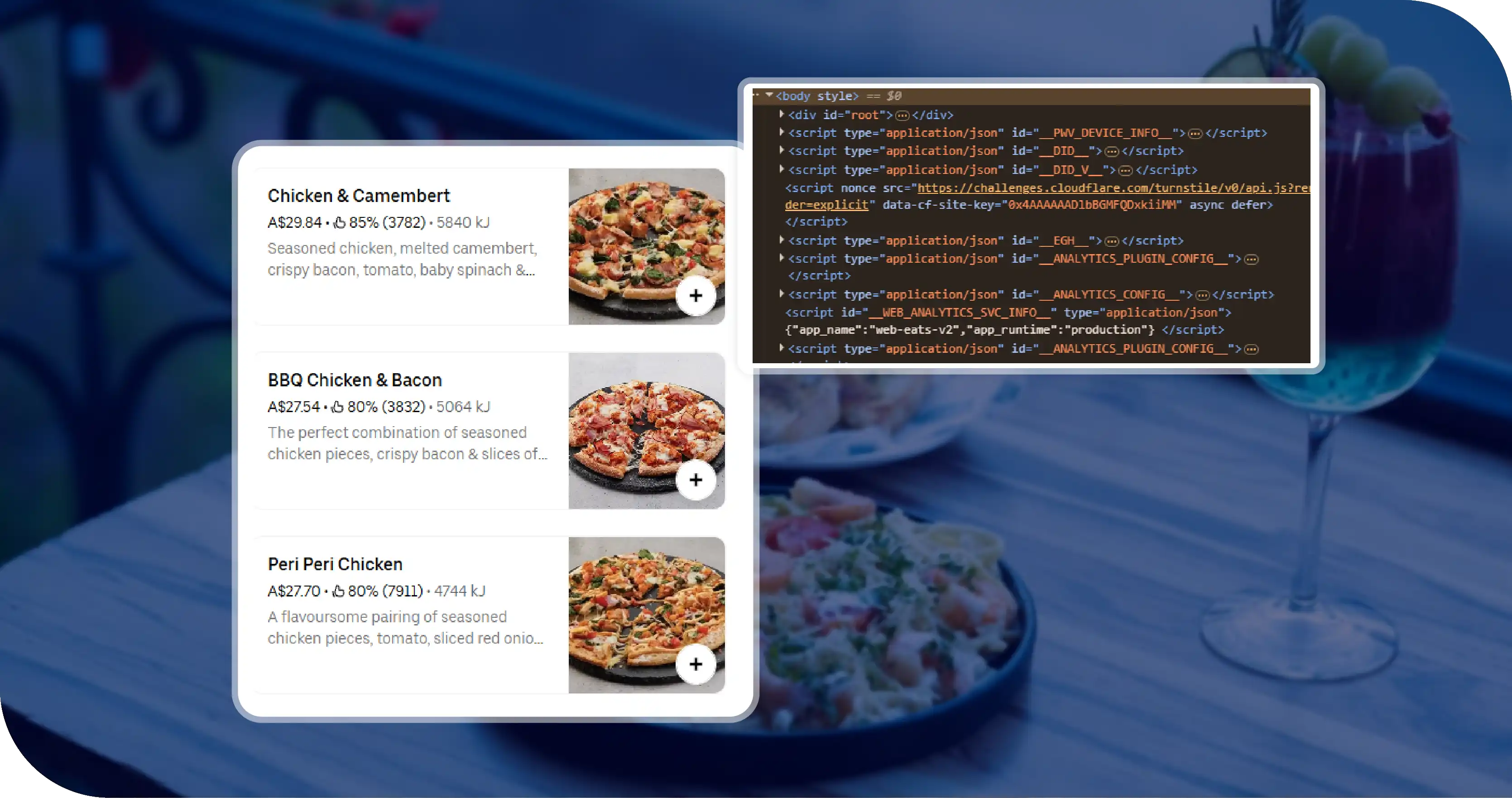
The client struggled to collect consistent delivery information across restaurants and locations. Differences in delivery fees, estimated times, service areas, and availability made Uber Eats delivery analytics difficult, limiting accurate comparisons and timely understanding of changing customer delivery experiences overall. -
Frequent Data Changes
Frequent changes in restaurant listings, menus, prices, discounts, and availability created challenges. Without a scalable Uber Eats Food Delivery Scraping API, the client faced repetitive manual collection, inconsistent records, delayed updates, and difficulty maintaining datasets for analysis and reporting. -
Large-Scale Restaurant Data Collection
The client needed restaurant coverage while preserving accurate, structured information for competitive research. Managing large volumes of restaurant profiles, cuisines, ratings, menus, and pricing through manual processes made Uber Eats Restaurant Data Scraping challenging, particularly across multiple markets and changing data.
Key Solutions
-
Automated Restaurant and Menu Data Collection
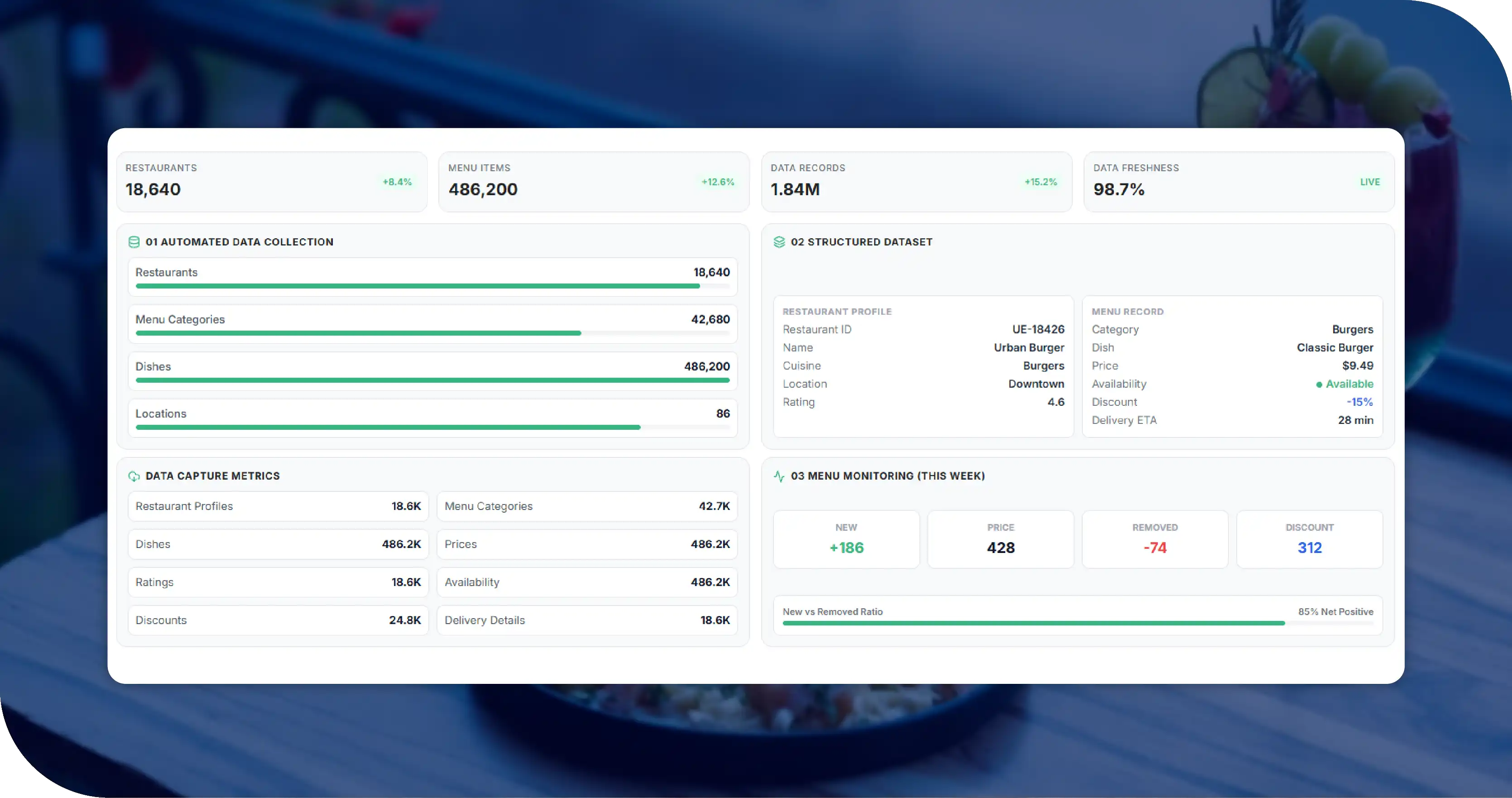
We developed an automated solution to Scrape Restaurants and Menus Data from Uber Eats, capturing restaurant profiles, cuisines, menu categories, dishes, prices, ratings, availability, discounts, and delivery details across targeted locations. -
Structured and Standardized Dataset
We transformed collected information into a consistent Uber Eats Food Dataset, organizing restaurant, menu, pricing, location, and delivery attributes into structured records. This enabled easier filtering, comparison, historical analysis, competitor research, and integration with the client's analytical workflows. -
Scalable Menu Scraping and Monitoring
Our UberEats Restaurant Menu Scraping solution supported scalable collection and recurring updates, helping the client identify menu changes, pricing variations, newly listed dishes, discontinued items, discounts, and availability changes while reducing manual data collection and improving market intelligence.
Solution Performance Overview
| Data Metric | Records Collected | Restaurants | Menu Items | Cities | Daily Updates | Data Fields | Coverage |
|---|---|---|---|---|---|---|---|
| Restaurants | 12,500+ | 12,500+ | --- | 75+ | 30+ | 18 | Multi-city |
| Menu Categories | 68,000+ | 12,500+ | 425,000+ | 75+ | 30+ | 10 | Multi-cuisine |
| Menu Items | 425,000+ | 12,500+ | 425,000+ | 75+ | 30+ | 15 | Item-level |
| Menu Prices | 425,000+ | 12,500+ | 425,000+ | 75+ | 30+ | 8 | Price tracking |
| Discounts & Offers | 52,000+ | 9,800+ | 52,000+ | 70+ | 30+ | 9 | Promotional |
| Item Availability | 425,000+ | 12,500+ | 425,000+ | 75+ | 30+ | 6 | Availability |
| Ratings & Reviews | 12,500+ | 12,500+ | --- | 75+ | 30+ | 7 | Restaurant-level |
| Add-ons & Modifiers | 145,000+ | 10,500+ | 145,000+ | 72+ | 30+ | 12 | Customization |
| Menu Images | 310,000+ | 11,800+ | 310,000+ | 75+ | 30+ | 5 | Image metadata |
| Delivery Data | 12,500+ | 12,500+ | --- | 75+ | 30+ | 8 | Delivery insights |
| Cuisine Types | 85+ | 12,500+ | 425,000+ | 75+ | 30+ | 4 | Cuisine mapping |
| Historical Price Records | 1.2M+ | 12,500+ | 425,000+ | 75+ | 30+ | 10 | Historical |
| Menu Change Records | 275,000+ | 11,200+ | 275,000+ | 75+ | 30+ | 11 | Change tracking |
| Structured Dataset | 2M+ | 12,500+ | 425,000+ | 75+ | 30+ | 25+ | Consolidated |
Methodologies Used
-
Automated Data Collection
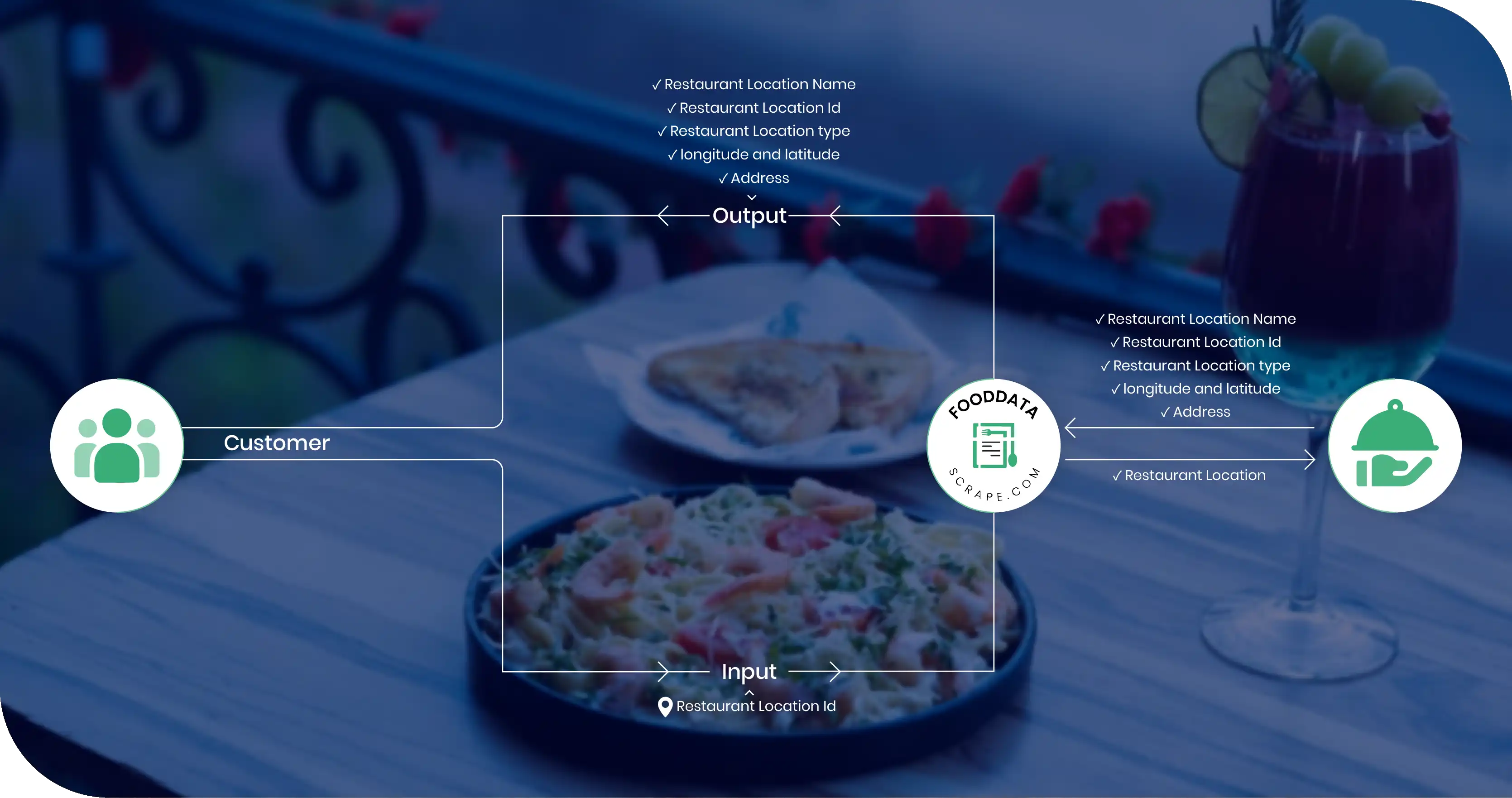
We implemented automated extraction workflows to collect restaurant profiles, menus, prices, ratings, cuisines, availability, delivery details, and promotional information at scale. This reduced manual research, improved consistency, and enabled systematic collection across multiple locations and restaurant categories. -
Dynamic Page Handling
Because restaurant and menu information can change dynamically, we used browser-based extraction techniques capable of handling JavaScript-rendered content. This approach helped capture information that may not appear within conventional static webpage responses, improving dataset completeness and reliability. -
Data Standardization
Collected records were cleaned, validated, and standardized into consistent fields. Duplicate restaurants, incomplete records, inconsistent pricing formats, and missing values were identified and processed to create organized datasets suitable for comparison, analysis, visualization, and downstream business intelligence applications. -
Scheduled Data Updates
We established recurring extraction schedules to capture changes in menus, prices, availability, restaurant status, discounts, and delivery information. Regular updates helped maintain current datasets while supporting historical comparisons and identifying important changes across monitored restaurants and locations. -
Quality Validation and Monitoring
Multiple validation checks were applied throughout the extraction pipeline to improve accuracy. We monitored missing fields, duplicate entries, unexpected values, and structural changes, ensuring the resulting datasets remained dependable, consistent, and useful for competitive research and strategic decision-making.
Advantages of Collecting Data Using Food Data Scrape
-
Scalable Data Collection
Our data scraping services enable businesses to collect large volumes of restaurant, menu, pricing, availability, and delivery information efficiently. Automated workflows reduce manual effort while supporting expansion across multiple cities, restaurants, cuisines, and market segments without significantly increasing operational workload. -
Regularly Updated Market Data
We provide scheduled data collection to help businesses maintain current information. Regular updates capture menu additions, removed dishes, price changes, discounts, availability, and restaurant status, enabling teams to work with fresher datasets for competitive analysis, market research, and strategic planning. -
Structured and Usable Datasets
Collected information is cleaned, standardized, and organized into structured datasets according to business requirements. Consistent fields make it easier to analyze restaurants, menu items, prices, promotions, ratings, and delivery information while supporting seamless integration with databases, dashboards, and analytical systems. -
Better Competitive Intelligence
Our datasets help businesses compare restaurant offerings, pricing strategies, promotions, menu structures, and availability across different competitors. These insights can reveal pricing gaps, changing customer offerings, emerging trends, and market opportunities, supporting faster and more informed competitive decision-making. -
Reduced Operational Costs
Automating repetitive data collection significantly reduces the time and resources required for manual research. Businesses can redirect internal teams toward analysis and strategy while receiving dependable datasets through scheduled delivery, helping improve productivity, consistency, scalability, and overall research efficiency.
Client's Testimonial
"The data scraping solution transformed how we monitor the food delivery market. We previously struggled with constantly changing restaurant menus, pricing, availability, and promotional information. The structured datasets provided accurate and organized insights that significantly reduced our manual research workload. The automated collection process also helped us maintain updated information across multiple locations and restaurants. Our analytics team can now compare competitors, identify pricing changes, monitor menu trends, and make faster business decisions using reliable data. The team was responsive, professional, and flexible throughout the project, delivering the solution according to our requirements. We are highly satisfied with the quality, consistency, and scalability of the data delivered."
—Head of Market Intelligence
Final Outcome
The project delivered a scalable and structured solution for collecting and analyzing Uber Eats restaurant and menu information across multiple markets. The client received comprehensive datasets covering restaurant profiles, cuisines, menu categories, individual items, prices, discounts, ratings, availability, delivery details, and menu changes. Automated extraction significantly reduced manual data collection and improved the consistency of market intelligence. Regular data updates enabled the client to monitor pricing fluctuations, newly introduced dishes, discontinued items, promotional campaigns, and availability changes more efficiently. The standardized dataset also supported competitor benchmarking, pricing analysis, menu trend identification, and geographic market comparisons. With reliable and organized data available for analysis, the client could make faster, evidence-based decisions, improve competitive monitoring, and identify emerging opportunities within the rapidly evolving online food delivery market.