Introduction
The food industry is rapidly becoming a data-driven ecosystem where product information, ingredients, nutrition, pricing, packaging, allergens, and specifications influence everyday business decisions. As retailers, restaurants, grocery platforms, manufacturers, and food-tech companies expand their digital operations, demand is increasing for professionals who can collect, organize, validate, analyze, and manage food product information.
This transformation is creating exciting Careers in Food Data for professionals with backgrounds in data analytics, food science, quality management, information technology, supply chain, e-commerce, and digital operations. Many of these roles can also be performed remotely, making food data an attractive career path for professionals seeking flexible working arrangements.
One important area is the ability to Scrape Food Product Data from online grocery stores, restaurant websites, marketplaces, and food delivery platforms. Structured product information can support pricing analysis, assortment planning, catalog management, competitor intelligence, and specification monitoring.
Another growing opportunity is Remote Food Data Management Careers, where professionals maintain digital product catalogs, verify specifications, standardize attributes, identify missing information, and support teams working across different locations.
Why Food Data Is Becoming a Career Opportunity?
Food companies generate enormous quantities of information every day. A single product may have dozens of attributes, including product name, brand, category, ingredients, nutritional values, package size, price, dietary labels, allergens, availability, country of origin, and storage requirements.
Managing these details manually becomes difficult as product catalogs expand.
Businesses therefore need specialists who understand how to transform fragmented information into consistent, usable datasets. These professionals may work with spreadsheets, databases, APIs, web-scraping tools, data-quality platforms, product information management systems, and business intelligence dashboards.
The opportunity extends beyond traditional data-entry positions. Modern food data professionals can work in catalog intelligence, product information management, data quality, competitive intelligence, analytics, specification management, and digital commerce.
What Does a Food Data Professional Do?
Food data roles can vary considerably depending on the organization. However, several responsibilities appear consistently across the industry.
Product Data Collection
Professionals collect information from retailer websites, manufacturer pages, marketplaces, restaurant platforms, and other digital sources. The objective is to create reliable product records that businesses can use for analysis and operations.
Product Specification Management
Specification management involves maintaining structured information about ingredients, packaging, nutritional values, allergens, certifications, serving sizes, product dimensions, and other attributes.
Accuracy matters because even a small inconsistency can affect product listings, search results, purchasing decisions, or regulatory workflows.
Data Validation
Collected information must be checked for completeness, consistency, duplication, and accuracy. Data professionals may compare information across multiple sources and flag discrepancies for review.
Catalog Standardization
Different platforms frequently describe the same products differently. A food data specialist can standardize brand names, categories, units, package sizes, attributes, and descriptions so information remains consistent across systems.
Data Analysis
Once product information is structured, analysts can identify pricing trends, assortment changes, product launches, category growth, and competitor movements.
These responsibilities make Food Data Management Careers increasingly relevant to companies operating digital food catalogs.
Remote Opportunities in Food Product Data
Remote work has expanded the geographic reach of food data teams. Organizations can now employ specialists who manage product information without requiring them to work from a physical office.
For professionals, this means opportunities can exist with food-tech companies, retailers, data providers, marketplaces, consulting firms, restaurants, grocery businesses, and technology organizations.
Some Remote Food Data Analyst Jobs focus on collecting and analyzing product information. Others involve building reports, monitoring competitors, identifying changes, and preparing datasets for business teams.
Professionals with strong analytical abilities can progress from operational data roles into more advanced positions involving dashboard development, forecasting, market intelligence, and strategic analysis.
Ready to unlock new opportunities in food data? Explore Food Data Scrape's solutions for reliable product data, specifications, pricing intelligence, and food-market insights. Start building smarter data-driven strategies today.
Remote Food Product Specification Jobs
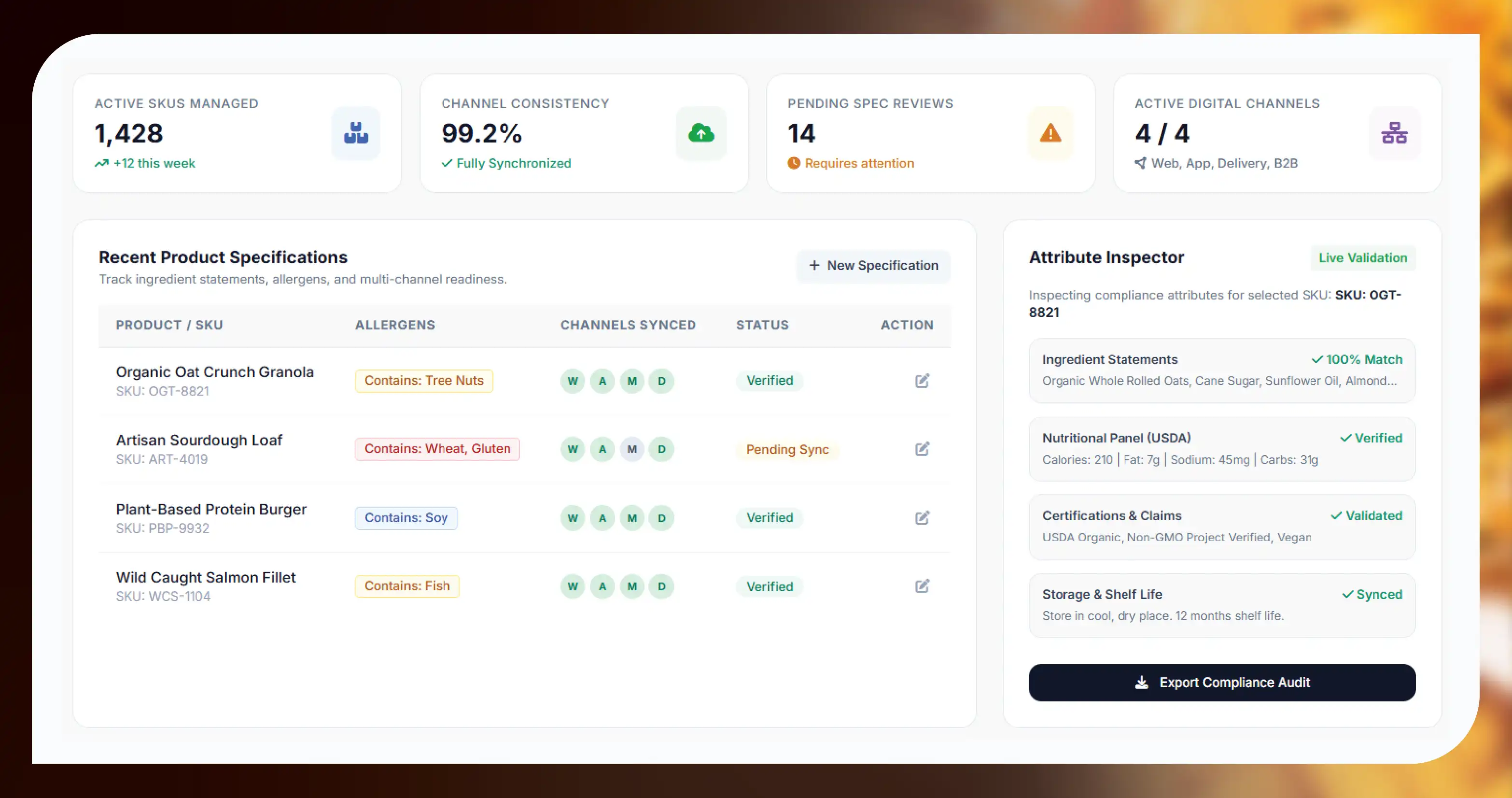
Product specifications represent another specialized career path.
A product specification specialist may work with ingredient statements, nutritional information, allergens, packaging details, certifications, preparation instructions, storage conditions, and other product attributes.
In digital commerce, these specifications need to remain accurate across multiple channels. A retailer may sell thousands of products through its website, mobile application, marketplace listings, and delivery partners.
Maintaining consistency across these channels requires systematic processes.
Remote Food Product Specification Jobs can therefore suit professionals who enjoy structured information, quality control, documentation, and detail-oriented work.
Food manufacturers may also require specification professionals to coordinate product information between suppliers, internal teams, retailers, and digital platforms.
Skills Needed for a Food Data Career
A successful food data professional does not necessarily need to master every technical tool. However, developing a combination of domain knowledge and data skills can create strong career opportunities.
1. Spreadsheet Expertise
Excel and Google Sheets remain important for data cleaning, validation, comparison, and reporting. Professionals should understand formulas, filters, pivot tables, lookup functions, conditional formatting, and basic automation.
2. Data Cleaning
Food catalogs often contain inconsistent capitalization, units, naming conventions, duplicate records, incomplete attributes, and formatting errors. Data-cleaning skills help convert messy information into reliable datasets.
3. SQL
SQL can help professionals query large product databases and retrieve information based on brands, categories, prices, product attributes, and availability.
4. Python
Python can support automation, data processing, extraction workflows, and analysis. Familiarity with libraries used for data manipulation can be particularly useful.
5. Web Data Understanding
Professionals working with online food catalogs benefit from understanding websites, APIs, structured data, and automated extraction techniques.
6. Food Industry Knowledge
Understanding food categories, ingredients, packaging, nutrition, allergens, and product specifications can provide an important advantage over professionals who possess only generic data skills.
Building a Career Path in Food Data
A career in this field can develop progressively.
An entry-level professional might begin with catalog management, product data validation, or data-entry quality control. With experience, they can move toward product information management, data analysis, competitive intelligence, or specification management.
The next stage could involve senior analyst, data quality specialist, product information specialist, or food intelligence roles.
Professionals who combine technical skills with food-industry knowledge may eventually move into data strategy, analytics leadership, product intelligence, or consulting.
The important point is that food data should not be viewed simply as repetitive catalog work. It can become a foundation for broader careers in digital commerce and business intelligence.
How Businesses Use Food Product Data
The demand for food data professionals is closely connected to how organizations use information.
Retailers can analyze product availability and pricing across competitors. Restaurants can monitor menu items, ingredients, and pricing. Food manufacturers can track how products appear across online channels.
Grocery platforms can use structured information to improve search and filtering. Delivery businesses can compare menus and product availability across locations.
Marketing teams can analyze category trends, while procurement teams can monitor suppliers and product changes.
This creates an ecosystem where reliable product data supports multiple departments simultaneously.
Remote Work and Career Flexibility
One of the biggest attractions of food data careers is the potential for distributed work.
Much of the workflow is digital. Data can be collected, cleaned, reviewed, analyzed, and delivered through cloud-based platforms. Teams can collaborate through project-management systems, shared databases, dashboards, and communication tools.
This allows professionals to pursue opportunities without being geographically close to food retailers or manufacturers.
However, remote work still requires discipline. Professionals need strong communication skills, careful documentation habits, reliable time management, and the ability to explain data-quality issues clearly.
How to Build Your Food Data Portfolio
A portfolio can make a major difference when applying for food data positions.
Instead of simply stating that you understand data management, demonstrate it through practical projects.
For example, create a structured dataset containing product names, brands, categories, prices, package sizes, ingredients, and nutritional attributes.
You could then clean the dataset, standardize units, identify duplicates, and build a dashboard showing category and pricing patterns.
Another project could compare food products across multiple online retailers and highlight differences in product availability, package sizes, or pricing.
Such projects demonstrate practical skills while showing potential employers that you understand the complete data lifecycle.
Emerging Opportunities in Food Data
The future of food data is likely to involve increasing automation and intelligence.
Artificial intelligence can help classify products, identify duplicate listings, extract attributes, summarize specifications, and detect changes.
Automated data pipelines can continuously collect information from digital platforms, while dashboards can provide near-real-time visibility into market conditions.
This means future food data professionals will increasingly need to understand how human expertise works alongside automation.
The strongest career opportunities may emerge for professionals who can combine food knowledge, analytical thinking, data-quality management, and technology.
How Food Data Scraping Supports Professional Growth
Professionals can strengthen their understanding of the industry by learning how online food information is collected and transformed into structured datasets.
This knowledge provides exposure to product catalogs, restaurant menus, grocery inventories, pricing structures, category hierarchies, and digital commerce ecosystems.
Understanding the full workflow—from source discovery and extraction to validation and analysis—can help professionals become more valuable in data-driven food organizations.
For businesses, these capabilities can support market intelligence, competitor monitoring, catalog management, and product research.
How Food Data Scrape Can Help You?
Build Practical Data Skills
Food Data Scrape can help professionals understand structured food information, data extraction workflows, product attributes, pricing records, and datasets used for digital food intelligence.
Explore Industry Applications
Working with food data exposes professionals to grocery, restaurant, food delivery, quick-commerce, and e-commerce applications, helping them understand how data supports real-world business decisions.
Strengthen Analytical Capabilities
Structured food datasets provide opportunities to practice cleaning, categorization, comparison, validation, visualization, and trend analysis while developing practical skills applicable across data-focused roles.
Develop Portfolio Projects
Food product and pricing datasets can support portfolio projects demonstrating practical experience with catalog structures, competitive analysis, market monitoring, product specifications, and data-driven reporting.
Elevate Your Career
Professionals can combine food-industry knowledge with technical capabilities to pursue emerging data-focused opportunities and Elevate your career with fooddatascrape through stronger practical understanding of food intelligence.
Conclusion
Food data is becoming an important component of modern food commerce, connecting retailers, manufacturers, restaurants, delivery platforms, and consumers through structured information. As digital catalogs grow, organizations need professionals who can manage product information accurately and turn large volumes of data into useful business intelligence.
From catalog management and specification validation to analytics and competitive intelligence, there are multiple pathways for professionals interested in this expanding field.
Organizations can also strengthen these workflows through Food Data Scraping Services, enabling systematic collection of product, pricing, category, and specification information from digital sources.
Businesses operating food delivery platforms can further Scrape Food Delivery API Data to study menus, prices, availability, promotions, and other market signals.
Well-structured Food Delivery Datasets can then support analytics, competitor monitoring, market research, pricing intelligence, and strategic decision-making.
For professionals, the opportunity is equally significant. Developing skills in data collection, cleaning, specification management, analysis, and automation can open doors to flexible and increasingly specialized careers within the global food-data ecosystem.
If you are seeking for a reliable data scraping services, Food Data Scrape is at your service. We hold prominence in Food Data Aggregator and Mobile Restaurant App Scraping with impeccable data analysis for strategic decision-making.
Get a Free Food Data Sample in 48 Hours.
Tell us your platforms, target markets and required fields — we'll map exactly what's possible with food data scraping, recommend the right approach, and send a working sample so you can verify quality before any commitment.
Request a strategy call
Thanks — our data team will reach out within 48 hours with your sample.