The Client
The client is a fast-growing FMCG retail analytics company focused on helping brands, distributors, and retailers improve competitive performance in the rapidly evolving quick commerce ecosystem. The organization required reliable FMCG quick commerce market intelligence to monitor product pricing, stock availability, promotions, and assortment changes across multiple dark store platforms. Their existing manual tracking methods were slow, inconsistent, and unable to capture real-time market fluctuations. To overcome these challenges, the client implemented an automated solution to Scrape Real-time dark store pricing data across major quick commerce platforms, enabling continuous visibility into pricing movements and inventory updates. The platform also supported Quick Commerce Pricing Data Monitoring, allowing stakeholders to compare regional price differences, evaluate promotional effectiveness, identify out-of-stock trends, and optimize product positioning. With accurate and timely insights, the client strengthened pricing strategies, enhanced demand forecasting, improved inventory planning, accelerated competitive analysis, and made faster, data-driven business decisions across diverse urban markets.
Key Challenges
-
Dynamic Price Changes
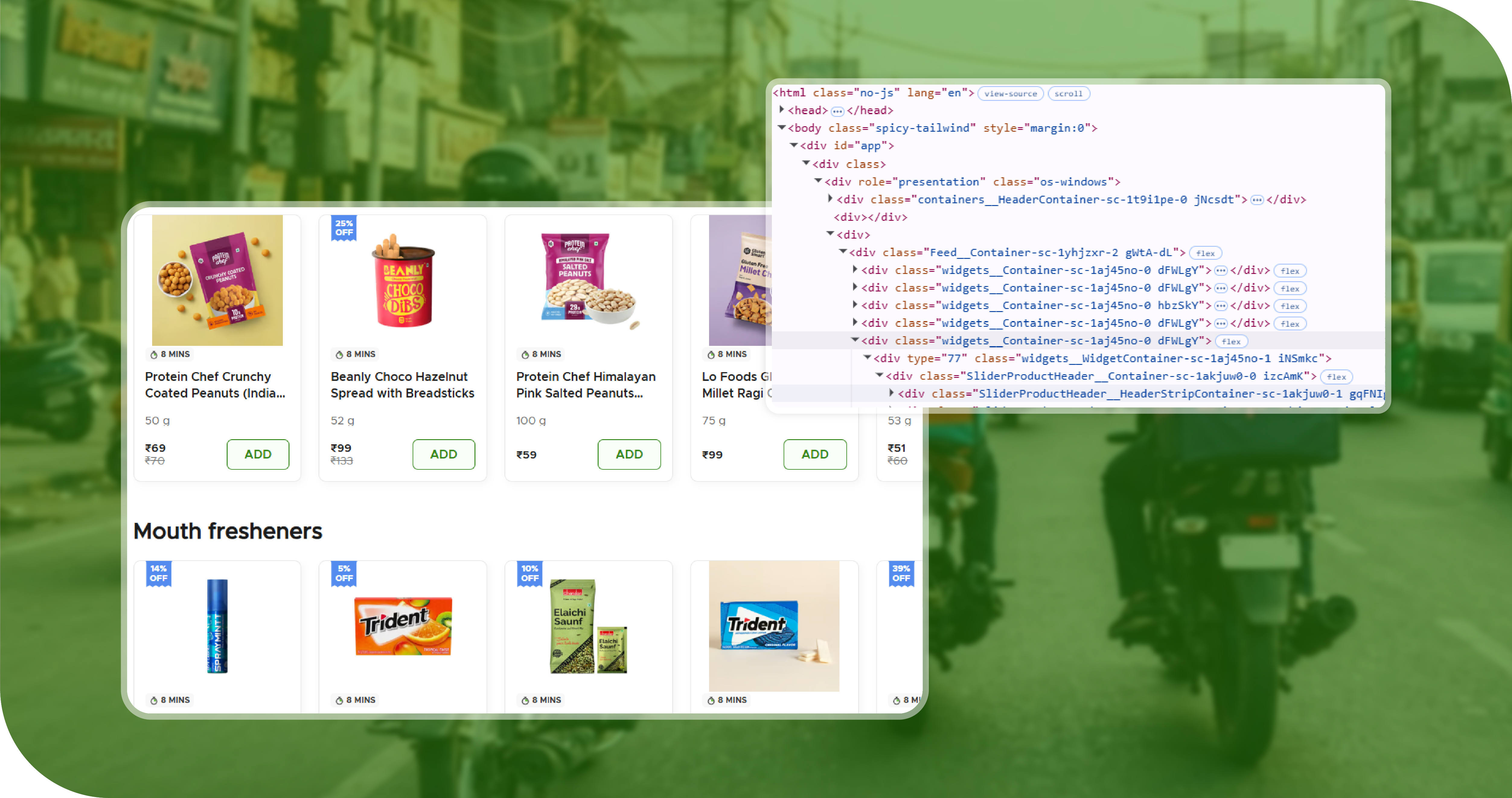
The client struggled with Real-Time Price Monitoring because prices, discounts, and inventory changed frequently across dark stores. Manual tracking failed to capture these rapid updates, leading to delayed decisions, inaccurate competitor comparisons, and missed opportunities for pricing optimization. -
Inventory Visibility
Limited Dark Kitchen Data Tracking made it difficult to monitor product availability, stockouts, and assortment variations across multiple fulfillment locations. This lack of visibility affected demand forecasting, inventory planning, promotional effectiveness, and overall competitive market intelligence. -
Data Collection Complexity
The client needed a scalable Blinkit Grocery Delivery Scraping API to collect accurate pricing and availability data from thousands of products. Existing methods were inconsistent, time-consuming, and unable to deliver reliable, structured datasets for continuous competitive analysis and business reporting.
Key Solutions
-
Automated Data Collection
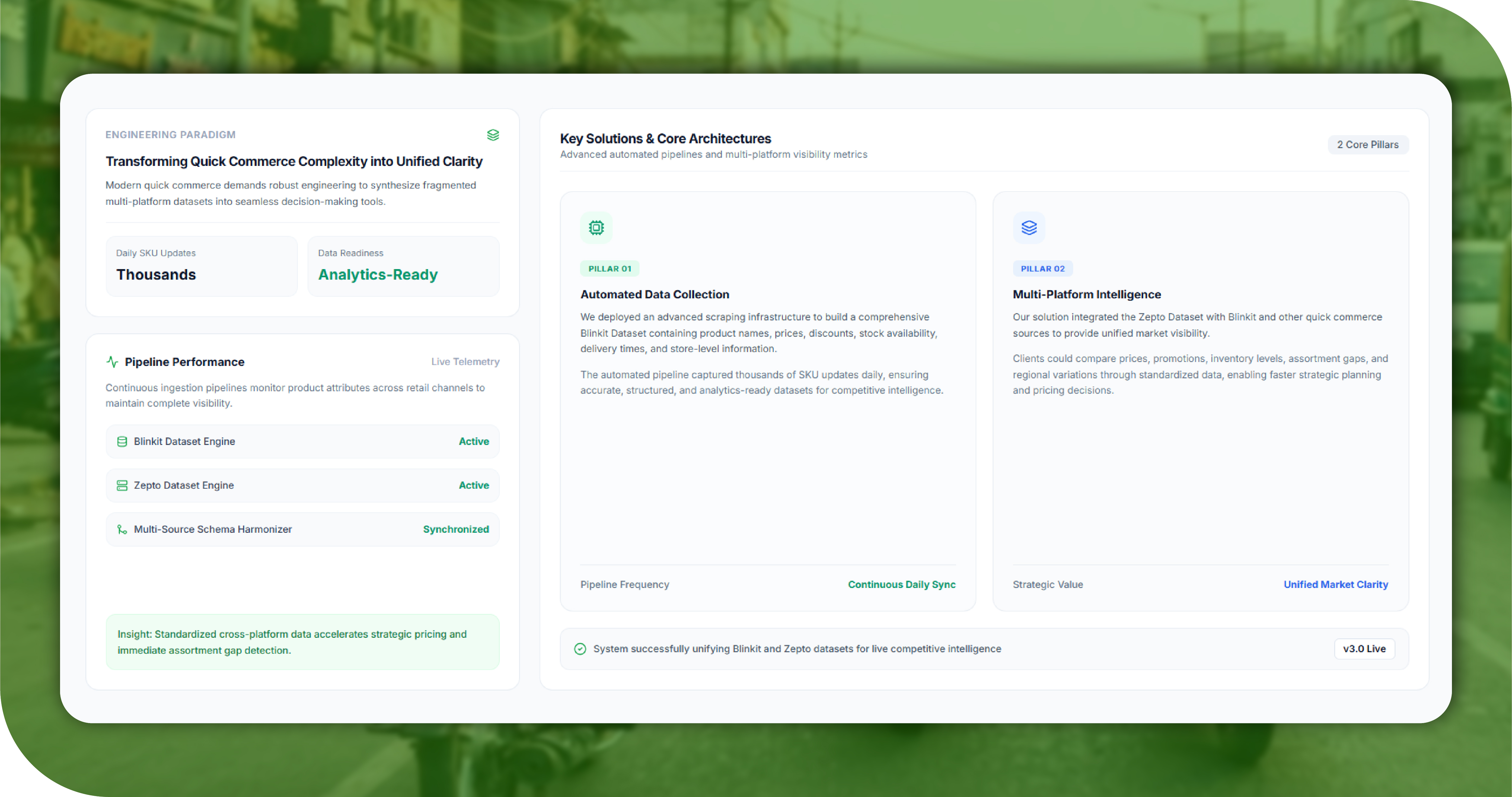
We deployed an advanced scraping infrastructure to build a comprehensive Blinkit Dataset containing product names, prices, discounts, stock availability, delivery times, and store-level information. The automated pipeline captured thousands of SKU updates daily, ensuring accurate, structured, and analytics-ready datasets for competitive intelligence. -
Multi-Platform Intelligence
Our solution integrated the Zepto Dataset with Blinkit and other quick commerce sources to provide unified market visibility. Clients could compare prices, promotions, inventory levels, assortment gaps, and regional variations through standardized data, enabling faster strategic planning and pricing decisions. -
API-Driven Monitoring
We implemented a scalable Zepto Grocery Delivery Scraping API that continuously monitored product availability and pricing changes across dark stores. The API delivered real-time structured data feeds, reduced manual effort, improved reporting accuracy, and supported seamless integration with BI dashboards and enterprise analytics platforms.
Scraped Data Overview
| Data Field | Blinkit | Zepto | Instamart | Daily Records |
|---|---|---|---|---|
| Products Scraped | 32,540 | 30,875 | 28,460 | 91,875 |
| Categories | 245 | 238 | 226 | 709 |
| Price Updates | 198,450 | 187,630 | 176,290 | 562,370 |
| Stock Status Updates | 164,720 | 158,940 | 149,510 | 473,170 |
| Discount Records | 51,380 | 48,960 | 44,870 | 145,210 |
| Dark Stores Tracked | 1,180 | 1,095 | 986 | 3,261 |
| Cities Covered | 38 | 36 | 34 | 108 |
| Average Refresh Interval (Minutes) | 15 | 15 | 20 | 17 |
Methodologies Used
-
Intelligent Data Extraction
We developed automated scraping workflows to collect product names, prices, discounts, availability, delivery estimates, and category information from Blinkit, Zepto, and Instamart. The system captured structured data continuously while maintaining high accuracy, consistency, and reliability across multiple dark stores. -
Geo-Based Store Mapping
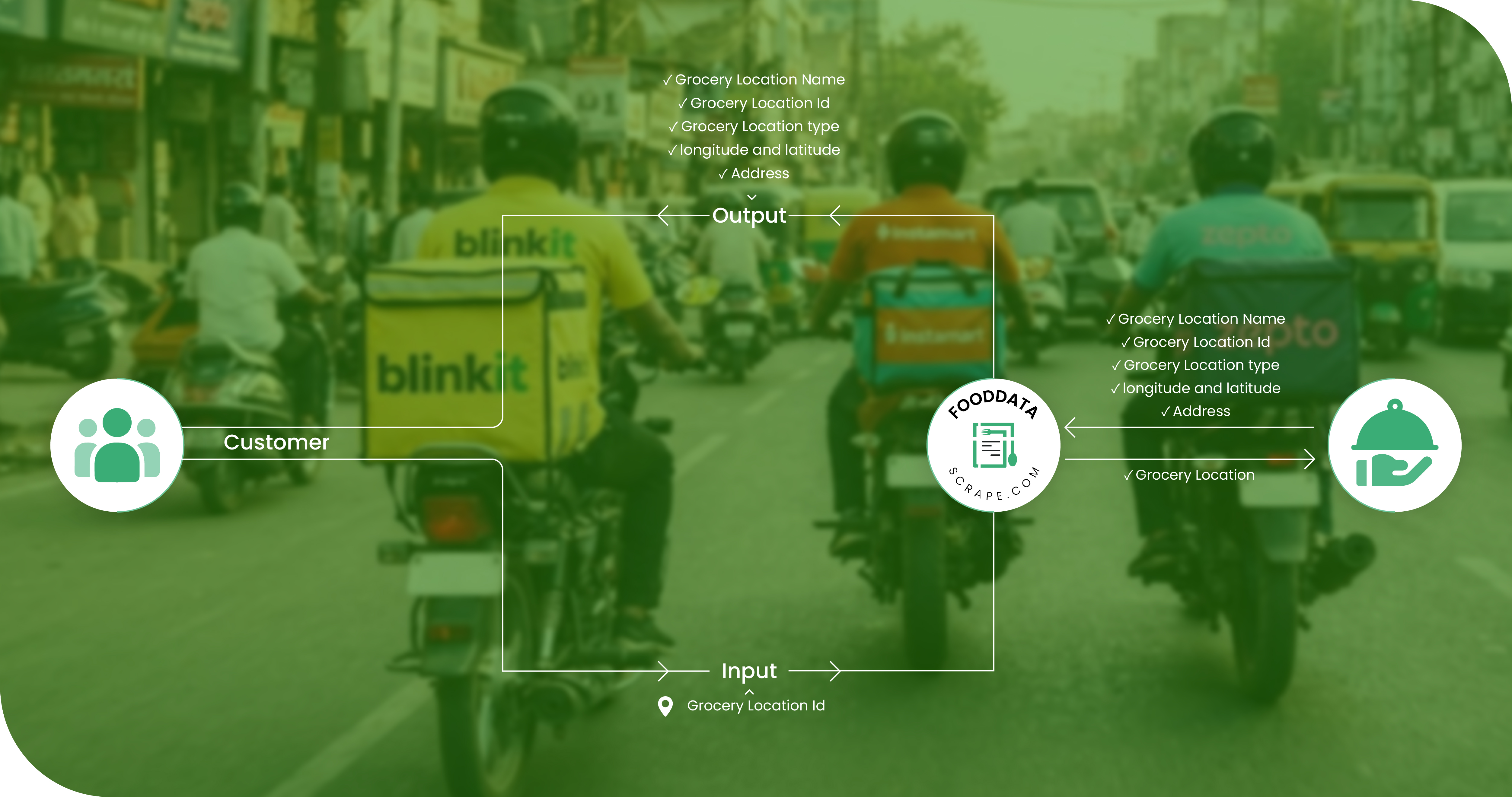
Our methodology simulated different customer locations to access location-specific catalogs, pricing, and inventory. This approach enabled comprehensive comparisons between dark stores, identified regional pricing differences, and delivered accurate market intelligence for city-level competitive analysis and strategic planning. -
Continuous Price Monitoring
We implemented scheduled scraping intervals to detect price fluctuations, promotional campaigns, and inventory changes throughout the day. Continuous monitoring ensured clients received timely updates, minimized data gaps, and supported rapid responses to changing market conditions and competitor strategies. -
Data Validation Process
Collected datasets passed through automated validation checks that removed duplicates, corrected inconsistencies, standardized product attributes, and verified pricing accuracy. This quality assurance process ensured dependable datasets suitable for analytics, reporting, forecasting, and executive decision-making across business functions. -
Analytics-Ready Delivery
The processed data was transformed into structured formats, including CSV, JSON, API feeds, and dashboard integrations. This methodology enabled seamless visualization, business intelligence reporting, automated alerts, and efficient integration with existing enterprise analytics and decision-support platforms.
Advantages of Collecting Data Using Food Data Scrape
-
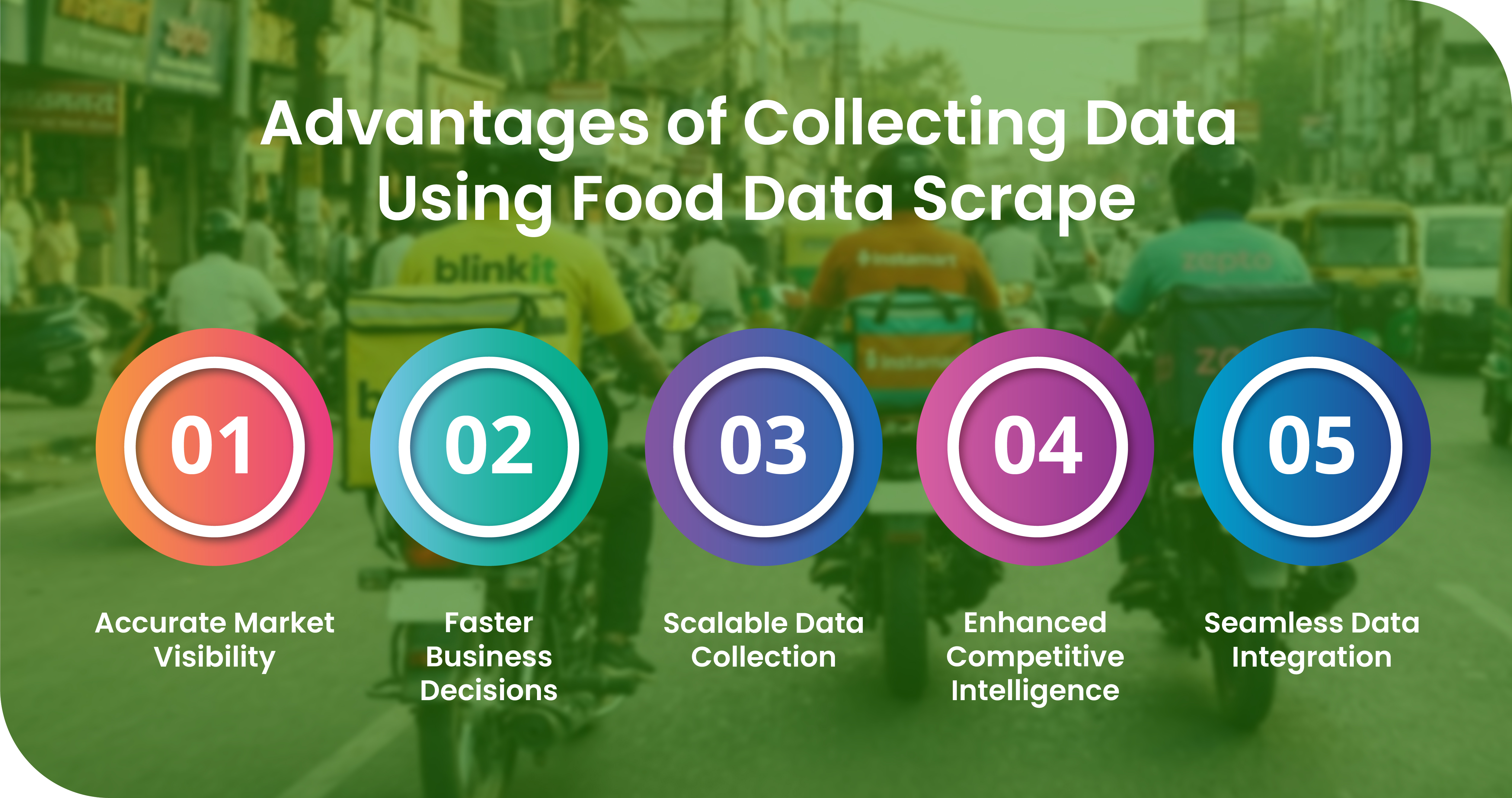
Accurate Market Visibility
Our data scraping services deliver precise, real-time information on pricing, product availability, promotions, and assortment changes. Businesses gain complete visibility into market dynamics, enabling informed decisions, improved competitive analysis, and faster responses to changing customer demand. -
Faster Business Decisions
Automated data collection eliminates manual research and provides continuously updated datasets. Decision-makers receive timely insights that support pricing optimization, inventory planning, promotional evaluation, and strategic planning without delays caused by outdated or incomplete information. -
Scalable Data Collection
Our infrastructure efficiently captures millions of product records across multiple cities, stores, and platforms. The scalable architecture supports growing business requirements while maintaining consistent data quality, high collection speed, and dependable performance for enterprise-level analytics. -
Enhanced Competitive Intelligence
Businesses can compare competitors' prices, discounts, stock availability, and product assortments through structured datasets. These insights reveal emerging trends, promotional opportunities, pricing gaps, and market shifts, helping organizations strengthen their competitive positioning and improve overall profitability. -
Seamless Data Integration
We deliver clean, standardized datasets through APIs, CSV, JSON, databases, or cloud platforms. The structured output integrates effortlessly with BI dashboards, analytics tools, ERP systems, and forecasting models, enabling organizations to maximize the value of their market intelligence.
Client's Testimonial
"The data scraping solution exceeded our expectations by delivering highly accurate, real-time pricing and inventory insights across multiple quick commerce platforms. The quality of the datasets, speed of delivery, and consistency of updates significantly improved our pricing strategy, competitive benchmarking, and inventory planning. Their team demonstrated exceptional technical expertise, responsiveness, and commitment throughout the project. The automated data feeds seamlessly integrated with our analytics platform, saving valuable time while enhancing business intelligence. We highly recommend their services to organizations seeking reliable, scalable, and actionable market data for informed decision-making and sustainable competitive growth."
—Director of Market Intelligence
Conclusion
The project successfully transformed the client's competitive intelligence capabilities by providing continuous access to accurate pricing, inventory, and promotional data across leading quick commerce platforms. Through Quick Commerce Data Intelligence Services, the client gained real-time visibility into regional pricing trends, stock availability, and assortment changes, enabling faster and more confident business decisions. Automated data collection eliminated manual effort, improved reporting accuracy, and significantly reduced operational delays. The structured datasets seamlessly integrated with the client's analytics ecosystem, supporting dynamic pricing strategies, demand forecasting, inventory optimization, and performance benchmarking. As a result, the client strengthened market competitiveness, improved customer satisfaction, identified new growth opportunities, responded quickly to changing market conditions, and achieved greater operational efficiency. The scalable solution also positioned the business for sustained growth in the rapidly evolving quick commerce industry.