The Client
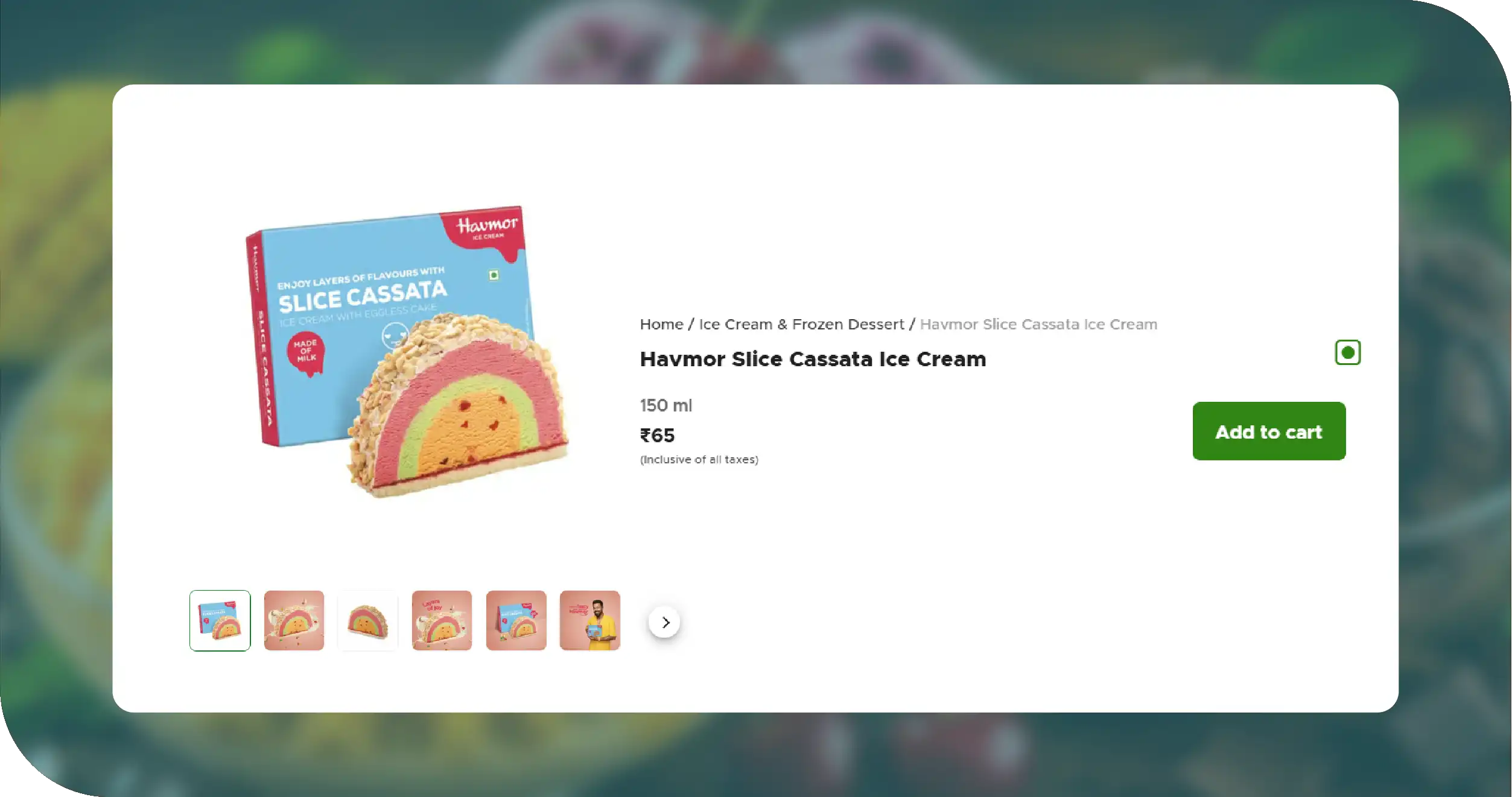
The client was an India-focused ice cream and frozen-dessert business seeking to improve its understanding of the rapidly expanding digital marketplace. Its team monitored competitor brands, product portfolios, pack sizes, pricing, discounts, availability, and marketplace visibility across multiple online channels. However, manually collecting this information was time-consuming and made it difficult to maintain consistent historical comparisons. The company required dependable Ice Cream Market Intelligence Data to support category planning, competitive benchmarking, and pricing decisions. Food Data Scrape designed a structured collection framework around the client's business requirements, incorporating Ice Cream Product Data Extraction In India across relevant digital sources. The solution also helped the client Extract Ice Cream Digital Shelf Visibility Data, covering product presence, placement-related attributes, availability indicators, and pricing information. With standardized datasets, the client could transform fragmented marketplace observations into organized intelligence for category managers, pricing teams, marketing professionals, and business analysts. This enabled more consistent monitoring and data-driven decision-making.
Key Challenges
-
Real-Time Pricing Visibility
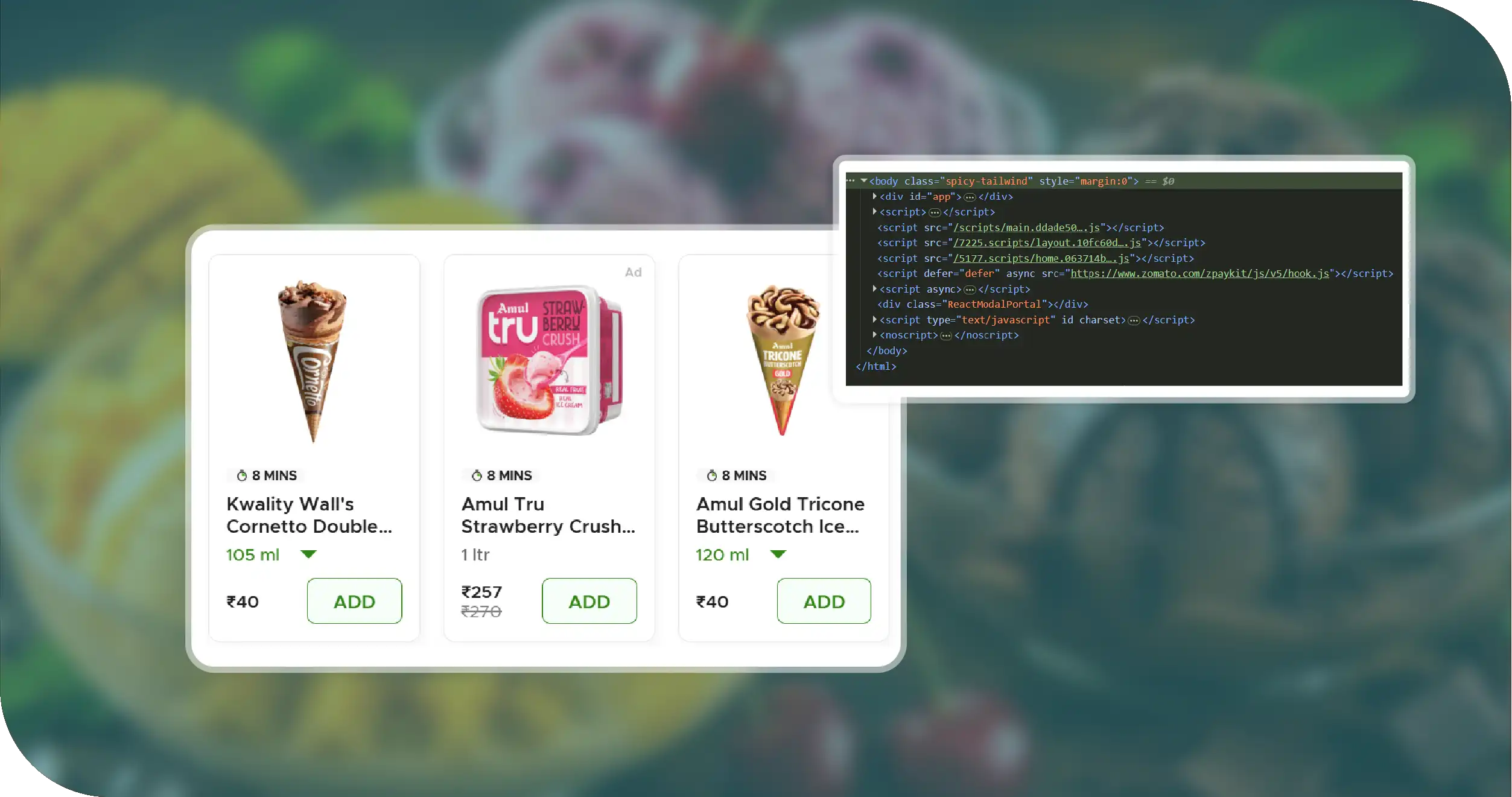
The client lacked continuous Real-Time Price Monitoring across competing ice cream products. Prices, discounts, pack sizes, and promotional offers frequently changed across platforms, making manual tracking inconsistent and limiting the team's ability to identify meaningful market movements. -
Fragmented Market Data
Managing Food Data Scraping in India across multiple retailers and delivery platforms created substantial data fragmentation. Product names, sizes, brands, prices, and availability indicators appeared in different formats, requiring normalization before the information could be reliably compared. -
Manual Collection Constraints
The existing workflow depended heavily on manual research, creating delays and increasing operational effort. Using Food Data Scraping Services became necessary to automate recurring collection while maintaining structured records suitable for historical analysis, competitive benchmarking, and category-level reporting.
Key Solutions
-
Digital Shelf Monitoring
Food Data Scrape implemented Digital Shelf Monitoring to capture product listings, pricing, pack sizes, availability, promotional information, and marketplace presence. Standardized fields allowed the client to compare competing products and identify changes across digital channels more efficiently. -
Food Delivery Datasets
The solution generated structured Food Delivery Datasets containing product-level information from relevant online channels. Data was organized into consistent fields, making it easier for the client to conduct pricing comparisons, assortment analysis, availability checks, and competitive research. -
Automated Competitive Tracking
Food Data Scrape established recurring collection workflows for competitor products and market indicators. Automated extraction reduced repetitive manual work while supporting consistent historical datasets that the client could use for trend identification, pricing reviews, promotional analysis, and strategic planning.
Data Collected for India Online Ice Cream Market
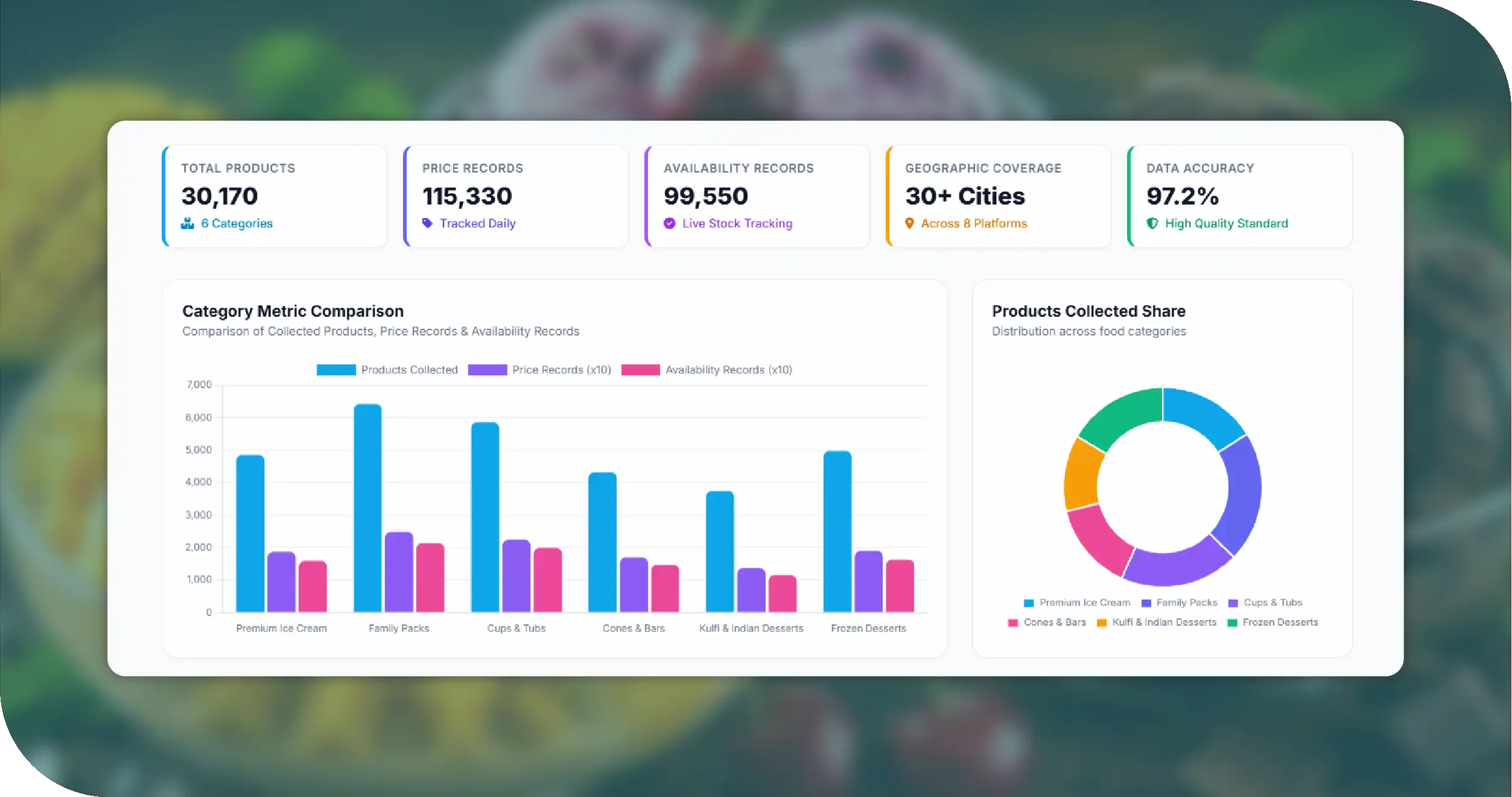
| Data Category | Brands Tracked | Products Collected | Cities Covered | Platforms | Price Records | Availability Records | Discount Records | Pack Sizes | Update Frequency | Data Accuracy |
|---|---|---|---|---|---|---|---|---|---|---|
| Premium Ice Cream | 18 | 4,850 | 22 | 7 | 18,640 | 15,920 | 8,430 | 286 | Daily | 97.5% |
| Family Packs | 24 | 6,420 | 28 | 8 | 24,780 | 21,360 | 11,250 | 342 | Daily | 97.2% |
| Cups & Tubs | 21 | 5,860 | 25 | 8 | 22,410 | 19,840 | 9,670 | 315 | Daily | 97.4% |
| Cones & Bars | 16 | 4,320 | 20 | 7 | 16,950 | 14,680 | 7,520 | 248 | Daily | 97.1% |
| Kulfi & Indian Desserts | 14 | 3,740 | 18 | 6 | 13,620 | 11,480 | 5,860 | 194 | Daily | 96.9% |
| Frozen Desserts | 19 | 4,980 | 23 | 7 | 18,930 | 16,270 | 8,910 | 276 | Daily | 97.3% |
| Overall | 112 | 30,170 | 30+ | 8 | 115,330 | 99,550 | 51,640 | 1,661 | Daily | 97.2% |
Methodologies Used
-
Source Identification
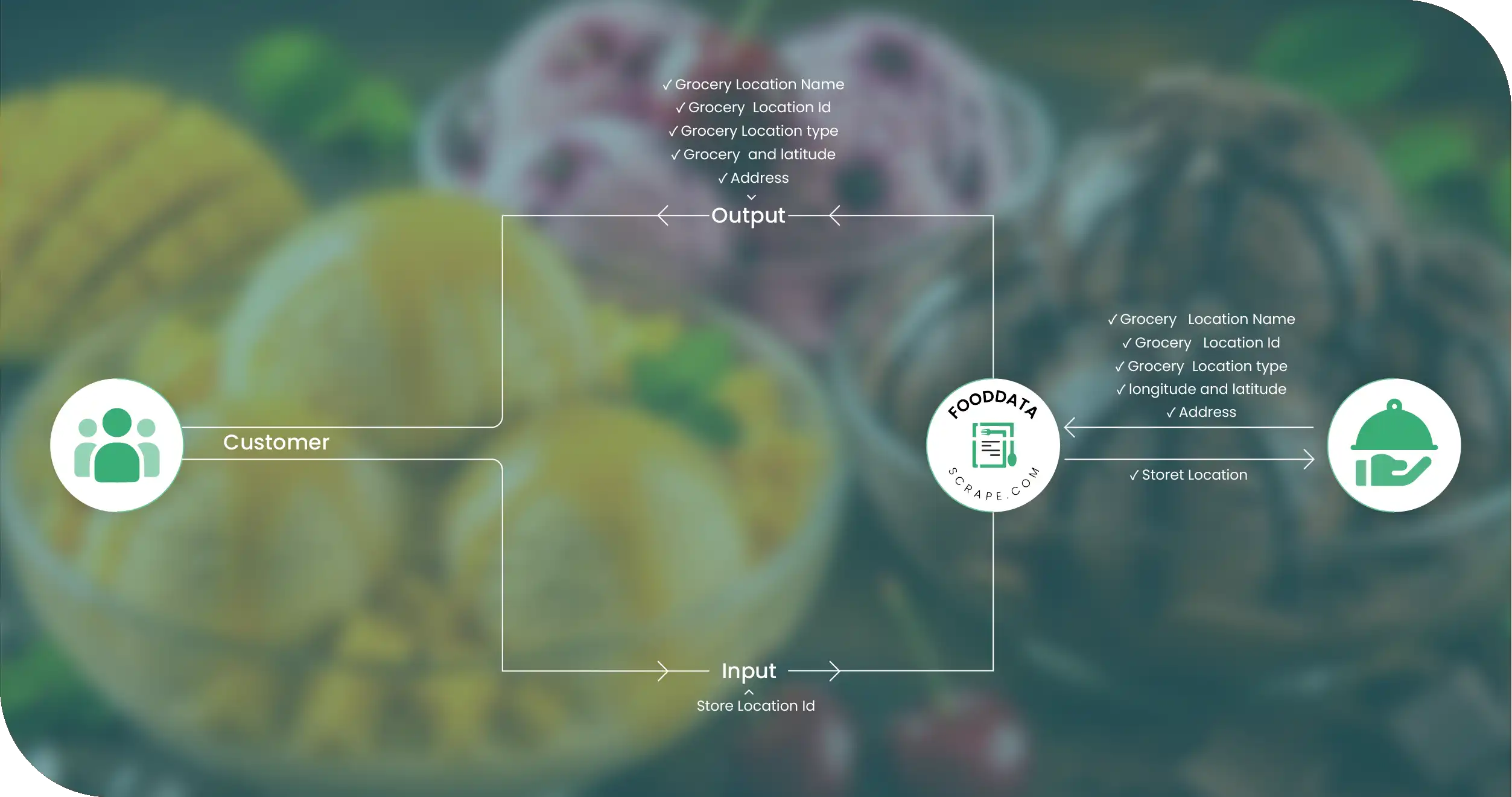
Relevant online grocery, food delivery, quick-commerce, and marketplace sources were identified according to the client's target categories. Source mapping prioritized product breadth, geographic coverage, pricing visibility, availability indicators, and consistency of publicly accessible information. -
Automated Data Extraction
Automated scraping workflows collected product names, brands, categories, pack sizes, prices, discounts, availability, retailer information, and related attributes. Extraction schedules were configured to support recurring updates and reduce dependence on manual marketplace research. -
Data Normalization
Collected records were standardized to resolve differences in product naming, units, pack sizes, category labels, and price formats. This created consistent datasets that could support reliable product-to-product comparisons across multiple platforms and geographic markets. -
Data Validation
Validation procedures were applied to identify missing fields, duplicate records, inconsistent values, and unexpected pricing changes. Quality checks helped improve dataset reliability before information was delivered for competitive analysis, reporting, and downstream business applications. -
Historical Data Structuring
The collected information was organized into structured historical records, enabling the client to examine pricing movements, availability changes, promotional activity, and assortment shifts over time. This supported recurring analysis rather than isolated marketplace snapshots.
Advantages of Collecting Data Using Food Data Scrape
-
Faster Competitive Analysis
Structured datasets reduce the time required to research competing products manually. Teams can compare brands, prices, pack sizes, discounts, and availability using organized records, allowing analysts to focus more attention on interpretation and business planning. -
Better Pricing Intelligence
Regularly updated pricing information helps businesses observe competitor price movements and promotional changes. Historical records also provide useful context for understanding price fluctuations and evaluating market-level pricing patterns across different products and locations. -
Improved Assortment Planning
Product-level datasets reveal which brands, flavors, pack sizes, and categories appear across digital channels. This information can help category teams identify assortment gaps, monitor competitor expansion, and evaluate opportunities for portfolio optimization. -
Stronger Digital Visibility
Continuous marketplace data collection provides greater visibility into product presence, availability, pricing, and promotional positioning. Teams can use these signals to identify changes in digital shelf conditions and respond to marketplace developments. -
Scalable Market Research
Automated data collection provides a scalable approach to monitoring a large number of products and sources. As market coverage expands, structured workflows can support additional brands, cities, platforms, categories, and attributes without equivalent increases in manual effort.
Client's Testimonial
"Food Data Scrape transformed the way our team monitors the online ice cream category. Previously, our analysts spent considerable time collecting prices, product information, and availability manually across different platforms. The structured datasets gave us a much clearer view of competitor movements and assortment changes. We can now compare products more consistently, identify pricing trends, and support our category planning with organized historical information. The standardized format has also made it easier for different teams to work with the same market intelligence. The project delivered a practical foundation for our digital market monitoring and competitive research requirements."
—Category Intelligence Manager, Ice Cream & Frozen Foods Company
Final Outcome
The project provided the client with a structured and scalable view of India's online ice cream marketplace. Instead of relying on fragmented manual observations, the business gained organized records covering products, brands, prices, pack sizes, discounts, availability, and digital marketplace presence. The resulting dataset supported more consistent competitor benchmarking and made recurring pricing and assortment analysis easier to manage. Historical records allowed the client to compare market movements across products, platforms, and locations while reducing repetitive research workloads. The solution also established a foundation for expanding monitoring into additional cities, retailers, categories, and digital channels. By integrating automated extraction, normalization, validation, and structured delivery, Food Data Scrape helped the client turn scattered marketplace information into actionable market intelligence. The outcome was a more systematic approach to pricing analysis, digital shelf monitoring, competitive research, assortment planning, and ongoing online ice cream market tracking.