
1. Leading Hotspots: Mumbai, Bengaluru and Pune dominate bakery listings.
2. Emerging Markets: Tier-2 cities offer promising bakery expansion opportunities.
3. Outlet Count Variations: Data providers report significantly different bakery counts.
4. Organised Chains: Popular bakery brands continue expanding across Indian cities.
5. Market Intelligence: Outlet data supports competitive analysis and strategic expansion.

India's bakery and dessert industry is expanding through a combination of traditional neighbourhood bakeries, premium patisseries, customised cake studios, quick-service dessert outlets and organised bakery chains. In 2026, metropolitan cities continue to attract premium bakery investments, while Tier-2 and Tier-3 cities are emerging as important markets for affordable cakes, biscuits, pastries and regional baked products.
This research report examines India's bakery landscape through city-level outlet counts, business distribution, market concentration, organised bakery expansion and dessert retail opportunities. It uses business-listing datasets and published industry research to identify leading bakery hotspots and compare their commercial potential.
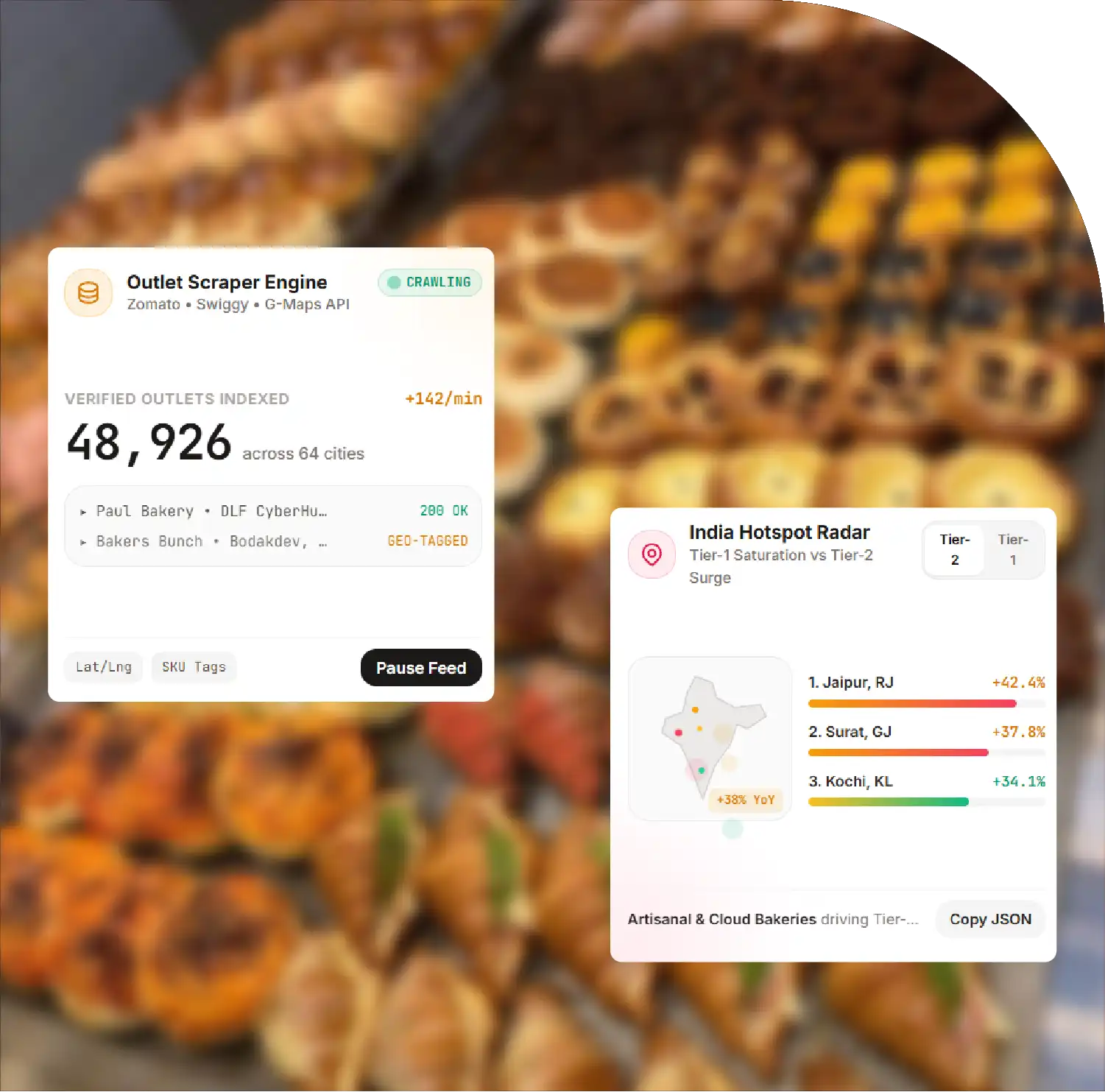
The research also highlights the importance of bakery outlet data scraping for identifying individual establishments, tracking their locations, and understanding the competitive structure of local bakery markets.
According to the Ministry of Food Processing Industries' bakery sector profile, India's bakery industry was valued at approximately USD 13.8 billion in 2024, with a projected CAGR of 9.12% through 2033. Other industry estimates put the 2025 market at approximately USD 15.05 billion, demonstrating the scale of the opportunity.
For 2026, Scrape India Bakery Outlet Data 2026 provides a useful framework for studying outlet expansion, geographical concentration and the distribution of bakery businesses across major Indian cities.
City-Wise Bakery Market Data Scraping can further support the identification of underserved neighbourhoods, emerging dessert destinations and locations with strong potential for new bakery investments.
The Indian bakery industry includes a diverse range of businesses, from independent bread manufacturers and local cake shops to international-style patisseries and organised dessert brands.
Bread, buns, cookies, rusks, cakes, cupcakes, pastries, doughnuts and savoury bakery products contribute to the industry's overall demand. Celebration-led consumption, changing food preferences, online ordering and the growing popularity of premium desserts are encouraging businesses to expand their product portfolios.
The market is also supported by organised retail, food delivery applications, café culture and improved cold-chain infrastructure. Consumers increasingly seek customised cakes, eggless bakery products, sugar-conscious desserts, premium chocolate cakes and freshly prepared pastries.
A MarketLine industry profile places India's bakery and cereals market at USD 12,768.4 million in 2025, while the broader bakery-market estimate from IMARC reaches USD 15.05 billion. These figures use different market definitions and should not be treated as directly interchangeable.
From an investment perspective, Bakery Market Intelligence In India is increasingly important for understanding how traditional bakeries compete with organised chains, delivery-first kitchens and premium dessert outlets.
Similarly, India Dessert Shop Data Extraction helps identify specialist dessert businesses, cake studios, ice cream and bakery hybrids, and outlets that primarily serve celebration-driven purchases.
City-level outlet distribution reveals where bakery businesses have established strong commercial networks. Mumbai, Bengaluru, Pune, Delhi, Chennai and Hyderabad are among the important bakery markets, supported by large consumer populations, organised retail, premium food consumption and strong delivery infrastructure.
A 2026 business-directory dataset from CompanyData identifies 159,406 bakery businesses across India and reports that 881 cities have at least one listed bakery. Its city-level figures provide a useful baseline for understanding geographical concentration.
Source: CompanyData, 2026 India bakery business listing. Counts represent listed firms, not independently verified active storefronts.
| Rank | City | Bakery businesses | National share |
|---|---|---|---|
| 1 | Mumbai | 4,077 | 2.6% |
| 2 | Bengaluru | 3,630 | 2.3% |
| 3 | Pune | 2,900 | 1.8% |
| 4 | New Delhi | 2,500 | 1.6% |
| 5 | Thane | 2,437 | 1.5% |
| 6 | Chennai | 1,954 | 1.2% |
| 7 | Hyderabad | 1,830 | 1.1% |
| 8 | Lucknow | 1,694 | 1.1% |
| 9 | Jaipur | 1,547 | 1.0% |
| 10 | Gorakhpur | 1,438 | 0.9% |
| 11 | Kanpur | 1,114 | 0.7% |
| 12 | Ahmedabad | 1,110 | 0.7% |
| 13 | Varanasi | 1,073 | 0.7% |
| 14 | Delhi | 1,061 | 0.7% |
| 15 | Prayagraj | 1,059 | 0.7% |
| 16 | Surat | 1,002 | 0.6% |
| 17 | Kolkata | 886 | 0.6% |
| 18 | Visakhapatnam | 869 | 0.5% |
| 19 | Coimbatore | 866 | 0.5% |
| 20 | Ernakulam | 818 | 0.5% |
Mumbai: Mumbai ranks first with 4,077 listed bakery businesses. Its dense residential markets, premium shopping destinations, corporate districts and celebration-driven food consumption create opportunities for neighbourhood bakeries and specialised dessert retailers.
Bengaluru: With 3,630 listed businesses, Bengaluru represents a significant bakery market. Young professionals, technology-sector employment, café culture and demand for artisanal products support a diverse bakery ecosystem.
Pune: Pune's 2,900 listed businesses indicate a strong market supported by students, working professionals, residential communities and growing organised food retail.
Delhi NCR: New Delhi records 2,500 businesses, while Delhi appears separately with 1,061. These figures should not be added without checking geographical overlap and city-boundary definitions. Premium patisseries, traditional bakeries and customised cake businesses contribute to the region's competitive landscape.
Emerging northern markets: Lucknow, Gorakhpur, Kanpur and Varanasi demonstrate that bakery retail is not restricted to metropolitan centres. These cities offer opportunities for affordable celebration cakes, traditional bakery products and regional dessert concepts.
The geographical distribution also supports Indian Bakery Market Mapping, allowing businesses to understand the concentration of competitors and identify locations where bakery demand may be underserved.
One important finding from this research is that different commercial business-listing providers report significantly different outlet counts for the same cities.
For example, CompanyData reports 3,630 bakery businesses in Bengaluru, whereas Poidata reports 15,635. Mumbai records 4,077 in CompanyData and 5,894 in Poidata. Such differences can result from variations in category definitions, geographical boundaries, listing coverage, business classification and duplicate handling.
The following comparison illustrates why research teams should establish a consistent methodology before combining datasets.
Sources: CompanyData and Poidata. Figures are separately reported directory counts, not a unified or reconciled census.
| City | CompanyData | Poidata | Difference |
|---|---|---|---|
| Mumbai | 4,077 | 5,894 | 1,817 |
| Bengaluru | 3,630 | 15,635 | 12,005 |
| Pune | 2,900 | 3,767 | 867 |
| New Delhi | 2,500 | 4,303 | 1,803 |
| Chennai | 1,954 | 5,821 | 3,867 |
| Hyderabad | 1,830 | 5,825 | 3,995 |
| Lucknow | 1,694 | 2,883 | 1,189 |
| Jaipur | 1,547 | 3,255 | 1,708 |
| Kanpur | 1,114 | 1,687 | 573 |
| Ahmedabad | 1,110 | 2,816 | 1,706 |
| Surat | 1,002 | 2,835 | 1,833 |
| Kolkata | 886 | 3,175 | 2,289 |
| Coimbatore | 866 | 2,058 | 1,192 |
| Thane | 2,437 | 834 | -1,603 |
| Visakhapatnam | 869 | 924 | 55 |
| Gurugram | Not listed in top 20 | 1,899 | — |
| Indore | Not listed in top 20 | 1,722 | — |
| Nagpur | Not listed in top 20 | 1,627 | — |
| Ludhiana | Not listed in top 20 | 1,572 | — |
| Patna | Not listed in top 20 | 1,094 | — |
| Bhubaneswar | Not listed in top 20 | 839 | — |
| Varanasi | 1,073 | 801 | -272 |
| Gorakhpur | 1,438 | 776 | -662 |
| Kochi | Not listed in top 20 | 672 | — |
| Dehradun | Not listed in top 20 | 688 | — |
Note: A dash indicates that the city was not included in CompanyData's published top-20 results, rather than zero businesses. Difference is calculated as Poidata minus CompanyData wherever both figures are available.
The comparison highlights three important considerations:
1. Category coverage: Some providers include cake shops, dessert outlets, home-based bakeries and bakery-café combinations, while others apply narrower business classifications.
2. Geographical accuracy: Metropolitan areas can be divided into multiple administrative and commercial locations, resulting in overlapping or differently grouped records.
3. Data freshness: Business directories may retain closed businesses or miss recently opened outlets. Verification is necessary before using counts for investment decisions.
Consequently, these figures should be interpreted as commercial listing indicators rather than exact active outlet totals.
Beyond independent bakery businesses, organised brands are contributing to the expansion of India's cake and dessert retail ecosystem. Their outlet networks provide useful indicators of consumer demand, franchise opportunities and geographical expansion.
Some notable organised players include:
Theobroma: Known for brownies, cakes, pastries, desserts and bakery products, with a strong presence in metropolitan markets.
7th Heaven: Its official website reports more than 200 outlets across 75+ cities and 23 states and union territories.
CakeZone: Curefoods describes the brand as operating more than 200 stores across 12 cities, including Bengaluru, Hyderabad, Chennai, Mumbai, Delhi NCR and Pune.
Flurys: An established premium bakery and confectionery name associated with Kolkata.
Monginis: A recognised cake and bakery retailer with a broad franchise-oriented business model.
These brands demonstrate the importance of tracking both independent establishments and organised retail networks.
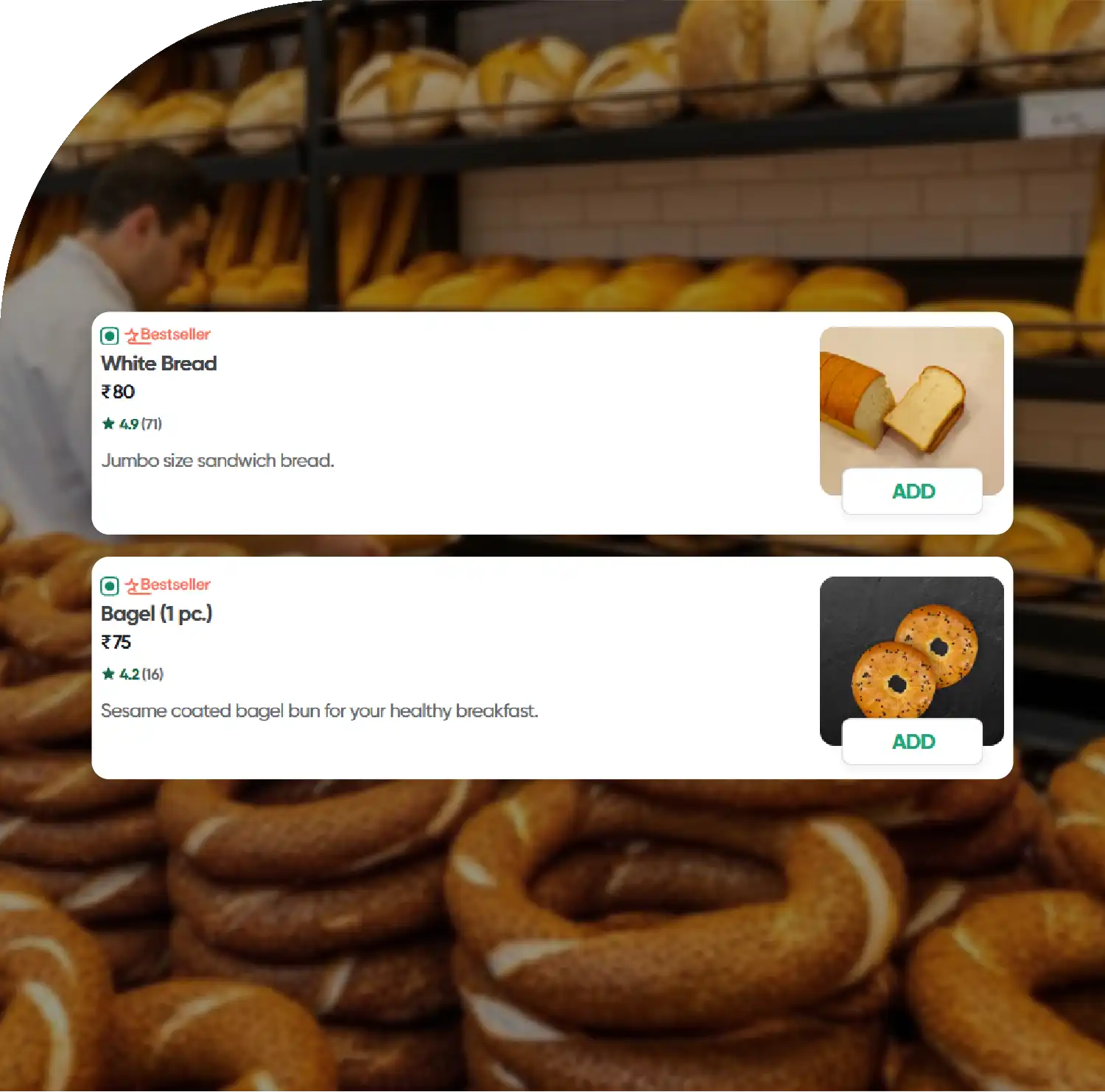
For example, Extract Bakery Ratings And Reviews Data to help businesses assess customer satisfaction, identify popular product categories and compare the reputation of competing bakery outlets.
Similarly, Web Scraping Bakery Trend can help monitor emerging preferences such as customised cakes, premium chocolate desserts, eggless products, sourdough bread, millet-based bakery products and healthier alternatives.
India's bakery market is geographically diverse, and different regions demonstrate distinct consumption patterns.
Western India: Mumbai, Pune, Ahmedabad and Surat provide opportunities for premium cakes, artisanal bread, bakery cafés and customised celebration products. High urban density supports both neighbourhood outlets and organised retail.
Southern India: Bengaluru, Chennai, Hyderabad and Coimbatore have strong bakery ecosystems supported by café culture, professional populations and established regional bakery traditions. Premium desserts and convenient breakfast products are important opportunities.
Northern India: Delhi NCR, Jaipur, Lucknow, Kanpur and Varanasi offer a combination of traditional bakeries, confectionery businesses and modern cake shops. Growing residential developments can support new franchise locations.
Eastern India: Kolkata has a distinctive bakery and confectionery heritage. Bhubaneswar, Patna and other emerging urban markets offer opportunities for modern bakery formats alongside traditional products.
Central India: Indore, Bhopal and Nagpur are relevant markets for studying affordable bakery retail, regional dessert consumption and expanding organised food businesses.
A wider Food Data Scraping in India strategy can combine bakery listings with restaurant information, product catalogues, prices, delivery availability and customer feedback to provide a more comprehensive understanding of local food markets.
For reliable bakery market intelligence, businesses should combine commercial directory information, public business listings, official brand store locators and food delivery platforms.
The recommended research framework includes the following parameters:
| Data Parameter | Information Collected | Business Application |
|---|---|---|
| Outlet Name | Bakery or dessert shop name | Business identification |
| City | Registered or listed city | Geographic analysis |
| Locality | Neighbourhood or commercial area | Location benchmarking |
| Outlet Address | Complete business address | Mapping and verification |
| Business Category | Bakery, cake shop, patisserie | Market segmentation |
| Product Categories | Bread, cakes, pastries, cookies | Product analysis |
| Average Price | Typical product or order price | Price benchmarking |
| Customer Rating | Average platform rating | Reputation analysis |
| Review Count | Number of customer reviews | Customer engagement |
| Delivery Availability | Online delivery status | Channel analysis |
| Website | Official business website | Digital presence |
| Contact Information | Public business contact details | Business identification |
| Operating Hours | Opening and closing times | Operational benchmarking |
| Brand Classification | Independent or organised chain | Competitive analysis |
| Outlet Status | Open, closed or unverified | Database quality |
The data should be standardised using consistent city and locality names. Duplicate listings should be identified through business names, addresses and geographical coordinates.
Outlet status should also be checked periodically because bakery businesses frequently relocate, expand, close or change ownership.
For accurate market sizing, researchers should distinguish between registered firms, directory listings, physical storefronts and delivery-only kitchens. These categories should never be combined without appropriate deduplication.
City-level bakery intelligence can support several commercial activities.
Market Entry: Identify cities and neighbourhoods with strong bakery business concentration before launching new outlets.
Competitor Benchmarking: Compare bakery pricing, product offerings, customer ratings and promotional activities.
Franchise Expansion: Identify locations where established bakery brands have limited representation.
Product Development: Study popular cake flavours, pastry categories, bread varieties and emerging dessert preferences.
Investment Research: Evaluate outlet density, brand penetration and potential market gaps across different urban markets.
The most valuable insight is not simply the number of bakeries in a city. It is understanding what types of businesses operate there, where they are concentrated, how they compete and which consumer requirements remain underserved.
India's bakery industry presents significant opportunities in 2026, supported by expanding urban consumption, organised retail, celebration-driven purchases and increasing interest in premium desserts. Mumbai, Bengaluru, Pune, Delhi, Chennai and Hyderabad remain important bakery hotspots, while Lucknow, Jaipur, Gorakhpur, Patna and other emerging cities offer additional opportunities for business expansion.
However, differences between commercial listing providers demonstrate why accurate classification, location validation and duplicate removal are essential before making market-sizing decisions.
Businesses can Scrape City-Wise Restaurant Outlet Data to identify bakery competitors alongside cafés, restaurants and dessert retailers, creating a broader picture of local food-service competition.
Integrating Food Delivery Datasets can further reveal product availability, pricing, customer ratings and promotional patterns across online food marketplaces.
Finally, organisations can Scrape Food Delivery API Data to build structured and regularly refreshed intelligence systems that support outlet discovery, pricing comparisons, competitive research and strategic expansion.
If you are seeking for a reliable data scraping services, Food Data Scrape is at your service. We hold prominence in Food Data Aggregator and Mobile Restaurant App Scraping with impeccable data analysis for strategic decision-making.